


The Bank of England raised interest rates from 1.25 per cent to 1.75 per cent on Thursday, the largest increase in nearly three decades.
The UK will enter five consecutive quarters of recession, with gross domestic product falling as much as 2.1 per cent, the central bank said as it warned of an unprecedented squeeze on living standards..
It said Consumer Prices Index inflation is expected to peak at 13.3 per cent in October, the highest level since September 1980, if regulator Ofgem raises the price cap on energy bills to about £3,450 ($4,194).
The Bank’s Monetary Policy Committee (MPC) made the widely expected decision as part of attempts to bring inflation under control.
It has been criticised for moving too slowly to combat inflation, which currently stands at a 40-year high of 9.4 per cent, forced upwards by surging food and energy prices.
The central bank said that it expected inflation to come back under control in 2023, dropping below 2 per cent towards the end of the year.
The pound reversed gains against the US dollar and UK bonds rallied after the recession warning. The currency fell as much as 0.7 per cent to $1.2066, having gained by that much before the announcement.
It is the sixth consecutive increase in the bank rate since December and the biggest individual leap in 27 years. The previous five increases had not been more than a quarter-point.
By contrast, the US Federal Reserve increased its key rate by three quarters of a point in each of the past two months to a range of 2.25 per cent to 2.5 per cent. The European Central Bank’s first increase in 11 years was a larger-than-expected half-point rise last month.
The last time the UK approved a similar rate increase was in December 1994, when interest rate decisions were still made by the government’s treasury chief, in consultation with the central bank governor.
Announcing its decision, the central bank said inflationary pressures in the UK and Europe had intensified significantly since May, reflecting a near doubling in wholesale gas prices due to Russia's restriction of supplies to Europe.
“As this feeds through to retail energy prices, it will exacerbate the fall in real incomes for UK households and further increase UK CPI inflation,” it said.
“The United Kingdom is now projected to enter recession from the fourth quarter of this year.”
The dire economic conditions will result in real household incomes dropping for two years in a row, the first time this has happened since records began in the 1960s.
Even after billions of pounds of government support for struggling households, families are set to be around 5 per cent worse off by the end of 2023 with incomes falling both this year and next.
However, the recession will at least be shallower than the 2008 crash, with gross domestic product dropping by as much as 2.1 per cent from its highest point.
Central bank officials said that the depth of the drop was more comparable to the recession in the early 1990s.
Unemployment will start to rise again next year, according to the projections.
In minutes from the rates decision meeting, the central bank said the majority of the MPC felt a “more forceful policy action was justified”. The committee voted eight to one in favour of the rise.
“Against the backdrop of another jump in energy prices, there had been indications that inflationary pressures were becoming more persistent and broadening to more domestically driven sectors,” the BoE said.
“Overall, a faster pace of policy tightening at this meeting would help to bring inflation back to the 2 per cent target sustainably in the medium term, and to reduce the risks of a more extended and costly tightening cycle later.”
Central banks worldwide are struggling to control surging inflation without tipping economies into recession that were beginning to recover from the coronavirus-induced slowdown.
Higher interest rates raise borrowing costs for consumers, businesses and the government, which tends to reduce spending and ease rising prices. But such moves are also expected to slow economic growth.
At a press conference, Bank governor Andrew Bailey said uncertainty around the economic outlook was “exceptionally high” due to swings in energy costs caused by Russia’s activities.
He said the “further sharp increase in energy prices” had been the biggest development in recent months.
“Wholesale gas futures prices for the end of this year … have nearly doubled since May,” he said.
They are “almost seven times higher” than forecasts had suggested a year ago, he said.
Mr Bailey had warned in July that a 50 basis point increases was on the cards, saying “there are no ifs or buts” in the bank’s commitment bringing inflation down to its 2 per cent target.
Today, he said there was an “economic cost to the war” in Ukraine but insisted that it would not deflect the central bank from setting monetary policy to bring inflation back on target.
Sterling has weakened more than 10 per cent against the dollar this year as rampant inflation, a weakening economy and war in Europe have encouraged investors to sell the risk-sensitive currency.
“Sterling will remain on the back foot against the dollar,” said Jane Foley, a currency strategist at Rabobank. “Currency markets have wanted to see more forceful guidance on interest rate hikes.”
Matthew Ryan, head of Market Strategy at global financial services company Ebury, said: “Sterling has fallen fairly sharply against its major peers so far this afternoon following a very doom and gloom assessment of the UK economy from the Bank of England.
“The BoE’s communications and accompanying macroeconomic projections were very downbeat. We have run out of fingers and toes keeping track of the number of occasions that the MPC has revised upwards its inflation forecasts in the past year.
“Of particular concern is the bank’s appraisal on the impact of the cost of living crisis on economic activity. Policymakers now expect the UK economy to contract throughout all of 2023, with a peak-to-trough fall of more than 2 per cent. This is a far sharper downturn than market participants had accounted for, hence the initial knee-jerk sell-off in the pound.
The rise will immediately hit about two million homeowners who are on standard variable rate or tracker mortgages, but will be a boost for savers.
Meanwhile, British construction companies reported their biggest fall in activity in more than two years last month, as house-builders scaled back work and civil engineering companies faced a dearth of new contracts, a survey showed on Thursday.
July's S&P Global/CIPS construction purchasing managers' index reading sank to 48.9 in July, from June's 52.6, its lowest since May 2020 during the pandemic-induced slump and only the second time since then that it has been below the 50-level that separates growth from contraction.
The central bank’s decision will play a key role in the Tory leadership debate as the economy dominates campaigning.
Tory leadership hopeful and former chancellor Rishi Sunak said: “One of the most urgent challenges we face as a country is getting inflation under control as quickly as possible.
“The [central] bank has acted today and it is imperative that any future government grips inflation, not exacerbates it.
“Increasing borrowing will put upward pressure on interest rates, which will mean increased payments on people’s mortgages. It will also make high inflation and high prices last for longer, making everyone poorer.
“As prime minister I would prioritise gripping inflation, growing the economy and then cutting taxes.”
Leadership frontrunner Liz Truss said: “Today’s news underlines the need for the bold economic plan that I am advocating.
“We need to take immediate action to deal with the cost-of-living crisis, grow the economy and delivering as much support to people as possible.
“As prime minister, I’d use an emergency budget to kickstart my plan to get our economy growing and offer immediate help to people struggling with their bills.
Ahead of the decision, Mr Sunak said Ms Truss’s “premature” tax cuts would stoke inflation.
Ms Truss's swift plan of action would further drive up rates and increase mortgage payments, the former chancellor said.
-

Conservative Party members will chose between Liz Truss and Rishi Sunak in the race to become Britain's next prime minister, after Penny Mordaunt was eliminated. PA -
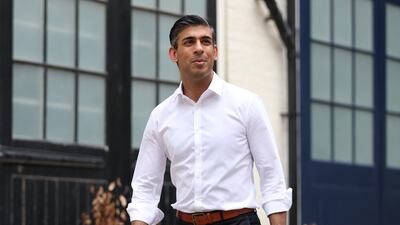
Rishi Sunak — former chancellor who resigned from his position last week. In a slick campaign video he said the government could not afford to fool voters about the difficulties ahead with ‘comforting fairy tales’. Getty Images -
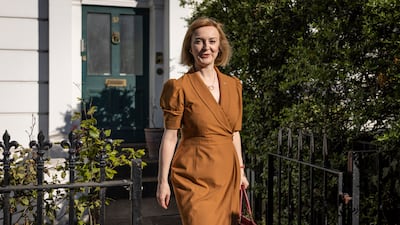
Liz Truss — the UK’s Foreign Secretary has pledged to start cutting taxes 'from day one' if she becomes prime minister, to tackle the cost-of-living crisis. She has also vowed to ‘take the vital steps necessary’ to protect the Good Friday Agreement. Getty Images -
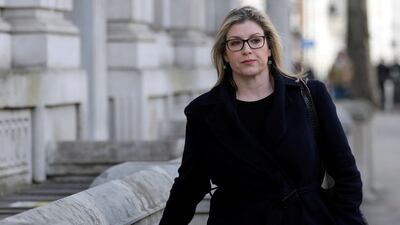
OUT OF THE RACE: Penny Mordaunt — Brexit-backing Trade Minister has insisted the Conservative Party was elected to ‘deliver a manifesto’. She played a prominent role in the Leave campaign in the 2016 referendum. Reuters -
OUT OF THE RACE: Kemi Badenoch — former equalities minister has promised 'limited government' and 'a focus on the essentials'. She has said Boris Johnson was 'a symptom of the problems we face, not the cause of them'. Photo: UK Parliament -
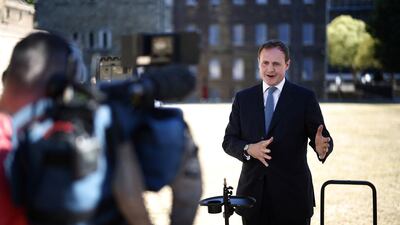
OUT OF THE RACE: Tom Tugendhat —Foreign Affairs Committee chairman and ‘Remainer’ aims to reverse the national insurance rise. He says the presence of Brexit party and Leave figures on his team is reassuring for Brexiteers. Reuters -
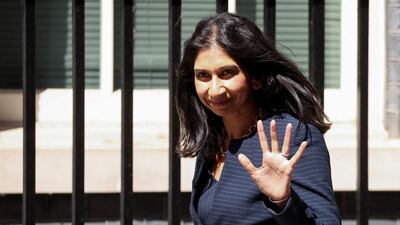
OUT OF THE RACE: Suella Braverman — current Attorney General has promised 'rapid and large tax cuts' to ease inflation. She has said the energy crisis means 'we must suspend the all-consuming desire to achieve net zero by 2050'. Reuters -
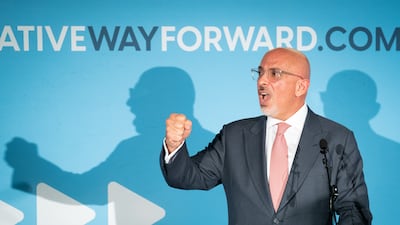
OUT OF THE RACE: Nadhim Zahawi — newly appointed Chancellor has promised to cut taxes and push ahead with the reforms he started in his previous role as education secretary, to ‘deliver a great education for every child’. PA -
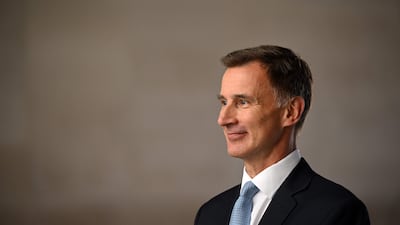
OUT OF THE RACE: Jeremy Hunt — runner-up to Boris Johnson in the 2019 leadership race, who has pledged to slash corporation tax to 15 per cent. He has also promised to back the Northern Ireland Protocol Bill. AFP -
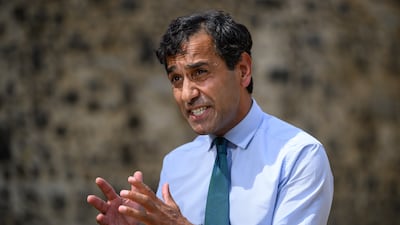
OUT OF THE RACE: Rehman Chishti — newly appointed Foreign Office minister had spoken of the importance of lower taxes and having a small state with a big society. 'It’s about aspirational conservatism, it’s about fresh ideas and then it comes down to having a fresh team.' Getty Images -
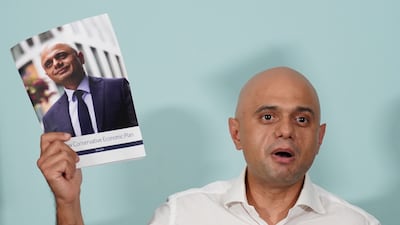
OUT OF THE RACE: Sajid Javid — experienced former health secretary had planned to scrap the government’s national insurance increase, bring forward the proposed 1p income tax cut to next year and introduce a further ‘significant’ temporary reduction on fuel duty. PA -
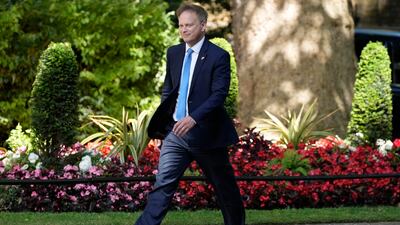
OUT OF THE RACE: Grant Shapps — the Transport Secretary had said on TV: 'I am interested in the bread-and-butter issues that your viewers will be thinking about every single day of the week.' AP


Shadow chancellor Rachel Reeves said: “This is further proof that the Conservatives have lost control of the economy, with skyrocketing inflation set to continue, while mortgage and borrowing rates continue to rise.
“As families and pensioners worry about how they’re going to pay their bills, the Tory leadership candidates are touring the country announcing unworkable policies that will do nothing to help people get through this crisis.”
Mr Sunak has faced attacks from Ms Truss for overseeing rising taxes while in No 11 during the pandemic, as she pledges a more radical plan to slash them.
He has insisted he does want to see taxes come down, but argues it is necessary to bring inflation under control before making major changes.
The former chancellor stressed there are “crucial differences” between their plans “because timing is everything”.

