
UN Secretary-General Antonio Guterres on Monday issued a stark warning about the lack of progress on tackling climate change, saying mankind was on the “verge of the abyss”.
Launching the UN’s annual State of the Global Climate report in New York, Mr Guterres said humanity is “way off track” in keeping global pollution levels and rising temperatures under control.
US President Joe Biden will this week host an online climate conference with other world leaders in a renewed effort to prevent worsening droughts, storms and other types of climate chaos.
“The data in this report should alarm us all,” said Mr Guterres.
“We are on the verge of the abyss. The six years since 2015 have been the hottest on record.”
Under the 2015 Paris Agreement, most world governments have pledged to keep global warming to “well below” 2°C above pre-industrial times and to strive to limit temperature rises to 1.5°C.
The planet has so far warmed by 1.2°C and is headed for at least 3°C this century – raising the risk of wildfires, droughts, floods, hurricanes and other extreme weather that could threaten global security.
“We are way off track,” said the UN chief. “This is truly a pivotal year for humanity’s future.”
He urged leaders to quickly submit ambitious 10-year climate targets, which are known as nationally determined contributions (NDCs) in the Paris deal.
Countries must reach “net-zero emissions” by 2050, meaning they would emit no more carbon dioxide and other planet-heating gases than they can offset through measures such as planting trees.
Governments should stop helping fossil fuel firms and switch subsidies to renewable energy, he said.
Coal should be phased out in rich countries by 2030 and elsewhere by 2040, he added.
“No new coal power plants should be built,” said Mr Guterres.
The US and China on Sunday released a joint statement saying they had agreed to work together and do more to fight climate change.
The statement came after a meeting between Chinese climate envoy Xie Zhenhua and his US counterpart John Kerry in Shanghai on Thursday and Friday.
The talks marked a resumption of climate dialogue between the world’s two top emitters of heat-trapping gases.
Bilateral talks ground to a halt during the administration of former president Donald Trump, who withdrew from the Paris Agreement after claiming it unfairly hurt US businesses.
Mr Biden's virtual summit this week, which will be live-streamed for public viewing, comes before global climate talks in Glasgow in November.
-
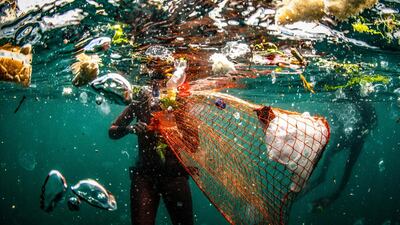
'Trash' by Sebnem Coskun (Turkey, Istanbul): Underwater cleaning in the Bosphorus as part of the Zero Waste Blue project. Courtesy CIWEM Environmental Photographer of the Year -
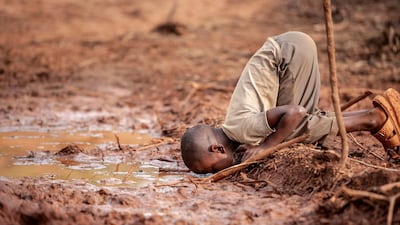
'Water Scarcity' by Frederick Dharshie (Kakamega, Kenya): A young boy drinking dirty water due to lack of water points in the area due to deforestation thus this leading to health risks to the boy. Courtesy CIWEM Environmental Photographer of the Year -
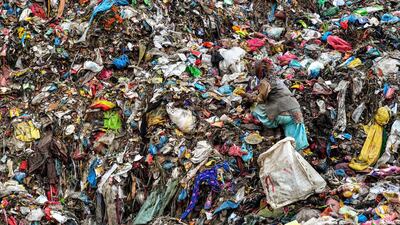
'Invisible' by Valerie Leonard (Sisdol, Nepal): In the Sisdol landfill in Nepal waste pickers rummage through garbage all day long looking for materials or valuables to sell. This temporary landfill located near Kathmandu has been in operation since 2005. Today it is running out of its capacity. Courtesy CIWEM Environmental Photographer of the Year -
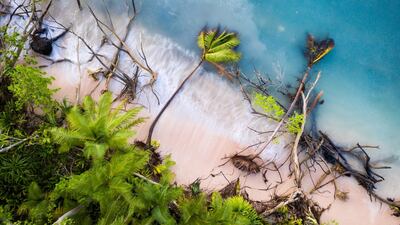
'Tuvalu Beneath the Rising Tide' by Sean Gallagher (Tuvalu): Fallen trees in the shallows of Funafuti atoll, Tuvalu. Erosion of land is an problem for coral atoll nations, as sea levels rise and increased threats from storm surges and extreme weather events occur, the land of Tuvalu will increasingly become fragile and prone to erosion. Courtesy CIWEM Environmental Photographer of the Year -
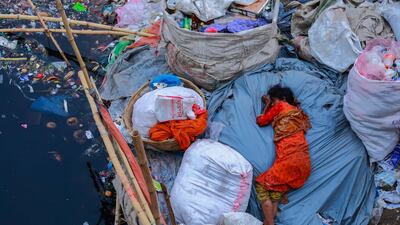
'Sleep Fatigue' by Amdad Hossain (Dhaka, Bangladesh): A woman sleeps on a dirty riverbank in Dhaka. Courtesy CIWEM Environmental Photographer of the Year -
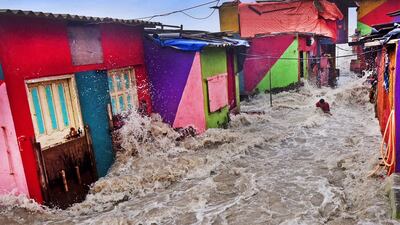
'Hightide Enters Home' by S L Shanth Kumar (Mumbai, India). Victims of climate change, a huge wave lashes at a shanty throwing a fisherman out of his home in Bandra, in the western suburbs of Mumbai. He is pulled in by the strong currents but was rescued by fellow fishermen before the sea could have swallowed him. The reclaimed city of Mumbai is facing the risk of coastal flooding, a fallout of the climate change. The city's land and sea temperatures have been rising causing an corresponding impact on the sea level. Courtesy CIWEM Environmental Photographer of the Year -
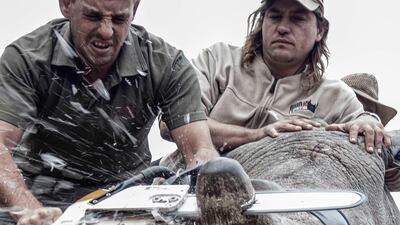
'Desperate Measures' by Neville Kgaugelo Ngomane (Limpopo, South Africa): A last ditch attempt to keep rhinos safe from poaching. Courtesy CIWEM Environmental Photographer of the Year -
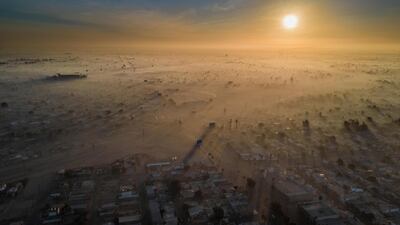
'Polluted New Year' by Eliud Gil Samaniego (Mexicali, Baja California): On January 1, 2018 Mexicali was one of the most contaminated cities in the world due to fireworks, climate change, location, industry and cars. Courtesy CIWEM Environmental Photographer of the Year -
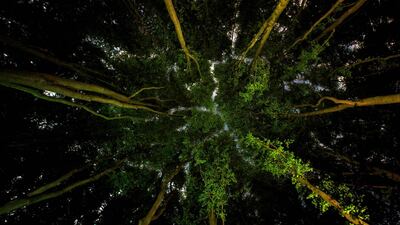
'Lungs of the Earth' by Ian Wade (Somerset, United Kingdom): Photographing trees at night with a long shutter speed and four LED spotlights isn't easy, the smallest amount of wind will blur the canopy. It took the photographer five nights to capture this image. Courtesy CIWEM Environmental Photographer of the Year -
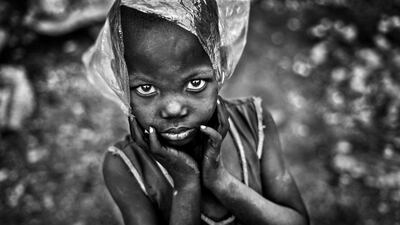
'The Plastic Quarry' by Aragon Renuncio Antonio (Ouagadougou, Burkina Faso, West Africa): A boy plays with a plastic bag. About 380 million tons of plastic is produced worldwide each year. Production increased exponentially from 2.3 million tons in 1950 to 448 million tons by 2015. Every day approximately 8 million pieces of plastic pollution find their way into our oceans. Courtesy CIWEM Environmental Photographer of the Year -
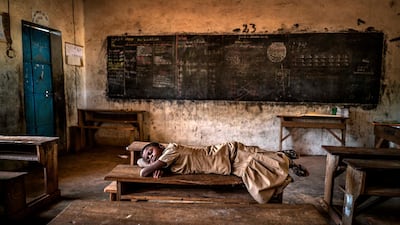
'Sweet Dreams' by Aragon Renuncio Antonio Burkina Faso, West Africa): A girl sleeps on a desk inside her schoolroom. Extreme rains have tripled in the Sahel in the last 35 years due to global warming. Climate change has caused 70 episodes of torrential rains in the last decade although the region suffers severe episodes of drought. Courtesy CIWEM Environmental Photographer of the Year -
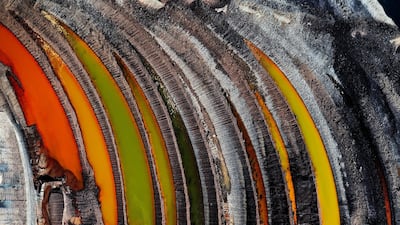
'Remains of the Forest' by J Henry Fair (Niederzier, Germany): Hambach Forest was nearly 12,000 years old when it was bought by a power company to dig for the brown coal buried underneath. The ancient forest was once the size of Manhattan; now only 10 per cent of it remains. Courtesy CIWEM Environmental Photographer of the Year -
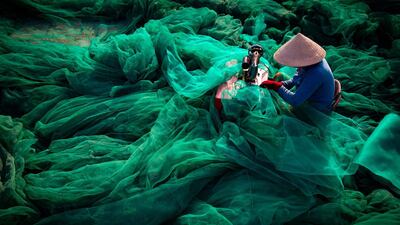
'Sewing Net' by Tran Tuan Viet (Phu Yen, Vietnam): As fish stocks decrease fishing methods become increasingly extreme. Destructive fishing with small-hole nets devastate the marine environment. Courtesy CIWEM Environmental Photographer of the Year -

'Daily Labor' by M Yousuf Tushar (Dhaka, Bangladesh): Thousands of poor people go to Bangladesh's capital city Dhaka to find work every year. Courtesy CIWEM Environmental Photographer of the Year



