

Live updates: Follow the latest news on Israel-Gaza
The US federal government has opened civil rights investigations into seven schools and universities over allegations of anti-Semitism and Islamophobia.
Three Ivy League institutions – Columbia, Cornell and the University of Pennsylvania – along with Wellesley College in Massachusetts, Lafayette College in Pennsylvania and Cooper Union for the Advancement of Science and Art in New York, were named on the list, the Associated Press reported. The list also includes one K-12 system, the Maize Unified School District in Kansas.
Incidents of Islamophobia and anti-Semitism have been on the rise since the Israel-Gaza war broke out last month.
The Education Department announced the inquiries on Thursday, calling it part of efforts by US President Joe Biden administration to take “aggressive action” against discrimination.
Educational institutions have a legal duty to act “when students are targeted because they are – or are perceived to be – Jewish, Muslim, Arab, Sikh or any other ethnicity or shared ancestry”, Education Secretary Miguel Cardona said in a written statement.
Schools found to have violated civil rights law can face penalties up to a total loss of federal money, although the vast majority of cases end in voluntary settlements.
Mr Cardona told CNN on Friday that he expects more investigations are coming.
Five of the investigations are in response to allegations of anti-Semitic harassment, while two are in response to allegations of anti-Muslim harassment, the department said. The agency did not disclose which schools faced which accusations.
The schools are being investigated for possible discrimination based on shared ancestry or ethnic characteristics, which violates the Civil Rights Act of 1964. The federal law requires schools to protect students from discrimination and respond to harassment that creates a hostile environment. Anyone can file a complaint alleging such discrimination.
Penn and Wellesley were accused of anti-Semitism in federal complaints filed last week by the Brandeis Centre, a Jewish legal advocacy group.
In a November 9 letter to the Education Department, the centre says Penn professors have made anti-Semitic statements in the classroom and on social media and that many Jewish students are afraid to be on campus during pro-Palestinian rallies.
University President Liz Magill “has made clear anti-Semitism is vile and pernicious and has no place at Penn”, the school said.
“The university will continue to vigilantly combat anti-Semitism and all forms of hate.”
A separate letter from the Brandeis Centre said Wellesley has failed to address anti-Semitism. It cites an email that some dorm advisers sent to residents saying “there should be no space, no consideration and no support for Zionism” at Wellesley. Advisers later apologised for the message.
Officials at Lafayette said it was unclear to them why their school was being investigated.
“The college maintains a firm stance against anti-Semitism, Islamophobia and hate speech of any kind. The College is co-operating and will continue to co-operate fully with the DOE in their investigation,” the college said in a written statement.
Maize Unified, a district of about 8,000 pupils outside Wichita, said it did not receive a copy of the complaint but that the district “takes allegations of discrimination seriously and is committed to co-operating fully with any investigation”.
Over the past weeks, the Biden administration has been holding meetings with members of the Jewish as well as Arab and Muslim-American communities to discuss discrimination that has been on the rise since the beginning of the Israel-Gaza war.
“The level of intensity is really high,” Mr Cardona told CNN. “We need to match it with a level of response that meets the moment. We need to be listening to our students; we need to let them know that they will be safe in our schools – that we’re not going to tolerate hate or threats on campus.”
The latest from the Israel-Gaza war – in pictures
-
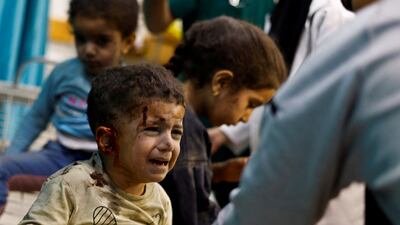
Palestinian children wounded in Israeli strikes amid the Israel-Gaza war wait for treatment at Nasser Hospital. Reuters -
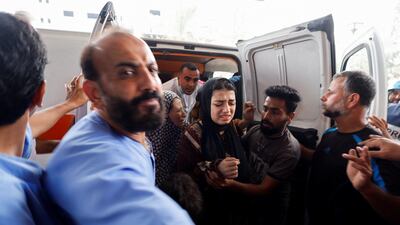
Wounded Palestinians are assisted out of an ambulance to receive treatment at Nasser Hospital in Khan Younis. Reuters -
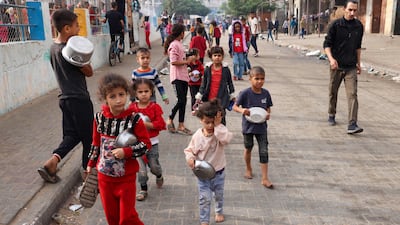
Displaced Palestinian children gather for breakfast at a refugee camp in Rafah. AFP -
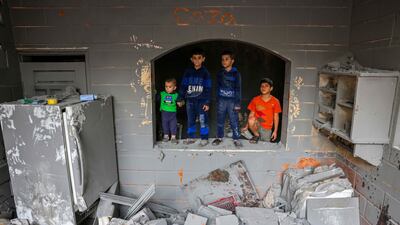
Children inside a damaged building following strikes on Rafah in the southern Gaza Strip. AFP -
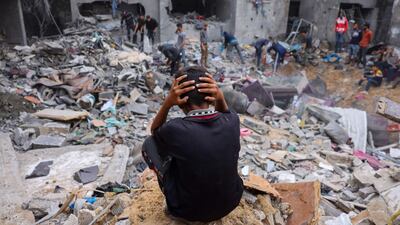
People salvage belongings from a damaged building following strikes on Rafah. AFP -
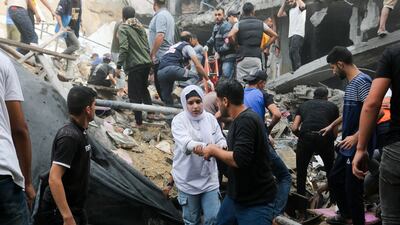
A girl is assisted as Palestinians search for casualties after an Israeli strike on a house, in Rafa in the southern Gaza Strip. Reuters -
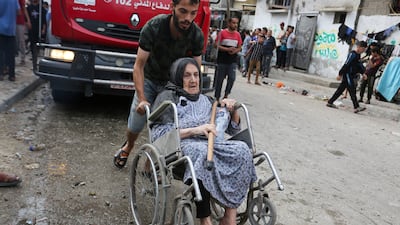
A Palestinian woman is evacuated at the site of an Israeli strike on a house, in Rafah. Reuters -
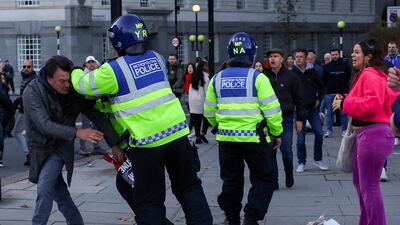
Police officers push back a counter protester who snatched a pro-Palestinian placard from a woman during a demonstration in solidarity with Gazans, London. Reuters -
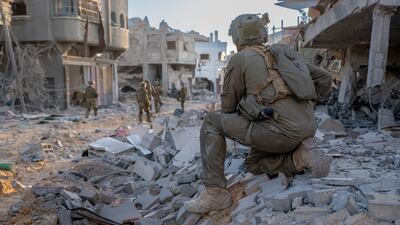
Israeli soldiers inside the Gaza Strip, amid the continuing ground operation. Reuters -
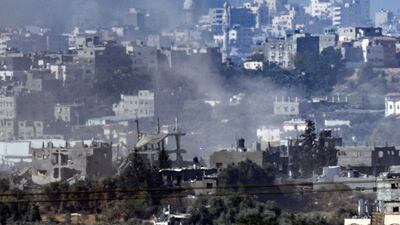
An Israeli flag can be seen inside the Gaza Strip, from the Israeli side of the border. Reuters -
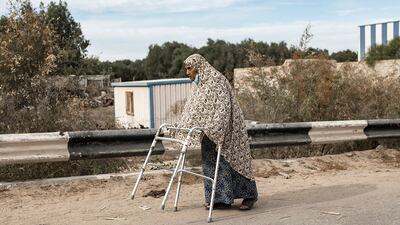
A Palestinian woman evacuates her home, heading to the southern Gaza Strip. EPA -
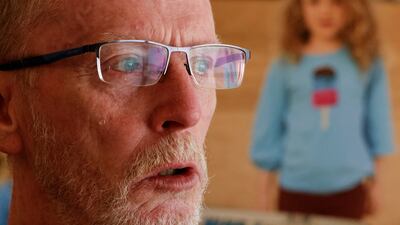
Thomas Hand, the father of Irish-Israeli Emily Hand, 8, who was announced dead following the October 7 attack, then later confirmed as one of the hostages held in Gaza, speaks from his hotel where he was evacuated to in Israel. Reuters -
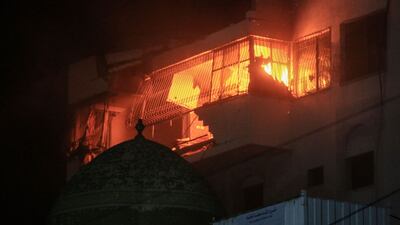
A residential building on fire following Israeli air strikes in Gaza city. Bloomberg -
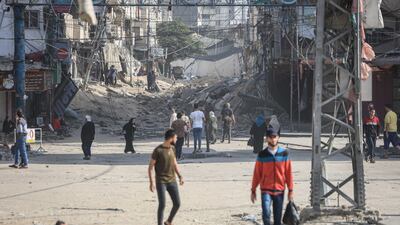
The rubble from destroyed residential buildings fills a street in Gaza city. Bloomberg -
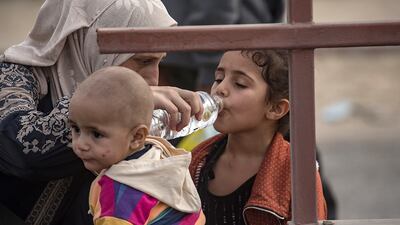
A Palestinian child drinks water as they evacuate to the southern Gaza Strip. EPA -
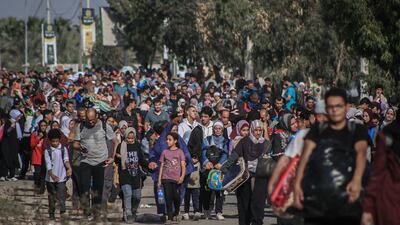
Palestinians displaced from Gaza city head towards the south. Bloomberg -
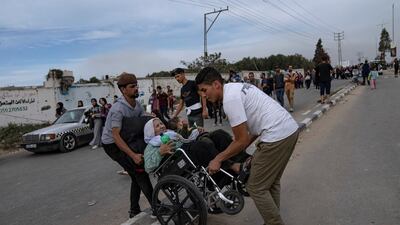
Palestinians flee to the southern Gaza Strip. AP -
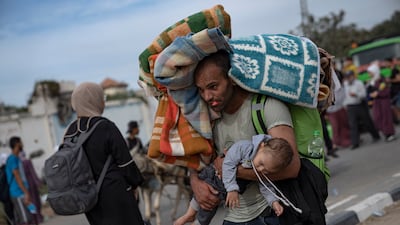
Palestinians flee to the southern Gaza Strip on Salah al-Din Street in Bureij, Gaza Strip. AP -

A group picture ahead of an emergency meeting of the Arab League and the Organisation of Islamic Co-operation in Riyadh. AFP



