


The US State Department on Thursday launched a new programme that encourages groups of Americans to sponsor refugees as they resettle in the country.
The so-called Welcome Corps aims to mobilise groups of five or more Americans into providing private sponsorships for about 5,000 refugees.
“The Welcome Corps builds on our country's proud tradition of providing refuge and inviting Americans to serve as neighbours, guides and friends to refugee newcomers as they build new lives in the United States,” a senior State Department official told reporters.
The US already has programmes that allow for the private sponsorship of refugees from several nations including Afghanistan, Ukraine and Venezuela. Welcome Corps is for refugees coming from anywhere.
Sponsors must raise $2,275 per refugee to provide “initial support” during their first three months in the US.
That fee is aimed at covering “security deposits for an apartment or [to] buy winter clothing or furniture, provide the resources the refugees need during those first three months”, the official said.
“The goal is for the refugees to become self reliant as quickly as possible … they pay their own way like everyone else who is in this country.”
Refugees will be vetted through the same “extensive security screening” process as others, and the application process for sponsors will be handled through a State Department-funded consortium of non-profits.
Ukrainian refugees in Mexico en route to US — in pictures
-

The US border fence in Tijuana, Mexico. All photos: Willy Lowry / The National -

The entrance to Unidad Deportiva Benito Juarez, where hundreds of Ukrainian refugees are staying. -

Georg Bondarenko with his uncle in Tijuana, having fled Ukraine. -
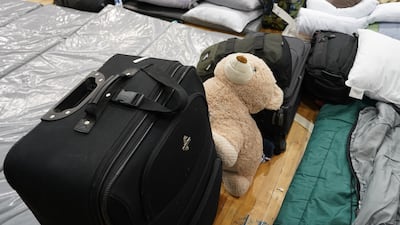
Ukrainians are sleeping beside luggage in Tijuana. -

Children pick out toys from a donation box at the sports complex where Ukrainian refugees are staying in Tijuana. -

A young girl plays with a toy. -

Hundreds of Ukrainian refugees are sleeping in the gymnasium in Tijuana. -

Victoria and her partner fled Kyiv for the US. Here they pose inside a refugee camp in Tijuana, Mexico. -
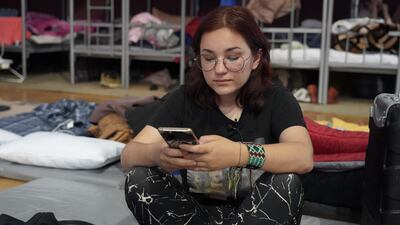
Sandra, a 21-year-old university student, waits to enter the US. -
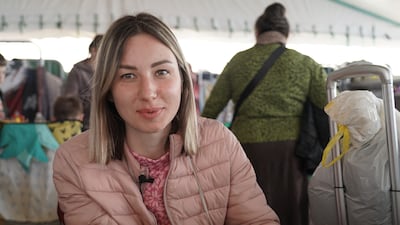
Karina Konotopets fled Chernihiv at the start of the war. -
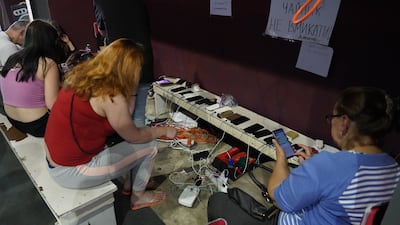
Ukrainians huddle around a makeshift charging station in Tijuana. -
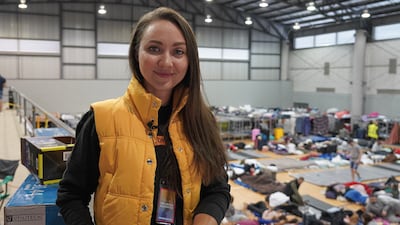
Anastasiya Polo is one of the lead volunteers helping to organise the makeshift refugee camp in Tijuana. -
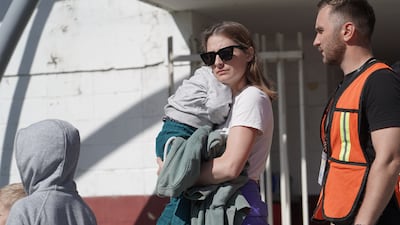
A woman carries a child on to a bus in Tijuana. -

A bus carrying refugees is parked in front of the sports complex where Ukrainians are staying in Tijuana. -
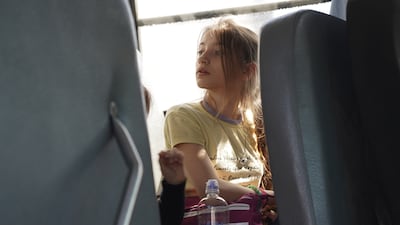
A young girl sits on a bus in Tijuana, waiting to enter the US. -

Ukrainian refugees walk up the pedestrian ramp to the PedWest point of entry into the United States. -
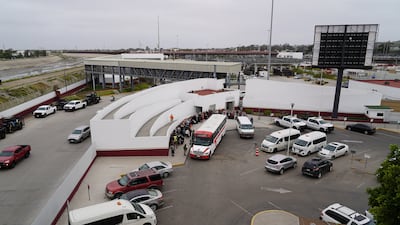
Ukrainian refugees wait to enter the US. -
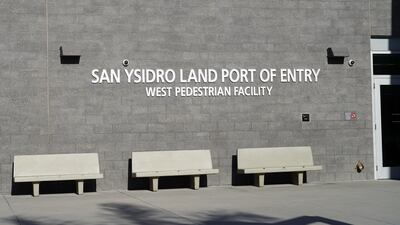
The San Ysidro Port of Entry from Tijuana. -
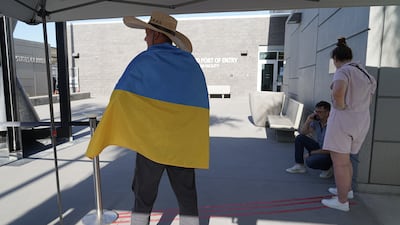
A man wearing a sombrero and draped in Ukrainian flag welcomes refugees on the US side of the border. -

Victoria and her partner pose with a young child on the US side of the border. -
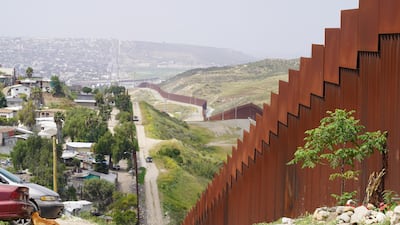
The controversial US border fence stretches for kilometres near Tijuana. -
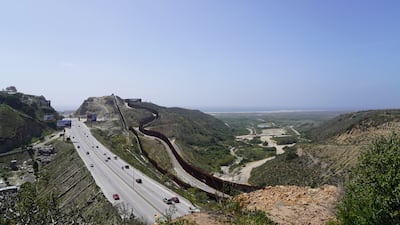
The US border fence stretches towards the Pacific Ocean.


The vetting process for sponsors was established in part to ensure refugee safety and ensure they are not subjected to labour abuses.
A group of more than 200 refugee advocacy and other aid groups on Thursday signed a letter of support, praising the programme as Washington's “boldest innovation” in decades.
“The Welcome Corps is a once-in-a-generation opportunity to directly engage communities in the resettlement process and allow more refugees to find a safe place to call home,” wrote Becca Heller, executive director of the International Refugee Assistance Project.
David Miliband, president and chief executive of the International Rescue Committee, described the Welcome Corps as a “much-needed pathway” to help “people find safety through the American spirit of welcome”.
The expansion comes as human displacement reaches historic highs.
UN refugee agency figures from 2021 show that 89.3 million people worldwide were forcibly displaced, a figure that does not account for Russia's invasion of Ukraine, which has displaced nearly eight million people.
President Joe Biden previously issued a memorandum mandating that up to 125,000 refugees be admitted to the US in fiscal year 2023.
That includes 40,000 people from Africa, 35,000 from the Middle East and South Asia, 15,000 from East Asia, 15,000 from Europe and Central Asia, 15,000 from Latin America and the Caribbean, and 5,000 unallocated.
The Welcome Corps will contribute to that existing overall goal.
The State Department official said one of the “touching” results of the Afghan private sponsorship programme was how refugees who became naturalised Americans have worked to help others like them.
“One of the groups that stood up in greatest numbers were people who had arrived themselves as refugees,” the official said, pointing in particular to the “Vietnamese boat people” who fled to the US during and after the Vietnam War.
They “have really stood up in very big numbers to welcome Afghans, and really saying that they feel a need to pay it forward”, the official said.
If more than 10,000 sponsors join the Welcome Corps, the State Department will seek to pair additional sponsors with refugees in need, the official added.

