


Live updates: follow the latest news on Russia-Ukraine
Russia’s invasion of Ukraine has exacerbated food shortages in Africa and the Middle East, a US official said on Thursday.
Ukraine is one of the world’s leading exporters of wheat, corn and sunflower oil, but its production has come to a near standstill.
Farmers have had to abandon their tractors and take up arms, according to Ramin Toloui, assistant secretary for economic and business affairs in the Biden administration.
Additionally, he said Russian forces have destroyed grain silos and other critical infrastructure, severely hampering Ukraines ability to store and transport agricultural products.
Since the war started on February 24, Ukraine’s agricultural exports have been severely hampered.
With Russia blocking access to the country’s main ports in the Black Sea, grain exports were capped at 800,000 tons, down from an average of 5 million tons, according Ukraine’s Agricultural Ministry.
Ukraine’s inability to export grains has caused global prices to soar, with farmers worldwide weighing whether to change their planting patterns and grow more wheat this spring.
-
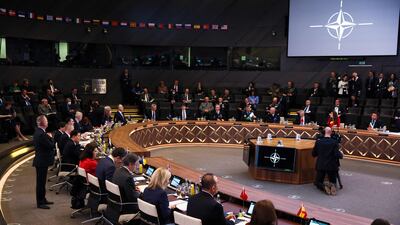
Nato foreign ministers meet in Brussels to discuss the latest in the continuing Russia-Ukraine war. AFP -
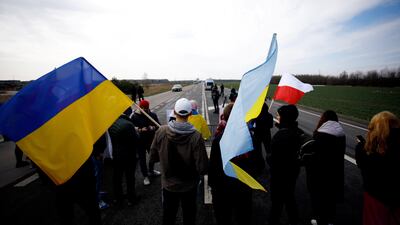
People take part in a protest against the transport of cargo to Russia and Belarus near the Polish-Belarusian border crossing in Koroszczyn, eastern Poland. EPA -
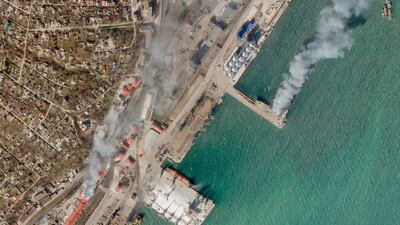
A Ukrainian naval vessel, thought to be the ‘Donbas’ and a nearby building burn in the besieged city of Mariupol. AP -
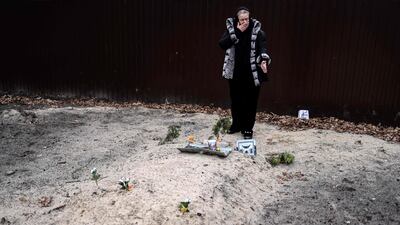
Bucha resident Tetiana Ustymenko weeps over the grave of her son, buried in the garden of her house, in Bucha, north-west of Kyiv. AFP -
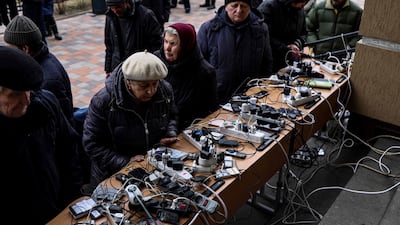
People charge their mobile phones in a public building in Bucha. AFP -
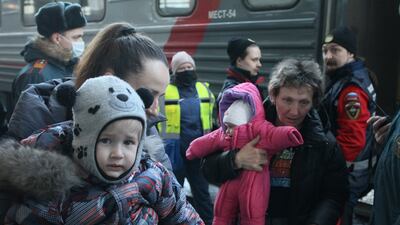
People from Mariupol leave a train to be taken to temporary residences in Nizhny Novgorod, Russia. AP -
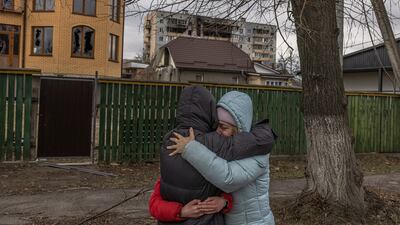
Vladyslava Liubarets, a Bucha resident, cries as she hugs her sister whom she had not seen since the beginning of the Russian invasion, in Bucha, the town which was retaken by the Ukrainian army. EPA -
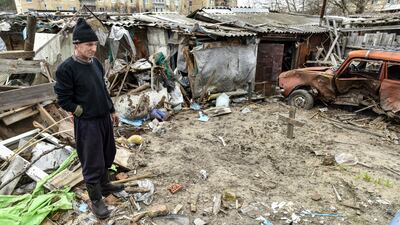
Local citizen Oleksandr, 55, looks at the grave of his neighbour in the backyard of his private house in Hostomel in Kyiv. EPA -

Debris of a rocket missile on the field near Kyiv. EPA -
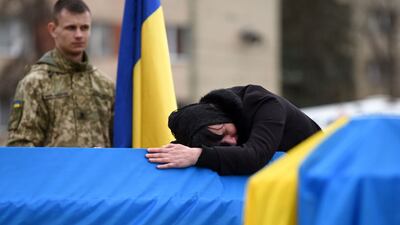
The mother of Ukrainian soldier Lubomyr Hudzeliak, who was killed during Russia's invasion of Ukraine, mourns during his funeral in the western Ukrainian city of Lviv. AFP -
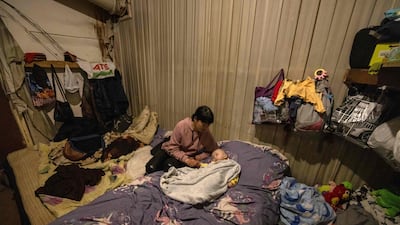
A woman takes care of a baby at a shelter in the Ukrainian city of Severodonetsk in Donbas region. AFP -
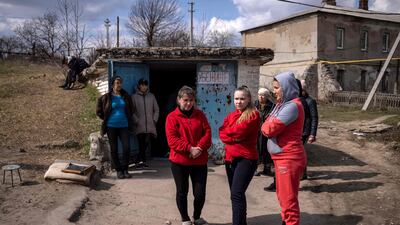
Residents gather outside a shelter in the city of Severodonetsk. AFP -
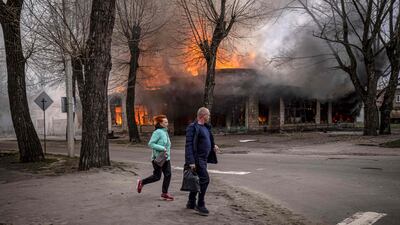
Residents in eastern Ukraine, including the city of Severodonetsk in Donbas region, have been asked by their government to leave 'now' or 'risk death'. AFP -
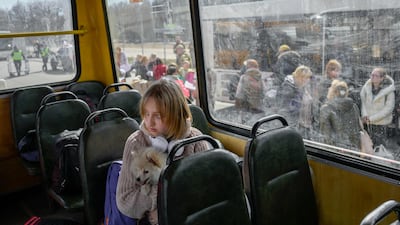
A young girl with her dog arrives at a centre for the displaced in Zaporizhzhia, north-west of Mariupol. AFP -
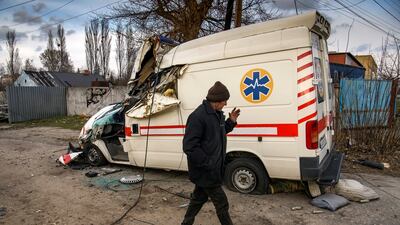
A damaged ambulance in Hostomel, on the outskirts of Kyiv. Reuters -
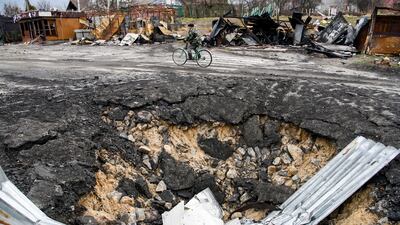
A bomb crater left behind by Russia's attack on the Ukrainian village of Demydiv, on the outskirts of Kyiv. Reuters -
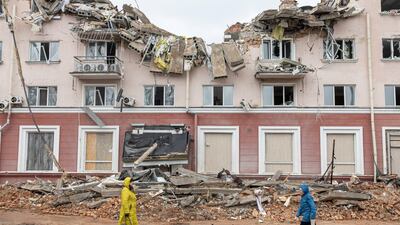
Russian attacks have reduced Hotel Ukraine in Chernihiv to debris. Reuters -
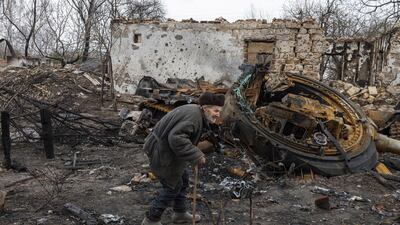
Oleksii Shcherbo, 98, near his burnt house in the village of Sloboda, on the outskirts of Chernihiv. Reuters -

Residents walk past destroyed Russian military machinery on the street, in Bucha, the town which was retaken by the Ukrainian army, north-west of Kyiv. EPA -
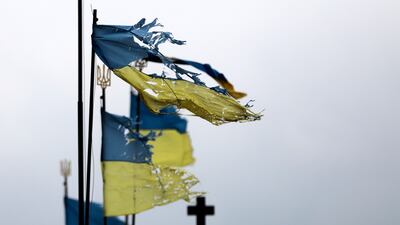
Damaged National flags flutter in the wind on a cemetry of Chernihiv city which was blocked by Russian troops for a long time. EPA -

Demonstrators lie down on the ground in tribute to the people killed in Russia's war against Ukraine, in Berlin, Germany. AP -

A Ukrainian firefighter works at the site of a burning fuel storage facility ignited by an air strike, in Dnipropetrovsk. Reuters -

A woman before and after she was removed by rescuers from debris after a military strike on the town of Rubizhne, Luhansk. Reuters -

People wait for help to evacuate Derhachi. Reuters -
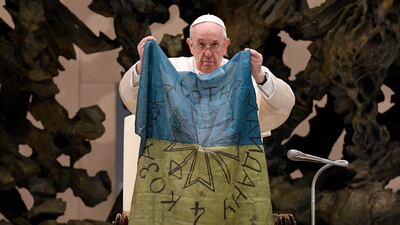
Pope Francis, in Vatican, holds a Ukrainian flag given to him by a delegation from the town of Bucha, where dozens of bodies had been found. EPA -
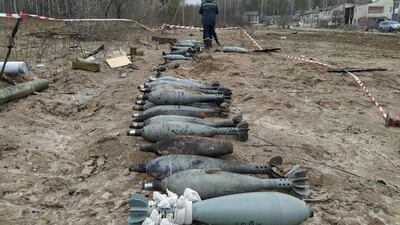
State emergency servicemen clear shells near Chernigiv, northern Ukraine. AFP -
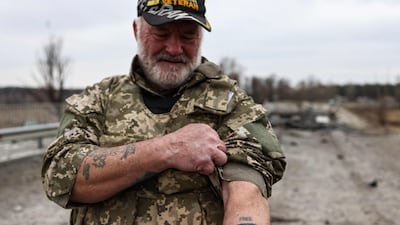
US war veteran Steven Straub shows his tattoo of the Ukrainian flag while on patrol near Buda-Babynetska, north of Kyiv, days after Russian forces retreated from the area. AFP -
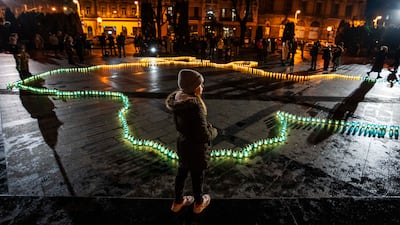
Candles are arranged in the shape of Ukraine by the monument to the poet Taras Shevchenko in the western city Lviv. AFP -
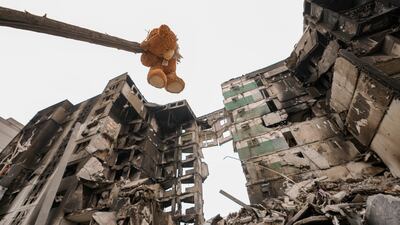
A teddy bear hangs from a tree branch outside an apartment building in Borodyanka, Kyiv oblast. AP -
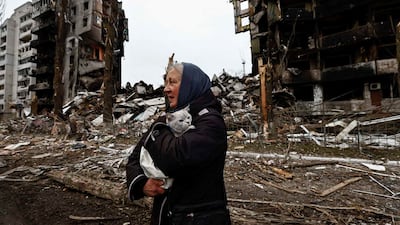
A woman carries her cat as she walks past buildings that were destroyed by Russian shelling, in Borodyanka. Reuters -
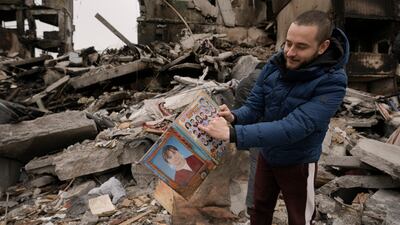
Dmitriy Evtushkov, 25, points to his picture in a primary school album retrieved from the rubble of a block of flats. AP -
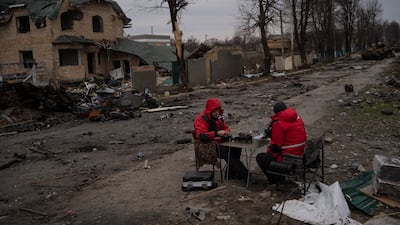
Technicians try to fix the internet in Bucha. AP -

A smashed mobile phone lies next to a Russian army ration book in Bucha. AP -
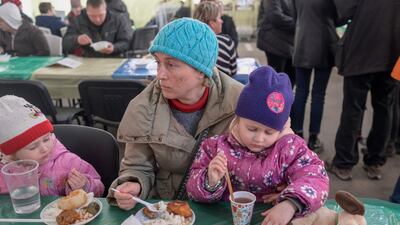
A woman and children after their arrival at a centre for displaced persons in Zaporizhzhia, about 200 kilometres north-west of Mariupol. AFP -
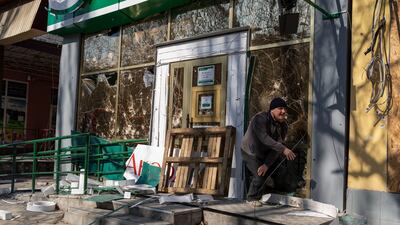
A man leaves a damaged pharmacy after a bombing that killed several civilians, in Mykolaiv. AP -
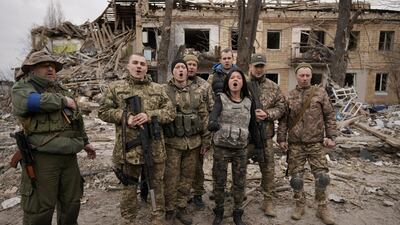
Ukrainian soldiers sing a patriotic song with buildings in the background that were destroyed during fighting in Borodyanka. AP -
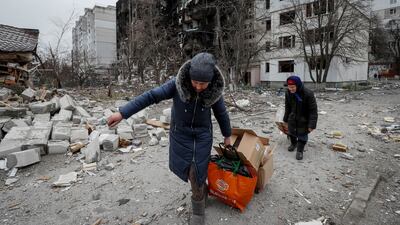
Borodyanka residents carry humanitarian aid packages. Reuters -

Elderly Ukrainians shelter in a basement in Kharkiv, in eastern Ukraine. EPA -
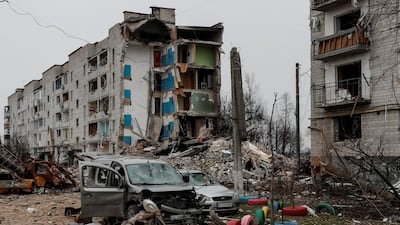
Destroyed apartment buildings in Borodyanka. Reuters -
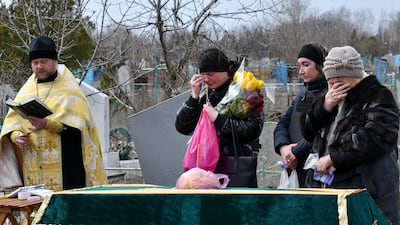
Relatives and friends are overwhelmed with emotions as they stand next to the coffin of Anatoly German during his funeral. AP


Russian President Vladimir “Putin’s actions are threatening vulnerable people in the Middle East and Africa with food scarcity or worse, starvation,” said Mr Toloui.
African and Middle Eastern countries rely on Russian fertiliser and Ukrainian grains to help feed their populations.
The shortages caused by the war are directly affecting these regions, he added.
President Joe Biden's administration has pledged $1 billion for those affected by the war in Ukraine.
The assistance covers critical needs such as safe drinking water, shelter and emergency food assistance, Mr Toloui said.
The US has also provided Ukraine with more than $1.7bn in military assistance since the war started.

