

A divided US Supreme Court heard arguments on Monday in an environmental regulation case with potentially far-reaching implications for President Joe Biden's fight against climate change.
The case concerns the authority of the Environmental Protection Agency (EPA) to regulate greenhouse gas emissions from coal-fired power plants, which produce about 20 per cent of the electricity in the US.
As the Supreme Court was hearing arguments, the UN issued a major report containing dire warnings on climate change.
While the three liberal justices on the nine-member Supreme Court appeared largely to support arguments that the EPA was operating within its brief, several of the conservative justices appeared sceptical.
“This agency is doing greenhouse gas regulation,” said Justice Sonia Sotomayor, one of the liberal members of the court. “This is in, you know, exactly in its wheelhouse.”
Jacob Roth, arguing for The North America Coal Corp, said the EPA is going beyond its remit.
“The agency is asking questions like: should we phase out the coal industry? Should we build more solar farms in this country? Should we restrict how consumers use electricity in order to bring down emissions?
-

Abdullah Abduljabar, Vice President of Al Ghadha Parks in Qassim, central Saudi Arabia, where a huge saxaul tree planting programme is being planned. All photos by Reuters -

Al Ghadha Parks is the world's largest saxaul botanical garden. For centuries millions of the trees, known by their Arabic name al ghadha, provided firewood, animal feed and respite from the desert heat for the Bedouin forefathers of modern Saudis. -

The trees produce seeds only as they become drier. Current conditions have provided the seeds to plant 250,000 drought-resistant saxauls in the region. -

Saxaul roots bind the desert sands, helping to constrain sandstorms. -

The kingdom aims to plant 10 billion trees in the coming decades as part of an ambitious campaign unveiled by Crown Prince Mohammed bin Salman last year. -

It is part of a green initiative aimed at reducing carbon emissions, pollution and land degradation. -

Abdullah Abduljabar checks soil quality in the saxaul garden. -

Majed Alsolaim, chief executive of Al Ghadha Parks, shows the Guinness World Record certificate for largest saxaul botanical garden held by the park.


“Those are not the types of questions we expect the agency to be answering,” Mr Roth said.
The Supreme Court, by a narrow majority, ruled in 2007 that the EPA has the power to regulate carbon dioxide emissions from power plants under the Clean Air Act of 1970.
In 2015, former president Barack Obama unveiled his Clean Power Plan, which was intended to combat global warming by reducing carbon dioxide emissions from coal and gas-burning plants and shifting energy production to clean sources such as solar and wind power.
The Clean Power Plan was blocked in the Supreme Court in 2016 and repealed by former Republican president Donald Trump, who replaced it with his own industry-friendly Affordable Clean Energy (ACE) rule.
Mr Trump, a climate change sceptic hostile to government regulation of industry, also nominated three justices to the Supreme Court, giving conservatives a 6-3 majority.
The US Court of Appeals for the District of Columbia threw out Mr Trump's ACE rule on the last day of his presidency, setting the stage for the case currently before the Supreme Court: West Virginia v EPA.
West Virginia and several other coal-producing states asked the Supreme Court to intervene and define the powers of the EPA. The case has also been embraced by opponents of strong government regulatory authority.
Solicitor General Elizabeth Prelogar, arguing before the court for the Biden administration, said the justices should wait until the EPA publishes its new rules.
“The DC Circuit's judgment leaves no EPA rule in effect,” Ms Prelogar said. “No federal regulation will occur until EPA completes its upcoming rule making.
“Petitioners aren't harmed by the status quo.
“Instead, what they seek from this court is a decision to constrain EPA authority in the upcoming rule making.”
In its brief to the court, West Virginia accused the EPA of acting like “the country's central energy planning authority".
Justice Samuel Alito, one of the more conservative members of the court, questioned how far the EPA could go in regulating emissions.
“Is there any reason EPA couldn't force the adoption of a system for single-family homes that is similar to what it has done, what it is claiming it can do, with respect to existing power plants?” Mr Alito asked.
Ms Prelogar replied that the EPA “has never listed homes as a source category and couldn't do so because they are far too diverse and differentiated".
UN experts, in the report issued on Monday on the global impacts of climate change, said humanity is perilously close to missing its chance to secure a “liveable” future.
“The cumulative scientific evidence is unequivocal: climate change is a threat to human well-being and planetary health,” the Intergovernmental Panel on Climate Change (IPCC) said.
Any further delay in global action to cut carbon pollution and prepare for impacts already in the pipeline “will miss a brief and rapidly closing window of opportunity to secure a liveable and sustainable future for all”, the 195-nation IPCC warned.
The Supreme Court is expected to issue its decision in West Virginia v EPA before June.
-

Libya's Ashaafean park became the country's first site to be added to Unesco's list of biosphere reserves last month. All photos: AFP -
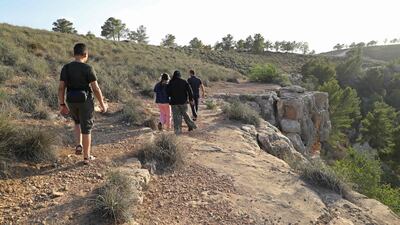
The park is now under threat due to climate change and human activity but authorities are hoping that the Unesco listing will help to protect its plant and animal life. -

Ashaafean park was first designated as a nature reserve under former strongman Muammar Qaddafi in 1978. -
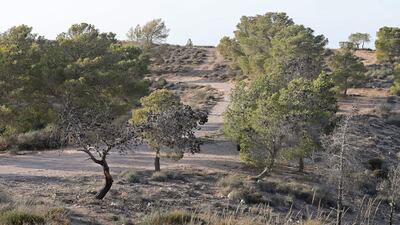
The 83,060-hectare biosphere reserve is home to about 350 plant species and has long been a sanctuary for rare or endangered species. -
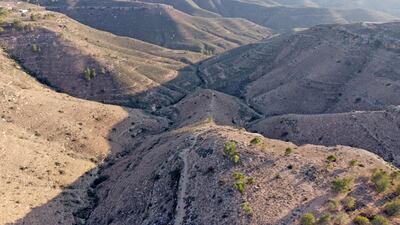
The park is in Libya's Nafusa mountain range and includes dry woodland, grassland and desert areas on the edge of the Sahara. -
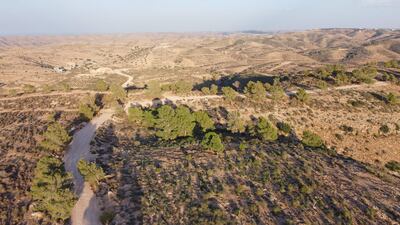
About 65,000 people live in the wider park area, with most of them making a living from traditional farming methods.



