


Leaving British ISIS suspects in refugee camps and stripping them of their citizenship rather than taking them back to the UK for trial could create a “breeding ground of terrorists tomorrow”, Conservative former chancellor Lord Norman Lamont has warned.
Lord Lamont told the government that it was “passing the buck”.
Parliament also heard that the decision to revoke the nationality of Shamima Begum, who ran off as a schoolgirl to join ISIS, was a form of capital punishment that has left her as “the breathing dead”.
Ms Begum was 15 when she travelled from Bethnal Green, east London, through Turkey and into territory controlled by the terrorist group in 2015.
Her British citizenship was revoked shortly after she was found in a Syrian refugee camp in February 2019.
Ms Begum has been locked in a legal battle ever since and last month lost her latest challenge against the decision to strip her of her British citizenship on national security grounds.
"If we continue to refuse citizenship and refuse to put on trial alleged UK terrorists here in this country, are we not just passing the buck to other countries?" Lord Lamont said as her case was raised in Parliament.
“If every country pursues the same policy, are we not just going to build up vast insecure camps full of potential terrorists — the breeding ground of terrorists tomorrow?”
Responding, Home Office minister Lord Simon Murray of Blidworth said Ms Begum’s citizenship had been taken by then home secretary Sajid Javid and this decision had been upheld by the Special Immigration Appeals Commission in February.
“I don’t agree with him that there is a risk of very large camps of people being accrued, who had been deprived of their nationality," Lord Murray said.
“In 2019, some 27 people were deprived of their nationality. In 2020 it was 10 and in 2021 it was eight.”
Militias who played a vital role in defeating ISIS - in pictures
-
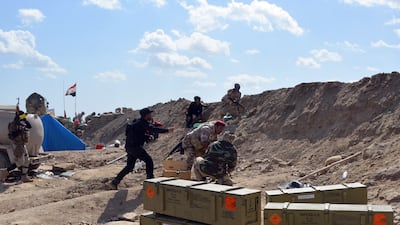
Iraqi government forces and allied militias take a position in the northern part of Diyala province as part of an assault to retake the city of Tikrit from ISIS, on March 2, 2015. All photos: AFP -
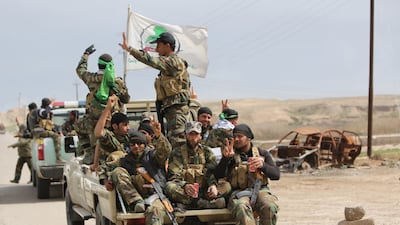
Members of the Iraqi paramilitary Popular Mobilisation units flash the 'V' for victory sign after regaining control of the village of Albu Ajil, near Tikrit, on March 9, 2015. -
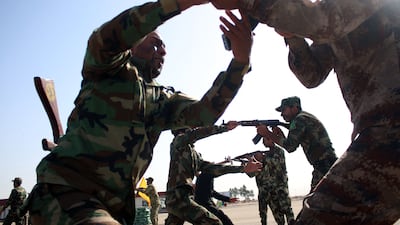
Fighters from a Popular Mobilisation unit take part in an exercise during their graduation ceremony in the southern Iraqi city of Basra, on April 9, 2015. -
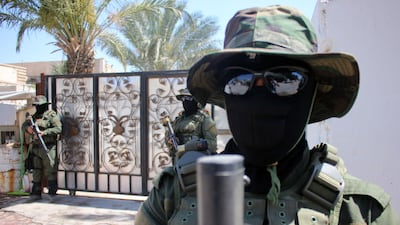
Iraqi fighters of the Shiite group Asaib Ahl Al Haq (The League of the Righteous) stand guard outside their headquarters on May 18, 2015, in the mainly Shiite southern city of Basra, as Shiite militias converged on Ramadi in a bid to recapture it from ISIS. -
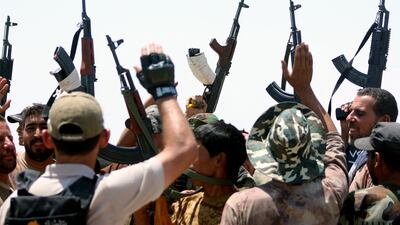
Iraqi government forces and members of the Popular Mobilisation units raise their weapons on the front line during battles with ISIS on the road leading to Saqlawiya, in Iraq's Anbar province, on August 4, 2015. -
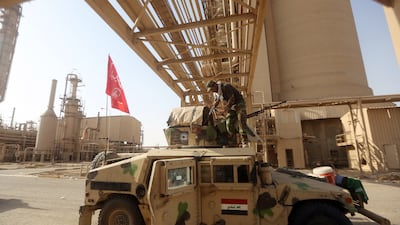
An Iraqi Shiite fighter cleans his weapon on his vehicle at the petrochemical plant in the town of Baiji, north of Tikrit, on October 16, 2015. -
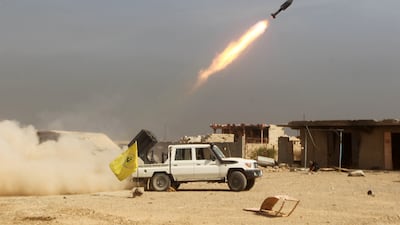
Iraqi Shiite fighters fire a rocket during a military operation against ISIS as they advance towards the centre of Baiji, about 200 kilometres north of Baghdad, on October 19, 2015. -
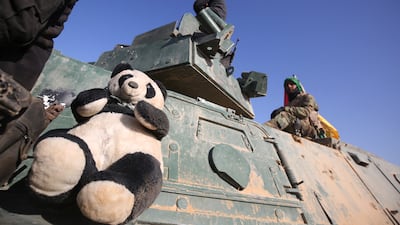
Iraqi Shiite fighters from the Hashed Al Shaabi paramilitaries advance in a desert area near the village of Tall Abtah, south-west of Mosul, on November 28, 2016, during a broad offensive by Iraq forces to retake Mosul from ISIS. -
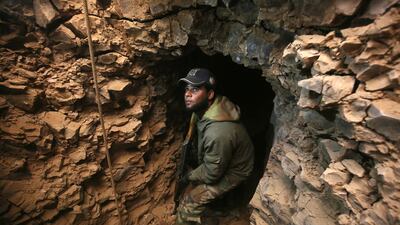
An Iraqi Shiite fighter from the Hashed Al Shaabi paramilitary forces inspects an underground tunnel in the town of Tal Abtah, south of Tal Afar, on December 10, 2016. -

Iraqi pro-government forces advance towards the Unesco-listed ancient city of Hatra, south-west of Mosul, during an offensive to retake the area from ISIS fighters, on April 26, 2017. -
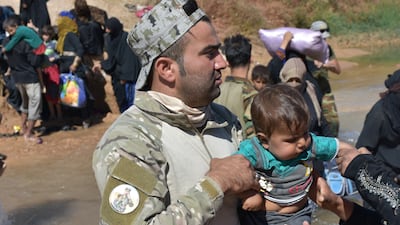
A fighter from the Hashed Al Sahaabi units helps displaced people who fled from battles to oust ISIS from Hawija cross a river in the area of Zarga, about 35km south-east of Kirkuk, on October 4, 2017. -
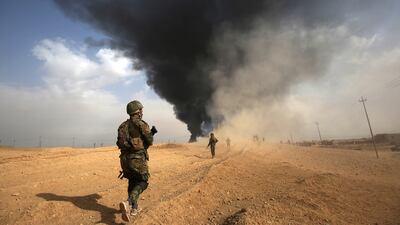
Iraqi forces advance towards the city of al-Qaim, in Iraq's western Anbar province near the Syrian border, as they fight against remnant pockets of ISIS forces, on November 3, 2017. -
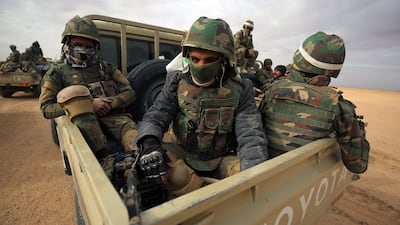
Iraqi forces ride in the back of pick-up trucks during the advance through Anbar province in the western desert bordering Syria, on November 25, 2017, to flush out remaining ISIS fighters in the region. -
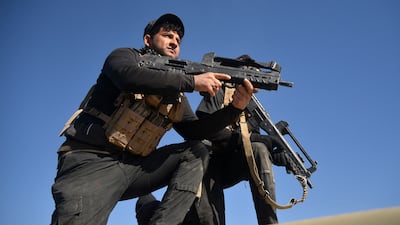
Members of the Iraqi forces and the Hashed Al Shaabi carry their firearms as they stand on an infanty-fighting vehicle near the Iraqi-Syrian border, about 80km west of the border town of al-Qaim, on December 9, 2017. -
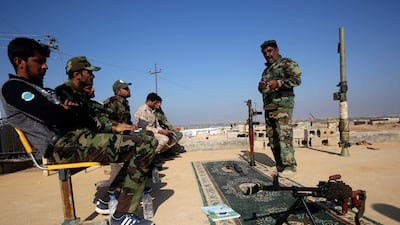
Abbas Hamza Hassan, a 56-year-old Iraqi fighter, is pictured on November 13, 2018 while training fellow Hashed members how to use weapons in the western Iraqi province of Anbar.


Labour's Lord Leslie Griffiths of Burry Port said: “Statelessness is a form of capital punishment in the sense that it deprives somebody of status forever, for the rest of their lives.
“Is that not just the breathing dead and shouldn’t we be opposed to it on moral grounds, and let circumstances dictate what happen to her if she were brought back?
“Leaving her where she is is surely inhumane.”
In reply, Lord Murray said: “Surely the principal interest and the principal duty of government is to keep the people safe.”
Earlier, he told peers the government was “pleased” the commission found in favour of it in Ms Begum’s appeal.
“It would be inappropriate to comment further given the potential for further legal proceedings," Lord Murray said.
"The government’s priority remains maintaining the safety and security of the United Kingdom.”
He had been responding to a question by the former archbishop of Canterbury Lord George Carey of Clifton, who said Ms Begum had been a child when she was “seduced by a perverted ideology” and was now stateless.
“What consideration has been given to her present situation as of today and did the minister’s response suggest that security fears trump our moral responsibilities?” the independent crossbencher said.
While declining to be drawn on Ms Begum’s case, Lord Murray said: “The power to deprive an individual of their British citizenship, as happened in this case, has existed in law for over 100 years.”
Liberal Democrat peer Baroness Lorely Burt of Solihull said: “Shamima Begum has ben variously described as a vulnerable, trafficked 15-year-old from Bethnal Green and an ex-ISIS recruiter.
"Isn’t the point though that she’s our vulnerable, trafficked girl or our ex-ISIS recruiter.
"Shouldn’t she be brought home to face the music in a British court of law?”
Lord Murray said: “The purpose of deprivation proceedings… is to protect the country in relation to issues of national security.”

