

Two British women who had their request for release denied by the UK government are facing indefinite detention in “appalling” conditions at a Syrian camp, the High Court has been told.
The two mothers, who can only be identified as C3 and C4, are bringing legal action against the foreign secretary in a bid to end the years-long “unlawful” detention of their families.
The women and their children are being detained in an overcrowded camp hit by disease, malnutrition, inadequate sanitation and abuse and violence by the Autonomous Administration of North and East Syria, judges overseeing a hearing in London were told.
Their legal team claims the women “have not been charged with any offence or subject to any form of legal process” and “are being detained indefinitely and arbitrarily” in a camp for people displaced following the defeat of so-called ISIS.
AANES and its military arm, the Syrian Democratic Forces, are “non-state actors” who worked closely with the UK and other allies to defeat the group, the court was told.
AANES does not want to continue to hold the detainees, believes they should be repatriated and has urged the UK to make an “official request” for their release, C3 and C4’s lawyers have alleged.
The Foreign, Commonwealth and Development Office said it previously declined to help with their repatriation “on national security grounds”, claiming the women had travelled “of their own volition” to join the so-called ISIS.
However the women’s legal team contends that the Kurdish authorities have told the UK government that C3 is “not an extremist and does not agree with the ideology of the ISIS”, and that C4 was coerced into travelling to Syria.
Miserable conditions at Al Hol camp in north-east Syria - in pictures
-
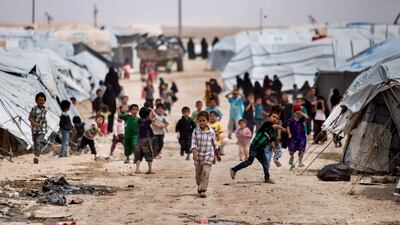
Al Hol camp in Al Hasakeh province, Syria, houses families of ISIS fighters. AP -

About 56,000 people, mostly women and children, live in crowded conditions in the camp. AFP -
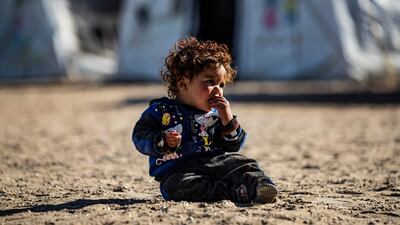
Many of its residents have been there since ISIS was defeated in Syria in 2019. AFP -
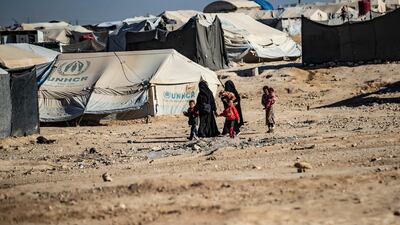
About 10,000 people at Al Hol are non-Arab foreign citizens, with the rest mostly from Syria and Iraq. AFP -
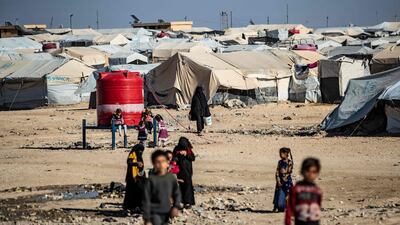
The Al Hol camp, which holds relatives of suspected ISIS group fighters. AFP -

UK charity Save the Children says 40,000 children from 60 countries live in dire conditions in Syria's Roj and Al Hol camps. AFP -
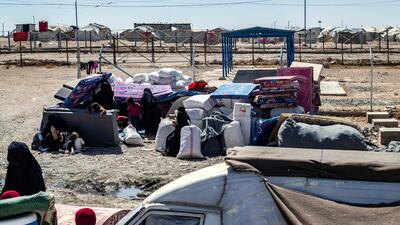
Families at Al Hol gather their belongings as they prepare to return home to Syria's northern Raqqa region. AFP -
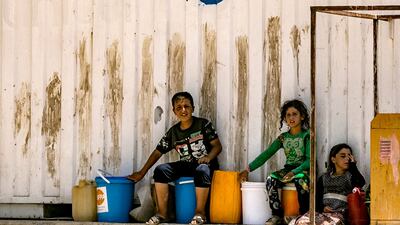
Two children die at the camp every week, Save the Children has said. AFP -
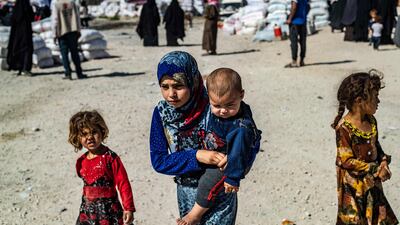
There have been reports of women in the camp being detained and tortured by ISIS supporters. AFP -
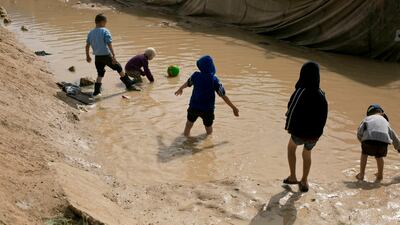
Children play in a mud puddle at Al Hol camp. AP


Lawyers for the foreign secretary – a role occupied by James Cleverly since September 6 – argued the UK has played no role in their detention and is under no legal obligation to provide assistance.
The two women are applying for “a writ for habeas corpus” – a Latin phrase meaning “you may have the body” – which requires a held person is brought before a court to examine the legality of their detention.
Dan Squires KC, representing the detainees, told the court on Tuesday: “Does the secretary of state have the power to bring the body here?
“Does the secretary of state have the power as a matter of fact to bring these women before this court? We say the answer (is) clearly he does.”
In written submissions, Mr Squires said there was “no plausible legal basis” for the women’s detention and that AANES had indicated that if it received a request for release it would provide “unconditional assistance and co-operation with the UK to hand over its citizens”.
It is the foreign secretary’s decision “that determines whether the (women) are released or remain detained”, Mr Squires said, adding that the minister has “sufficient de facto control” over their detention.
“To date the (foreign secretary) has, however, refused to request the (women’s) release,” Mr Squires said.
“As a consequence, the (women) remain detained, potentially indefinitely.”
“Conditions in the camp are appalling and represent a risk to the health and safety, and the lives, of those detained there,” added Mr Squires.
“Children and newborn babies have died in the camps suffering from pneumonia/hypothermia,” he added.
“There is overcrowding. Sanitation is inadequate, and conditions are squalid.
“The diet is poor and there are reports of malnutrition. Disease and ill health are rife and only the most rudimentary healthcare is available.”
Mr Squires said there were also “reports of guards shooting at women and children attempting to escape”, a risk of tent fires and “documented evidence of abuse and physical, sexual and other violence in the detention camps”.
Snow storm hits refugee camps in northern Syria - in pictures
-

An aerial view of the snow-covered Al Zaytoun camp near the city of Azaz in the northern countryside of Aleppo, where about 600 tents are set up. All photos: Moawia Atrash / The National -
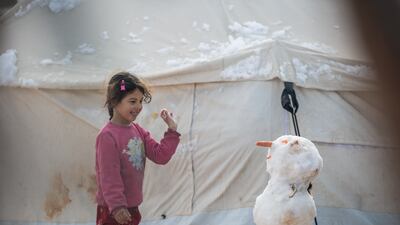
A child plays with a snowman at Al Zaytoun camp north of Aleppo. -

A tent in Al Zaytoun camp in northern Syria that was destroyed after large amounts of snow fell on it. -

A child stands next to his brother at the entrance to their tent as they look at the snow in the camp. -
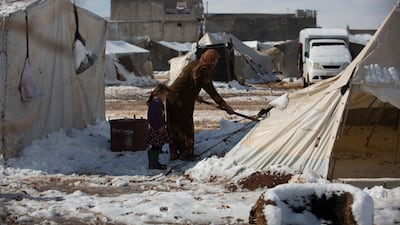
Khadija Suleiman, 50, displaced from the southern countryside of Aleppo, has 7 children. She said that before they were displaced, they did not feel winter because they had warm houses and money. But now that they live in tents, their financial situation is difficult and they are afraid of what is to come during the winter. -
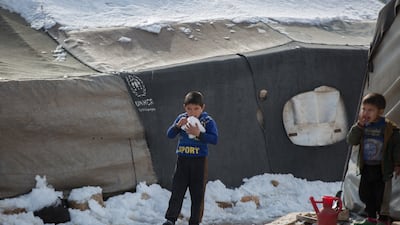
A displaced Syrian child walks near his tent and eats the snow that fell on the camp. -
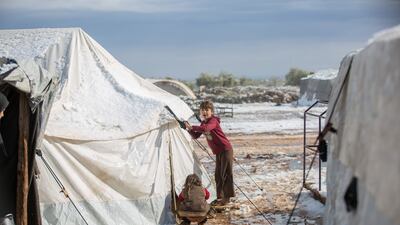
A child and her sister try to cover their tent, which was destroyed by a snowstorm in northern Syria. -
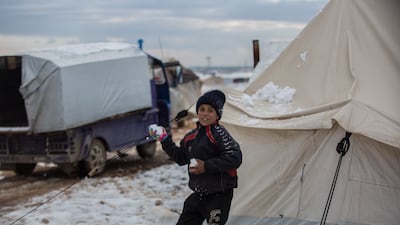
A child makes snowballs and throws them inside the camp. -
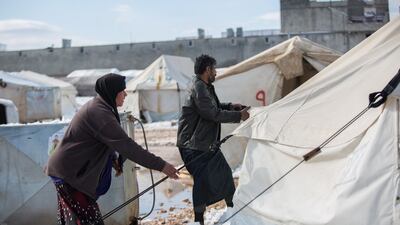
Bader Shehadeh, 50, displaced from rural Idlib, has 6 children. He said he has been displaced for 8 years and his family had been moving from one place to another before settling in the camp, where they suffer from the bitter cold. Before the war, he loved when it snowed, but now it is very difficult to deal with. -
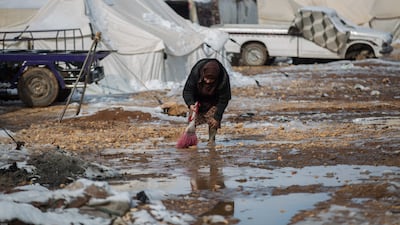
An elderly displaced Syrian woman removes snow in front of her tent. -
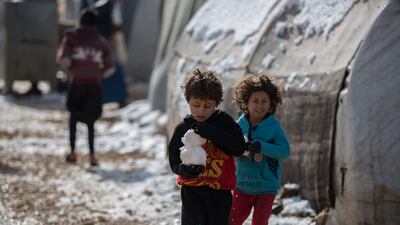
A displaced child carrying a piece of snow walks next to his sister through the camp in northern Syria. -
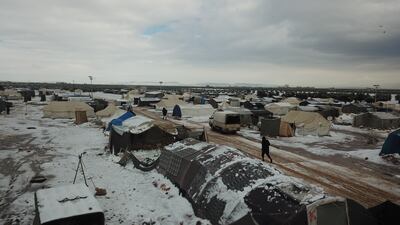
Aerial view of tents covered with snow in Al Zaytoun camp in the northern countryside of Aleppo. -
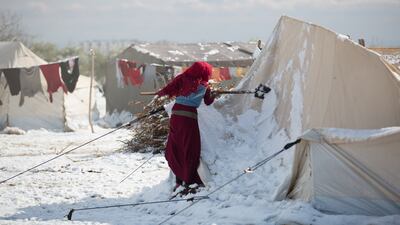
A Syrian woman scrapes snow from her destroyed tent after a snowstorm. -
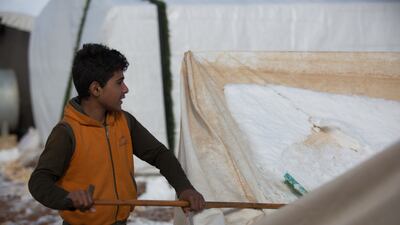
Faisal, 13, scrapes snow off his tent. He says he loves snow and playing in it with his friends, but the winter has become a tragedy for his family as their tent was destroyed in the storm. In his home village, he used to have fun when it snowed, but now he is sad.


Last year, the two women won an appeal at the UK’s Special Immigration Appeals Commission over the government’s earlier decision to strip them of their British nationality over an alleged national security risk, Mr Squires said.
SIAC concluded the women were not nationals of any other state apart from the UK, and removing their citizenship would render them “stateless”, the court was told.
Mr Squires said other countries – including Germany, Belgium, Denmark, Sweden and the US – had successfully requested the release of women from camps, while the UK “facilitated the return of lone children” since 2019.
The women’s potential return could be facilitated by human rights charity Reprieve if the UK refuses to make practical arrangements, Mr Squires said, adding that, other than making the “official request” the government only needed to provide “documentation needed to allow for their repatriation”.
He said that as British citizens they “have a right of abode in the UK” and “the right not to be exiled from the UK, and a right to return to this country”.
“If the government were to refuse to issue British citizens the travel documents they require in order to return to the UK, this would constitute a denial of their right to return to the UK, and constitute de facto exile from the UK,” Mr Squires said.
Sir James Eadie KC, leading the FCDO’s legal team, said in written submissions that the UK “does not have control” over the women as they “are not detained by the government, and the government has had no involvement in their capture or detention”.
He added that there was also “no basis for alleging that any civil wrong has been committed by the government under English law or international law”, meaning the “habeas corpus remedy” did not apply.
“There is no legal obligation on the secretary of state to provide consular assistance to British nationals abroad,” Sir James said, adding that requests to foreign authorities for the release of a detained British citizen were at the “discretion” of the minister.
The FCDO previously made “lawful and unchallenged” decisions that it was “unwilling to assist with the (women’s) repatriation on national security grounds”, he added.
Sir James said habeas corpus cannot be used “to bypass decision-making on issues of foreign relations and national security” and that it was “not the proper function” of the court to rule over the lawfulness of acts by AANES.
The hearing before Lord Justice Lewis and Mr Justice Jay is due to conclude on Wednesday, with a ruling expected at a later date.

