

Rebekah Vardy will have to pay about £1.5 million ($1.7 million) towards Coleen Rooney's legal costs after losing the "Wagatha Christie" High Court case she brought against her fellow footballer's wife.
Mrs Vardy, 40, lost her high-profile libel claim against Mrs Rooney, 36, in July when Mrs Justice Steyn ruled that Mrs Rooney's viral social media post accusing Mrs Vardy of leaking her private information to the press was "substantially true".
In an order made public on Tuesday, the judge ruled that Mrs Vardy should pay 90 per cent of Mrs Rooney's costs.
Mrs Rooney incurred total costs of more than £2 million, but £350,000 of those had already been racked up before the trial in May, so those were removed to produce a final figure of £1,667,860.
Mrs Vardy was ordered to pay £800,000 by 4pm on November 15.
She will also have to pay costs incurred by seven journalists who were potential witnesses but did not give evidence – apart from a portion of their costs, which Mrs Rooney has already been ordered to pay.
The judge ruled on various issues relating to Mrs Rooney's costs after receiving written legal arguments on behalf of both women.
Mrs Justice Steyn said Mrs Rooney has not yet produced a final total costs bill, and therefore the figures in the order were taken from a breakdown of her costs given in a statement from her solicitor.
The total amount of Mrs Vardy's legal costs is not known, but is expected to be of a similar level to those incurred by Mrs Rooney.
Wagatha Christie trial - in pictures
-
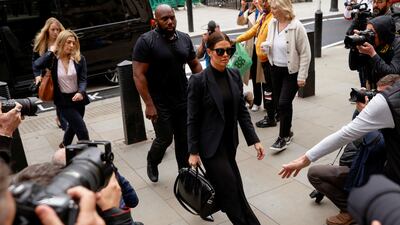
Rebekah Vardy arrives at the Royal Courts of Justice in London, where she is suing Coleen Rooney for libel over a social media post. Reuters -
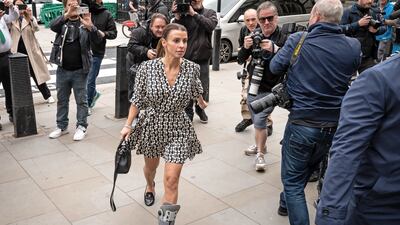
Coleen Rooney is followed by photographers as she arrives at court on the second day of the trial. PA -

Ms Rooney, 36, is the wife of former England footballer Wayne Rooney. EPA -

Ms Vardy, 40, is the wife of Leicester City and ex-England footballer Jamie Vardy. PA -
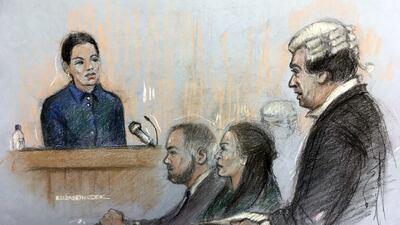
A court artist sketch of Ms Vardy giving evidence in what has become known as the 'Wagatha Christie' trial because of its origins in Ms Rooney's amateur detective efforts. PA -

Wayne Rooney arrives at court. AFP -
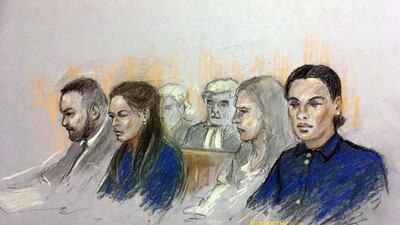
Coleen and Wayne Rooney, left, and Rebekah Vardy in the front row at court. PA -

Ms Rooney accused Ms Vardy of leaking 'false stories' about her to the media after she said she had carried out a months-long 'sting operation', leading her former friend to sue. AFP -

Ms Rooney was called 'Wagatha Christie' when she publicly claimed Ms Vardy shared three fake stories she had posted on her personal Instagram account with 'The Sun' newspaper. AFP -

Wayne Rooney and Jamie Vardy were England team-mates. The players' partners were known as Wags, short for wives and girlfriends. Getty


Mrs Justice Steyn said there were certain issues that arose during the week-long trial, which justified the reduction of 10 per cent in the amount Mrs Vardy has to pay, including Mrs Rooney's "weak" allegation that Mrs Vardy was one of the people behind The Sun's "Secret Wag" gossip column, and Mrs Rooney's unsuccessful public interest defence.
"However, given the defendant's success on the defence of truth which was at the heart of this claim, and the degree to which there was overlap between the issues, I consider that the appropriate reduction is 10 per cent," the judge said.
Mrs Vardy had argued for a reduction to 80 per cent, while Mrs Rooney contended there should be no reduction at all.
The final figure of costs Mrs Vardy has to pay may be reduced further if she does not agree to pay the total incurred by Mrs Rooney and, at a later date, a court considers some of those costs to have been unreasonable.
Mrs Justice Steyn also decided the costs should be assessed on an indemnity, rather than a standard basis – a decision which is more favourable to Mrs Rooney in terms of the amount of her legal bill she can recover.
The judge said she was "wholly unpersuaded" by arguments put forward by Mrs Rooney's legal team that she should do so because of Mrs Vardy's "approach to settlement" or interviews she has given since the ruling in July.
But the judge cited other issues, including her finding in the ruling that Mrs Vardy and her former agent Caroline Watt had "deliberately deleted or destroyed evidence".
She said in the order: "In my judgment, what takes this case out of the norm in a way which compels the conclusion that I should make an order for indemnity costs is that in my judgment following the trial I found that the claimant, and also her former agent, had deliberately deleted or destroyed evidence.
"Even if, as the claimant contends I should, I were to disregard the actions of the claimant's former agent on the basis that it was not put to the claimant that she procured the disposal of the phone and I made no such finding, the point remains that I found the claimant deliberately deleted or destroyed evidence.
"Such behaviour is outside the ordinary and reasonable conduct of proceedings. In all the circumstances, I consider it appropriate to order the claimant to pay costs on the indemnity basis."

