


Queen Elizabeth II dies - follow the latest news as the world mourns
Prince Harry chose to remember Queen Elizabeth II's "infectious smile" as he paid tribute to his late grandmother, thanking her for her "sound advice" and describing her as a "guiding compass".
In a statement released on Monday, which is understood to have been held back a day out of respect for the anniversary of the September 11 attacks in the US, the Duke of Sussex also said he wanted to honour his father at the start of his reign as King Charles III.
Referring to the queen as "Granny", he said it made him smile to know that she has been reunited with "grandpa", the late Duke of Edinburgh who died last year.
He also revealed that the Queen shared precious moments with his children just a few months before her death.
The prince described how the queen hugged Archie, three, and Lilibet, 15 months, likely when the family visited the UK in June to attend the queen’s platinum jubilee celebrations.
At the time, it was not known if the Sussexes had met privately with the queen during their stay at their Frogmore cottage home close to Windsor Castle.
“In celebrating the life of my grandmother, Her Majesty The Queen — and in mourning her loss ― we are all reminded of the guiding compass she was to so many in her commitment to service and duty," Harry said.
-
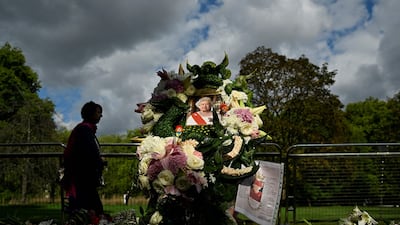
A tribute altar for Queen Elizabeth II in Green Park in London. AFP -
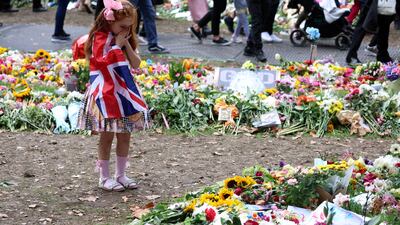
Ann Doran, 6, looks at floral tributes left in Green Park. Reuters -
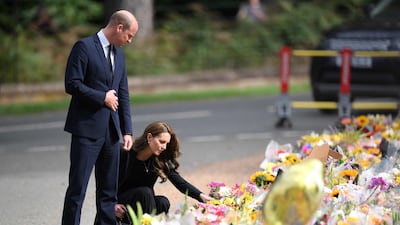
Britain's Prince William, Prince of Wales, and Catherine, Princess of Wales, look at floral tributes on the Sandringham Estate. AFP -
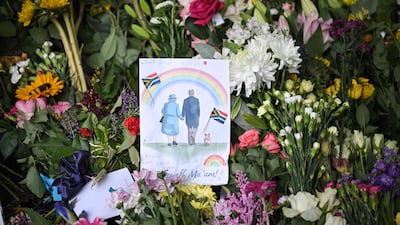
A drawing of the queen and her husband Prince Philip among flowers outside Windsor Castle. AFP -

Members of the public view floral tributes in Green Park, near Buckingham Palace. PA -
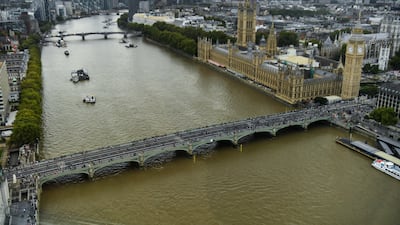
People queue on a bridge over the river Thames to pay their respects to Queen Elizabeth in London. Reuters -
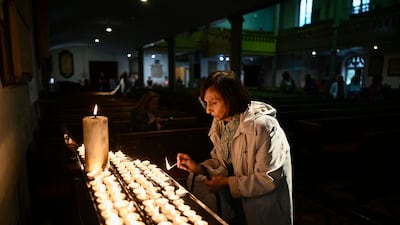
A member of the public lights a candle at Windsor Parish Church. AFP -
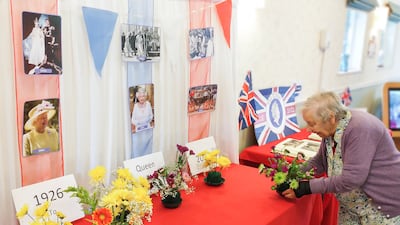
Residents of the Lawn care home in Alton, Hampshire, decorate an area with photographs of Queen Elizabeth, bunting and their own flower arrangements. PA -

Lloyd's of London chief John Neal delivers remarks honouring the life of Queen Elizabeth during a remembrance ceremony in the atrium of the company's offices in London. Getty Images -
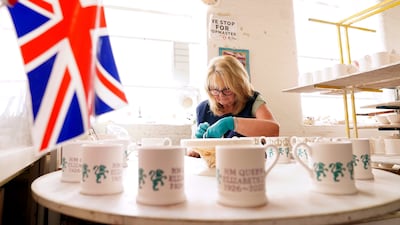
Joyce Buckley, a sponge decorator at Emma Bridgewater pottery in Stoke-on-Trent, Staffordshire, paints a commemorative mug. PA -
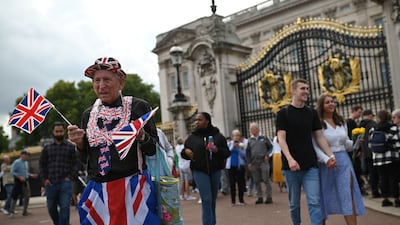
A royalist standing in front of Buckingham Palace. AFP -
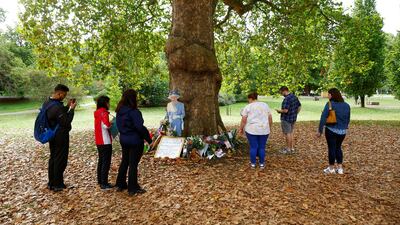
Tributes to Queen Elizabeth are viewed at St James's Park in London. Reuters -
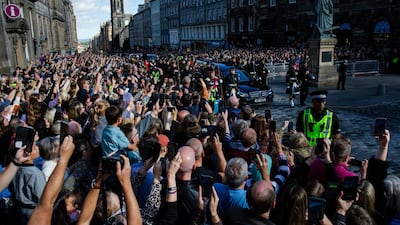
Crowds gather outside St. Giles' Cathedral on the Royal Mile as the queen's coffin passes in Edinburgh. Bloomberg -
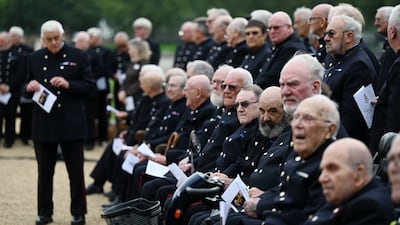
Chelsea Pensioners attend a Drumhead service of remembrance, with readings and prayers, in London. Getty Images -
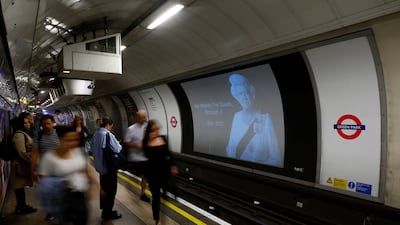
An image of Queen Elizabeth at Green Park Tube station. Reuters -
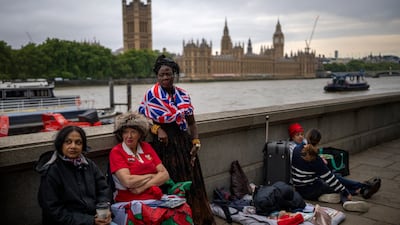
Vanessa, Anne and Grace, from left to right, wait opposite the Palace of Westminster to be first in line bidding farewell to Queen Elizabeth in London. AP -
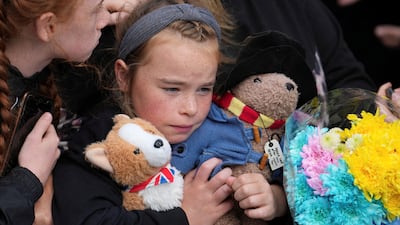
A young girl holds Paddington Bear and Corgi stuffed toys while waiting to watch the procession of Queen Elizabeth's coffin from the Palace of Holyroodhouse to the Royal Mile in Edinburgh. Reuters -
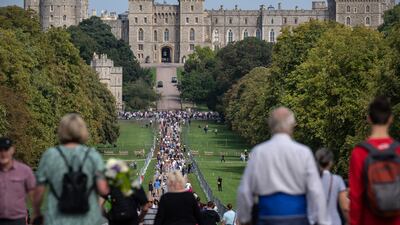
Well-wishers outside Windsor Castle. Getty Images -
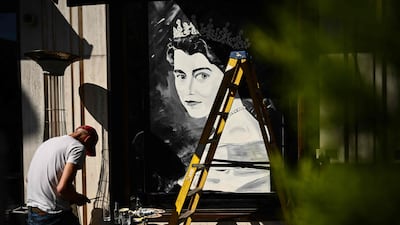
Lloyd Smith paints a portrait of Queen Elizabeth in London. AFP -
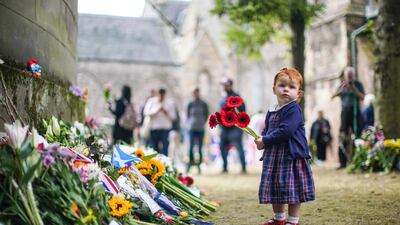
A child lays flowers outside the Palace of Holyroodhouse in Edinburgh. AP -
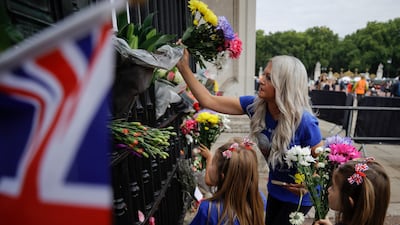
A family leaves flowers outside Buckingham Palace. EPA -
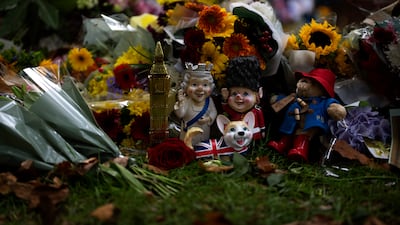
Flowers and tributes, including sunflowers and a Paddington Bear, are left for Queen Elizabeth at the Green Park memorial in London. AP -
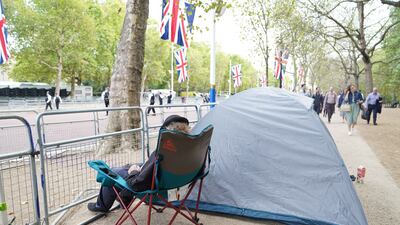
People start to camp on The Mall ahead of Queen Elizabeth's coffin being taken from Buckingham Palace on Wednesday afternoon by procession on a Gun Carriage to the Palace of Westminster. PA -
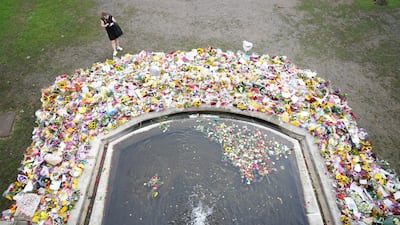
Flowers left in St James's Park, London. PA -
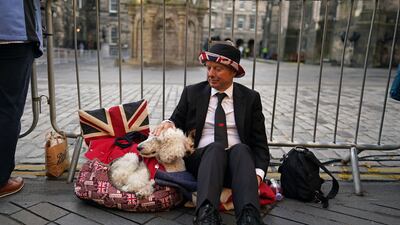
A man with his dog arrive early as they wait to view the cortege carrying the coffin of Queen Elizabeth in Edinburgh. Getty Images -
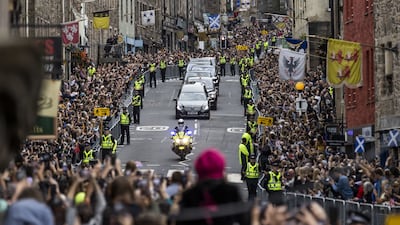
Members of the public gather on the Royal Mile in Edinburgh to watch the hearse carrying the coffin of Queen Elizabeth to the Palace of Holyroodhouse. PA -

Crowds watch as the hearse continues its journey to the Palace of Holyroodhouse from Balmoral. PA -
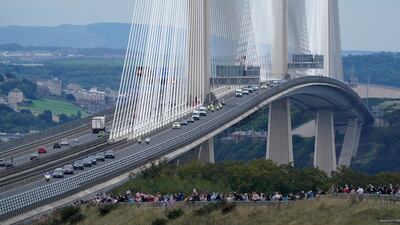
The hearse passing over Queensferry Crossing on its way to Edinburgh. PA -

Flowers left at the Sandringham Estate, one of the queen's residences. EPA -
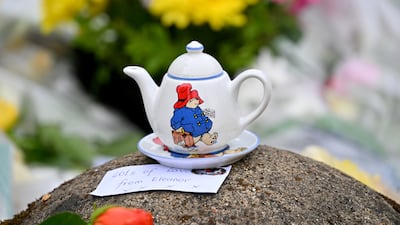
A Paddington Bear teapot at the Sandringham Estate. EPA -
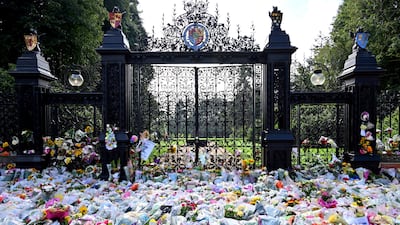
Flowers left at the gates of the Sandringham Estate. EPA -

Flowers, cards and messages left in St James's Park in London. EPA -
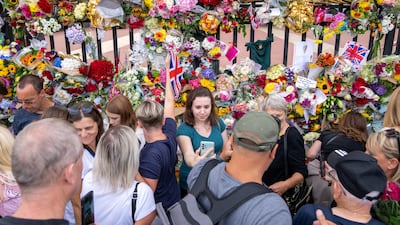
People lay flowers at Buckingham Palace in London. Reuters


“She was globally admired and respected. Her unwavering grace and dignity remained true throughout her life and now her everlasting legacy.
“Let us echo the words she spoke after the passing of her husband, Prince Philip, words which can bring comfort to all of us now: ‘Life, of course, consists of final partings as well as first meetings.'”
He added: “Granny, while this final parting brings us great sadness, I am forever grateful for all of our first meetings ―from my earliest childhood memories with you, to meeting you for the first time as my Commander-in-Chief, to the first moment you met my darling wife and hugged your beloved great-grandchildren.
“I cherish these times shared with you, and the many other special moments in between. You are already sorely missed, not just by us, but by the world over.
“And as it comes to first meetings, we now honour my father in his new role as King Charles III. Thank you for your commitment to service. Thank you for your sound advice.
“Thank you for your infectious smile. We, too, smile knowing that you and grandpa are reunited now, and both together in peace.”
The queen and Duke of Edinburgh saw Archie at Windsor Castle a few days after he was born in May 2019 but it was thought the Queen had not held Lilibet, who was born last June.
Her great-granddaughter was named after her – taking her childhood nickname.
-
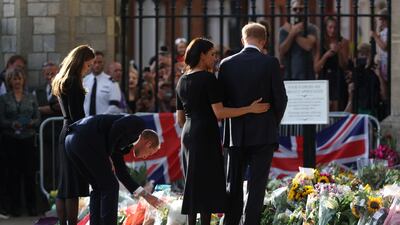
Britain's William, Prince of Wales, second left, his wife Catherine, Princess of Wales, left, along with Prince Harry and his wife Meghan, the Duchess of Sussex, look at floral tributes as they walk outside Windsor Castle. Reuters -
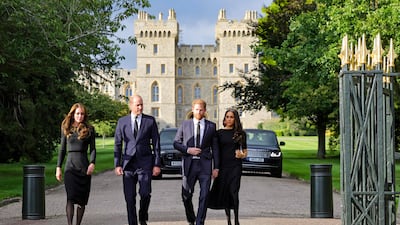
Left to right: The Duchess of Cambridge, Prince William, Prince Harry and the Duchess of Sussex at Windsor Castle. AFP -
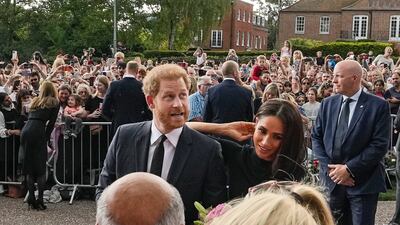
The royals meet people outside Windsor Castle. AP -
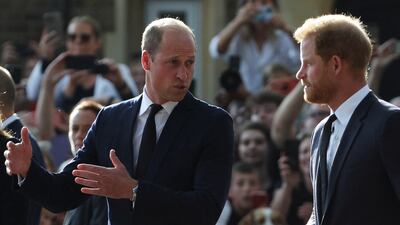
Walking together outside Windsor Castle. Reuters -
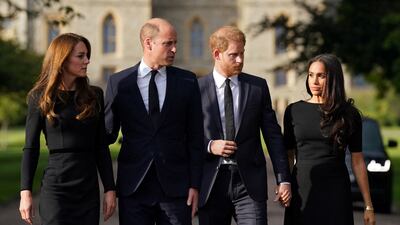
Prince Harry and his wife Meghan are staying at Frogmore Cottage on the Windsor estate, just a stone's throw from Prince William and his wife Kate's new home, Adelaide Cottage. PA -
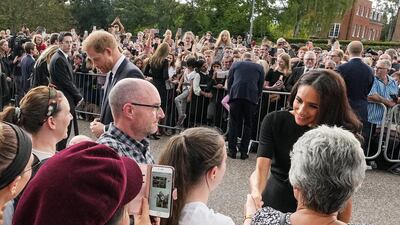
The royals speak and shake hands with different sides of the cheering crowds. AP -
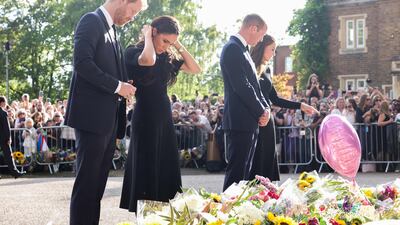
A pause to look at floral tributes laid by members of the public on the Long Walk at Windsor Castle. AFP -

Prince Harry points at a floral tribute. Reuters -

In his first speech as king on Friday, Charles, 73, spoke of his love for his second son and daughter-in-law. AP -
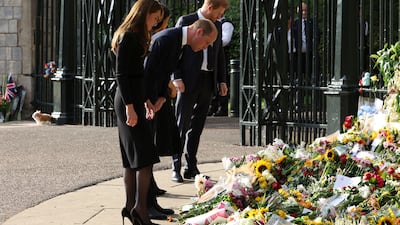
The two couples had last been seen together at the Commonwealth Day service at Westminster Abbey in 2020. Reuters


The statement came two days after the duke and his wife Meghan, the Duchess of Sussex, joined the new Prince and Princess of Wales at Windsor Castle on Saturday.
The princes have a well-documented troubled relationship but the death of their grandmother saw the pair shelve their differences when, with their wives, they viewed floral tributes left to the late queen.
It is understood Prince William invited his brother to join them in meeting well-wishers outside the castle as an “important show of unity”.
Two years have passed since the four were together side by side in public, during the 2020 Commonwealth Day church service. On Saturday, they appeared at ease driving off together with William at the wheel of a Range Rover after their walkabout lasted a little more than 40 minutes.
During their walkabout, the Duchess of Cambridge told children who had gathered to lay flowers that her son, Prince Louis, had responded to the death of the queen by saying: "At least granny is with great grandpa now."

