


The British royal family spent £102.4 million ($124.3m) in the last financial year — an increase of 17 per cent on the previous 12 months, the latest accounts show.
Records for the 2021-2022 financial year published on Thursday show that £86.6 million of this sum came from the British taxpayer.
This was through the Sovereign Grant — a single payment that Queen Elizabeth II receives annually from the British government.
Much of the remainder of the royal outlay — £14.6m — came from the Sovereign Grant Reserve. These are funds the monarchy has deposited with the government’s banking service until required.
The overall spend was £14.9m higher than the total of £87.5m for the financial year to the end of March 2021.
Spending included £4.5m on travel, plus a significant chunk towards maintaining royal properties. The cost of a 10-year renovation of Buckingham Palace — the queen’s main London residence — rose sharply from £14.4m to £63.9m, the accounts show.
The UK royals own about 30 residences.
These include Buckingham Palace, Kensington Palace, St James’s Palace and Clarence House in London, Windsor Castle and Frogmore House in Berkshire, south-east England, Balmoral Castle, in Aberdeenshire, north-east Scotland, and Sandringham House in Norfolk, eastern England.
Housekeeping and hospitality came to £1.3m, utilities £3.2m and payroll costs £23.7m.
The publishing of the figures sparked renewed calls for a slimmed-down British monarchy, which would drastically reduce the royals' use of taxpayers’ cash.
Campaign group Republic, which wants to see the monarch replaced by an elected head of state, condemned the increase in spending.
“As always, while the rest of us face a cost-of-living crisis and continued squeezes on public services, the royals walk off with hundreds of millions of pounds of taxpayers’ money,” chief executive Graham Smith said.
“We need to put the monarchy on a proper budgetary footing, just like any other public body. We need to slash that budget down to below £10 million, and only fund what’s required for the functions of the head of state,” he said.
Sir Michael Stevens, the queen’s treasurer who is known as Keeper of the Privy Purse, outlined the challenges facing Buckingham Palace after the Covid-19 pandemic and rising inflation.
He said the Sovereign Grant, the single taxpayer-funded payment allocated to the queen each year by the UK government, was not expected to rise from £86.3m in the near future. The package comprises £51.8m for the core funding of the family and an additional £34.5m for the Buckingham Palace renovation.
“Looking ahead, with the Sovereign Grant likely to be flat in the next couple of years, inflationary pressures on operating costs and our ability to grow supplementary income likely to be constrained in the short term, we will continue to deliver against our plans and manage these impacts through our own efforts and efficiencies,” Sir Michael said.
The royal family’s supplementary income from the Royal Collection Trust was £9.9m in 2021/2022, which is 50 per cent below pre-pandemic levels, with the figure not expected to rebound for another two or three years.
Economy drives within the royal household include a pay and recruitment freeze, and a watchful eye on energy use as the cost of power escalates.
A senior royal source said: “Not only are we looking at consumption, but also we have an eye on — in terms of the cost of living — one of the big increases that is coming and is happening now, utilities.
“So we’re looking very much at how we can be innovative in reducing consumption and consequentially, as a by-product, reducing costs as well to ensure that we can live within and operate within the funding envelope that we are anticipating.”
Another source described Prince Charles as taking a very close interest in how inflation and the cost-of-living problems were affecting people — particularly the Duchy of Cornwall’s tenants — and their welfare. Revenue from the Duchy, a private estate encompassing 53,000 hectares of land in 23 counties, mostly in the south-west of England, are passed to the Prince of Wales and his wife Camilla and used to fund the royals’ public, charitable and private activities.
The Prince of Wales has spent time with farmers “sitting around the farmhouse table” discussing the challenges while visiting Duchy districts to work out ways to help them, the source said.
“He wants to hear from them, what is their lived experience, so we can see what we can do to try to help them, support them along the way because to roll the question into a wider point about the living crisis, the family are extremely conscious of this ― the Prince of Wales is paying very close attention to this indeed,” the source said.
The representative was keen to stress that the heir to the throne and the Duchess of Cornwall had shown support for vulnerable communities through their engagements, including trips to high streets where the retail sector is struggling.
The Prince’s Trust has worked for many years to help young people with skills to find employment and the source said that making sure they are “best equipped to get the best jobs they can” will be “the best insulation against these economic shocks when they come”.
Queen Elizabeth II in pictures
-
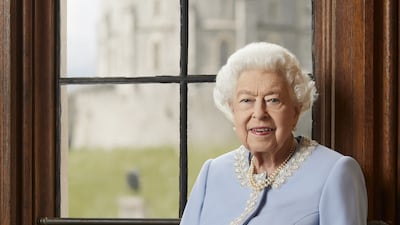
The most recent official portrait of Queen Elizabeth II, at Windsor Castle, was for her platinum jubilee. The image is part of the Platinum Jubilee: The Queen's Coronation exhibition, on view at Windsor Castle until September 26. Photo: Ranald Mackechnie -
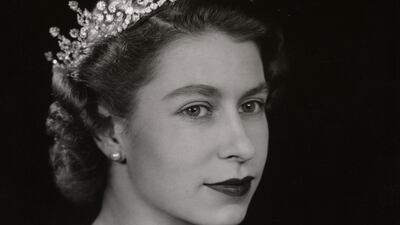
This portrait, issued by the Royal Collection Trust, was taken by photographer Dorothy Wilding in 1952, and is featured in the Platinum Jubilee: The Queen's Accession exhibition, on view at Buckingham Palace until October 2. Photo: Royal Collection Trust -

This portrait of Queen Elizabeth by British artist Lucian Freud was finished in 2001 and caused an outcry. The image is a part of the Platinum Jubilee: The Queen's Coronation exhibition. Reuters -
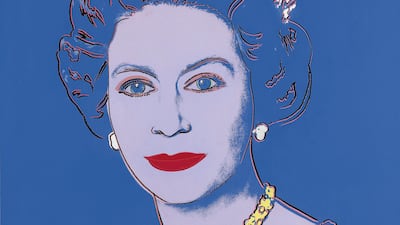
The monarch was featured in Andy Warhol's 'Reigning Queens' series of portraits created in 1985. The pop art print, although not officially commissioned, was later brought into the Royal Collection. The image is a part of Platinum Jubilee: The Queen's Coronation exhibition. Photo: Royal Collection Trust -
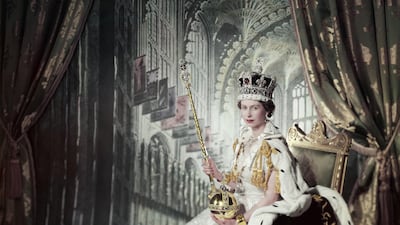
This image of Queen Elizabeth II on her Coronation Day on June 2, 1953, was taken by royal photographer Cecil Beaton, and remains one of the most famous portraits of the monarch. The image is a part of the Platinum Jubilee: The Queen's Coronation exhibition. Photo: Royal Collection Trust -
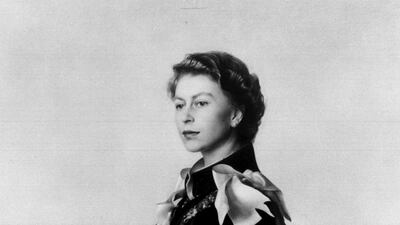
The portrait of Queen Elizabeth II painted by Pietro Annigoni, was finished in 1956 and commissioned by the Fishmongers Company in the City of London. The image is a part of the Platinum Jubilee: The Queen's Coronation exhibition. PA -
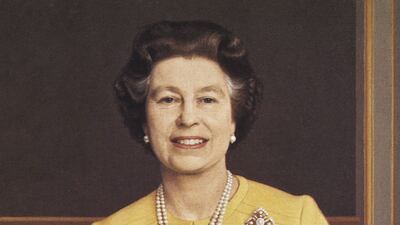
Michael Leonard's portrait of Queen Elizabeth II was painted for her 60th birthday, and commissioned by 'Reader's Digest'. The image is a part of the Platinum Jubilee: The Queen's Coronation exhibition. Photo: Reader's Digest / Shutterstock -

Nigerian artist Chinwe Chukwuogo-Roy painted this portrait of Queen Elizabeth II, which was commissioned by the Commonwealth to mark her 2002 golden jubilee on March 10, 2002. The image is a part of the Platinum Jubilee: The Queen's Coronation exhibition. Photo: Royal Collection Trust -
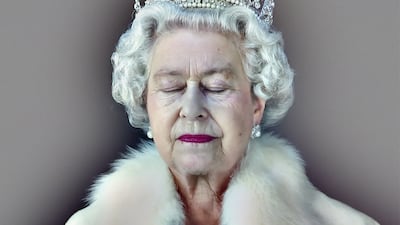
Artist Chris Levine made headlines with his controversial portrait titled 'Lightness of Being', which shows the queen with her eyes closed. The image is a part of the Platinum Jubilee: The Queen's Coronation exhibition. Photo: Royal Collection Trust -
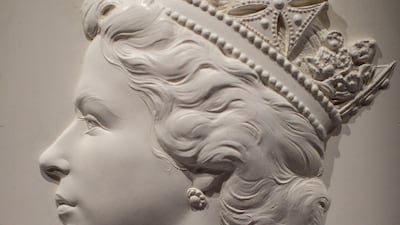
The 1963 plaster cast known as the 'Dressed Head' by Arnold Machin, provided the portrait of Queen Elizabeth II to be used on British stamps from 1967. The image is a part of the Platinum Jubilee: The Queen's Coronation exhibition. Getty Images -
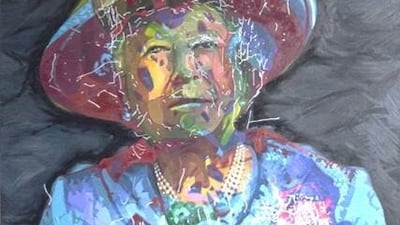
This recent portrait of the monarch titled 'Algorithm Queen', was painted by an ultra-realistic humanoid robot artist called Ai-Da Robot for the platinum jubilee. -
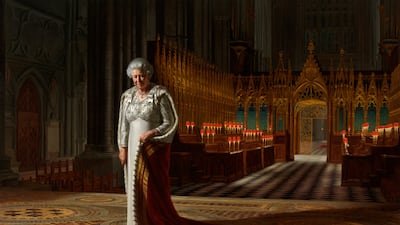
Ralph Heimans's portrait of Queen Elizabeth II was commissioned to mark her 60 years on the throne and hung in the Chapter House of Westminster Abbey. The image is a part of the Platinum Jubilee: The Queen's Coronation exhibition. Photo: Dean and Chapter of Westminster / AFP



