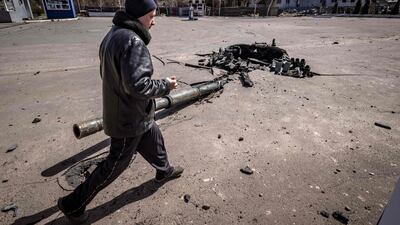
Ukrainian soldiers sit on an armoured vehicle in the city of Severodonetsk, in the Donbas region, on April 7. AFP

Mother of UK soldier in Ukraine ‘detained by Russians’ calls for his release


  • English
  • Arabic

Live updates: follow the latest news on Russia-Ukraine

The family of a British soldier allegedly captured by Russian forces while fighting in the Ukrainian resistance have begged Vladimir Putin to “treat him with humanity”.

Images on Russian television appeared to show prisoner of war Aiden Aslin, 28, originally from Nottinghamshire, being led around in handcuffs with a cut on his forehead.

Days earlier, comments posted on his Twitter account, which is being run by a friend while he is fighting with the Ukrainian marines, said he had “no choice but to surrender to Russian forces”.

Footage shared on social media apparently showing Mr Aslin in captivity was allegedly broadcast on Russian state-controlled television channel RT, which was recently taken off air in the UK by broadcasting regulator Ofcom amid concerns it was peddling Kremlin propaganda.

Twitter said last week it would prohibit posts by governments and state-linked accounts that show prisoners of war captured during fighting in Ukraine.

Speaking dispassionately and slowly, in broken sentences, he says: “I fought in beginning, Ukraine was good side.

“But then eventually I see they don’t make right decisions that would end war.”

Mr Aslin enlisted in the Ukrainian army in 2018 and has previously fought against ISIS in Syria for Kurdish militia known as the People’s Protection Units, or YPG.

One of his British former YPG colleagues, Macer Gifford, said on Friday he was now being “used for propaganda” by the Russians.

His mother, Ang Wood, called on the Kremlin to treat her son as a prisoner of war in accordance with international rules, and for the British government to “take Putin down”.

Ms Wood told The Telegraph: “He called me and said they have no weapons left to fight.

“I love my son, he is my hero. They put up one hell of a fight. Boris (Johnson) needs to take Putin down.”

She said she recognised her son from images released in Russia due to his distinctive tattoos.

“It’s Aiden, I can’t deny it. It’s him,” she said.

“I’m in bits. My son will be scared just as we are.

“I now hold Vladimir Putin to the terms of the Geneva Convention. Aiden is a serving member of the Ukrainian armed forces and as such is a prisoner of war and must be treated with humanity.

“It already looks like he has been beaten up. It is time now for the British Government to get involved and help secure Aiden’s release.”

His grandmother, Pamela Hall, said she had expected her grandson would die fighting if “the worst came to the worst”.

She told the BBC: “Obviously I didn’t want that, I wanted the war to end and for him to go home to his fiancee.

“I think all the guys should be treated as prisoners of war according to the Geneva Convention; I appreciate it’s opposing forces, but they’re all human beings.

“We are all just hoping and praying for his safety.”

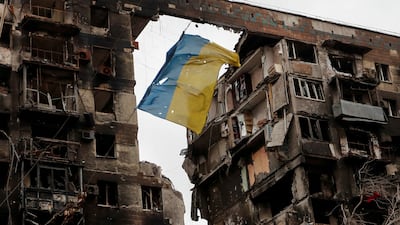
Mr Aslin had been defending the beseiged city of Mariupol with his unit during heavy fighting in recent weeks.

But after 48 days, he said he had to surrender.

“We have no food and no ammunition,” a post on his Twitter account read.

“It’s been a pleasure everyone – I hope this war ends soon.”

It is understood the Foreign, Commonwealth and Development Office is still working to verify the reports of Mr Aslin’s capture and that its ability to provide consular services in Ukraine is severely limited due to the conflict.

But officials expect any detainees to be treated “in accordance with international law”.

TOURNAMENT INFO

Women’s World Twenty20 Qualifier

Jul 3- 14, in the Netherlands
The top two teams will qualify to play at the World T20 in the West Indies in November

UAE squad
Humaira Tasneem (captain), Chamani Seneviratne, Subha Srinivasan, Neha Sharma, Kavisha Kumari, Judit Cleetus, Chaya Mughal, Roopa Nagraj, Heena Hotchandani, Namita D’Souza, Ishani Senevirathne, Esha Oza, Nisha Ali, Udeni Kuruppuarachchi

Key figures in the life of the fort

Sheikh Dhiyab bin Isa (ruled 1761-1793) Built Qasr Al Hosn as a watchtower to guard over the only freshwater well on Abu Dhabi island.

Sheikh Shakhbut bin Dhiyab (ruled 1793-1816) Expanded the tower into a small fort and transferred his ruling place of residence from Liwa Oasis to the fort on the island.

Sheikh Tahnoon bin Shakhbut (ruled 1818-1833) Expanded Qasr Al Hosn further as Abu Dhabi grew from a small village of palm huts to a town of more than 5,000 inhabitants.

Sheikh Khalifa bin Shakhbut (ruled 1833-1845) Repaired and fortified the fort.

Sheikh Saeed bin Tahnoon (ruled 1845-1855) Turned Qasr Al Hosn into a strong two-storied structure.

Sheikh Zayed bin Khalifa (ruled 1855-1909) Expanded Qasr Al Hosn further to reflect the emirate's increasing prominence.

Sheikh Shakhbut bin Sultan (ruled 1928-1966) Renovated and enlarged Qasr Al Hosn, adding a decorative arch and two new villas.

Sheikh Zayed bin Sultan (ruled 1966-2004) Moved the royal residence to Al Manhal palace and kept his diwan at Qasr Al Hosn.

Sources: Jayanti Maitra, www.adach.ae

The%20specs%3A%202024%20Mercedes%20E200
%3Cp%3E%3Cstrong%3EEngine%3A%20%3C%2Fstrong%3E2.0-litre%20four-cyl%20turbo%20%2B%20mild%20hybrid%0D%3Cbr%3E%3Cstrong%3EPower%3A%20%3C%2Fstrong%3E204hp%20at%205%2C800rpm%20%2B23hp%20hybrid%20boost%0D%3Cbr%3E%3Cstrong%3ETorque%3A%20%3C%2Fstrong%3E320Nm%20at%201%2C800rpm%20%2B205Nm%20hybrid%20boost%0D%3Cbr%3E%3Cstrong%3ETransmission%3A%20%3C%2Fstrong%3E9-speed%20auto%0D%3Cbr%3E%3Cstrong%3EFuel%20consumption%3A%20%3C%2Fstrong%3E7.3L%2F100km%0D%3Cbr%3E%3Cstrong%3EOn%20sale%3A%20%3C%2Fstrong%3ENovember%2FDecember%0D%3Cbr%3E%3Cstrong%3EPrice%3A%20%3C%2Fstrong%3EFrom%20Dh205%2C000%20(estimate)%3C%2Fp%3E%0A

Mercer, the investment consulting arm of US services company Marsh & McLennan, expects its wealth division to at least double its assets under management (AUM) in the Middle East as wealth in the region continues to grow despite economic headwinds, a company official said.

Mercer Wealth, which globally has $160 billion in AUM, plans to boost its AUM in the region to $2-$3bn in the next 2-3 years from the present $1bn, said Yasir AbuShaban, a Dubai-based principal with Mercer Wealth.

Within the next two to three years, we are looking at reaching $2 to $3 billion as a conservative estimate and we do see an opportunity to do so,” said Mr AbuShaban.

Mercer does not directly make investments, but allocates clients’ money they have discretion to, to professional asset managers. They also provide advice to clients.

“We have buying power. We can negotiate on their (client’s) behalf with asset managers to provide them lower fees than they otherwise would have to get on their own,” he added.

Mercer Wealth’s clients include sovereign wealth funds, family offices, and insurance companies among others.

From its office in Dubai, Mercer also looks after Africa, India and Turkey, where they also see opportunity for growth.

Wealth creation in Middle East and Africa (MEA) grew 8.5 per cent to $8.1 trillion last year from $7.5tn in 2015, higher than last year’s global average of 6 per cent and the second-highest growth in a region after Asia-Pacific which grew 9.9 per cent, according to consultancy Boston Consulting Group (BCG). In the region, where wealth grew just 1.9 per cent in 2015 compared with 2014, a pickup in oil prices has helped in wealth generation.

BCG is forecasting MEA wealth will rise to $12tn by 2021, growing at an annual average of 8 per cent.

Drivers of wealth generation in the region will be split evenly between new wealth creation and growth of performance of existing assets, according to BCG.

Another general trend in the region is clients’ looking for a comprehensive approach to investing, according to Mr AbuShaban.

“Institutional investors or some of the families are seeing a slowdown in the available capital they have to invest and in that sense they are looking at optimizing the way they manage their portfolios and making sure they are not investing haphazardly and different parts of their investment are working together,” said Mr AbuShaban.

Some clients also have a higher appetite for risk, given the low interest-rate environment that does not provide enough yield for some institutional investors. These clients are keen to invest in illiquid assets, such as private equity and infrastructure.

“What we have seen is a desire for higher returns in what has been a low-return environment specifically in various fixed income or bonds,” he said.

“In this environment, we have seen a de facto increase in the risk that clients are taking in things like illiquid investments, private equity investments, infrastructure and private debt, those kind of investments were higher illiquidity results in incrementally higher returns.”

The Abu Dhabi Investment Authority, one of the largest sovereign wealth funds, said in its 2016 report that has gradually increased its exposure in direct private equity and private credit transactions, mainly in Asian markets and especially in China and India. The authority’s private equity department focused on structured equities owing to “their defensive characteristics.”

Starring: Jamie Foxx, Angela Bassett, Tina Fey

Directed by: Pete Doctor

Rating: 4 stars

What is blockchain?

Blockchain is a form of distributed ledger technology, a digital system in which data is recorded across multiple places at the same time. Unlike traditional databases, DLTs have no central administrator or centralised data storage. They are transparent because the data is visible and, because they are automatically replicated and impossible to be tampered with, they are secure.

The main difference between blockchain and other forms of DLT is the way data is stored as ‘blocks’ – new transactions are added to the existing ‘chain’ of past transactions, hence the name ‘blockchain’. It is impossible to delete or modify information on the chain due to the replication of blocks across various locations.

Blockchain is mostly associated with cryptocurrency Bitcoin. Due to the inability to tamper with transactions, advocates say this makes the currency more secure and safer than traditional systems. It is maintained by a network of people referred to as ‘miners’, who receive rewards for solving complex mathematical equations that enable transactions to go through.

However, one of the major problems that has come to light has been the presence of illicit material buried in the Bitcoin blockchain, linking it to the dark web.

Other blockchain platforms can offer things like smart contracts, which are automatically implemented when specific conditions from all interested parties are reached, cutting the time involved and the risk of mistakes. Another use could be storing medical records, as patients can be confident their information cannot be changed. The technology can also be used in supply chains, voting and has the potential to used for storing property records.

The biog

Age: 35

Inspiration: Wife and kids 

Favourite book: Changes all the time but my new favourite is Thinking, Fast and Slow  by Daniel Kahneman

Best Travel Destination: Bora Bora , French Polynesia 

Favourite run: Jabel Hafeet, I also enjoy running the 30km loop in Al Wathba cycling track

Tributes from the UAE's personal finance community

• Sebastien Aguilar, who heads SimplyFI.org, a non-profit community where people learn to invest Bogleheads’ style

“It is thanks to Jack Bogle’s work that this community exists and thanks to his work that many investors now get the full benefits of long term, buy and hold stock market investing.

Compared to the industry, investing using the common sense approach of a Boglehead saves a lot in costs and guarantees higher returns than the average actively managed fund over the long term. 

From a personal perspective, learning how to invest using Bogle’s approach was a turning point in my life. I quickly realised there was no point chasing returns and paying expensive advisers or platforms. Once money is taken care off, you can work on what truly matters, such as family, relationships or other projects. I owe Jack Bogle for that.”

• Sam Instone, director of financial advisory firm AES International

"Thought to have saved investors over a trillion dollars, Jack Bogle’s ideas truly changed the way the world invests. Shaped by his own personal experiences, his philosophy and basic rules for investors challenged the status quo of a self-interested global industry and eventually prevailed.  Loathed by many big companies and commission-driven salespeople, he has transformed the way well-informed investors and professional advisers make decisions."

• Demos Kyprianou, a board member of SimplyFI.org

"Jack Bogle for me was a rebel, a revolutionary who changed the industry and gave the little guy like me, a chance. He was also a mentor who inspired me to take the leap and take control of my own finances."

• Steve Cronin, founder of DeadSimpleSaving.com

"Obsessed with reducing fees, Jack Bogle structured Vanguard to be owned by its clients – that way the priority would be fee minimisation for clients rather than profit maximisation for the company.

His real gift to us has been the ability to invest in the stock market (buy and hold for the long term) rather than be forced to speculate (try to make profits in the shorter term) or even worse have others speculate on our behalf.

Bogle has given countless investors the ability to get on with their life while growing their wealth in the background as fast as possible. The Financial Independence movement would barely exist without this."

• Zach Holz, who blogs about financial independence at The Happiest Teacher

"Jack Bogle was one of the greatest forces for wealth democratisation the world has ever seen.  He allowed people a way to be free from the parasitical "financial advisers" whose only real concern are the fat fees they get from selling you over-complicated "products" that have caused millions of people all around the world real harm.”

• Tuan Phan, a board member of SimplyFI.org

"In an industry that’s synonymous with greed, Jack Bogle was a lone wolf, swimming against the tide. When others were incentivised to enrich themselves, he stood by the ‘fiduciary’ standard – something that is badly needed in the financial industry of the UAE."

Updated: April 15, 2022, 10:04 AM