


The co-leader of the autonomous, Kurdish-led administration in north-east Syria has urged the UK government to put pressure on the Turkish government to end its “negative role” inside Syria.
Elham Ahmed also spoke about the changing relationship with the coalition forces that helped defeat ISIS territorially – one that has shifted from fighting the terrorist group, to building a foundation and infrastructure in the region that would prevent extremism flourishing.
Turkey has backed Syrian rebel groups, currently in the north-west of the country, and sent in its military to attack and contain the Kurdish-led fighters in north-eastern Syria that function as the armed forces of Ms Ahmed’s administration. Ankara regards the Kurdish troops, the People's Defence Units (YPG), as an extension of the banned Kurdistan Workers' Party (PKK).
Turkey and the UK are both members of Nato. The UK, US and other countries allied with Kurdish-led forces to defeat ISIS territorially in north-east Syria in 2019.
The Turkish-backed rebels in Syria have been accused of carrying out a litany of human rights abuses on Kurdish civilians and soldiers.
“We want for the UK Government to play an important role, a positive role inside Syria and to put pressure on Turkey to give up its negativity and interference with Syrian policy and Syrian territory,” Ms Ahmed, president of the executive committee of the Syrian Democratic Council, told The National during a visit to London.
“We and the UK armed forces fought together against ISIS in one front and we gave thousands of martyrs. We have thousands of injured fighters. Today Turkey is attacking us. We agreed a ceasefire, but Turkey is using drones on a daily basis.”
Ms Ahmed accused Turkey of wanting to occupy and destroy the Kurdish people and its territory, citing how her home city of Afrin in north-west Syria is currently controlled by Turkish-backed Syrian rebels.
She said her administration wanted and hoped the UK could play a positive role in Syria, and “support the Kurdish cause and to finish ISIS”.
The message on Turkey is similar to the one Ms Ahmed gave on a visit to London nearly two years ago when Turkish-backed groups launched an assault on north-east Syria after the then-US president Donald Trump announced American troops would be withdrawn from the region – only to partially walk back that decision.
Ms Ahmed said the US had promised they have no intention to leave north-east Syria and said their presence was important to maintaining stability, as the search for a political settlement to the Syrian civil war continues.
While the view on Turkey has not changed, the relationship with the Coalition forces has in some ways shifted since 2019.
-
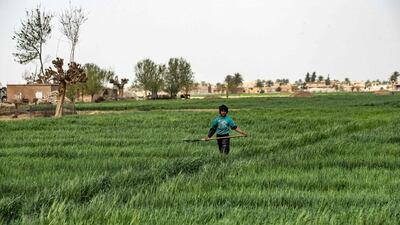
A boy crosses a field on the outskirts of the village of Baghouz in Deir Ezzor province, northern Syria. There, two years ago, ISIS made its stand and was defeated. In March 2019, Baghouz was a wasteland and roads were dotted with ruined homes. Now, residents have started to renovate buildings, children have returned to schools, and businesses have reopened. AFP -
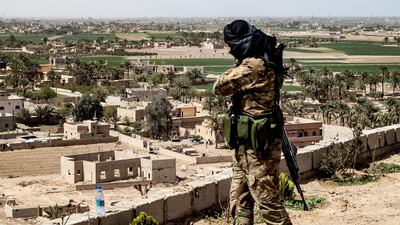
A fighter with the Kurdish-led Syrian Democratic Forces stands guard on a hilltop overlooking the village of Baghouz in Deir Ezzor province, northern Syria, where two years ago ISIS made its last stand and was defeated. AFP -
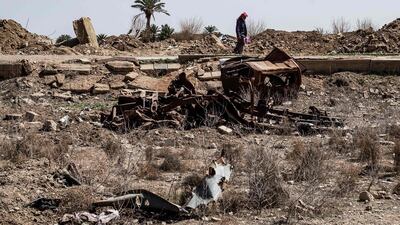
Twisted metal wreckage left behind by heavy fighting in the village of Baghouz in the Deir Ezzor province of northern Syria reminds villagers and visitors that two years ago ISIS was defeated. AFP -
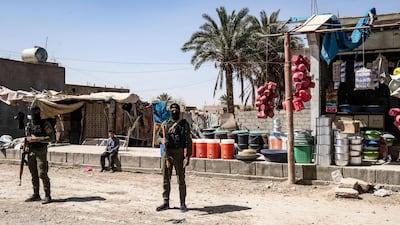
Fighters of the Kurdish-led Syrian Democratic Forces stand guard in the streets of Baghouz, a village in Deir Ezzor province of northern Syria. Two years ago after the defeat of ISIS there, homes and buildings are being renovated, children are back in school, and a handful of businesses has reopened. AFP -
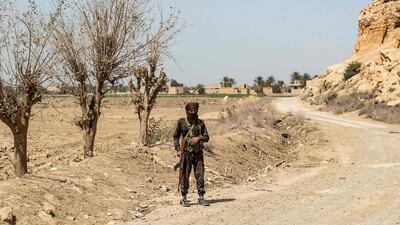
A fighter with the Kurdish-led Syrian Democratic Forces stands guard on a road on the outskirts of Baghouz village in Deir Ezzor province, northern Syria. Two years ago, ISIS made its last stand in Baghouz and was defeated. AFP -
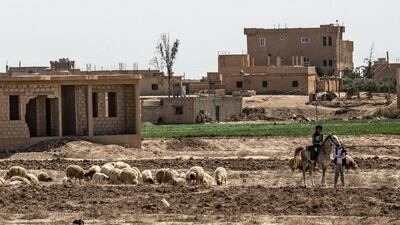
Young shepherds work near buildings damaged by fighting in the village of Baghouz in Syria's northern Deir Ezzor province. AFP -
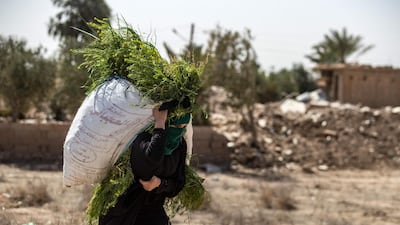
A woman carries freshly harvested grass for cattle as passes buildings damaged by fighting in ISIS' last stand, which took place in the village of Baghouz in Syria's northern Deir Ezzor province, two years ago. AFP -

A shepherd is pictured in fields on the outskirts of the village of Baghouz in Deir Ezzor province, northern Syria, two years after ISIS made its last stand there. AFP -
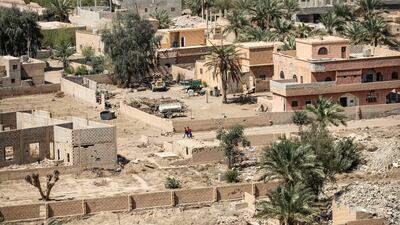
A partial view of the village of Baghouz in Syria's northern Deir Ezzor province. Fighters from ISIS were purged from the village two years ago, but the twisted metal wreckage of war remains on the streets, some homes still lie empty and ISIS graffiti can still be seen on walls. AFP -
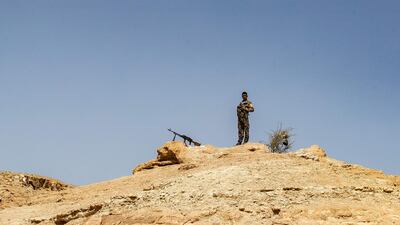
A fighter with the Kurdish-led Syrian Democratic Forces stands guard on a hilltop overlooking the Syria village of Baghouz, where two years ago ISIS made its last stand and was defeated. AFP -
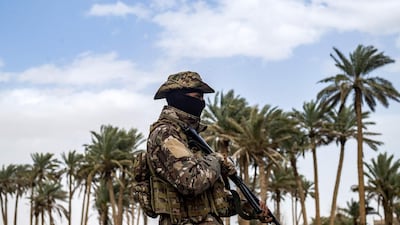
A fighter with the Kurdish-led Syrian Democratic Forces (SDF) stands guard near a field on the outskirts of the village of Baghouz in Syria's northern Deir Ezzor province, where two years ago ISIS was defeated. AFP -
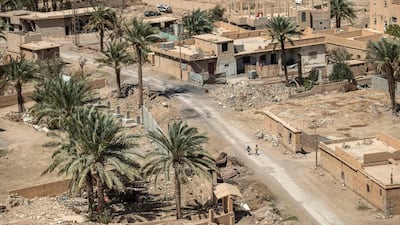
ISIS was defeated at Baghouz in northern Syria two years ago. Today, residents have started to repair buildings, children have returned to school, and businesses have reopened. AFP -
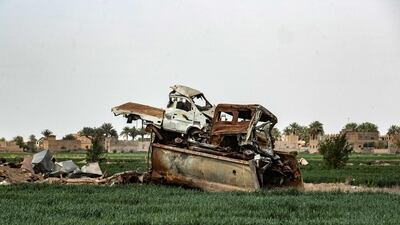
Wreckage left behind by fighting marks the defeat of ISIS in the northern Syrian village of Baghouz. AFP


“For example, before we used to fight on against ISIS. But now, our perspective and our work with the coalition is to build an infrastructure for Syria, in order for people to not be radicalised or not join ISIS.”
She said support would be welcomed to help build institutions in the region, giving solar, water, agriculture and electricity projects as examples. Conversations are under way with some companies, Ms Ahmed said, although she gave no further details.
Tens of thousands of ISIS fighters and their families, of which a sizeable minority are not from Syria or Iraq, are being held in camps in north-east Syria. While a handful of foreign fighters – including prominent ISIS members El Shafee El Sheikh and Alexander Kotey – have been removed, most governments have washed their hands of their citizens and refused to repatriate them.
The local authorities have repeatedly told of the security threat the extremists in the camps hold.
Ms Ahmed’s administration has, with foreign support, plans to rebuild additional and more secure detention centres. The population continues to increase because of newborn babies.
“There is no indication that they want their people back,” she said.
The hope is that, by running deradicalisation programmes, the threat level will decrease and perhaps countries may even be prepared to take their citizens back.
“What can we do? They don't accept their people, but we at least want to open centres and to rehabilite them. Possibly in the future, maybe they will accept [them back] but at least we achieved something.”

