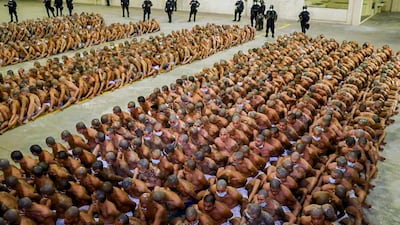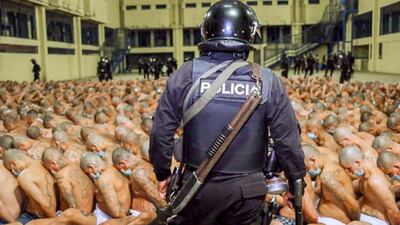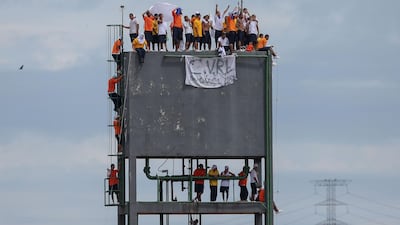
Seven guards at a Brazilian prison were briefly taken hostage on Saturday during an inmate uprising stoked by fears of a coronavirus outbreak.
Authorities at Puraquequara prison in Manaus, a state capital deep in the Amazon rainforest where public services have been overwhelmed by the pandemic, said 10 guards and five inmates were injured in the incident, which officials said was a distraction from a foiled escape attempt.
There were no reports of any fatalities.
Relatives of inmates said the incident was a response to poor conditions in the prison, including a lack of food, power and medical attention. Some said the spread of the virus in Manaus made the concerns of prisoners more urgent.
Officials did not respond to questions about fears of an outbreak in the prison. Two other prisons in the state of Amazonas confirmed cases of the virus, according to local prison authorities.
Inmates in various Latin American nations have risen up during the pandemic due to fears the virus would rip through the region's underfunded and overcrowded jails.
Late last month, inmates in Buenos Aires climbed to the roof of a jail and set fire to mattresses, saying they refused to die while locked up.
Nine inmates died in a prison riot in Peru last week.
Last Friday in Venezuela, at least 46 people died and 60 were injured in a riot at a prison in Portuguesa state, according to a rights group and an opposition lawmaker.
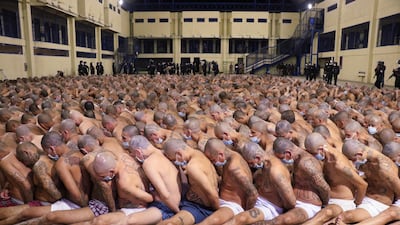
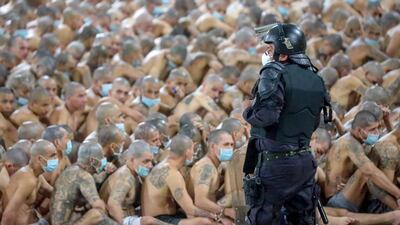
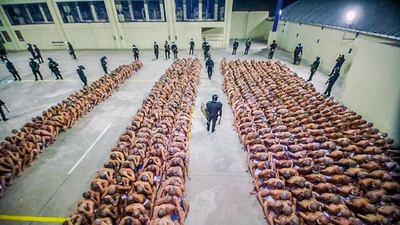
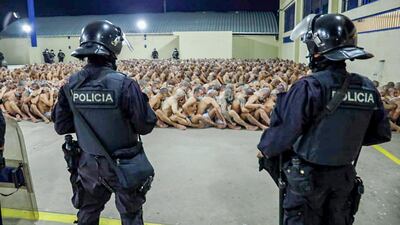
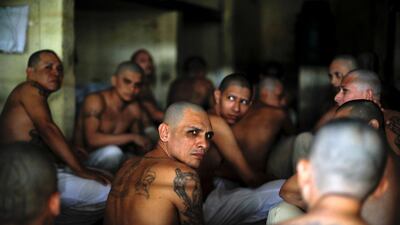
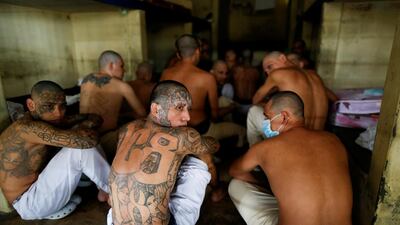
El Salvador prisons amid coronavirus
The violence at Puraquequara prison came as the virus outbreak overwhelms public services in Manaus, where patients who succumb to Covid-19 are buried mass graves and there are warnings of an imminent shortage of coffins.
Brazilian TV network GloboNews reported the country's national prison chaplaincy sent a formal complaint to the public defender's office in Manaus alleging that up to 300 inmates at the prison were sick, some with symptoms compatible with coronavirus cases.
According to the report, authorities denied there were cases of the virus inside the prison.
The chaplaincy, which is tied to the Catholic Church in Brazil, and state prison officials did not respond to requests for comment from Reuters on Saturday.
The public defender's office said it visited the prison in late March and the chaplaincy's complaint regarding an outbreak "was not confirmed".
However, the office said the possibility of the virus spreading among inmates was a concern and it was working to move vulnerable prisoners to house arrest where possible.
Violence is rife in Brazil's prisons, which are often controlled by people involved in organised crime.
Human rights groups call conditions medieval, with food scarce and cells so packed prisoners sometimes have no space to lie down.
In January 2017, almost 150 prisoners were killed as rival gangs battled each other in several prisons in northern and north-eastern Brazil.
In one particularly violent incident in Manaus in July last year, 57 inmates were killed, some of whom were decapitated and thrown over prison walls.
Last year, more than 50 inmates were strangled or stabbed to death as rival gangs battled each other in four Manaus jails.

How to protect yourself when air quality drops
Install an air filter in your home.
Close your windows and turn on the AC.
Shower or bath after being outside.
Wear a face mask.
Stay indoors when conditions are particularly poor.
If driving, turn your engine off when stationary.
More from Neighbourhood Watch:
How to play the stock market recovery in 2021?
If you are looking to build your long-term wealth in 2021 and beyond, the stock market is still the best place to do it as equities powered on despite the pandemic.
Investing in individual stocks is not for everyone and most private investors should stick to mutual funds and ETFs, but there are some thrilling opportunities for those who understand the risks.
Peter Garnry, head of equity strategy at Saxo Bank, says the 20 best-performing US and European stocks have delivered an average return year-to-date of 148 per cent, measured in local currency terms.
Online marketplace Etsy was the best performer with a return of 330.6 per cent, followed by communications software company Sinch (315.4 per cent), online supermarket HelloFresh (232.8 per cent) and fuel cells specialist NEL (191.7 per cent).
Mr Garnry says digital companies benefited from the lockdown, while green energy firms flew as efforts to combat climate change were ramped up, helped in part by the European Union’s green deal.
Electric car company Tesla would be on the list if it had been part of the S&P 500 Index, but it only joined on December 21. “Tesla has become one of the most valuable companies in the world this year as demand for electric vehicles has grown dramatically,” Mr Garnry says.
By contrast, the 20 worst-performing European stocks fell 54 per cent on average, with European banks hit by the economic fallout from the pandemic, while cruise liners and airline stocks suffered due to travel restrictions.
As demand for energy fell, the oil and gas industry had a tough year, too.
Mr Garnry says the biggest story this year was the “absolute crunch” in so-called value stocks, companies that trade at low valuations compared to their earnings and growth potential.
He says they are “heavily tilted towards financials, miners, energy, utilities and industrials, which have all been hit hard by the Covid-19 pandemic”. “The last year saw these cheap stocks become cheaper and expensive stocks have become more expensive.”
This has triggered excited talk about the “great value rotation” but Mr Garnry remains sceptical. “We need to see a breakout of interest rates combined with higher inflation before we join the crowd.”
Always remember that past performance is not a guarantee of future returns. Last year’s winners often turn out to be this year’s losers, and vice-versa.
Ferrari 12Cilindri specs
Engine: naturally aspirated 6.5-liter V12
Power: 819hp
Torque: 678Nm at 7,250rpm
Price: From Dh1,700,000
Available: Now
The specs
Engine: 2.0-litre 4cyl turbo
Power: 261hp at 5,500rpm
Torque: 405Nm at 1,750-3,500rpm
Transmission: 9-speed auto
Fuel consumption: 6.9L/100km
On sale: Now
Price: From Dh117,059
Who's who in Yemen conflict
Houthis: Iran-backed rebels who occupy Sanaa and run unrecognised government
Yemeni government: Exiled government in Aden led by eight-member Presidential Leadership Council
Southern Transitional Council: Faction in Yemeni government that seeks autonomy for the south
Habrish 'rebels': Tribal-backed forces feuding with STC over control of oil in government territory
THE 12 BREAKAWAY CLUBS
England
Arsenal, Chelsea, Liverpool, Manchester City, Manchester United, Tottenham Hotspur
Italy
AC Milan, Inter Milan, Juventus
Spain
Atletico Madrid, Barcelona, Real Madrid
'HIJRAH%3A%20IN%20THE%20FOOTSTEPS%20OF%20THE%20PROPHET'
%3Cp%3E%3Cstrong%3EEdited%20by%3A%3C%2Fstrong%3E%20Idries%20Trevathan%3Cbr%3E%3Cstrong%3EPages%3A%3C%2Fstrong%3E%20240%3Cbr%3E%3Cstrong%3EPublisher%3A%3C%2Fstrong%3E%20Hirmer%20Publishers%3Cbr%3E%3Cstrong%3EAvailable%3A%3C%2Fstrong%3E%20Now%3C%2Fp%3E%0A
The specs
Engine: 3.0-litre 6-cyl turbo
Power: 374hp at 5,500-6,500rpm
Torque: 500Nm from 1,900-5,000rpm
Transmission: 8-speed auto
Fuel consumption: 8.5L/100km
Price: from Dh285,000
On sale: from January 2022
The biog
Favourite hobby: I love to sing but I don’t get to sing as much nowadays sadly.
Favourite book: Anything by Sidney Sheldon.
Favourite movie: The Exorcist 2. It is a big thing in our family to sit around together and watch horror movies, I love watching them.
Favourite holiday destination: The favourite place I have been to is Florence, it is a beautiful city. My dream though has always been to visit Cyprus, I really want to go there.
More on Quran memorisation:
THE BIO: Mohammed Ashiq Ali
Proudest achievement: “I came to a new country and started this shop”
Favourite TV programme: the news
Favourite place in Dubai: Al Fahidi. “They started the metro in 2009 and I didn’t take it yet.”
Family: six sons in Dubai and a daughter in Faisalabad
RESULTS
%3Cp%3E%3Cstrong%3E6pm%3A%20Baniyas%20%E2%80%93%20Group%202%20(PA)%20Dh97%2C500%20(Dirt)%201%2C400m%3C%2Fstrong%3E%3Cbr%3EWinner%3A%20AF%20Alajaj%2C%20Tadhg%20O%E2%80%99Shea%20(jockey)%2C%20Ernst%20Oertel%20(trainer)%3C%2Fp%3E%0A%3Cp%3E%3Cstrong%3E6.35pm%3A%20The%20Pointe%20%E2%80%93%20Maiden%20(TB)%20Dh82%2C500%20(D)%201%2C200m%3C%2Fstrong%3E%3Cbr%3EWinner%3A%20Awasef%2C%20Pat%20Dobbs%2C%20Doug%20Watson%3C%2Fp%3E%0A%3Cp%3E%3Cstrong%3E7.10pm%3A%20Palm%20West%20Beach%20%E2%80%93%20Maiden%20(TB)%20Dh82%2C500%20(D)%201%2C400m%3C%2Fstrong%3E%3Cbr%3EWinner%3A%20Long%20Kiss%2C%20Jose%20da%20Silva%2C%20Antonio%20Cintra%3C%2Fp%3E%0A%3Cp%3E%3Cstrong%3E7.45pm%3A%20The%20View%20at%20the%20Palm%20%E2%80%93%20Handicap%20(TB)%20Dh87%2C500%20(D)%201%2C200m%3C%2Fstrong%3E%3Cbr%3EWinner%3A%20Ranaan%2C%20Tadhg%20O%E2%80%99Shea%2C%20Bhupat%20Seemar%3C%2Fp%3E%0A%3Cp%3E%3Cstrong%3E8.20pm%3A%20Nakheel%20%E2%80%93%20Handicap%20(TB)%20Dh105%2C000%20(D)%201%2C400m%3C%2Fstrong%3E%3Cbr%3EWinner%3A%20Raaeb%2C%20Antonio%20Fresu%2C%20Musabah%20Al%20Muhairi%3C%2Fp%3E%0A%3Cp%3E%3Cstrong%3E8.55pm%3A%20The%20Club%20%E2%80%93%20Handicap%20(TB)%20Dh95%2C000%20(D)%201%2C900m%3C%2Fstrong%3E%3Cbr%3EWinner%3A%20Qareeb%2C%20Sam%20Hitchcock%2C%20Doug%20Watson%3C%2Fp%3E%0A%3Cp%3E%3Cstrong%3E9.30pm%3A%20Palm%20Beach%20Towers%20%E2%80%93%20Handicap%20(TB)%20Dh87%2C500%20(D)%201%2C600m%3C%2Fstrong%3E%3Cbr%3EWinner%3A%20Falsehood%2C%20Adrie%20de%20Vries%2C%20Musabah%20Al%20Muhairi%3C%2Fp%3E%0A
Mercer, the investment consulting arm of US services company Marsh & McLennan, expects its wealth division to at least double its assets under management (AUM) in the Middle East as wealth in the region continues to grow despite economic headwinds, a company official said.
Mercer Wealth, which globally has $160 billion in AUM, plans to boost its AUM in the region to $2-$3bn in the next 2-3 years from the present $1bn, said Yasir AbuShaban, a Dubai-based principal with Mercer Wealth.
“Within the next two to three years, we are looking at reaching $2 to $3 billion as a conservative estimate and we do see an opportunity to do so,” said Mr AbuShaban.
Mercer does not directly make investments, but allocates clients’ money they have discretion to, to professional asset managers. They also provide advice to clients.
“We have buying power. We can negotiate on their (client’s) behalf with asset managers to provide them lower fees than they otherwise would have to get on their own,” he added.
Mercer Wealth’s clients include sovereign wealth funds, family offices, and insurance companies among others.
From its office in Dubai, Mercer also looks after Africa, India and Turkey, where they also see opportunity for growth.
Wealth creation in Middle East and Africa (MEA) grew 8.5 per cent to $8.1 trillion last year from $7.5tn in 2015, higher than last year’s global average of 6 per cent and the second-highest growth in a region after Asia-Pacific which grew 9.9 per cent, according to consultancy Boston Consulting Group (BCG). In the region, where wealth grew just 1.9 per cent in 2015 compared with 2014, a pickup in oil prices has helped in wealth generation.
BCG is forecasting MEA wealth will rise to $12tn by 2021, growing at an annual average of 8 per cent.
Drivers of wealth generation in the region will be split evenly between new wealth creation and growth of performance of existing assets, according to BCG.
Another general trend in the region is clients’ looking for a comprehensive approach to investing, according to Mr AbuShaban.
“Institutional investors or some of the families are seeing a slowdown in the available capital they have to invest and in that sense they are looking at optimizing the way they manage their portfolios and making sure they are not investing haphazardly and different parts of their investment are working together,” said Mr AbuShaban.
Some clients also have a higher appetite for risk, given the low interest-rate environment that does not provide enough yield for some institutional investors. These clients are keen to invest in illiquid assets, such as private equity and infrastructure.
“What we have seen is a desire for higher returns in what has been a low-return environment specifically in various fixed income or bonds,” he said.
“In this environment, we have seen a de facto increase in the risk that clients are taking in things like illiquid investments, private equity investments, infrastructure and private debt, those kind of investments were higher illiquidity results in incrementally higher returns.”
The Abu Dhabi Investment Authority, one of the largest sovereign wealth funds, said in its 2016 report that has gradually increased its exposure in direct private equity and private credit transactions, mainly in Asian markets and especially in China and India. The authority’s private equity department focused on structured equities owing to “their defensive characteristics.”
Notable cricketers and political careers
- India: Kirti Azad, Navjot Sidhu and Gautam Gambhir (rumoured)
- Pakistan: Imran Khan and Shahid Afridi (rumoured)
- Sri Lanka: Arjuna Ranatunga, Sanath Jayasuriya, Tillakaratne Dilshan (rumoured)
- Bangladesh (Mashrafe Mortaza)