Fighting cholitas in Bolivia – in pictures
-

A cholita wrestler incorporates a spectator into her performance during the ElectroPreste festival, which combines traditional and modern customs, in La Paz, Bolivia. Reuters -

Fighting cholitas grapple at ElectroPreste. The festival brings together young people from all departments of Bolivia and fuses elements of Bolivian Andean culture with electronic music. AFP -

A fighting cholita is caught in a hold by her opponent at ElectroPreste. The festival returned in 2022, after being suspended for two years due to the Covid-19 pandemic. AFP -
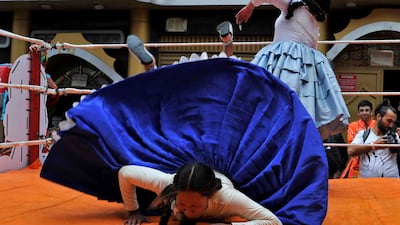
Cholita fighters perform in their signature outfit of pleated skirt, shawl and bowler hat – though this may be understandably discarded during a bout – with pigtail braids. AFP -

Many wrestlers are indigenous Aymara and Quechua women. Reuters -

A Cholita wrestler in full costume flexes her bicep. The fighters help tackle gender stereotypes and discrimination against indigenous people. Reuters -

Cholita wrestlers fight it out while Electropreste festival goers look on. Reuters -

About 20 years ago, female wrestlers were a side act in male wrestling show. But cholitas were so popular that they became the main attraction. Reuters -

A referee comes off worse trying to ensure cholitas abide by the rules, much to the crowd's amusement. Reuters -

The term cholita comes from a pejorative Spanish term for an indigenous person. It has been reclaimed and used proudly by Bolivia's indigenous population. Reuters -
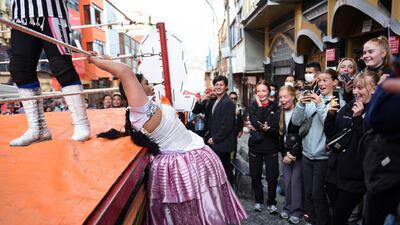
Cholitas are a popular attraction at Electropreste. Many of the women say wrestling brings a sense of empowerment. Reuters -

Anabel, a Cholita wrestler, holds her child after performing at ElectroPreste. Reuters


Most popular today

