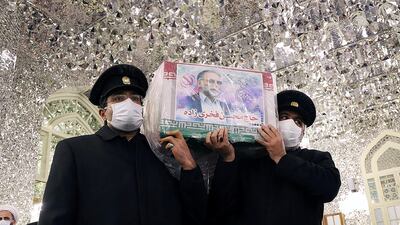
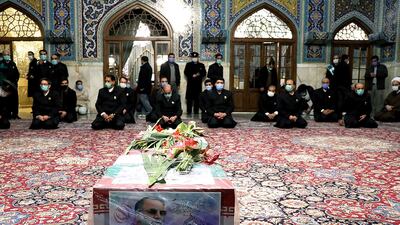
People pray over the flag draped coffin of Mohsen Fakhrizadeh. An opinion piece published by a hard-line Iranian newspaper has suggested that Iran must attack the Israeli port city of Haifa if Israel carried out the killing of a scientist. Saturday, Nov. 28, 2020, (Iranian Defence Ministry via AP)
People pray over the flag draped coffin of Mohsen Fakhrizadeh. An opinion piece published by a hard-line Iranian newspaper has suggested that Iran must attack the Israeli port city of Haifa if Israel

Tehran newspaper: Strike Haifa if Israel killed Iranian scientist


  • English
  • Arabic

An opinion piece in a hardline Iranian newspaper on Sunday suggested that Iran should attack the Israeli port city of Haifa if Israel killed a scientist linked to Tehran's disbanded military nuclear programme.

The Kayhan newspaper has long argued for aggressive retaliation for operations against Iran, but Sunday's opinion piece went further and suggested any assault be carried out in a way that destroys facilities and "also causes heavy human casualties".

Iran over the past decade has accused Israel of killing its nuclear scientists, but Israel has not commented on the assassination of Mohsen Fakhrizadeh on Friday.

Iranian officials blamed Israel for the latest attack, raising the spectre of renewed tensions that could engulf the region, including US troops stationed in the Arabian Gulf and beyond.

Kayhan published the piece by Iranian analyst Sadollah Zarei, who said that Iran's reactions to suspected Israeli air strikes that killed Revolutionary Guard forces in Syria did not go far enough to deter Israel.

Striking Haifa and killing a large number of people “will definitely lead to deterrence, because the United States and the Israeli regime and its agents are by no means ready to take part in a war and a military confrontation”, Mr Zarei wrote.

He said an assault on Haifa needed to be greater than Iran’s ballistic missile attack against US troops in Iraq after the US drone strike that killed a senior Iranian general in Iraq in January.

Haifa, on the Mediterranean Sea, has been threatened in the past by Iran and its proxy, the Lebanese militant group Hezbollah.

In February 2016, Hezbollah leader Hassan Nasrallah suggested striking Haifa’s stores of ammonium nitrate, a highly volatile fertiliser that fuelled the deadly Beirut port explosion in August that killed at least 192 people and wounded 6,500 others.

Nasrallah said the ability to strike the ammonium nitrate facility was like Hezbollah owning a nuclear bomb.

The statement led Israeli officials to hastily look at moving the ammonium nitrate out of striking distance.

While Kayhan is a small-circulation newspaper in Iran, its editor-in-chief, Shariatmadari, was appointed by supreme leader Ayatollah Ali Khamenei and has been described as an adviser to him in the past.

Threats in parliament

The Iranian parliament on Sunday held a closed-door hearing about the killing of Fakhrizadeh. Afterwards, Speaker Mohammad Baqer Ghalibaf said Iran’s enemies must be made to regret killing him.

"The criminal enemy does not regret it except with a strong reaction," he said on Iranian state radio.

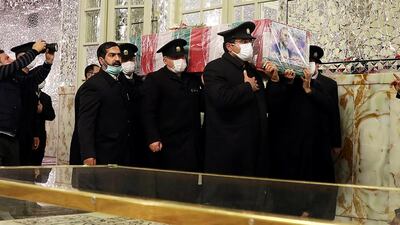
State television broadcast images of Fakhrizadeh’s casket as it was flown to Mashhad, a city in eastern Iran’ and home to the shrine of Imam Reza.

  • Servants of the holy shrine of Imam Reza carry the coffin of Iranian nuclear scientist Mohsen Fakhrizadeh in Mashhad, Iran. WANA via REUTERS
    Servants of the holy shrine of Imam Reza carry the coffin of Iranian nuclear scientist Mohsen Fakhrizadeh in Mashhad, Iran. WANA via REUTERS
  • Servants of the holy shrine of Imam Reza carry the coffin of Iranian nuclear scientist Mohsen Fakhrizadeh in Mashhad, Iran. WANA via REUTERS
    Servants of the holy shrine of Imam Reza carry the coffin of Iranian nuclear scientist Mohsen Fakhrizadeh in Mashhad, Iran. WANA via REUTERS
  • Servants of the holy shrine of Imam Reza carry the coffin of Iranian nuclear scientist Mohsen Fakhrizadeh in Mashhad, Iran. WANA via REUTERS
    Servants of the holy shrine of Imam Reza carry the coffin of Iranian nuclear scientist Mohsen Fakhrizadeh in Mashhad, Iran. WANA via REUTERS
  • Servants of the holy shrine of Imam Reza sit near the coffin of Iranian nuclear scientist Mohsen Fakhrizadeh in Mashhad, Iran. WANA via REUTERS
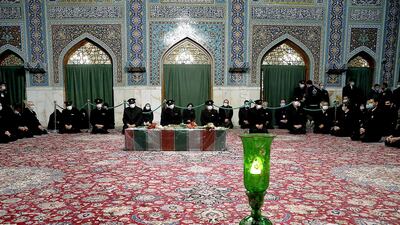
    Servants of the holy shrine of Imam Reza sit near the coffin of Iranian nuclear scientist Mohsen Fakhrizadeh in Mashhad, Iran. WANA via REUTERS
  • A coffin with an image of Iranian nuclear scientist Mohsen Fakhrizadeh, can be seen among the servants of the holy shrine of Imam Reza in Mashhad. WANA via REUTERS
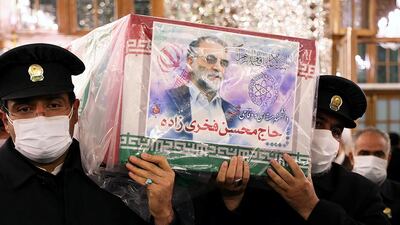
    A coffin with an image of Iranian nuclear scientist Mohsen Fakhrizadeh, can be seen among the servants of the holy shrine of Imam Reza in Mashhad. WANA via REUTERS
  • A coffin with an image of Iranian nuclear scientist Mohsen Fakhrizadeh, can be seen among the servants of the holy shrine of Imam Reza in Mashhad. WANA via REUTERS
    A coffin with an image of Iranian nuclear scientist Mohsen Fakhrizadeh, can be seen among the servants of the holy shrine of Imam Reza in Mashhad. WANA via REUTERS
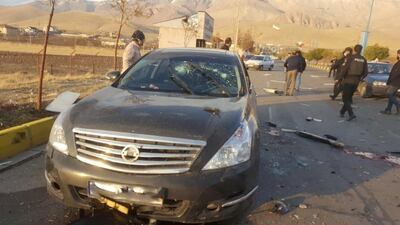
  • The scene of the attack that killed prominent Iranian scientist Mohsen Fakhrizadeh, outside Tehran. WANA via REUTERS
    The scene of the attack that killed prominent Iranian scientist Mohsen Fakhrizadeh, outside Tehran. WANA via REUTERS
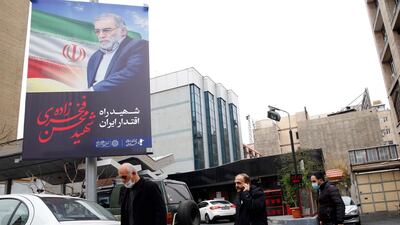
  • Iranians walk past next to a huge poster of Iranian nuclear scientist Mohsen Fakhrizadeh in a street in Tehran. EPA
    Iranians walk past next to a huge poster of Iranian nuclear scientist Mohsen Fakhrizadeh in a street in Tehran. EPA
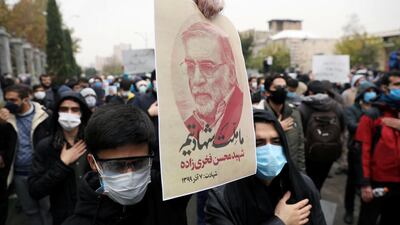
  • A protester holds a picture of Mohsen Fakhrizadeh, Iran's top nuclear scientist, during a demonstration against his killing in Tehran. WANA via REUTERS
    A protester holds a picture of Mohsen Fakhrizadeh, Iran's top nuclear scientist, during a demonstration against his killing in Tehran. WANA via REUTERS
  • A protester holds a picture of Mohsen Fakhrizadeh, Iran's top nuclear scientist, during a demonstration against his killing in Tehran. WANA via REUTERS
    A protester holds a picture of Mohsen Fakhrizadeh, Iran's top nuclear scientist, during a demonstration against his killing in Tehran. WANA via REUTERS
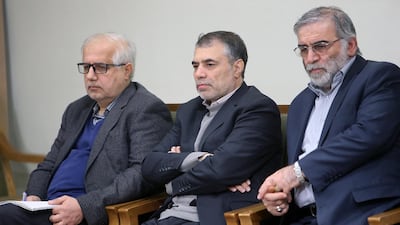
  • Iranian nuclear scientist Mohsen Fakhrizadeh (R) during a meeting with Iranian supreme leader (unseen) in Tehran on January 23, 2019. EPA/IRANIAN SUPREME LEADER'S OFFICE HO
    Iranian nuclear scientist Mohsen Fakhrizadeh (R) during a meeting with Iranian supreme leader (unseen) in Tehran on January 23, 2019. EPA/IRANIAN SUPREME LEADER'S OFFICE HO
  • Israeli Prime Minister Benjamin Netanyahu points at a screen with an image of Iranian nuclear scientist Mohsen Fakhrizadeh during a news conference at the Defence Ministry of in Tel Aviv on April 30, 2018. Reuters
    Israeli Prime Minister Benjamin Netanyahu points at a screen with an image of Iranian nuclear scientist Mohsen Fakhrizadeh during a news conference at the Defence Ministry of in Tel Aviv on April 30, 2018. Reuters
  • The US Navy’s USS Nimitz aircraft carrier was ordered back to the Arabian Gulf to show capability as it withdraws troops from Afghanistan and Iraq and to deter adversaries moving against the US, US Fifth Fleet said. AFP PHOTO / US NAVY
    The US Navy’s USS Nimitz aircraft carrier was ordered back to the Arabian Gulf to show capability as it withdraws troops from Afghanistan and Iraq and to deter adversaries moving against the US, US Fifth Fleet said. AFP PHOTO / US NAVY

Analysts compared Fakhrizadeh to J Robert Oppenheimer, the scientist who led the US Manhattan Project in the Second World War that developed the atomic bomb.

Fakhrizadeh headed Iran’s so-called Amad programme that Israel and the West alleged was a military operation looking at the feasibility of building a nuclear weapon.

The International Atomic Energy Agency said that “structured programme” ended in 2003. Iran has long maintained its nuclear programme is peaceful.

The killing of Fakhrizadeh  is likely to complicate the plans of Joe Biden, US president-elect, who has said his administration will consider re-entering Tehran’s nuclear deal with world powers. It also raises the risk of an open conflict in the remaining weeks in office for President Donald Trump, who unilaterally withdrew the US from the atomic accord in 2018, beginning a series of escalating incidents between Tehran and Washington.


SPEC%20SHEET%3A%20APPLE%20M3%20MACBOOK%20AIR%20(13%22)
%3Cp%3E%3Cstrong%3EProcessor%3A%3C%2Fstrong%3E%20Apple%20M3%2C%208-core%20CPU%2C%20up%20to%2010-core%20CPU%2C%2016-core%20Neural%20Engine%3C%2Fp%3E%0A%3Cp%3E%3Cstrong%3EDisplay%3A%3C%2Fstrong%3E%2013.6-inch%20Liquid%20Retina%2C%202560%20x%201664%2C%20224ppi%2C%20500%20nits%2C%20True%20Tone%2C%20wide%20colour%3C%2Fp%3E%0A%3Cp%3E%3Cstrong%3EMemory%3A%3C%2Fstrong%3E%208%2F16%2F24GB%3C%2Fp%3E%0A%3Cp%3E%3Cstrong%3EStorage%3A%3C%2Fstrong%3E%20256%2F512GB%20%2F%201%2F2TB%3C%2Fp%3E%0A%3Cp%3E%3Cstrong%3EI%2FO%3A%3C%2Fstrong%3E%20Thunderbolt%203%2FUSB-4%20(2)%2C%203.5mm%20audio%2C%20Touch%20ID%3C%2Fp%3E%0A%3Cp%3E%3Cstrong%3EConnectivity%3A%3C%2Fstrong%3E%20Wi-Fi%206E%2C%20Bluetooth%205.3%3C%2Fp%3E%0A%3Cp%3E%3Cstrong%3EBattery%3A%3C%2Fstrong%3E%2052.6Wh%20lithium-polymer%2C%20up%20to%2018%20hours%2C%20MagSafe%20charging%3C%2Fp%3E%0A%3Cp%3E%3Cstrong%3ECamera%3A%3C%2Fstrong%3E%201080p%20FaceTime%20HD%3C%2Fp%3E%0A%3Cp%3E%3Cstrong%3EVideo%3A%3C%2Fstrong%3E%20Support%20for%20Apple%20ProRes%2C%20HDR%20with%20Dolby%20Vision%2C%20HDR10%3C%2Fp%3E%0A%3Cp%3E%3Cstrong%3EAudio%3A%3C%2Fstrong%3E%204-speaker%20system%2C%20wide%20stereo%2C%20support%20for%20Dolby%20Atmos%2C%20Spatial%20Audio%20and%20dynamic%20head%20tracking%20(with%20AirPods)%3C%2Fp%3E%0A%3Cp%3E%3Cstrong%3EColours%3A%3C%2Fstrong%3E%20Midnight%2C%20silver%2C%20space%20grey%2C%20starlight%3C%2Fp%3E%0A%3Cp%3E%3Cstrong%3EIn%20the%20box%3A%3C%2Fstrong%3E%20MacBook%20Air%2C%2030W%2F35W%20dual-port%2F70w%20power%20adapter%2C%20USB-C-to-MagSafe%20cable%2C%202%20Apple%20stickers%3C%2Fp%3E%0A%3Cp%3E%3Cstrong%3EPrice%3A%3C%2Fstrong%3E%20From%20Dh4%2C599%3C%2Fp%3E%0A
Ten tax points to be aware of in 2026

1. Domestic VAT refund amendments: request your refund within five years

If a business does not apply for the refund on time, they lose their credit.

2. E-invoicing in the UAE

Businesses should continue preparing for the implementation of e-invoicing in the UAE, with 2026 a preparation and transition period ahead of phased mandatory adoption. 

3. More tax audits

Tax authorities are increasingly using data already available across multiple filings to identify audit risks. 

4. More beneficial VAT and excise tax penalty regime

Tax disputes are expected to become more frequent and more structured, with clearer administrative objection and appeal processes. The UAE has adopted a new penalty regime for VAT and excise disputes, which now mirrors the penalty regime for corporate tax.

5. Greater emphasis on statutory audit

There is a greater need for the accuracy of financial statements. The International Financial Reporting Standards standards need to be strictly adhered to and, as a result, the quality of the audits will need to increase.

6. Further transfer pricing enforcement

Transfer pricing enforcement, which refers to the practice of establishing prices for internal transactions between related entities, is expected to broaden in scope. The UAE will shortly open the possibility to negotiate advance pricing agreements, or essentially rulings for transfer pricing purposes. 

7. Limited time periods for audits

Recent amendments also introduce a default five-year limitation period for tax audits and assessments, subject to specific statutory exceptions. While the standard audit and assessment period is five years, this may be extended to up to 15 years in cases involving fraud or tax evasion. 

8. Pillar 2 implementation 

Many multinational groups will begin to feel the practical effect of the Domestic Minimum Top-Up Tax (DMTT), the UAE's implementation of the OECD’s global minimum tax under Pillar 2. While the rules apply for financial years starting on or after January 1, 2025, it is 2026 that marks the transition to an operational phase.

9. Reduced compliance obligations for imported goods and services

Businesses that apply the reverse-charge mechanism for VAT purposes in the UAE may benefit from reduced compliance obligations. 

10. Substance and CbC reporting focus

Tax authorities are expected to continue strengthening the enforcement of economic substance and Country-by-Country (CbC) reporting frameworks. In the UAE, these regimes are increasingly being used as risk-assessment tools, providing tax authorities with a comprehensive view of multinational groups’ global footprints and enabling them to assess whether profits are aligned with real economic activity. 

Contributed by Thomas Vanhee and Hend Rashwan, Aurifer