


Slovakia has tested about half its population for coronavirus after announcing a plan to test everyone over the age of 10.
About 2.5 million Slovaks were tested on the first day of mass testing on Saturday, with 25,850, or 1 per cent, testing positive and forced to self-isolate.
The country of 5.5 million has struggled to contain the second wave and officials argued the only alternative to the ambitious testing programme would be a national lockdown.
People were tested on a voluntary basis but the government said it would impose a personal lockdown on those who did not participate.
More than 40,000 medics, army and police staffed 5,000 sites to administer the antigen swab tests.
Prime Minister Igor Matovic apologised for pressuring people to take part but said the country was at a crossroads.
Slovakia is predicted to be “two or three” weeks behind neighbouring Czech Republic, which has the worst infection rate in Europe.
Mr Matovic said: “Freedom must go together with responsibility towards those who ... are the weakest among us, oncology patients, old people, people with other diseases.”
However, the scheme has been criticised by some experts who said it didn’t make sense.
The Slovak Association of General Practitioners pointed out that crowding into testing sites went against social-distancing protocols.
Medics also argued the antigen tests used were less accurate than the laboratory-based tests, returning more false negative and false positive results.
Slovakia plans a second round of the testing next weekend to catch cases missed in the first round or those who got infected in the meantime.
In another sign of the desperation felt by European leaders, Chancellor Angela Merkel urged Germans to comply with new restrictions as the country entered its four-week “wave-breaker” shutdown.
-
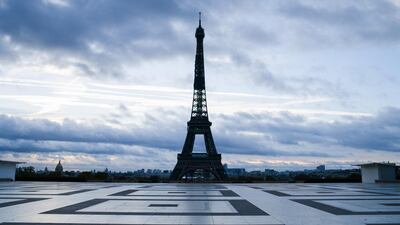
The Eiffel Tower beside the empty Trocadero Square in Paris, France. France implemented a second national lockdown on Friday. Bloomberg -
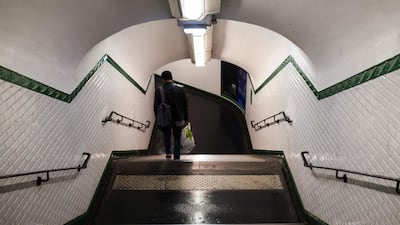
A solitary traveler walks down a staircase in an underground metro railway station in Paris. Bloomberg -
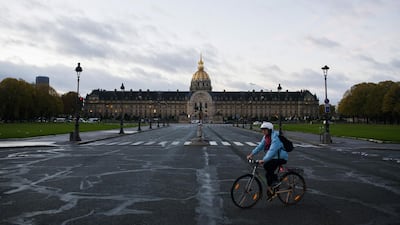
A cyclist rides across an empty road junction near Les Invalides in Paris. Bloomberg -
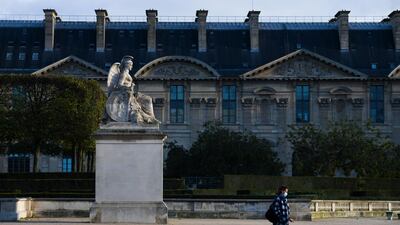
A pedestrian wearing a protective face mask passes the Louvre Museum in Paris. Bloomberg -
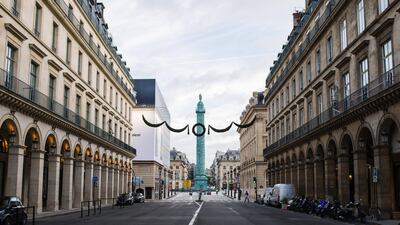
A traffic free street leading to Place Vendome luxury retail area in Paris. Bloomberg -

A pedestrian crosses the empty courtyard outside the Louvre Museum during morning rush hour in Paris. Bloomberg -
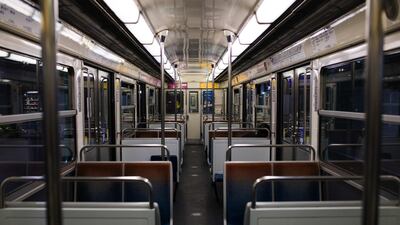
Empty passenger seats in an underground metro railway train in Paris. Bloomberg -
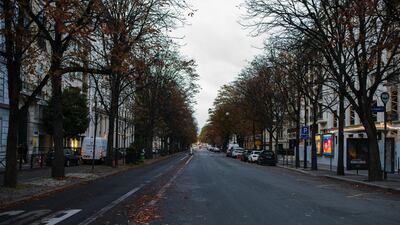
The traffic free Avenue Montaigne in Paris. Bloomberg -
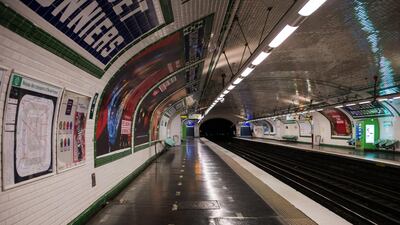
Empty platforms in the Marcadet – Poissonniers underground metro railway station in Paris. Bloomberg


Restaurants, bars, theatres, cinemas, gyms and other leisure facilities remain closed as the country battles to control the second wave.
Germany has reported record numbers of new infections and there were worrying signs the country’s contact tracers – praised for their efficiency – were failing to keep on top of the workload.
Mrs Merkel said the virus “punishes half-heartedness” as she vowed compliance with the new restrictions could lead to a “bearable” Christmas.
She said: "We are dependent on the co-operation, acceptance and understanding of the people in our country for this to work.
"It's in everyone's own hands to make this November a joint success, a turnaround.
“If we all behave very sensibly in November, we can allow ourselves more freedom over Christmas.
“It will be a Christmas under corona conditions but it should not be a lonely Christmas.”
In France, supermarkets were banned from selling books, makeup and any products found in smaller shops that have been forced to shut under the country’s November lockdown.
Owners of bookshops and other specialist outlets had bitterly complained that the month-long lockdown, which came into effect on Friday, discriminated against small traders already struggling to survive.
-
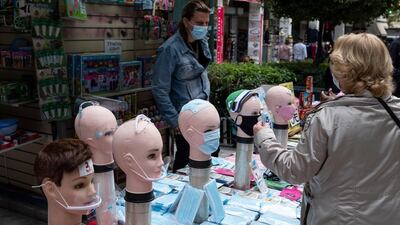
A woman buys face masks from a street vendor in Athens. AP Photo -
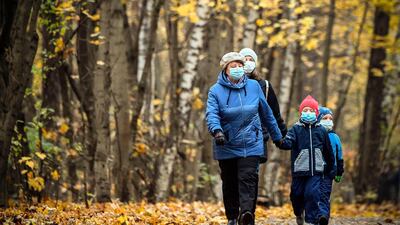
A family wearing face masks walks in a park in Moscow. AFP -
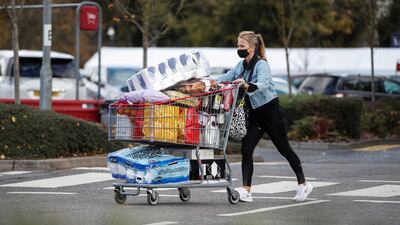
A woman pushes a full shopping cart outside a store in Watford after new nationwide restrictions were announced in England. Reuters -
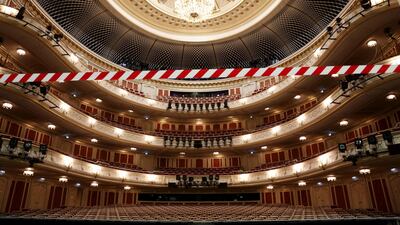
Empty eating inside the main auditorium of the closed Berlin State Opera house in Berlin. Bloomberg -
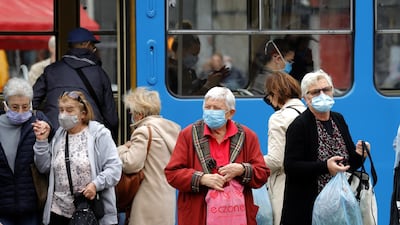
Citizens wear protective face masks in Croatian capital Zagreb. EPA -
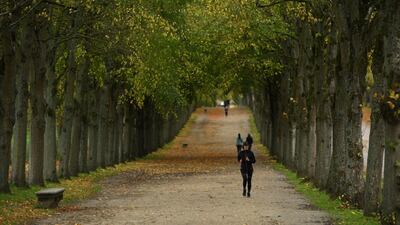
A jogger runs in the Versailles gardens in Versailles, France. France has imposed another national lockdown for a minimum of four weeks. Getty Images -
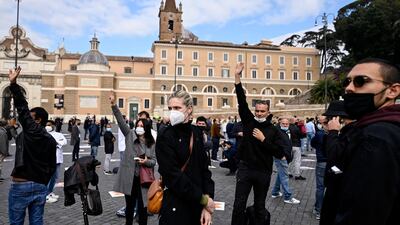
Owners of restaurants gather to protest in 'Piazza del Popolo', Rome, Italy. EPA -
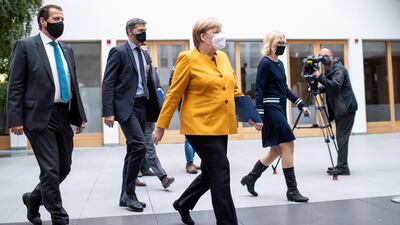
German Chancellor Angela Merkel arrives for a news conference in Berlin after discussing with her cabinet new measures to contain the spread of the coronavirus disease. Reuters -
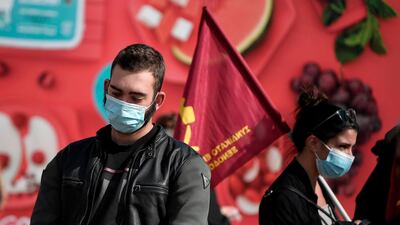
Workers in food, tourism and hospitality services demonstrate in central Athens. AFP


They pointed out that supermarket chains, which have been allowed to remain open to ensure supplies of essential goods, continue to do a brisk trade in non-essential items such as books and toys.
To defuse the row, Prime Minister Jean Castex announced on Sunday that supermarkets would from Tuesday be barred from stocking goods found in specialist shops.
The UK will follow France and Germany into a second lockdown on Thursday.
Chancellor Rishi Sunak warned that unemployment would shoot up as a result and “hoped” it would only last four weeks.
In Italy, Prime Minister Giuseppe Conte sought to avoid a new economically damaging lockdown by opting for a regional strategy to combat the virus.
He imposed new measures including closing shopping centres on weekends, shuttering museums and limiting movement between the worst-hit regions.
Italian cities have also been hit by a wave of protests – some turning violent – as general frustration grows.
Mr Conte said a new alert system would guide further restrictions.
Infection rates have continued to soar to record levels in Italy, with cases now approaching 30,000 a day.
In Portugal, the country is holding a day of national mourning for its Covid-19 victims.
The death toll in the country since the pandemic began in March stands at 2,544.
Elsewhere in Europe, Greece and Kosovo announced new measures to combat the virus.
All bars and restaurants will close in northern Greece, which includes the capital Athens, for about a month.
In Kosovo, people aged over 65 will be allowed out of their homes only from 6am to 10am and from 4pm to 7pm.

