
Tunisia’s first democratically elected leader, Beji Caid Essebsi, died on Thursday at the age of 92.
The state-run Tunisia News Agency reported that the president was taken to a military hospital in the capital but passed away at around 10.25am.
The president is survived by his wife and four children. The date for his funeral will be announced at a later time, his office said.
UAE leaders sent their condolences to Tunis. Sheikh Mohammed bin Rashid, UAE Vice President and Ruler of Dubai said Essebi led Tunisia in its most difficult time with wisdom, generosity and competence.
Sheikh Mohamed bin Zayed, Crown Prince of Abu Dhabi and the Deputy Supreme Commander of the UAE Armed Forces, expressed his condolences on Twitter:
President Emmanuel Macron of former colonial power France hailed his late counterpart as "a friend" of France and "a courageous leader".
German Chancellor Angela Merkel called Caid Essebsi "a courageous actor on the road to democracy" and Italian premier Giuseppe Conte also sent his condolences for the passing of a "statesman of great ... humanity".
Tunisia's parliament announced its speaker Mohamed Ennaceur would take the reins as interim president, and within hours he was sworn in as the new leader.
Mr Ennaceur, who called on Tunisians to show "solidarity", now has 90 days to organise a presidential election, electoral commission head Nabil Baffoun told AFP.
That means the vote, previously set for November 17, must be held by October 23.
Article 82 of the country’s constitution that requires elections to be held within 45 to 90 days if a serving president dies in office.
Thursday is Tunisia's republic day and Caid Essebsi had been expected to give an address. A video released by the president's office on Monday of him meeting the defence minister, with the president looking visibly weakened, raised concerns about his fitness for office.
Caid Essebsi won the first democratic election in 2014 just three years after Zine El Abidine Ben Ali stood down in the face of mass protests at the outset of the 2011 Arab uprisings.
The nonagenarian had already said he did not intend to stand for office again in upcoming elections, saying that the country needed a younger leader.
Last month he was admitted to hospital suffering what officials called a "severe health crisis".
There were few details of his condition and it was widely believed he had died. Prime Minister Youssef Chahed visited the president in hospital and then called on people not to spread "fake news" about his condition.
Several days later he was photographed in a wheelchair surrounded by his doctors as he was discharged.
After Ben Ali left the country in the face of mass rallies in 2011, Caid Essebsi helped draft a new democratic constitution and helped pave the way for the 2014 election that he won.
He struggled to keep the disparate political parties together but despite setbacks managed to chart a course towards democracy and reform.
The country struggled with insecurity after several terror attacks drove vital tourists away and economic reforms were met with protests.
-
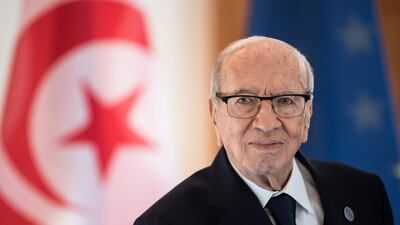
Tunisia’s 92-year-old president, Beji Caid Essebsi, has died, the country's presidency said in a statement on Thursday. AFP -
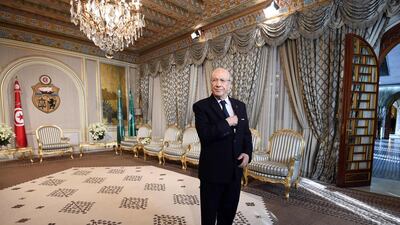
Tunisian President Beji Ceid Essebsi stands on January 4, 2015. He was Tunisia's first democratically elected president, having won office in 2014. AFP -
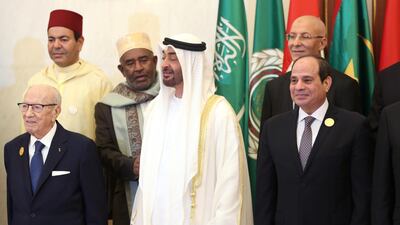
Tunisian President Beji Caid Essebsi, Abu Dhabi's Crown Prince Sheikh Mohammed bin Zayed and Egyptian President Abdel Fattah al-Sisi stand during a group photo with Arab leaders, ahead of the Arab Summit in Mecca, Saudi Arabia. Reuters -
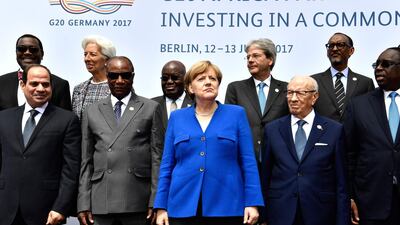
Essebsi attends a two-day G20 Africa partnership investment conference in Berlin on June 12, 2017. aFP -
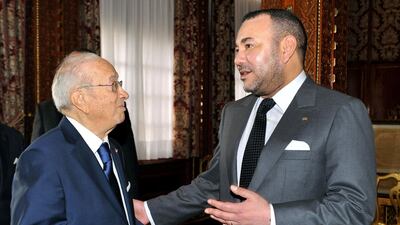
Essebsi, then Tunisia's Prime Minister, meets Morocco's king Mohammed VI in Rabat in 2011. AFP -
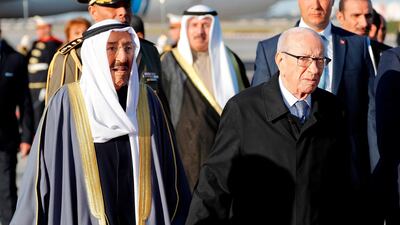
Essebsi welcomes Kuwait's Emir Sheikh Sabah Al Ahmad Al Sabah for a March 30, 2019 Arab Summit. AFP -
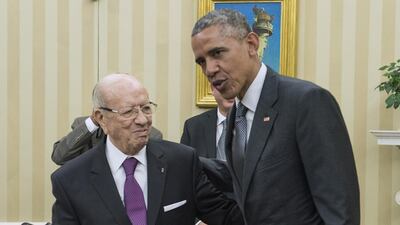
Essebsi at the Oval Office with US President Barack Obama in 2015. AFP Photo -
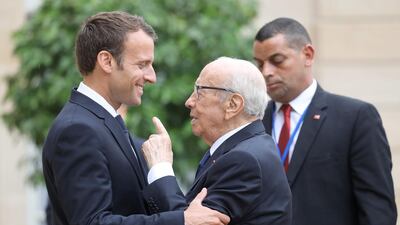
Essebi shares a joke with France's President Emmanuel Macron in May 2019 prior an international conference on Libya. AFP -

(FILES) A file photo taken on September 15, 2011 shows Essebi with Turkey's Recep Tayyip Erdogan. AFP -
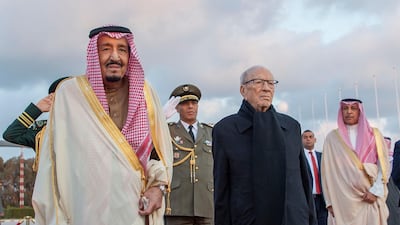
Essebsi posing for a picture during a welcoming ceremony at Tunis-Carthage International Airport with Saudi Arabia's King Salman. AFP Photo -
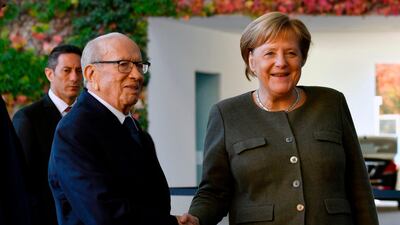
German Chancellor Angela Merkel welcoming Tunisia's President Beji Caid Essebsi on the sidelines of the "Compact with Africa" conference in October 2018. AFP -
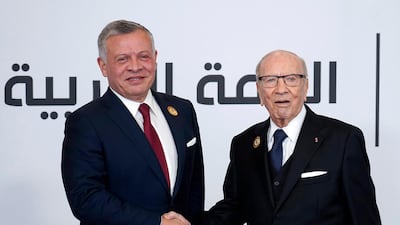
Essebsi with Jordan's King Abdullah II last year. AFP Photo


Tunisia also faced tough questions about the renewal of the state of emergency placed after the attacks in 2015, with critics claiming it was unconstitutional and provided cover for heavy-handed security forces.
Caid Essebsi followed his mentor Habib Bourguiba, the founding father of Tunisia who was removed by Ben Ali in 1987, in promising a secular state. He worked to improve education and develop the impoverished interior while promoting women's rights. He was praised for ending a 44-year-old law that banned Tunisian women marrying non-Muslim men.
However, he ultimately failed to achieve his stated goal of passing a bill to ensure the equality of inheritance between men and women, a taboo in the region, leaving the door open for exceptions in the face of opposition from Islamists.

