

The lively bustle that usually marks the beginning of Ramadan in Beirut as people stockpile food has all but disappeared this year as the price of goods continues to increase, leaving shops empty with little prospect of recovery.
“You see that bottle of Jallab there?” gestures a cashier at a popular supermarket chain in Koraytem, in the east of the capital, referring to a thick, dark brown syrup that is traditionally consumed during Ramadan.
“Last year, it cost 9,500 Lebanese pounds. Now its price is 19,500 Lebanese pounds,” he says.
Idle employees wait for rare customers, who are given gloves before entering as part of efforts to contain the spread of the coronavirus pandemic. Aside from the occasional beggar, the streets are mostly empty in Koraytem and neighbouring Hamra.
The value of the local currency has been in freefall for the past six months, losing over half its value, though the official peg of 1,500 Lebanese pounds to the US dollar remains officially in place.
Money exchange houses went on strike on Friday, and it will last until Monday, as fears mount that the Lebanese pound could drop as low as 4,000 to the dollar after hitting 3,600 on Thursday evening.
Although dollars were used interchangeably with the local currency until late 2019, the US currency has all but disappeared from the local market. As the value of people’s salaries plummet, so does their purchasing power.
-
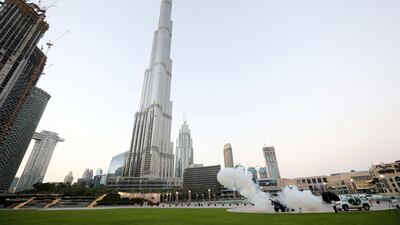
The cannon firing to mark the breaking of the fast at Maghrib sunset prayers at Burj Khalifa, Dubai. Chris Whiteoak / The National -
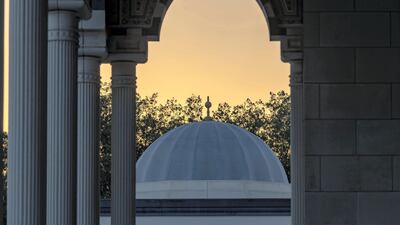
The sun rises over Al Farooq Omar Bin Al Khattab Mosque on the first morning of Ramadan. Mosques remain closed. Chris Whiteoak / The National -
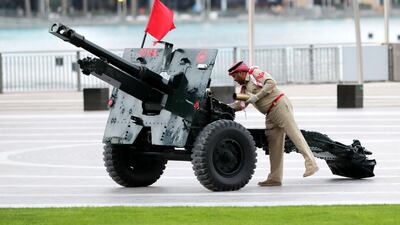
The cannon firing to mark the breaking of the fast at Maghrib sunset prayers at Burj Khalifa, Dubai. Chris Whiteoak / The National -
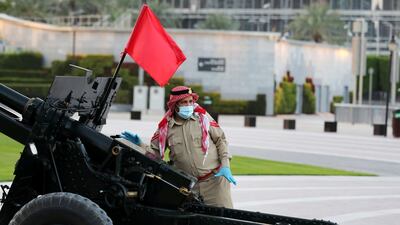
The cannon firing to mark the breaking of the fast at Maghrib sunset prayers at Burj Khalifa, Dubai. Chris Whiteoak / The National -
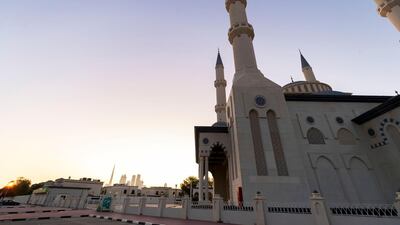
The sun rises over Al Farooq Omar Bin Al Khattab Mosque on the first morning of Ramadan. Mosques remain closed. Chris Whiteoak / The National -

A canon is fired to mark the breaking of the fast at Maghrib sunset prayers at the Umm Al Emarat Park in Abu Dhabi on the first day of Ramadan. Victor Besa / The National -
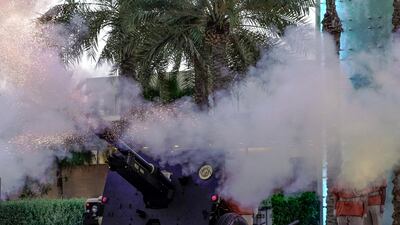
A canon is fired to mark the breaking of the fast at Maghrib sunset prayers at the Umm Al Emarat Park in Abu Dhabi on the first day of Ramadan. Victor Besa / The National -

The Sheikh Zayed Grand Mosque on a beautiful sunny day on the first day of Ramadan. Victor Besa / The National -

Dubai Police officers get ready to fire the cannon on the first day of Ramadan to break the fast at the Al Mankhool area in Dubai. Pawan Singh / The National -
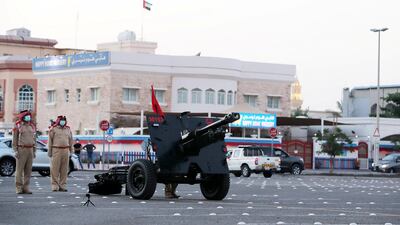
A Dubai Police officer gets ready to fire the cannon on the first day of Ramadan to break the fast at the Al Mankhool area in Dubai. Pawan Singh / The National -
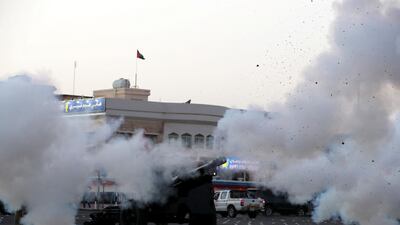
Dubai Police officers firing the cannon on the first day of Ramadan to break the fast at the Al Mankhool area in Dubai. Pawan Singh / The National -

Some shops in Satwa are open for business after Dubai eased restrictions for Ramadan. Leslie Pableo for The National -

A father and his daughter cross the street to get to the Abu Dhabi Central Bus Terminal during the first morning of Ramadan. Victor Besa / The National -
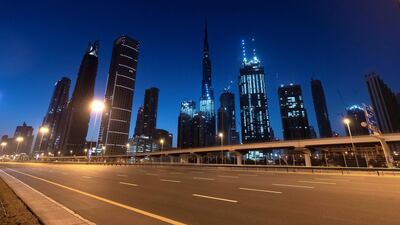
Sheikh Zayed Road is still very quite on the first morning of eased restrictions on personal travel. Chris Whiteoak / The National -
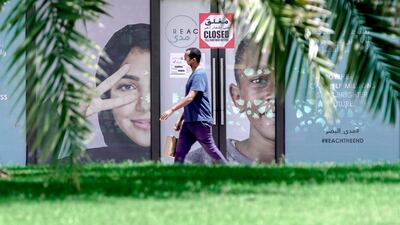
A pedestrian walks pass a bus stop at downtown Abu Dhabi during the Coronavirus epidemic. Victor Besa / The National -

A barber shop in Satwa is busy with customers. Leslie Pableo for The National


Most locally sold goods are imported and paid for in dollars, which means that the overheads of retail outlets have risen dramatically, leaving little room for manoeuvre.
“You think we can do special Ramadan offers? Come on, the Lebanese pound is now worth almost 4,000,” jokes an employee at another branch of the same supermarket chain a few blocks away.
“Nobody buys iPhones anymore. The cheapest is worth $800. People purchase cheap brands, and only when they really have to,” says the owner of an electronics shop, who stopped buying from importers last October when the value of the pound started to fall on the parallel market. “The situation is catastrophic,” he says.
Figures from the World Food Programme show that the price of imported Egyptian rice, a staple food in Lebanon and the region, has risen by 40 per cent in a year, from 1,853 Lebanese pounds per kilo in March 2019 to 2,630 pounds last month.
Because of Lebanon’s dependence on imports, even of raw materials, inflation has also hit the price of locally produced fruit and vegetables. In one shop selling fresh produce, a man said the price of tomatoes had gone up by 20 per cent. “Nothing is normal this year," says the shop owner.
Last year, farmers bought less imported fertilisers and seeds as importers asked to be paid upfront in cash instead of at the end of the season as they usually do, says Antoine Howayek, the head of the Lebanese farmer’s association. As a result, production decreased by roughly 50 per cent, driving prices up.
Thankfully, the Lebanese buy less, too, otherwise the price of tomatoes would have more than tripled, says Mr Howayek.
“If the Lebanese could access their money and there wasn’t this level of poverty, demand would have been at least three times higher than it is today,” he says.
Small shops with not enough reserves have little choice but to shut down. Many had already closed over the last six months, but containment measures implemented due to the coronavirus pandemic means that only a few types of stores are allowed to remain open, including supermarkets, bakeries and phone shops.
“I’ve been losing money since January. I only had enough money set aside for six months. I’ll be closing soon,” says the owner of the electronics shop, which opened in 2009.
However, there is one positive in all of this, he says: that the anti-government protests that began in October but were forced to suspend demonstrations because of coronavirus have started to pick up again.
On Thursday afternoon, a big crowd gathered in front of the central bank in Hamra.
“I’d rather not protest now with the threat of coronavirus as I live with elderly members of my family, but as soon as the virus is over, I’ll be on the streets again. My shop will be closed, and there’ll be nothing else to do,” he says.
-
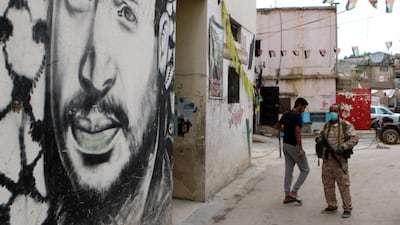
Armed Palestinians wearing protective face masks stand in front of a portrait of their late leader Yasser Arafat at the Wavel Palestinian refugee camp (also known as the Jalil camp) in Lebanon's eastern Bekaa Valley, on April 24, 2020, after cases of infection by the novel coronavirus were detected there. The residents of the Wavel camp were tested after a member of a household, a Palestinian refugee from Syria, was admitted to the state-run Rafic Hariri hospital in the capital Beirut for demonstrating COVID-19 symptoms. / AFP / - -
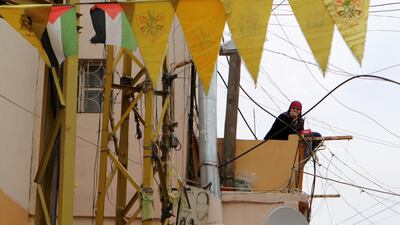
A woman watches from her balcony at the Wavel Palestinian refugee camp (also known as the Jalil camp) in Lebanon's eastern Bekaa Valley, on April 24, 2020, after cases of infection by the novel coronavirus were detected there. The residents of the Wavel camp were tested after a member of a household, a Palestinian refugee from Syria, was admitted to the state-run Rafic Hariri hospital in the capital Beirut for demonstrating COVID-19 symptoms. / AFP / - -
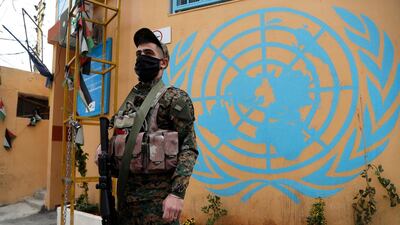
A Palestinian fighter from the Fatah movement wears a mask to help curb the spread of the coronavirus as he stands guard at the closed entrance of Jalil, or Galilee Palestinian refugee camp, in Baalbek, Lebanon, Friday, April 24, 2020. Authorities closed all entrances to a Palestinian refugee camp in eastern Lebanon Friday after four more people tested positive for the coronavirus, heightening concerns over the virus spreading among the population of overcrowded refugee camps and settlements. (AP Photo/Hussein Malla) -
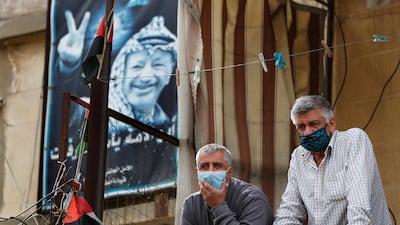
Palestinians wearing masks to help curb the spread of the coronavirus stand on their balcony watching the arrival of the Lebanese health minister, at Jalil, or Galilee Palestinian refugee camp, in Baalbek, Lebanon, Friday, April 24, 2020. Authorities closed all entrances to a Palestinian refugee camp in eastern Lebanon Friday after four more people tested positive for the coronavirus, heightening concerns over the virus spreading among the population of overcrowded refugee camps and settlements. (AP Photo/Hussein Malla) -
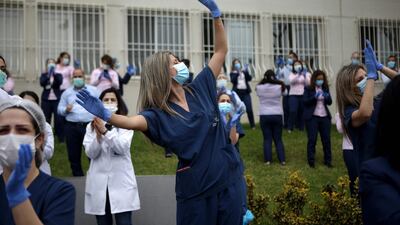
CORRECTION / Medical staff members of the Lebanese hospital Notre Dame des Secours dance to music played by a band thanking them for their efforts to support patients during the COVID-19 coronavirus pandemic, in the northern coastal city of Byblos on April 23, 2020. / AFP / PATRICK BAZ -
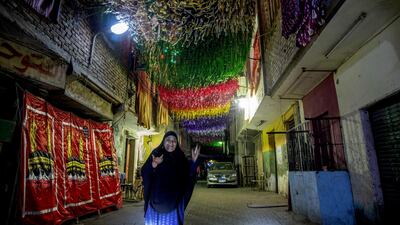
A woman walks on a street under decorations a day ahead of the holy month of Ramadan, in the Imbaba neighborhood of Giza, April 23, 2020. Muslims around the world are trying to maintain the cherished rituals of Islam holiest month during the coronavirus pandemic. (AP Photo/Nariman El-Mofty) -

Children walk under decorations hung up for Ramadan a day ahead of the holy month, in the Imbaba neighborhood of Giza, April 23, 2020. Muslims around the world are trying to maintain the cherished rituals of Islam holiest month during the coronavirus pandemic. (AP Photo/Nariman El-Mofty)



