


The scene was biblical. On the barren, snowy peak of Qornet Al Sawda in northern Lebanon, believers sat on the hard ground last Sunday to hear an open-air mass in a 1,000-year-old tradition.
Behind the priest stood a cross made from three slabs of wood. A goat – dinner – bleated mournfully.
“I want you to pray with all your heart for all the innocents that fell. They were the victims of people who have no respect for human lives," the priest said as clouds billowed around him, referring to the explosion that devastated Beirut just days earlier.
The August 4 blast at Beirut port killed 171 people and wounded over 6,000. The victims were of all sects and several nationalities, but traditionally majority-Christian neighbourhoods were worst hit. It has forced Lebanon’s Christians to reckon with the impact on the country and on their community, and laid bare divisions between politicians and their constituents, and between young and old.
Some Christian leaders quickly tried to claim the tragedy as their own. “The pain we feel is first a Christian pain. Then, it’s Beirut’s pain. And finally, it’s Lebanon’s pain,” Christian leader Nadim Gemayel told the Sky News Arabia TV channel.
But his words were met with anger by activists who accused him of attempting to spur sectarian sentiment.
“What age do they live in, what is this logic! People’s blood has still not dried up!” tweeted activist Adham Hassanieh. “They divide us to kill us!”
Sporadic protests have been ongoing for the past year as Lebanon suffers from its worst-ever economic crisis, which is widely blamed on corruption created by Lebanon’s sectarian power-sharing system.
Speaking to The National a few days after his interview, Mr Gemayel said that he was answering the anchor's question about why Christian MPs, including himself, resigned after the blast. "I also said that the explosion showed that there was solidarity between the Lebanese, and that no region had been spared pain," he explained.
Another Christian leader, Samir Geagea, was met with screams of “criminal”, and “resign” when he visited the neighbourhood of Rmeil, where Christian parties traditionally rule, on Saturday.
As rage keeps mounting, most politicians have avoided visiting victims out of fear of public shaming. Stepping in to replace the faltering state, thousands of volunteers, including from Palestinian refugee camps, flocked to clean up the debris and distribute food. Most of the dead are Lebanese, but there are also many Syrians, Filipinos, and Bangladeshis.
On Tuesday, Beirut echoed with church bells and Muslim calls to prayer as the city mourned the dead, one week after the explosion.
-
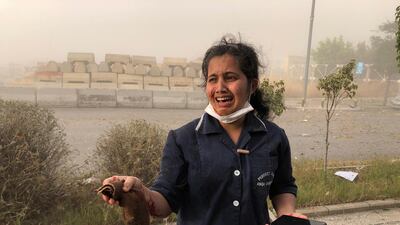
A migrant worker reacts in shock following an explosion at the Beirut port. EPA -
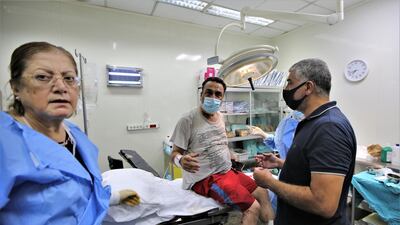
A man injured in the Beirut Port explosion receives treatment at Najjar Hospital in Al Hamra area in Beirut. EPA -

People injured in the Beirut Port explosion receive first aid at Najjar Hospital in Al Hamra area in Beirut. EPA -
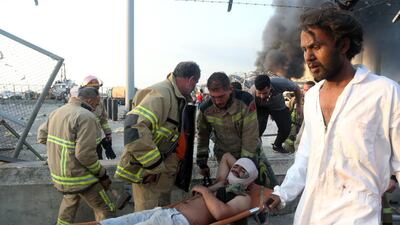
An injured man is rescued from the scene of an explosion at the Beirut port. EPA -
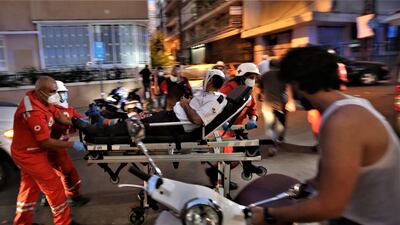
Medics shift an injured person from Najjar Hospital to another hospital in Al Hamra area in Beirut after port explosion. EPA -
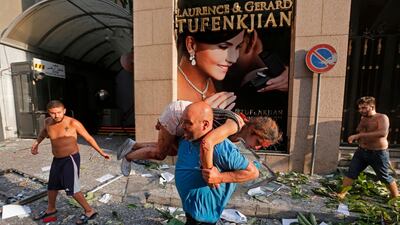
A man carries an injured girl while walking through debris in the Achrafiyeh district in Lebanon's capital Beirut. AFP -
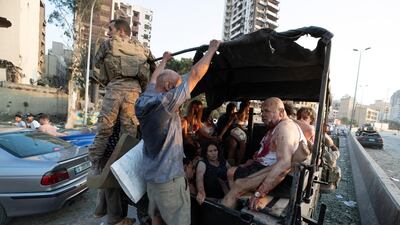
Injured people are rescued after a massive explosion in Beirut. AP Photo -
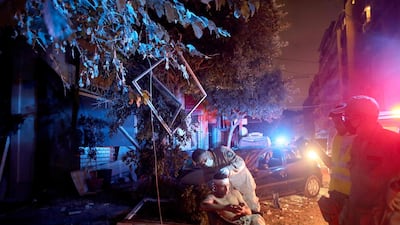
A rescue worker tends to an injured man following an explosion at the port of Beirut. AFP -

An injured man sits outside American University of Beirut medical centre following an explosion in Beirut. Reuters -
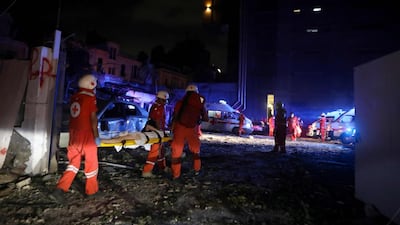
Lebanese Red Cross officers carry an injured woman following an explosion at the port of Beirut. AFP -
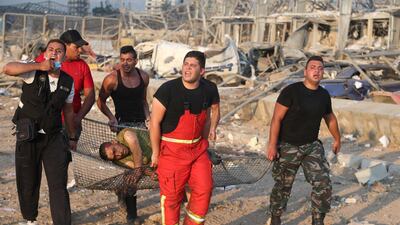
An injured man is taken from the scene of explosion at the Beirut port. EPA -
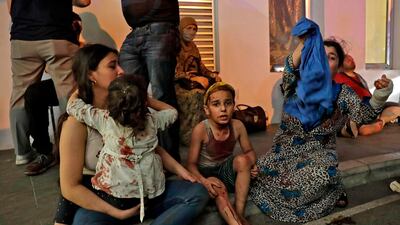
Wounded people wait to receive help outside a hospital following the explosion in Beirut. AFP -
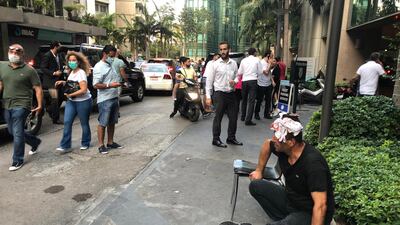
An injured man sits in shock on the pavement following an explosion at the Beirut port. EPA -
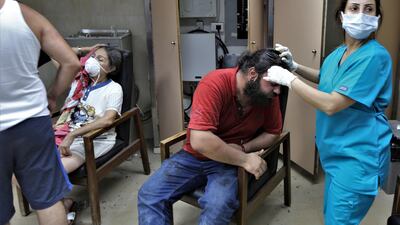
People injured in the Beirut port explosion receive first aid at Najjar Hospital in Al Hamra area in Beirut. EPA -

A man tries to walk in the mud near the scene of explosion at the Beirut port. EPA


“It was a tragic accident that the explosion hit Christian neighbourhoods. Muslims died too and we will pray for them,” said Hani Tawk, the priest who celebrated the mass on Qornet Al Sawda, as he drove up the rough dirt track leading to the mountain on Sunday. At over 3,000 metres, the highest peak in the Levant towers over his home town of Bsharreh.
Father Tawk, 44, took part in the relief efforts in Beirut, distributing hundreds of lunches and raising funds to rebuild shattered houses. He also participated in the protests on Saturday, when thousands of demonstrators were met with tear gas fired by riot police in downtown Beirut.
“Maronite priests carry the smell of their people. If his people are goat herders, he’ll be a goat herder. If they are peasants, he’ll be a peasant. If they want to fight, he’ll be a soldier alongside them,” he said.
Public anger boiled over after officials admitted that they knew that 2,750 tonnes of ammonium nitrate were stored unsafely at the port for seven years before they were accidentally ignited by workers. But none have taken responsibility for the deadly explosion, choosing to blame each other instead.
-

Lebanese anti-government protesters clash with security forces in the area close to the parliament in Beirut. EPA -
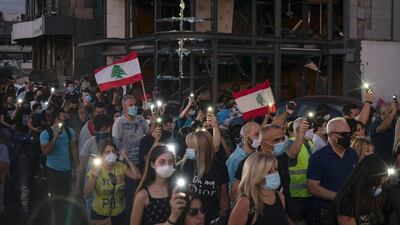
Demonstrators march past a damaged building holding candles and flashlights honouring the victims. AP -
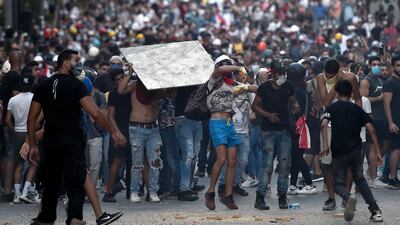
Lebanese anti-government protesters clash with security forces in the area close to the parliament in Beirut. EPA -
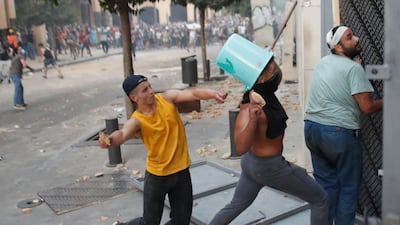
Demonstrators throw stones during a protest following Tuesday's blast in Beirut's port area, in Beirut. Reuters -
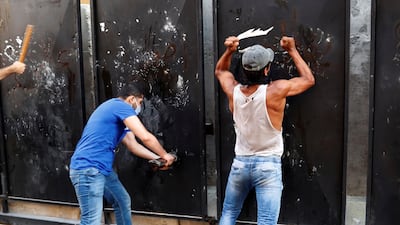
Demonstrators try to break a fence during a protest following Tuesday's blast in Beirut's port area. Reuters -
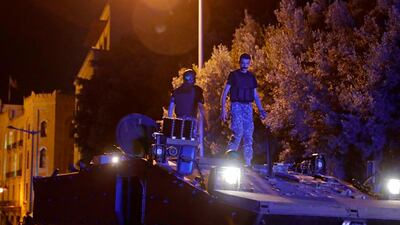
Lebanese anti-riot police stand guard atop an armoured vehicle during anti-government protests in central Beirut. AFP -
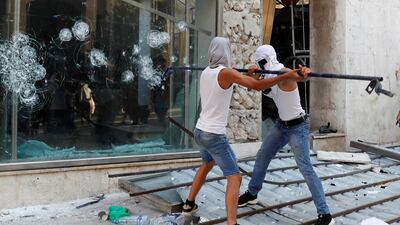
Demonstrators try to break a glass with a metal bar during a protest following Tuesday's blast in Beirut's port area. Reuters -
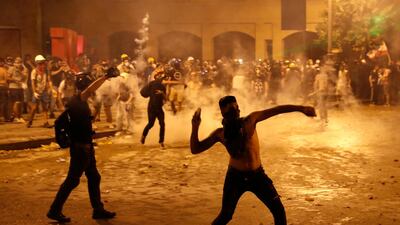
A protester throws stones against the Lebanese riot police. AP -
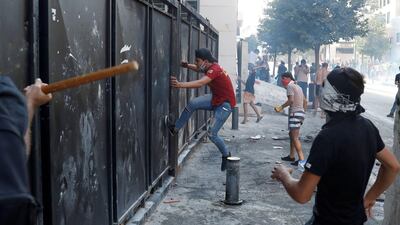
Demonstrators try to break a fence during a protest following Tuesday's blast in Beirut's port area. Reuters -
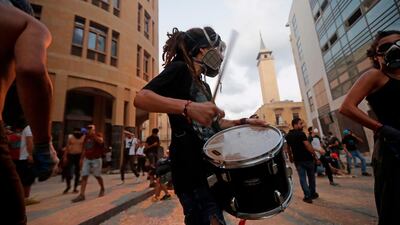
A Lebanese protester beats a drum amid clashes with security forces near an access street to the parliament in central Beirut. AFP -
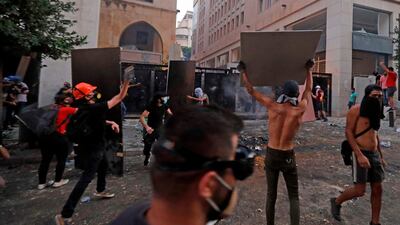
Lebanese protesters, enraged by a deadly explosion blamed on government negligence, clash with police. AFP -
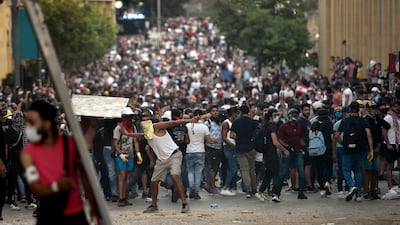
Lebanese anti-government protesters clash with security forces in the area close to the parliament in Beirut. EPA -
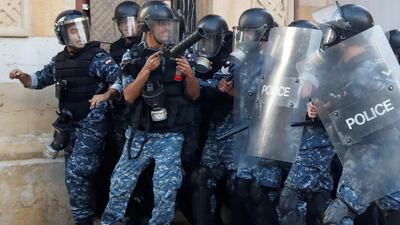
Policemen withdraw as demonstrators throw stones during a protest following Tuesday's blast in Beirut's port area, in Beirut. Reuters -
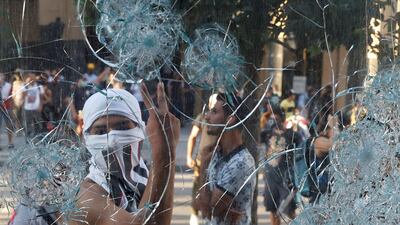
A demonstrator gestures during a protest following Tuesday's blast in Beirut's port area, in Beirut. Reuters


“I am not responsible! I don’t know where it was put and I didn’t know how dangerous it was," said President Michel Aoun, a Maronite Christian. "I have no authority to deal with the port directly. There is a hierarchy and all those who knew should have known their duties to do the necessary.”
The president’s relationship with the influential Maronite patriarch Bechara Boutros Al Rai is tense. Weeks before the explosion, the patriarch criticised Mr Aoun and other leaders for letting Hezbollah, Lebanon's powerful Iran-backed militia and party, cut the country off from potential Western aid. After the blast, the patriarch called for the government’s resignation.
Bsharreh is the Maronite community’s most historic stronghold. Locals have named Qornet Al Sawda from the Syriac word for “martyr” in homage to their ancestors who died fleeing persecution in the region hundreds of years ago.
They say that they have celebrated the feast of the transfiguration of Jesus on the highest point of the mountain in early August every year for the past millennium. “It’s part of showing everyone that this is where we belong. This is our land,” said Mary Tawk, from Bsharreh.
The region is dominated by the Lebanese Forces political party, which is also highly critical of President Aoun’s Free Patriotic Movement.
As they sat down to share a meal after celebrating mass on Qornet Al Sawda, members of the extended Tawk family were unanimous in their anger and disbelief at their leaders’ negligence.
“They have all failed. The Christian president, the Sunni Muslim prime minister, the Shiite Muslim speaker of parliament,” said Youssef Tawk, 60.
“What’s important for us is to have a good person [in charge] – whether he is Muslim, Druze, Shiite or Christian – who will put the country first,” said Youssef. “I am for the end of sectarianism. But it’s impossible. It won’t happen,” he continued, pointing to the sectarian tensions that spiked a few months ago during anti-government protests.
“It’s important that we have a Christian president. We have nothing else but the presidency,” chipped in Boutros Tawk, 27.
“So what if a good Shiite came along? Wouldn’t that be OK?” pressed one of his relatives, carrying a baby on her hip.
“Why can’t we have a good Christian leader?” answered Boutros defensively.
“We need to share power. Sharing power stops one community from taking over the others,” said Father Tawk. “Otherwise, we’ll end up like the Kurds in Syria, or minorities in Iran, Iraq, Yemen and Egypt,” he said, referring to the persecution of religious and cultural groups in the region.
Such rhetoric did not convince the youngest person at the table. Charbel Fakhri, 16, argued that Lebanon’s sectarian power-sharing system needs to end.
“Our leaders don’t care about whether we starve or not. If the situation continues like this, I won’t be able to go to university. My future will be gone. That is why we are starting a revolution,” said Charbel, who has been active in protests since an anti-government movement started last year. “We need to be united.”
Raghida Tawk, a 26-year-old interior designer who moved to Qatar for work five years ago because she could not find a job in Lebanon, agreed with him. For her, last week’s explosion should push the Lebanese towards more unity.
“This is not about whether a Christian or a Muslim died. That’s not the idea. The idea is that the country is destroyed. Religion is not important,” she said.
“I used to think that if the president was not Christian, they [Muslims] would kill us all. But I’ve changed my mind. I matured. The president might be Christian – and I’m not just talking about this president, but previous ones too – but three quarters of us want to leave Lebanon. In the end, people just want a dignified, normal life.”

