


Iraq’s Health Ministry, struggling to contain the outbreak of Covid-19, appealed on Sunday to influential Shiite cleric Moqtada Al Sadr to endorse a 14-day self-quarantine after thousands ignored its advice to mark a religious occasion.
Iraq has reported 233 cases and 17 deaths from the coronavirus, but many believe the numbers could be much higher as only about 2,000 people have been tested out of 40 million.
The government imposed a week-long curfew and lockdown across Iraq on Monday to prevent transmission of the virus.
On Sunday it extended the curfew until 11pm on March 28. Authorities have also banned all travel between provinces.
Iraqi Health Minister Jaafar Allawi called on Mr Al Sadr to urge people to comply with the ministry’s instructions to self-isolate for 14 days, the ministry said on Sunday.
“We have sent a letter to Moqtada Al Sadr, setting out efforts to address the threat of coronavirus and prevent the spread of this serious epidemic in the country,” it said.

Mr Al Sadr last week urged his supporters to take part in an annual procession to the Imam Musa Al Kadhim’s mosque in Baghdad.
They took to the streets in half of Iraq’s 18 provinces on Saturday to mark the imam’s death in 799.
Videos circulated on social media showed hundreds of pilgrims taking part.

Pilgrims from around the world come to visit and kiss the imam’s shrine, including from neighbouring Iran.
Iran is battling one of the world's deadliest coronavirus outbreaks with nearly 22,000 cases and more than 1,600 deaths as of Sunday.
But this year flights to and from Iraq are suspended until at least next Saturday because of the virus, and all border crossings outside the semi-automous Kurdish region have been closed.
The situation in the country is "severe and the public must listen to our instructions", an official from the health ministry told The National.
He warned against public gatherings “because of the great risk of spreading the virus".
-

A man walks next to buildings where people stay home in Tehran, Iran on March 26, 2020. WANA / Reuters -
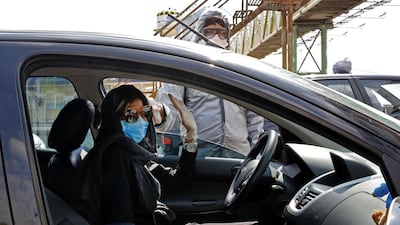
A member of Iranian Red Crescent tests people with possible coronavirus Covid-19 symptoms, as police blocked Tehran to Alborz highway. AFP -
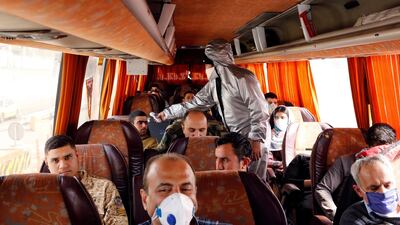
A member of Iranian Red Crescent tests passengers of a bus for possible coronavirus Covid-19 symptoms, as police blocked Tehran to Alborz highway. EPA -
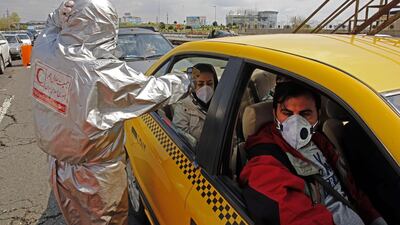
A member of Iranian Red Crescent tests people with possible coronavirus Covid-19 symptoms, as police blocked Tehran to Alborz highway. AFP -

Iranian Red Crescents personnel rest in a tent. EPA -
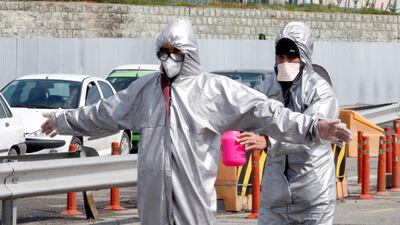
Members of Iranian Red Crescent get themselves disinfected after testing people for possible coronavirus Covid-19 symptoms. EPA -
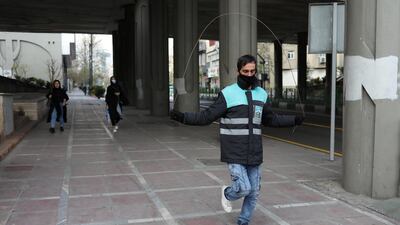
A man jumps rope at Valiasr street in Tehran. WANA / Reuters -

An Iranian army soldier walks past rows of beds at a temporary 2,000-bed hospital for COVID-19 coronavirus patients set up by the army at the international exhibition center in northern Tehran. AP Photo -
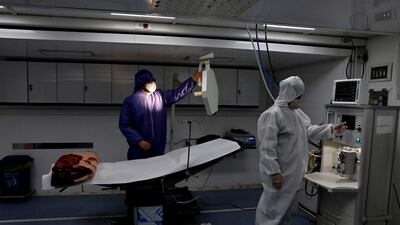
People in protective clothing work in a temporary 2,000-bed hospital for COVID-19 coronavirus patients set up by the Iranian army. AP Photo -
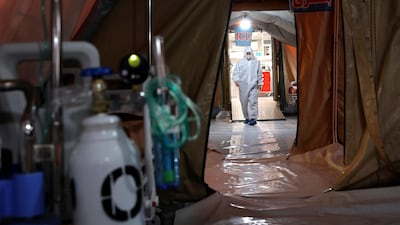
A person in protective clothing walks through a temporary 2,000-bed hospital for COVID-19 coronavirus patients. AP Photo -
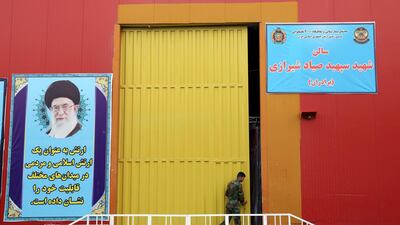
A member of the Iranian Army works at a temporary hospital in Tehran. AP Photo -
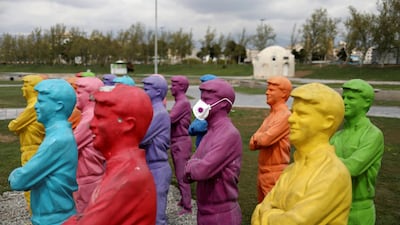
A statue wearing a protective face mask is pictured at Azadi square, in Tehran. WANA / Reuters -
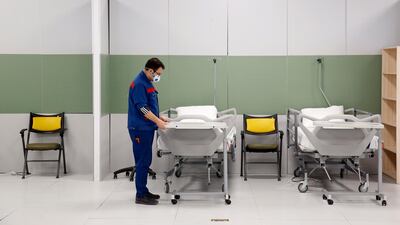
Iranian workers set a temporary emergency hospital in a part of the world's largest shopping mall complex called 'Iran Mall'. EPA -
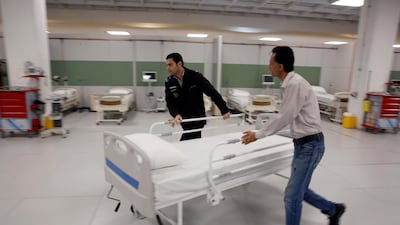
The facility is to treat patients infected with the COVID-19 disease, caused by the SARS-CoV-2 coronavirus, in north-west of the capital of Tehran. EPA -
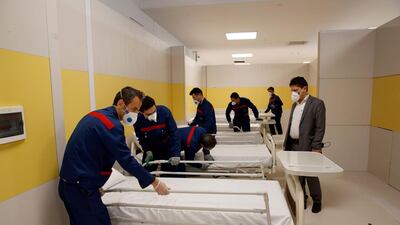
According to the latest report by the Ministry of Health, there are at least 21,638 confirmed cases of coronavirus infections and 1,685 people have died from the virus throughout Iran. EPA -
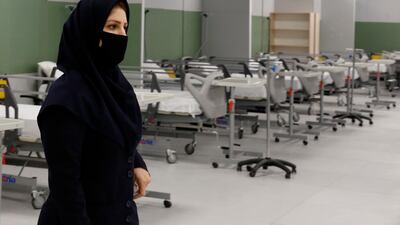
An Iranian woman health inspector checks a temporary emergency hospital in 'Iran Mall'. EPA -
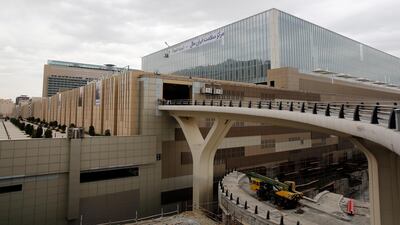
A general view of a temporary emergency hospital in a part of the world's largest shopping mall complex called 'Iran Mall'. EPA -
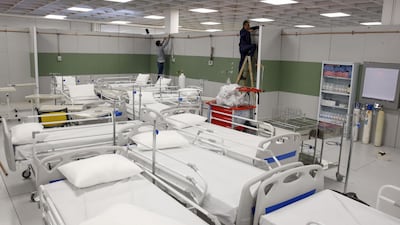
Iranian workers set up a makeshift hospital inside the Iran Mall, northwest of Tehran. AFP -
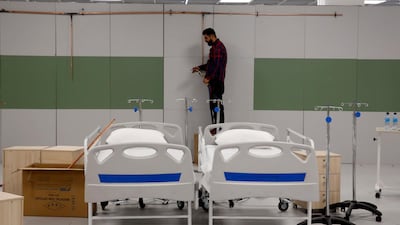
Iran is one of the countries most affected by the devastating pandemic of the coronavirus. EPA -

Iran said that 123 more people had died from coronavirus, raising the official death toll to 1,556 in the Islamic Republic, one of the world's worst affected countries. AFP -
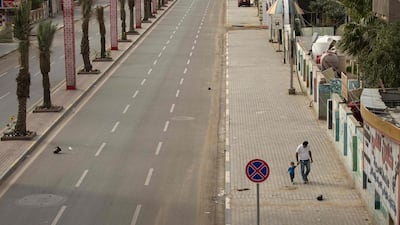
Altogether, more than half of the 18 Iraqi provinces announced curfews for several days in the hopes it could contain the new coronavirus outbreak. AFP


On Friday, Iraq’s top Shiite cleric, Grand Ayatollah Ali Al Sistani, urged followers against gathering in large numbers for prayers.
Like many other countries in the region, Iraq has suspended prayers at mosques.
Mr Al Sistani urged Muslims to abide by medical advice on social distancing, but did not advise pilgrims to stay home.
His and the ministry’s calls have done little to convince the public to isolate themselves.
“We don’t even have a proper government, why should we stop our religious pilgrimage and stay home?” asked student Ali Khadim, 24, from Baghdad.
Thousands have taken to the streets and “we will not stay away", Mr Khadim said.
The UN envoy to Iraq on Sunday added her voice to appeals for the public to follow health precautions.
“In recent days we have noticed that some people are unnecessarily breaking the curfew and some people are not fully abiding by instructions," Jeanine Hennis-Plasschaert said in Baghdad.
"To those, I would like to say you are endangering yourself, your families, your loved ones and the community.
“Mass gatherings should not take place and this includes sports, cultural events and religious gatherings.”
Up to 25 per cent of the population are defying government calls and are trying to perform their pilgrimage, Ali Al Bayati, a member of the country's Human Rights Commission, told The National.
“Some people were arrested and given penalties for being outdoors and contributing to the spread of the disease,” Mr Al Bayati said.
Government institutions must make greater efforts to raise health awareness and design programmes on precautions and risks related to the virus, as this is one of the main problems, he said.

