

Friday prayers are to resume in Morocco with 10,000 mosques to reopen this week after closing for months in an attempt to contain the coronavirus pandemic, the government said.
Morocco recorded 3,185 new cases of Covid-19 on Tuesday, taking the total number of infections to nearly 160,333 with 2,726 reported deaths.
It has the highest number of cases among its North African neighbours.
Coronavirus around the Middle East
-
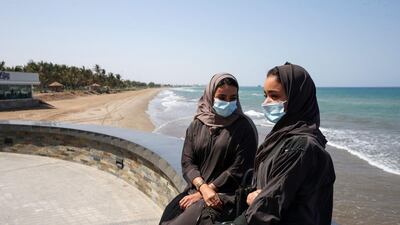
Omanis, wearing protective face masks, sit on the corniche in the capital Muscat, during the coronavirus pandemic. AFP -

Omanis, wearing protective face masks, sit in a seafront cafe in the capital Muscat, during the coronavirus pandemic. AFP -
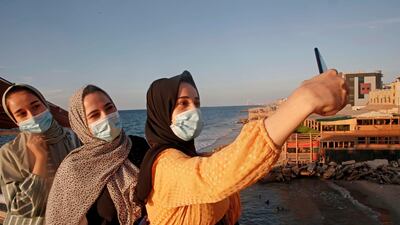
Palestinian women takes a selfie at sunset in Gaza city amid strict restrictions due to the COVID-19 pandemic. AFP -

Women chat while enjoy their time at a beach side cafe in Gaza City. AP Photo -

An Iraqi Kurdish woman is tested for Covid-19 at a hospital in the northeastern city of Sulaymaniyah in Iraq's autonomous Kurdistan region, which has seen the hights death rates from the novel coronavirus. The virus has hit hard Iraq which more than 375,000 people infected and some 9,500 deaths. AFP -

An Iraqi Kurdish medical worker tests samples for Covid-19 at a hospital in the northeastern city of Sulaymaniyah in Iraq's autonomous Kurdistan region, which has seen the hights death rates from the novel coronavirus. The virus has hit hard Iraq which more than 375,000 people infected and some 9,500 deaths. AFP -

Students wearing protective face masks maintain social distancing as they attend a class after some schools reopened amid the coronavirus disease (COVID-19) crisis, in Misrata, Libya. REUTERS -

A man teaches his sons and nephews at home amid the coronavirus disease (COVID-19), in Misrata, Libya. REUTERS -

A teacher sprays disinfectant to sanitize a classroom after some schools reopened amid the coronavirus disease (COVID-19) crisis, in Misrata, Libya. REUTERS -

People wearing protective face masks against the spread of the novel corona virus, Covid-19, as they travel on a public bus in Ankara. AFP -

People wearing masks to help protect against the spread of coronavirus, walk in Ankara, Turkey. Turkey's health minister says the country will start to report its total number of coronavirus cases later this week after Ankara was criticized for only releasing figures for patients showing symptoms of infection. AP Photo


“Mosques will be able to host five daily prayers in addition to the Friday sermon,” the Ministry of Islamic Affairs said. The decision will be effective from Friday.
Mosques must ensure they take preventive measures into account when welcoming worshippers to ensure the virus does not spread, the ministry said.
Since mid-July, only 5,000 of the more than 50,000 mosques in Morocco have been operating and none were open for Friday prayers.
Nearly 20,000 mosques are still closed, the ministry said. It did not explain the status of the remaining 15,000 mosques.
The government lifted a strict, three-month long lockdown in mid-July but daily cases have increased rapidly during the last few months.
Authorities began a third phase of gradually lifting the lockdown, with foreign business visitors allowed to enter the kingdom from September 10.
The outbreak of the virus has taken a huge toll on the country’s healthcare services, and medical staff have bemoaned a lack of bed space and coronavirus equipment in hospitals.
Photos showing Covid-19 patients lining the corridors of overcrowded hospitals, with some lying on the floor, caused an uproar on social media.
The Health Ministry tried to quell public anger by setting up field hospitals.
Morocco’s King Mohammed VI said last month that if numbers continued to rise, “the Covid-19 Scientific Committee may recommend another lockdown, perhaps with even tighter restrictions”.

