
Oman has charged a number of people for spreading false rumours relating to coronavirus, a spokesman for the country's public prosecutor said on Saturday.
Fake news and rumours spread online were causing “a certain amount of fear and panic," Dr Ahmed Al Shukaili, told Oman TV.
An unspecified number of people who published or promoted rumours about the spread of the virus have been arrested, he said, adding that some of these cases would be referred to court.
The statement was followed by a similar warning from the Government Communication Centre, detailing what punishments rumourmongers could face.
-

Syrian Red Crescent vehicles spraying disinfectant along a street in the capital Damascus. AFP -
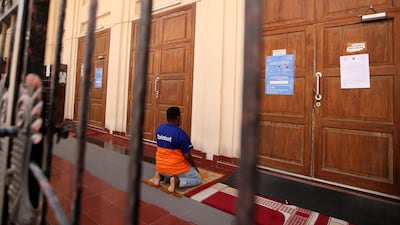
A man prays outside of a closed mosque, as Friday prayers were suspended following the spread of the coronavirus, in Isa Town south Manama, Bahrain. Reuters -
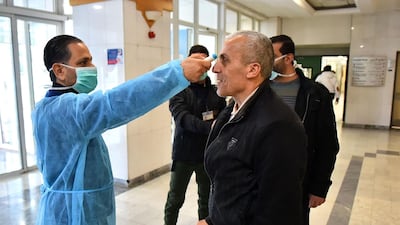
A Lebanese medic takes the temperature of a suspected coronavirus case at Rafiq Hariri University Hospital in Beirut where coronavirus COVID-19 patients are being treated. AFP -
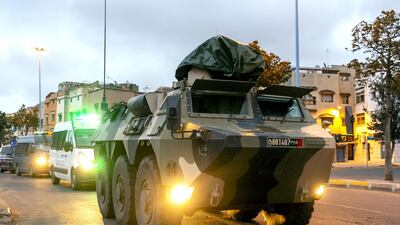
A military vehicle used to instruct people to return home, is seen in a street in Casblanca, Morocco. AFP -
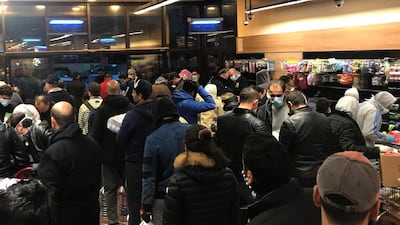
Shoppers fill a local supermarket shortly after the announcement of a curfew in Amman, Jordan. EPA -
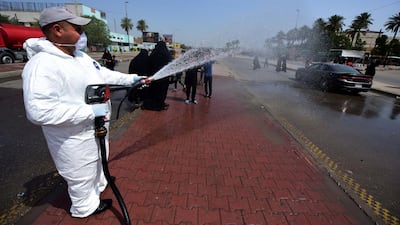
A member of a medical team sprays disinfectant as Iraqi Shiite pilgrims make their way to the tomb of Mousa al-Kadhim to mark his death anniversary in the Kadhimiyah district of Baghdad, Iraq. EPA -
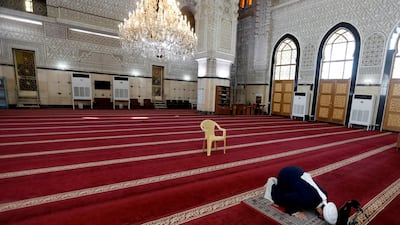
An Iraqi cleric prays in an empty mosque, as Friday prayers were suspended following the spread of the coronavirus disease (COVID-19), in Baghdad, Iraq. Reuters -
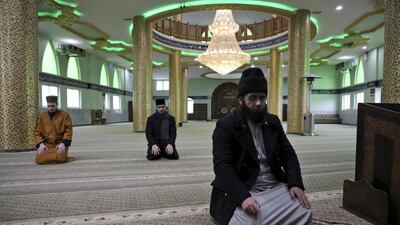
The staff of a Palestinian mosque pray at an empty building as all the mosques in the Hebron area are closed amids the coronavirus pandemic. AFP -
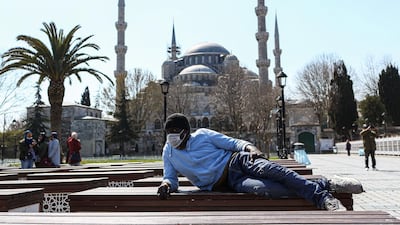
A man wearing a protective face mask rests in front of the Sultanahmet Mosque in Istanbul, Turkey. EPA -
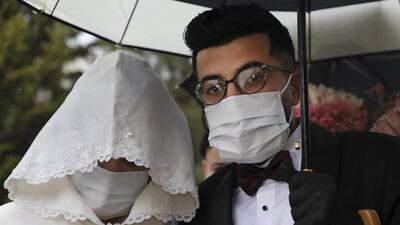
Palestinian groom Imad Sharaf, wearing gloves and a face mask, accompanies his bride Bara'a Amarneh as they arrive at their home in the village of al-Dahriya, south of Hebron in the West Bank. AFP -
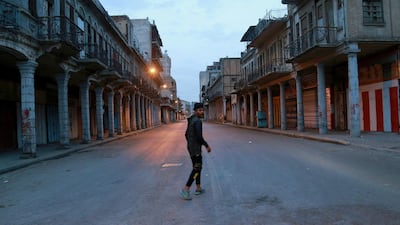
A man walks down an empty street in central Baghdad, Iraq. AP Photo -
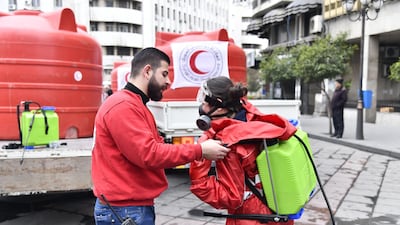
Staffers of the Syrian Arab Ref Crescent with the cooperation of the Damascus Governorate undertake a massive sterilisation campaign in Damascus, Syria. EPA -
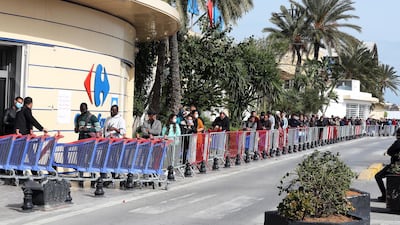
Customers wearing protective face masks queue outside a supermarket in Tunis, Tunisia. EPA -
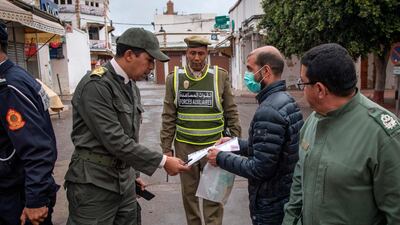
Members of Morocco's Interior Ministry Auxiliary Forces instruct a man to return home in the capital Rabat, Morocco. AFP -
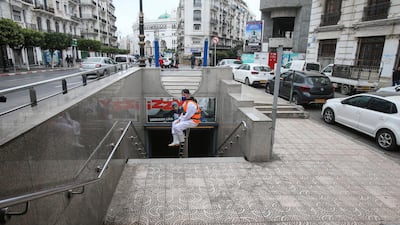
A cleaning worker wearing a protective suit sits in the entrance of metro station in Algiers, Algeria. Reuters -
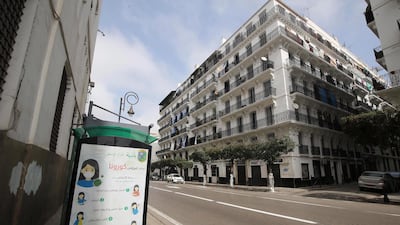
An empty street in Algiers, Algeria. EPA -
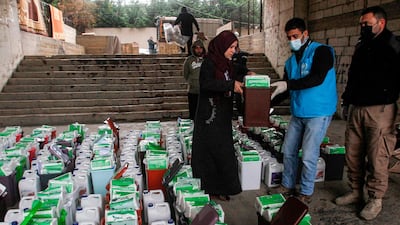
A Syrian refugee receives sanitisation and cleaning supplies from a representative of the United Nations High Commissioner for Refugees (UNHCR) in the city of Sidon in southern Lebanon. AFP


"The Law on Combating Information Technology Crimes stipulates that whoever uses the information network or information technology means to produce, publish, distribute or possess anything that violates religious values or public order, shall be punished," the statement read.
“The punishment is by imprisonment for a period of no less than a month and not exceeding three years and a fine of no less than OMR1,000 (DH9535) and not more than OMR3000 or one of these two penalties.”
Oman joins other GCC member nations who have taken steps to prevent the spread of misinformation during the crisis.
Kuwait's interior minister announced last week that it had initiated legal proceedings against people spreading fake news and the UAE's Attorney General said anyone who shared incorrect information would face legal consequences.
Oman has had 52 cases of the virus, with 12 people recovered.

