
The UK is using “surge testing” in London to prevent an outbreak of the Covid-19 variant first identified in South Africa.
Surge testing will take place in an area of north London after cases of the strain were detected.
Health officials, from Thursday, will begin testing people for the variant at locations in and around Finchley, in the borough of Barnet.
"We will start testing people for this variant in specific postcode areas affected in N3, or those who shop on the local high street," the borough said.
A mobile testing unit will be set up in the Finchley Central station car park and teams will be going door to door, offering home PCR testing kits.
Screening uncovered 44 confirmed and 30 probable cases of the strain in south London, mainly in the boroughs of Wandsworth and Lambeth.
The variant has worried ministers and health officials because of fears that available vaccines will be less effective against the South African strain.
Ministers are urging everyone aged 11 and over who lives, works or travels in the affected boroughs to take a PCR test, whether or not they have symptoms of the disease.
-

People wait outside a Nike Town shop on Oxford Street in London, on the first morning of reopening after England’s latest lockdown. AP Photo -
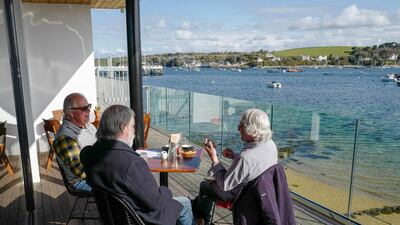
Diners enjoy an alfresco breakfast on the terrace at the Indidog brasserie, as outdoor hospitality restarts in Falmouth. Getty Images -

People run in as Thorpe Park reopens. Reuters -

Members of Aquabatix, a synchronised swimming team practice at Clissold leisure centre in north London. AFP -

A man chooses a book at the Literary and Philosophical Society of Newcastle upon Tyne, as it reopens its doors to socially distanced customers. Reuters -

Members of the public look at Rothschild's giraffes in their enclosure at Chester Zoo. AFP -

People swim in the indoor swimming pool at the re-opened The Pods sports and fitness centre in Scunthorpe, north east England. AFP -
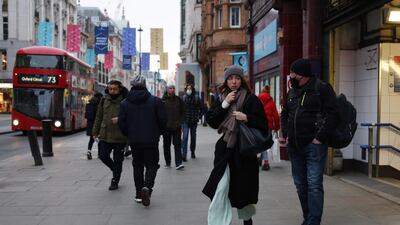
People exit Oxford Street tube station as England takes a significant step in easing lockdown restrictions, with non-essential retail, beauty services, gyms and outdoor entertainment venues among the businesses allowed to reopen. Getty Images -

Members of the public ride on the Depth Charge water slide ride at Thorpe Park theme park in Chertsey. AFP -

Secret Spa hairstylist Nas Ganev cuts the hair of Amy Pallister, 27, just after midnight, at her home in Balham, south London. AP Photo -
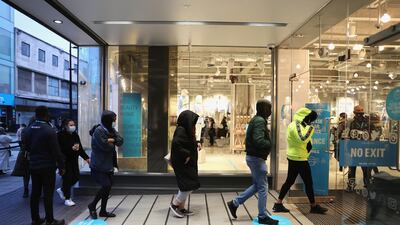
Customers at a Primark shop in Birmingham, central England. Reuters -
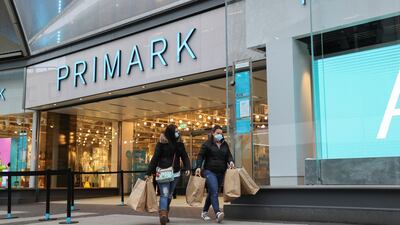
Customers with shopping bags visit Primark in Birmingham. Reuters -
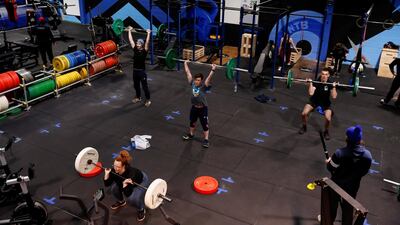
People attend a strength and conditioning class at Ultimate Fitness Gym in Wallsend, north-east England. Reuters -
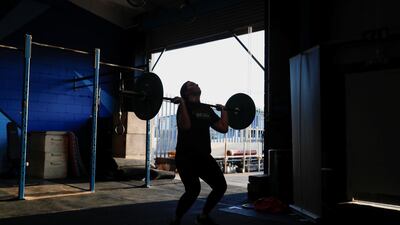
A person trains at Ultimate Fitness Gym in Wallsend. Reuters -
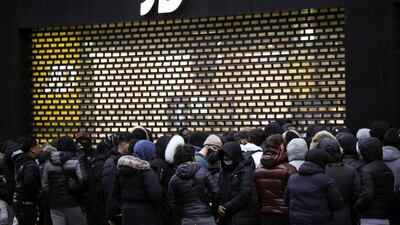
People queue outside a shop on Oxford Street, London. Reuters -
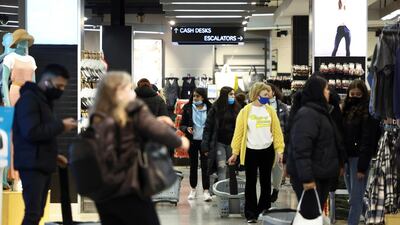
Customers browse inside a shop on Oxford Street, London. Reuters -
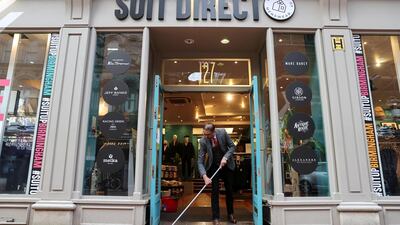
A worker sweeps a shop to prepare for its reopening in Birmingham. Reuters


Samples from the tests can be sent to laboratories where scientists carry out genomic sequencing and identify cases of the strain, which is also known as B1351.
Residents who test positive for the variant will be subject to “enhanced contact tracing”, in which NHS test-and-trace workers scrutinise their contacts “over an extended period”.
All of the identified cases so far are isolating or have already done so, the government said.
Their contacts have also been asked to isolate.
“This is the largest surge-testing operation to date,” said the UK’s Department of Health and Social Care.
The first case of the variant in south London was found in early March.
Dr Susan Hopkins, the chief medical adviser for the National Health Service’s test-and-trace programme, said the London cluster was significant.
“It’s really important that people in the local area play their part in stopping any further spread within the local community,” Dr Hopkins said.
“PCR testing is now available for all and I would strongly encourage everyone, whether they live, work or travel through the boroughs, to get tested even if they don’t have any symptoms of coronavirus.
“Around one in three people with Covid-19 don’t show any symptoms.
“By taking part you can protect yourselves and your loved ones, and help us identify any possible new cases that would otherwise be missed, preventing further transmission and saving lives.”

