Leila Aboulela was an 18-year-old student of economics at the University of Khartoum when she met her mother-in-law for the first time.
The woman who was to play an influential role in Aboulela’s life was English, married to a Sudanese man, loved to travel in Africa, spoke Arabic and had set up a shop selling local handicrafts and artwork to tourists in the capital.
It was only many years later, when Aboulela and her husband Nadir moved their family - the youngest child at two weeks old - to Aberdeen in Scotland, that she realised just how unconventional an Englishwoman her mother-in-law actually was.
"I expected everybody to be like her and of course I was horrified that they weren't," she tells The National. "Then I appreciated her all the more for it."

It was the 1990s, and there was a great deal of anti-Arab and anti-Muslim sentiment in the media that had arisen at the time of the first Gulf war. In those early days, Aboulela could feel the homesickness and sense of alienation building up within her.
Against this backdrop, she also faced bringing up her children away from her home country, instilling in them a knowledge of Arabic and an awareness of where they had come from. Most people, she says, underestimate the enormity of the challenge.
“I had an anxiety about bringing my children up in the West,” Aboulela concedes. “In general, bringing up a child is one of the most difficult things in the world. It helps when you have a support system like an extended family, a community and a society that shares your values and your aspirations for your child, but I had left it behind.
“Instead, everything was new for me, not least the cold. All this made me want to write.”

But when Aboulela relocated to Aberdeen for her husband’s job in the oil and gas sector, she had never even thought of herself as a potential author. When she did begin to write, her mother-in-law, Judith Mahjoub, was to become her internal audience.
“Sadly, she passed away in 1998, one year before my first published novel, so she never did read any of my books,” she says.
“I think now I'm writing for the people who read the same books as me. Through social media, there is a community of readers and we are all evolving together.
"In that way, we are all part of a massive book club. They are my readers now.”
Reading has long been a hobby for Aboulela, and she considers writing to be a natural extension. Throughout her childhood, she devoured books. The daughter of an Egyptian university lecturer and a Sudanese businessman, she was educated expatriate-style at the Khartoum American School where there were “very few Sudanese pupils and no Sudanese teachers”.
-
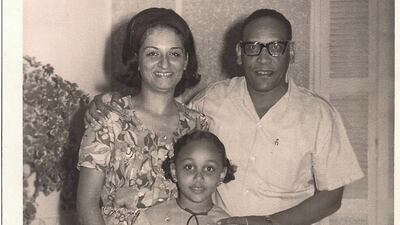
The young Leila with her mother, an Egyptian university lecturer, and father, a Sudanese businessman. Courtesy Leila Aboulela -
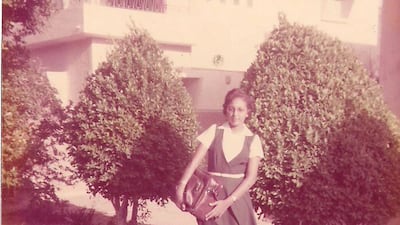
As a school girl in the Sudanese capital, many of Leila Aboulela's borrowings from the library were Western classics such as 'The Diary of Anne Frank' and 'Little Women'. Courtesy Leila Aboulela -
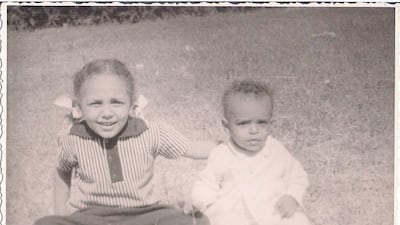
Leila, pictured with her younger brother. Courtesy Leila Aboulela -

Leila recalls growing up as a happy child in Sudan. Courtesy Leila Aboulela -
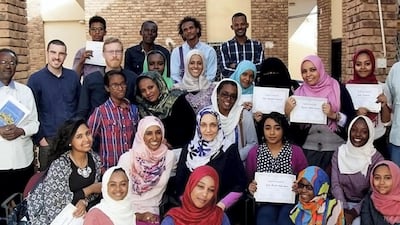
The author with her creative writing class at the private Ahfad University for Women in Omdurman, Sudan. Courtesy Leila Aboulela


Her borrowings from the school library were perhaps unusual for a young girl growing up in Khartoum: Little House on the Prairie, A Wrinkle in Time, Little Women, Harriet the Spy and The Diary of Anne Frank.
Later, Judith introduced her to the works of Commonwealth authors, to those of the American novelist Toni Morrison and to the women’s writing and books on feminist topics published by Virago Press.
After a stint at a private Catholic school, she did a degree in Economics and Statistics because she was good at maths and found it easy to achieve strong results in the subject. “My true interest,” she says, though, “was history, but I always got poor grades in it so I was discouraged.”
Aboulela then embarked on a PhD at the London School of Economics, which she never finished. She left instead with a MSc and MPhil in statistics for her thesis on the Stock and Flow Models for the Sudanese Educational System.
When she arrived in Scotland, it was by reading fiction that she made sense of her new surroundings. “When I finally accepted that I was going to settle here, I started to read to understand Britain better,” she explains.
“I like Joanna Trollope’s work; I thought she was very helpful. And for understanding Scotland, I read Janice Galloway. But mostly I was interested in understanding how outsiders felt about Britain. I found a lot of interesting insights from [British-Zimbabwean writer] Doris Lessing, because she had come here from abroad like me.”
As she made her own forays into writing, she thought at first that she would focus on non-fiction but every attempt inevitably came out as fiction. She attended writer’s workshops and had her first stories published, which opened new doors and turned her life around.
Aboulela credits the move away from Sudan for giving birth to her writing voice, and is unequivocal in her conviction that she could never have become an author had she stayed.
“Definitely not,” she says, though she is quick to point out that the reason is not because Sudanese society in any way discourages or constrains women from writing. “If someone wants to write, they write. There are plenty of excellent men and women writers in Sudan.
“It’s just that in my case, personally, the thing I wanted to write and to talk about was this movement from country to country, this immigration, this tension between the West and Islam,” Aboulela says. “These were my topics, what I was writing about. If I had stayed in Sudan, these issues would not have come up. I would have been quite happy to have had a teaching career in statistics, and to read novels in my leisure time.”
However, leave she did, and her first novel, The Translator, was published in 1999, the main character of which she has described as a "Muslim Jane Eyre". A year later, she was awarded the inaugural Caine Prize for African Writing for a short story, The Museum, and her second novel, The Minaret, followed in 2005.

Her latest, Bird Summons, published in 2019, weaves together two myths, one Celtic and the other Muslim, into the story of a trio of Arab women on a pilgrimage holiday to the Scottish Highlands paying homage to Lady Evelyn Cobbold, the first British woman convert to Islam to perform the Hajj, the holy journey to Mecca.
As with several contemporary Middle Eastern writers who treat similar themes, such as Elif Shafak, Ahdaf Soueif, Hisham Matar, Laila Lalami and Isabella Hamad, she writes not in the language of her place of birth but in English.
“My Arabic is not good enough for me to write in it,” she explains. “I'm quite fluent and happy to read and happy to talk Arabic. But, when it comes to the writing, I write in English because I mostly read in English.”
She is, however, instrumentally involved in the rendering of her oeuvre in Arabic, minutely going over the copy word by word, giving feedback and suggesting changes to the translator.
After she began writing, a new BBC Scotland initiative for ethnic minority writers became a lucky break for Aboulela. “I was commissioned to write many radio plays for the BBC, some of them adaptations of my work, and because of the programme I was also approached by a literary agent, which was fantastic,” she says.
In 2013, for the centenary of the birth of Albert Camus, Aboulela was asked by the BBC to write a reworking of the Frenchman's classic existentialist novel The Outsider. She reimagined the lives of two of the book's key characters - both Arabs, unnamed and non-speaking - and called it The Insider.
It is interesting to consider how this kind of outside-inside perspective has shaped her own later life. Lily Mabura, the Kenyan author who teaches a course on Aboulela’s work at the American University of Sharjah, in the UAE, finds her multiculturalism compelling, once describing her as “a writer who lives and embraces living in between”.
Asked when an immigrant - or perhaps more accurately in her case, an expatriate - stops feeling like an immigrant, Aboulela says: "I suppose when people stop asking me where I'm from, or when I say I'm from Aberdeen, when people don't then ask "Where are you really from?
“If I’m in Aberdeen I say that I’m from Sudan, of course, but if I’m outside Aberdeen I say I’m from Aberdeen.”
She is settled in Scotland, having, as she puts it, planted many memories there. It feels to her like home, not least because two of her children, Ahmed, 30, and Manaal, 22, still live in the port city.
Her eldest son Kareem, 34, resides in Dubai, a place that Aboulela loves because it is “such a mosaic of different people and just so pleasurable”. In an ideal world, she would be based in Aberdeen with leisurely visits to Dubai and Khartoum.
The spread of the coronavirus has had an unexpected effect on the woman who all those years ago exchanged numbers for words. Since the emergence of the infection, the public has become accustomed to seeing and hearing the input of experts with their various graphs, data and predictions about the imminent rise or fall in Covid cases.
“All the modelling used for the pandemic made me nostalgic for statistics,” she says, laughing.

Not enough, however, to divert her from working on her sixth novel. Set in late 19th-century Sudan, around the Siege of Khartoum, this forthcoming offering will be a take on the story of General Charles Gordon, and the Mahdi rebels who led a revolution against Turkish-Egyptian rule.
The young Leila grew up with the tale of Gordon, her university in Khartoum was originally founded by Lord Kitchener as a memorial to the British Army officer, and, coincidentally, a statue of the ill-fated general stands in central Aberdeen, though he neither lived nor worked there.
“It’s been amazing to research it in the Sudan Archive at Durham University,” she says. “I want to share the story with people who don’t know it and also the younger generation who haven’t grown up with it.”
It is not hard to imagine her in the library surrounded by official correspondence and personal diaries, piles of Mahdist material and military papers, indulging the passion for history that she never could quite excel at as a school girl.
But that has its own place in the past - by any estimation, Aboulela has more than made the grade now.

