Hungarian Prime Minister Viktor Orban delivers his address on the first day of the parliament's autumn session in Budapest, on September 25. EPA

Hungary PM Orban says ratifying Sweden's Nato bid not urgent


Soraya Ebrahimi
  • English
  • Arabic

Ratifying Sweden's Nato bid is not "urgent", Hungarian Prime Minister Viktor Orban told Parliament on Monday, accusing the Nordic country of having challenged the country's "democratic nature".

Hungary aligned itself with Turkey, which had long blocked Sweden's membership before lifting its veto in July, and has still not voted to approve the country's entry into the North Atlantic Treaty Organisation.

Mr Orban has repeatedly stated in the past that Hungary supports Sweden's bid, stressing that it was merely a "technicality".

"I wonder if there is something urgent that would force us to ratify Sweden's Nato bid. I cannot see any such circumstance," he told politicians.

Mr Orban underpinned his remarks by saying that there was "no threat to Sweden's security" and no military relationship with the Nordic country that could be jeopardised.

Budapest has often denounced what it called Stockholm's "open hostile attitude", accusing Swedish representatives of being "repeatedly keen to bash Hungary" on rule-of-law issues.

In recent weeks, criticism increased after a video from 2019 resurfaced that allegedly shows the democratic decline in Hungary.

Nato through the years - in pictures

  • British Foreign Secretary Ernest Bevin signs the North Atlantic Treaty in Washington on April 4, 1949. All photos: Getty
    British Foreign Secretary Ernest Bevin signs the North Atlantic Treaty in Washington on April 4, 1949. All photos: Getty
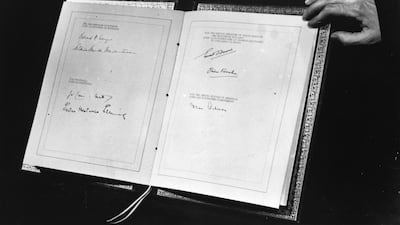
  • The North Atlantic Treaty showing the signatures of the foreign secretaries and ambassadors of the original signing nations - Belgium, Britain, Canada, Denmark, France, Iceland, Italy, Luxembourg, the Netherlands, Norway, Portugal and the US
    The North Atlantic Treaty showing the signatures of the foreign secretaries and ambassadors of the original signing nations - Belgium, Britain, Canada, Denmark, France, Iceland, Italy, Luxembourg, the Netherlands, Norway, Portugal and the US
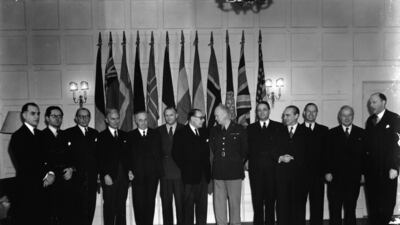
  • A meeting of the North Atlantic Council deputies in 1951 in London, attended by Gen Dwight D Eisenhower, centre
    A meeting of the North Atlantic Council deputies in 1951 in London, attended by Gen Dwight D Eisenhower, centre
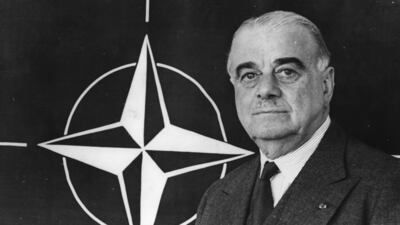
  • Lord Hastings Lionel Ismay, Secretary General of Nato, with the newly adopted Nato emblem in 1952
    Lord Hastings Lionel Ismay, Secretary General of Nato, with the newly adopted Nato emblem in 1952
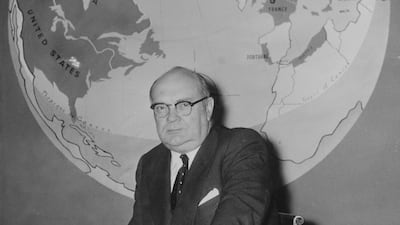
  • Belgian Foreign Minister Paul-Henri Spaak holds a press conference in Paris after taking over from Hastings Ismay as Nato chief in 1956
    Belgian Foreign Minister Paul-Henri Spaak holds a press conference in Paris after taking over from Hastings Ismay as Nato chief in 1956
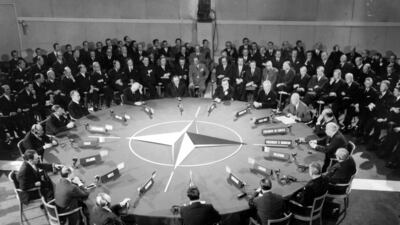
  • The opening speech at the Nato summit in Paris in 1957
    The opening speech at the Nato summit in Paris in 1957
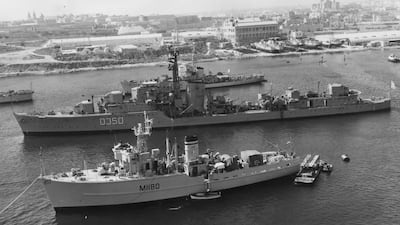
  • Some of the Nato vessels gathered for Exercise Medflex Invicta in Malta in 1961
    Some of the Nato vessels gathered for Exercise Medflex Invicta in Malta in 1961
  • A McDonnell Douglas F-4 Phantom II fighter-bomber of the Royal Navy is launched from HMS Ark Royal during a Nato exercise in 1972
    A McDonnell Douglas F-4 Phantom II fighter-bomber of the Royal Navy is launched from HMS Ark Royal during a Nato exercise in 1972
  • German Nato troops on manoeuvres in 1980
    German Nato troops on manoeuvres in 1980
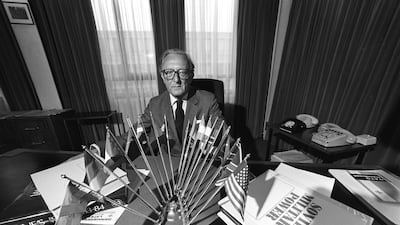
  • Lord Carrington, the new Secretary General of Nato, sits behind his desk in Brussels, Belgium, in 1984
    Lord Carrington, the new Secretary General of Nato, sits behind his desk in Brussels, Belgium, in 1984
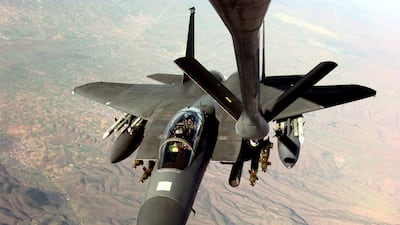
  • A US Air Force F-15E Strike Eagle refuels in the skies over Macedonia in 1999, as it flies missions in support of Nato Operation Allied Force
    A US Air Force F-15E Strike Eagle refuels in the skies over Macedonia in 1999, as it flies missions in support of Nato Operation Allied Force
  • Frigates, part of the Nato permanent fleet based in the Mediterranean Sea, enter the port of Piraeus, Greece, in 2003
    Frigates, part of the Nato permanent fleet based in the Mediterranean Sea, enter the port of Piraeus, Greece, in 2003
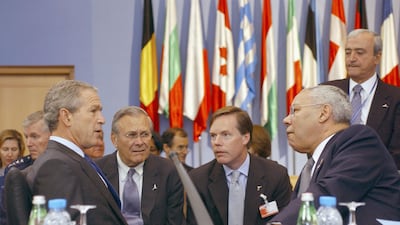
  • US President George W Bush, US Secretary of Defence Donald Rumsfeld, ambassador R Nicholas Burns and US Secretary of State Colin Powell attend the Nato summit in 2004 in Istanbul, Turkey
    US President George W Bush, US Secretary of Defence Donald Rumsfeld, ambassador R Nicholas Burns and US Secretary of State Colin Powell attend the Nato summit in 2004 in Istanbul, Turkey
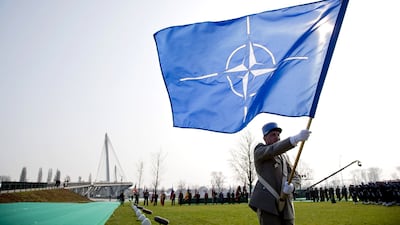
  • Members of the military attend a commemoration for Nato soldiers during the 2009 summit in Kehl, Germany
    Members of the military attend a commemoration for Nato soldiers during the 2009 summit in Kehl, Germany
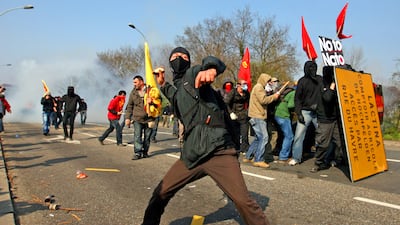
  • A protester throws a stone during clashes at the Nato summit in 2009 in Strasbourg, France
    A protester throws a stone during clashes at the Nato summit in 2009 in Strasbourg, France
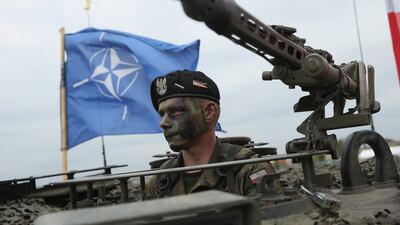
  • A Polish soldier sits in a tank as a Nato flag flies behind during military exercises in Zagan, Poland, in 2015
    A Polish soldier sits in a tank as a Nato flag flies behind during military exercises in Zagan, Poland, in 2015
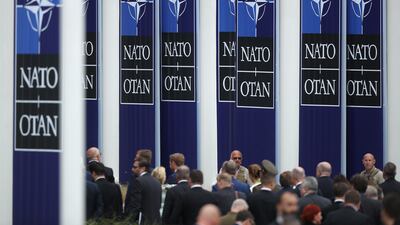
  • Guests depart after attending the opening ceremony at the 2018 Nato summit in Brussels
    Guests depart after attending the opening ceremony at the 2018 Nato summit in Brussels
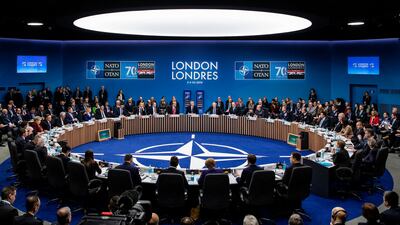
  • Nato leaders listen to British Prime Minister Boris Johnson while attending the summit in 2019 in Watford, England
    Nato leaders listen to British Prime Minister Boris Johnson while attending the summit in 2019 in Watford, England
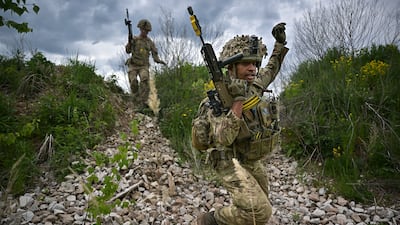
  • Soldiers from the Royal Welsh Battlegroup take part in manoeuvres during a Nato exercise on the Estonian-Latvian border in 2022 in Voru, Estonia
    Soldiers from the Royal Welsh Battlegroup take part in manoeuvres during a Nato exercise on the Estonian-Latvian border in 2022 in Voru, Estonia
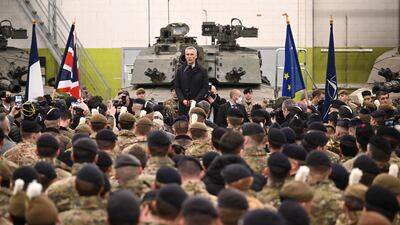
  • Secretary General of Nato Jens Stoltenberg meets troops at the Tapa Army Base in 2022 in Tallinn, Estonia
    Secretary General of Nato Jens Stoltenberg meets troops at the Tapa Army Base in 2022 in Tallinn, Estonia
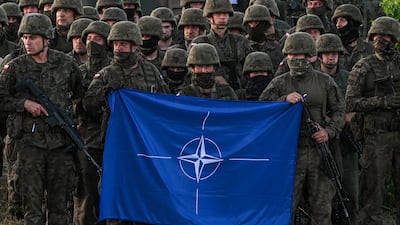
  • Polish soldiers hold a Nato flag in 2022 at a training ground in Orzysz, Poland
    Polish soldiers hold a Nato flag in 2022 at a training ground in Orzysz, Poland
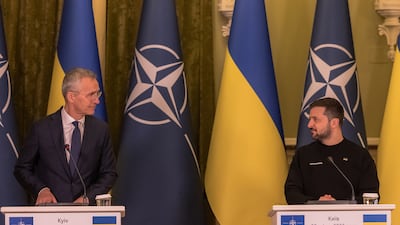
  • Ukrainian President Volodymyr Zelenskyy and Mr Stoltenberg attend a joint press conference in Kyiv, Ukraine, in April 2023
    Ukrainian President Volodymyr Zelenskyy and Mr Stoltenberg attend a joint press conference in Kyiv, Ukraine, in April 2023

"Serious accusations and fake informations are being spread to students in the schools of Sweden," Hungarian Foreign Minister Peter Szijjarto wrote in a letter sent to his Swedish peer in mid-September.

The video about Hungary being shown in schools "elevates the problem … to the level of international policy, and we will not accept that", Mr Orban said on Monday.

Finland and Sweden ended decades of military non-alignment and decided to join the alliance after Russia's invasion of Ukraine.

In April, Finland became the 31st member of Nato.

Ten tax points to be aware of in 2026

1. Domestic VAT refund amendments: request your refund within five years

If a business does not apply for the refund on time, they lose their credit.

2. E-invoicing in the UAE

Businesses should continue preparing for the implementation of e-invoicing in the UAE, with 2026 a preparation and transition period ahead of phased mandatory adoption. 

3. More tax audits

Tax authorities are increasingly using data already available across multiple filings to identify audit risks. 

4. More beneficial VAT and excise tax penalty regime

Tax disputes are expected to become more frequent and more structured, with clearer administrative objection and appeal processes. The UAE has adopted a new penalty regime for VAT and excise disputes, which now mirrors the penalty regime for corporate tax.

5. Greater emphasis on statutory audit

There is a greater need for the accuracy of financial statements. The International Financial Reporting Standards standards need to be strictly adhered to and, as a result, the quality of the audits will need to increase.

6. Further transfer pricing enforcement

Transfer pricing enforcement, which refers to the practice of establishing prices for internal transactions between related entities, is expected to broaden in scope. The UAE will shortly open the possibility to negotiate advance pricing agreements, or essentially rulings for transfer pricing purposes. 

7. Limited time periods for audits

Recent amendments also introduce a default five-year limitation period for tax audits and assessments, subject to specific statutory exceptions. While the standard audit and assessment period is five years, this may be extended to up to 15 years in cases involving fraud or tax evasion. 

8. Pillar 2 implementation 

Many multinational groups will begin to feel the practical effect of the Domestic Minimum Top-Up Tax (DMTT), the UAE's implementation of the OECD’s global minimum tax under Pillar 2. While the rules apply for financial years starting on or after January 1, 2025, it is 2026 that marks the transition to an operational phase.

9. Reduced compliance obligations for imported goods and services

Businesses that apply the reverse-charge mechanism for VAT purposes in the UAE may benefit from reduced compliance obligations. 

10. Substance and CbC reporting focus

Tax authorities are expected to continue strengthening the enforcement of economic substance and Country-by-Country (CbC) reporting frameworks. In the UAE, these regimes are increasingly being used as risk-assessment tools, providing tax authorities with a comprehensive view of multinational groups’ global footprints and enabling them to assess whether profits are aligned with real economic activity. 

Contributed by Thomas Vanhee and Hend Rashwan, Aurifer

Classification of skills

A worker is categorised as skilled by the MOHRE based on nine levels given in the International Standard Classification of Occupations (ISCO) issued by the International Labour Organisation. 

A skilled worker would be someone at a professional level (levels 1 – 5) which includes managers, professionals, technicians and associate professionals, clerical support workers, and service and sales workers.

The worker must also have an attested educational certificate higher than secondary or an equivalent certification, and earn a monthly salary of at least Dh4,000. 

UAE currency: the story behind the money in your pockets
Updated: September 26, 2023, 5:45 AM