


Wildlife populations have fallen by nearly 70 per cent over the past five decades and the decline is helping to push Earth towards a climate catastrophe, according to a report by the World Wide Fund for Nature.
The loss of biodiversity is being fuelled by climate change and is placing all life on Earth on the brink, according to the WWF's flagship Living Planet report.
It claims that its biennial report ― which is collated from the Zoological Society of London’s Living Planet Index (LPI) and analyses almost 32,000 populations of 5,230 species ― is the most detailed in its 24-year history.
On average, wildlife population sizes have plummeted by 69 per cent between 1970 and 2018. The UK, meanwhile has seen its biodiversity richness drop to 50 per cent of previous levels, according to its analysis, making it one of the most nature-depleted countries in the world.
Wildlife in Britain such as skylarks and hedgehogs are no longer everyday sightings, while 92 per cent of sea grass habitat and 97 per cent of wildflower meadows have been lost,
Authors said they were particularly concerned about ecosystems in Latin America and the Amazon, where wildlife populations have shrunk by 94 per cent on average within a lifetime, partly due to the devastating effects of deforestation.
Species to suffer catastrophic loss include the Amazon pink river dolphin, whose population in the Mamiraua Sustainable Development Reserve in the Brazilian state of Amazonas plummeted by 65 per cent between 1994 and 2016.
Experts said the Amazon is fast approaching a tipping point where it will cease to be a functioning rainforest, without which the world cannot avert dangerous global warming.
Every year, almost 10 million hectares of forests ― about the size of Portugal ― is destroyed globally, adding to the climate crisis and food insecurity.
In addition, one million plants and animals are threatened with extinction. At least 1 per cent to 2.5 per cent of birds, mammals, amphibians, reptiles and fish have already become extinct, the authors say.
In the report, the WWF describes climate change and biodiversity loss as "two sides of the same coin". Land-use change is the primary driver of ecological decline, it says, in part because of the climate crisis.

The situation threatens to deteriorate further unless the world adheres to the 1.5ºC climate target that has been ratified by successive UN climate change summits. It is hoped that the upcoming Cop27 meeting in Egypt will address the concurrent crises surrounding food, energy and climate.
The authors say that wealthy countries are disproportionately to blame for the crisis and ahead of the linked Cop15 biodiversity summit in Montreal, Canada, in December, called on world leaders to address the situation.
The WWF says that this is "the last chance we will get" to agree a new global framework for biodiversity that would halt and reverse nature loss by 2030.
Dr Robin Freeman, head of the indicators and assessments unit at ZSL, said that his organisation's findings show "we are eroding the very foundations of life and urgent action is needed".
“Governments meeting this December in Montreal have the opportunity to secure the health of species and restore ecosystems, to ensure a future for nature across the globe," he said.
"ZSL is calling on world leaders to put nature at the heart of all global decision-making at Cop15, by making stronger targets and commitments to reverse biodiversity loss ― and urge them to include the LPI as a headline indicator through which to hold these targets to account."
A transition to net-zero economy will address the cost of living and energy crisis, as investment in cost-effective renewable energy will help to get the UK's economy back on track, according to the report.
Tanya Steele, chief executive at WWF, said that failure of global leaders to agree a solution on biodiversity would be “the biggest possible betrayal of future generations".
“Despite the science, the catastrophic projections, the impassioned speeches and promises, the burning forests, submerged countries, record temperatures and displaced millions ― world leaders continue to sit back and watch our world burn in front of our eyes.
“The climate and nature crises, their fates entwined, are not some faraway threat our grandchildren will solve with still-to-be-discovered technology.
“Across the world, and in the UK, nature is on its knees and our leaders are risking catastrophic consequences for people, planet and our economy by failing to act. We are hurtling towards a hotter planet where nature ― and with it, our food, our homes and livelihoods ― will be unable to survive without urgent action now to save our climate."
There are some bright spots of wildlife bucking the declines, such as numbers of loggerhead turtle nests increasing 500 per cent along the coastline of Chyrsochou Bay, Cyprus, between 1999 and 2015 thanks to targeted conservation efforts.
In the UK, once-extinct common cranes have been reintroduced, with the population reaching more than 200, and in the Virunga Mountains of east Africa conservation efforts have helped increase mountain gorilla numbers from 480 in 2010 to 604.
Morocco's last nomads are struggling with climate change - in pictures
-
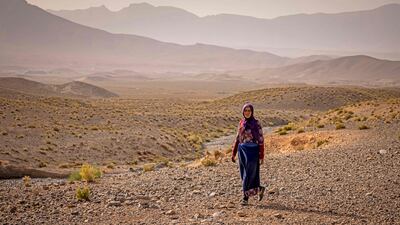
Amazigh Ida Ouchaali at an encampment near the village of Amellagou, where some of the last people to keep Morocco's nomadic traditions reside. They say their ancient lifestyle has become impossible to sustain as climate change brings ever more intense droughts. All photos: AFP -
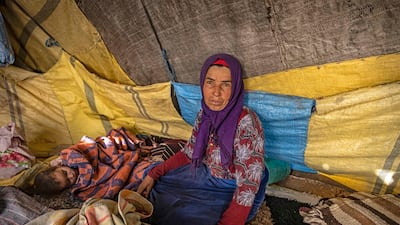
Amazigh Ida Ouchaali belongs to a community of about 25,000 people at the last census in 2014. Its numbers are down by two-thirds in a decade. -
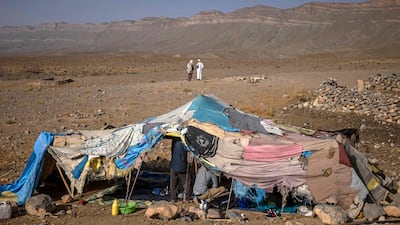
Amazigh tents near the village of Amellagou in Morocco. Ida Ouchaali's tribe spent centuries roaming the country to find food for their animals, but their way of life is steadily disappearing. Ms Ouchaali says she is 'exhausted' by her fight for survival. -

Amazigh women in Amellagou carry out their daily chores. -
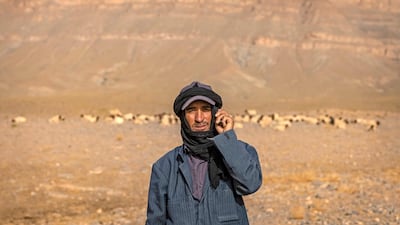
An Amazigh man poses for a picture next to a herd of sheep near the village of Amellagou. Water for livestock is hard to find and the harsh climate threatens his way of life. -
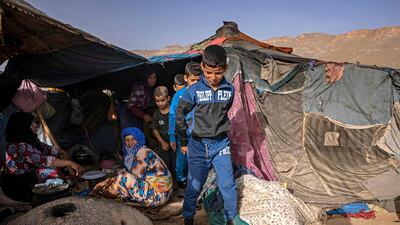
Amazigh families at Amellagou worry about the future of their children. One teenager says the young want to 'turn the page on nomadism'. -
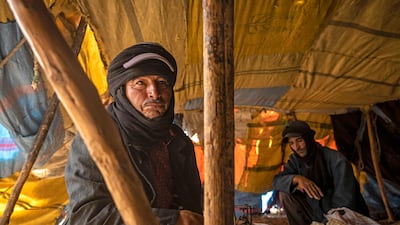
Amazigh Moha Ouchaali is in his 50s. 'Everything has changed,' he says. 'I don't recognise myself anymore in the world of today.' -
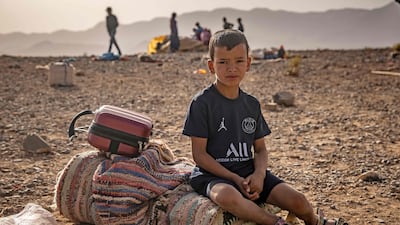
An Amazigh boy and his belongings in the Moroccan desert. -
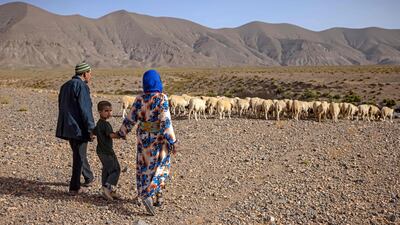
Children of Amazigh families grow up in a shrinking community. At one time there were nearly 500 tents around the village of Amellagou but now there are less than a tenth of that. -

Each generation of Amazigh face social and economic changes that make their lives more difficult. Laws passed by Morocco that would defend the nomadic way are simply ignored by other people, they say. -
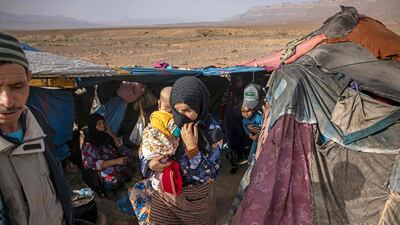
Amazigh sheltering at Amellagou say they recall a time when nomadic people were welcomed by settled communities but such hospitality is largely gone. -
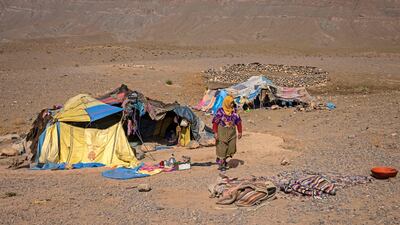
Driss Skounti says he has little hope for the future. 'Nomadic life has an identity and a tradition steeped in history, but is doomed to disappear within 10 years.'



