


The head of Amnesty International in Ukraine has resigned in protest at a report published by the charity which appeared to blame Ukraine for Russian attacks on civilians.
Oksana Pokalchuk said Amnesty's report had become a “tool of Russian propaganda” and criticised her colleagues for failing to consult their Ukrainian branch.
The report published on Thursday said the Ukrainian military was endangering civilians by moving troops and weapons to residential areas, suggesting this made them susceptible to Russian attack.
Accusing Ukraine of breaching humanitarian law by “turning civilian objects into military targets”, it described “ensuing Russian strikes” as hitting civilians caught up in the slipstream of Ukrainian military operations.
Ukraine and allies including the US and UK have said that Russian strikes on civilians are not accidental.
Although Amnesty criticised Russia for using weapons that caused indiscriminate damage, it met a barrage of criticism from those who said the report defended the invaders and damaged the charity's reputation.
Oksana Markarova, Ukraine's ambassador to the US, called it “appalling victim-blaming... Ukrainians are in harm's way because Russians invaded us and kill us”.
President Volodymyr Zelenskyy devoted part of his nightly address on Thursday to countering Amnesty by saying there was no situation in which Russian attacks could be justified.
“We saw today a completely different report from Amnesty International, which unfortunately tries to amnesty the terrorist state,” he said.
Ms Pokalchuk said the report was one-sided and that Amnesty gave too little time for Ukraine's Defence Ministry to respond, resulting in a release that “sounded like support of Russian narratives”.
The notion that Ukraine has been using human shields to defend its cities is a frequent Kremlin talking point which President Vladimir Putin has tried to sell to fellow leaders.
Amnesty's report was picked up by Russian news agencies Interfax and Tass, which said it exposed “inconvenient facts” about the war in Ukraine.
Moscow's narrative is rejected by western allies, who have described Russia's actions as war crimes and asked the International Criminal Court to investigate alleged atrocities.
Ukraine crisis latest — in pictures
-
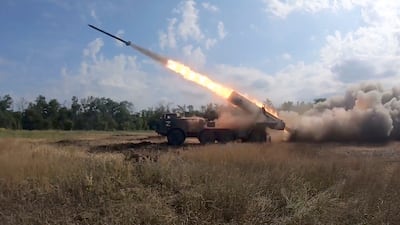
A Russian multiple-launch 'Hurricane' rocket system in action during battles in an undisclosed area in Ukraine. EPA -
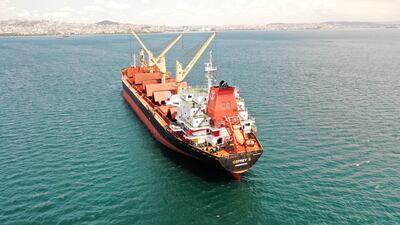
The Turkish bulk carrier 'Osprey S' is anchored off the shore near Istanbul. The vessel was expected to arrive in Ukraine's Chornomorsk port carrying grain, becoming the first ship to arrive at a Ukrainian port during the war. Reuters -
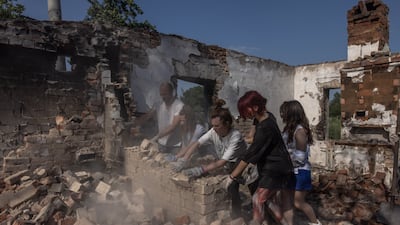
Young volunteers from the 'Repair Together' initiative, together with the local residents, clear rubble from a house that was destroyed during fighting, in Ivanivka, Chernihiv region. EPA -
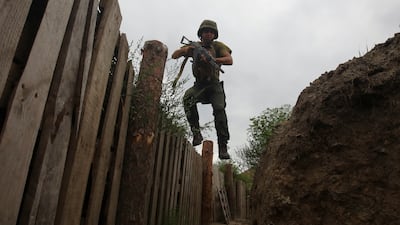
A member of the Ukrainian National Guard jumps into a trench at a position near a front line, in the Kharkiv region. Reuters -
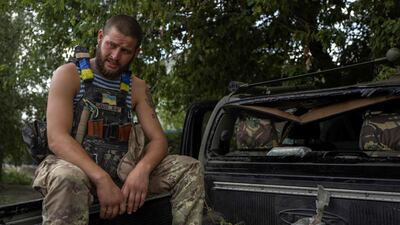
A Ukrainian soldier after a rocket fragment hit his car, in Bakhmut. AFP -
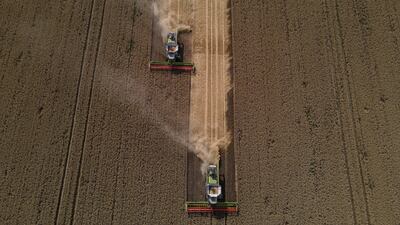
Combine harvesters of the Continental Farmers Group agricultural company harvest wheat in the Ternopil region of Ukraine. Getty Images -
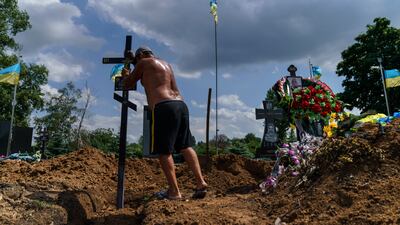
A cemetery worker places a cross on the grave of Ukrainian soldier Serhiy Marchenko, who died aged 26, after his burial in Pokrovsk, Donetsk region. AP -
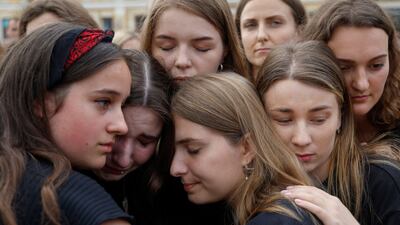
Women attend a rally of relatives and friends of defenders of the Azovstal Iron and Steel Works in Mariupol. Reuters -
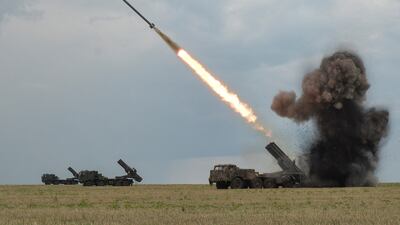
Ukrainian troops fire with a BM27 Uragan multiple-launch rocket system, in the Kharkiv region. Reuters -
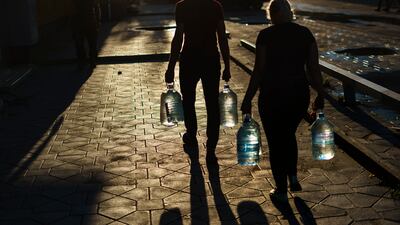
A couple carry water bottles after filling them up at a store in Pokrovsk, Donetsk region. AP -
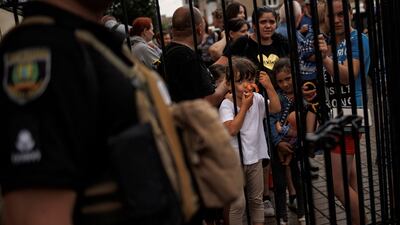
A girl holds a doll as people wait in Pokrovsk, to board a train to Dnipro and Lviv, during an evacuation effort from war-affected areas of eastern Ukraine. Reuters -
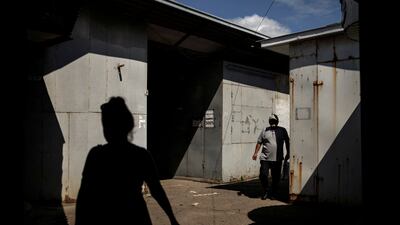
People make their way through the partially-closed Market of Kramatorsk. Reuters


Ms Pokalchuk said she had initially hoped to have the report withdrawn and replaced but resigned after realising that would not happen.
“It hurts me to admit it, but the leadership of Amnesty International and I have split over our values,” Ms Pokalchuk said.
“The Ukrainian office was not involved in the preparation or writing of the text of the publication. Every person from the Ukrainian Amnesty office knows that the Russian Federation is responsible for the crimes of aggression against Ukraine.”
Amnesty chief Agnes Callamard, a former UN special rapporteur, said the charity had also extensively documented alleged Russian atrocities during the war.
She said Amnesty's investigations were being attacked by “Ukrainian and Russian social media mobs and trolls”.
That comment angered Ukraine's Foreign Minister Dmytro Kuleba, who said it “won't stop me from saying that its report distorts reality, draws false moral equivalence and the victim and boosts Russia's disinformation efforts”.
Latvia's Foreign Minister Edgars Rinkevics sided with him in criticising Ms Callamard's remark.
“This is called ignorance, arrogance and incompetence,” he said.

