


Tens of thousands of lives depend on a deal being reached between Russia and Ukraine to restart grain exports through the Black Sea, the European Union said on Monday, as it expressed hope of an agreement in the coming days.
Josep Borrell, the EU's top foreign policy official, said the talks being brokered by the UN and Turkey were “not a diplomatic game … it is an issue of life and death for many human beings”.
Diplomats meeting in Brussels were briefed that efforts to reroute Ukrainian grain up the Danube had led to 2.7 million tonnes of grain being exported via Romania — about 10 per cent of the pre-war stockpile — while the Black Sea was blocked.
Rail wagons have also taken some of the grain to Poland as Ukraine's allies try to stop its produce going to waste, worsening the economic fallout of the war.
But these stopgap measures are “not enough,” said Mr Borrell, “so I hope, and I think I have hope, that this week it will be possible to reach an agreement to de-block Odesa and other Ukrainian ports. The lives of thousands — more than thousands, tens of thousands of people — depend on this agreement.”
Britain's Foreign Office said on Monday that Russia was deliberately bombing Ukrainian farm equipment and that grain fields were burning because of Russian shelling, adding to the food shortage on world markets.
“These attacks and the blockade of ports are risking future harvests and threatening global hunger,” it said.
Ukraine wants to ensure that opening a shipping corridor will not leave its southern coast vulnerable to a Russian attack, and has said it is not satisfied with mere assurances from a hostile Moscow.
Lithuania's Foreign Minister Gabrielius Landsbergis said providing more arms to Ukraine was part of the solution because it would deter the Russians from attacking or capturing Odesa.

Senior officials insisted at the Brussels talks that sanctions against Russia were working, as the EU prepared to turn the pressure on Moscow up another notch by banning the import of Russian gold.
The nearly five-month Russian onslaught on Ukraine has raised questions about whether EU sanctions have missed their target, and Europe's resolve could be tested further this week if Russia turns off the gas tap to Germany.
Hungary's prime minister Viktor Orban, the main voice of dissent among the EU's 27 leaders, said last week that sanctions had failed and that the bloc had “shot itself in the lungs” by weakening its own economy.
But diplomats meeting in Brussels said the Russian economy had taken a bigger hit and that easing the pressure on the Kremlin would embolden President Vladimir Putin to keep pursuing his goals with violence.
“Some European leaders have been saying that the sanctions were an error, were a mistake. Well, I do not think it was a mistake,” said Mr Borrell.
“Have a look at the charts of the prices — the prices of oil, since we adopted the ban on oil, have been decreasing. So, how can someone say that it was the ban which has increased the price of oil? Don’t they have eyes?”
Brent crude was trading at about $103 a barrel on Monday compared to $116 when the EU's oil ban was agreed on June 2, although prices are still considerably higher than before the Russian invasion in February.
Austria's Foreign Minister Alexander Schallenberg said the Russian car and aviation industries had also been hit hard by the sanctions, after its planes were banned from EU airspace and western-made aircraft were denied maintenance.
“We cannot fall into the trap of taking up the Russian narrative,” said Mr Schallenberg, who cited forecasts that Russia's economy would shrink by 10 per cent this year while the EU's is tipped to grow.
He also mentioned signs of a brain drain from Russia, with many people leaving for Turkey or former Soviet republics such as Georgia, as evidence that the heat was being felt.
-
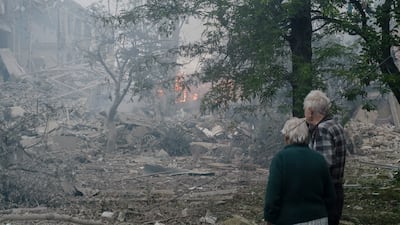
An elderly couple stands near a damaged school in the city of Kramatorsk in eastern Ukraine. EPA -
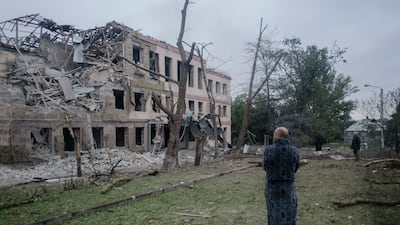
At least one person was killed after shelling hit the school, the Ukrainian State Emergency Service said. EPA -
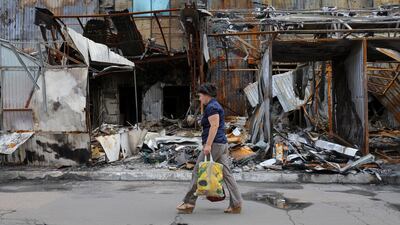
A woman walks past a destroyed market near a railway station in Donetsk. Reuters -
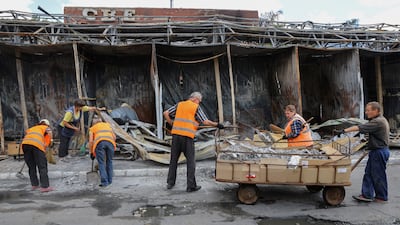
Municipal workers clean a street in Donetsk. Reuters -
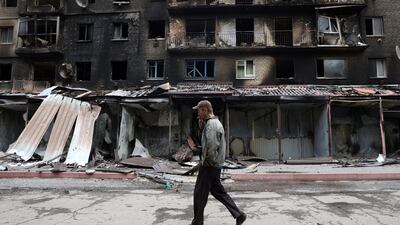
A man passes destroyed buildings in the Ukrainian town of Siversk. AFP -
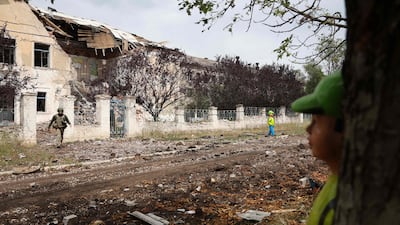
A destroyed school in Siversk. AFP -

A Ukrainian serviceman passes by destroyed buildings in Siversk. AFP -
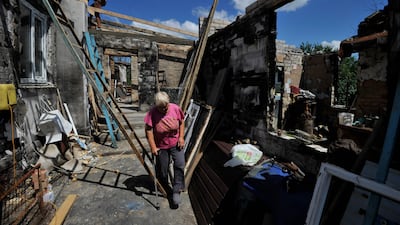
A woman's home is repaired by volunteers after being destroyed by shelling in the village of Zalissya. AFP -
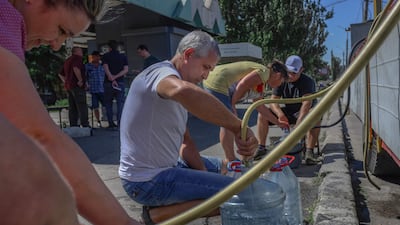
People fill up water canisters in Mykolaiv, amid the Russian invasion of Ukraine. AFP -
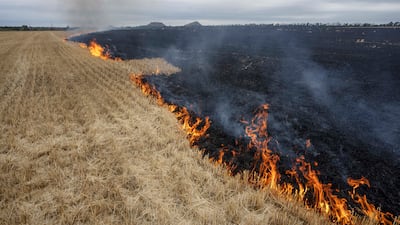
Grain fields burn on the outskirts of Kurakhove, Donetsk Oblast, eastern Ukraine. AP Photo -
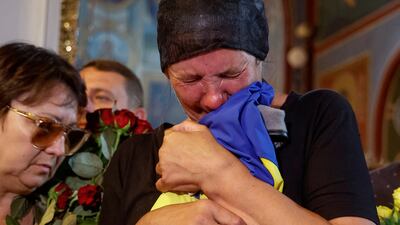
The mother of Ukrainian serviceman Abdulkarim Gulamov, who was killed in a fight against Russian troops in Kherson, attends his funeral in Kyiv. Reuters -
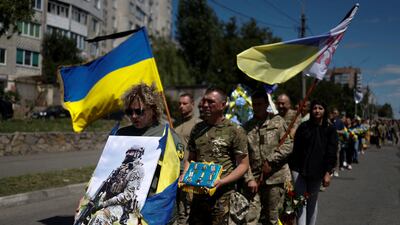
People carry pictures of Mr Gulamov at the funeral. Reuters -
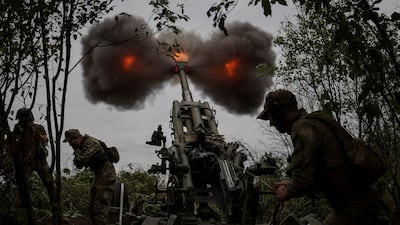
Ukrainian service members fire a shell from a M777 Howitzer in Kharkiv. Reuters -
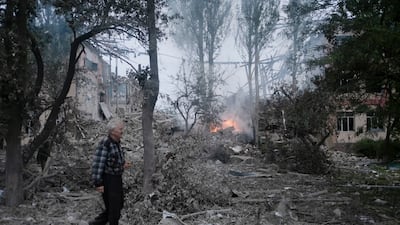
A man walks in front of a damaged school after a missile strike hit the city of Kramatorsk. EPA -
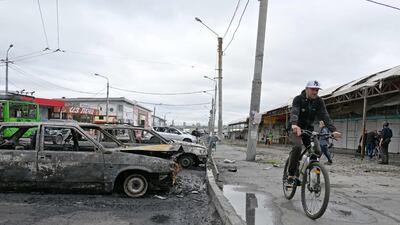
A cyclist rides past burnt cars after a Russian rocket strike in Kharkiv. AFP -
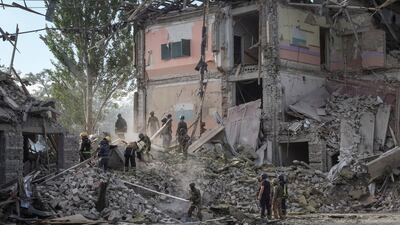
Rescuers and servicemen work at a school building damaged by a Russian military strike in Kramatorsk. Reuters -
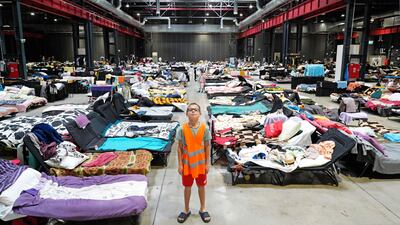
Sasha, 12, a refugee from Ukraine at the humanitarian aid centre set up at the Global Expo exhibition hall in Warsaw, Poland. AFP -
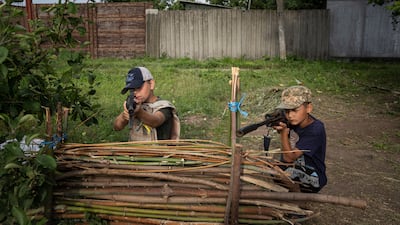
Maksym and Andrii, 11-year-old boys, play with plastic guns at a self-made checkpoint along a motorway in the Kharkiv region of Ukraine. AP -

A Ukrainian soldier nicknamed 'Oakland' guards his position at the front line in the Kharkiv region. AP -
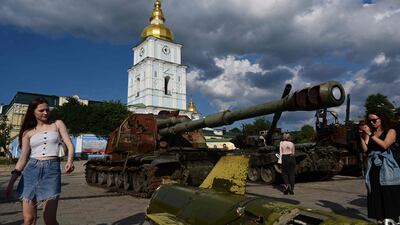
Ukrainians look at destroyed Russian military equipment at an outdoor exhibition near the Church of the Three Saints in Kyiv. AFP -
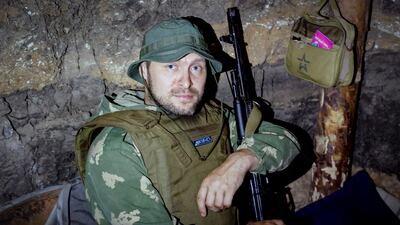
A member of the self-proclaimed Donetsk People's Republic (DPR) militia sits in a makeshift bunker near Avdiivka, in the Donbas region of Ukraine. EPA -
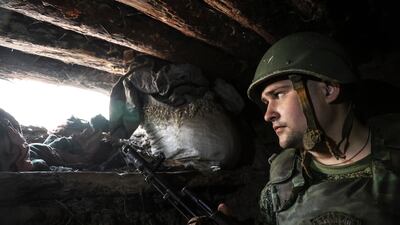
A DPR militia member monitors a section of the road near Avdiivka. EPA -
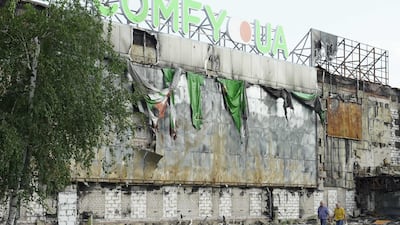
Ukrainians pass a heavily damaged shopping mall in the city of Kherson. AFP -
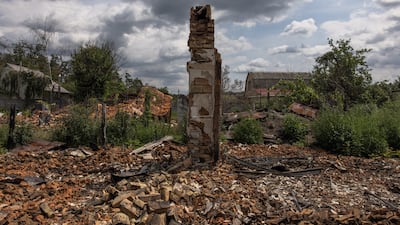
The rubble of a house in Moshchun village, about 20 kilometres outside Kyiv. EPA -

A resident helps a firefighter put out a fire after an air strike in the town of Bakhmut, in the breakaway enclave of Donetsk. AFP -
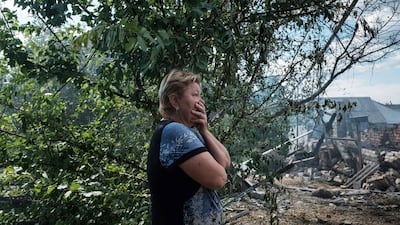
A woman surveys the devastation caused by an air strike in Bakhmut. AFP -
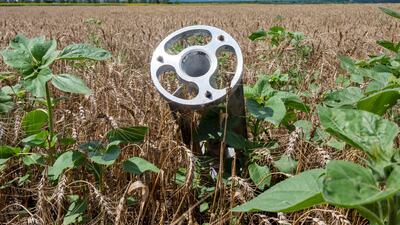
Part of a projectile fire by a rocket launcher lies embedded in a wheat field in Ukraine's Kharkiv region. AFP -
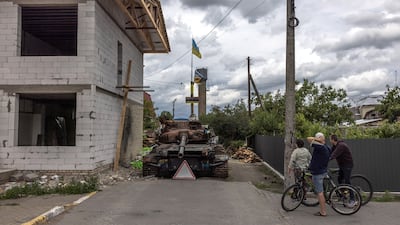
Members of the public look at a Ukrainian tank destroyed in a Russian attack, in Hostomel, north-west of Kyiv. EPA -

Burnt out cars destroyed in Russian attacks are piled up in Hostomel. EPA -
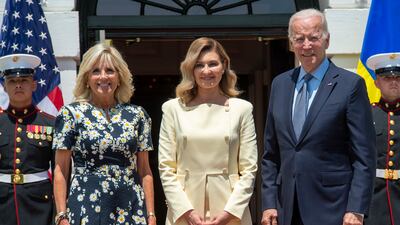
Jill Biden, US first lady, left, and US President Joe Biden welcome the first lady of Ukraine, Olena Zelenska, to the White House. EPA -

Miami District Two commissioner Ken Russell, left, and Miami police chief Manuel Morales with weapons collected in the Guns 4 Ukraine initiative, at Miami City Hall in Florida. Guns bought back by Miami will be delivered to sister city Irpin, near Kyiv. EPA -
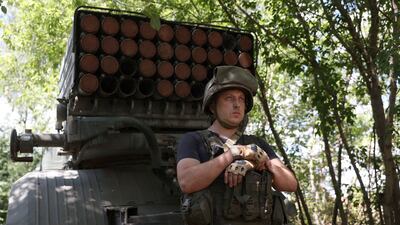
A Ukrainian serviceman stands next to a Grad BM-21 multiple rocket launcher at the front line in Donbas, eastern Ukraine. AFP -
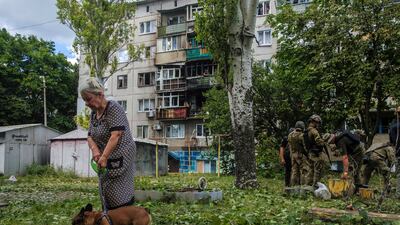
A woman walks her dog in front of a block of flats hit by shelling in Kramatorsk, Donetsk region, eastern Ukraine. EPA -
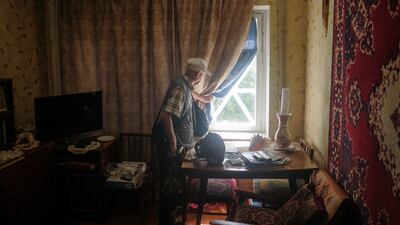
A Kramatorsk resident peers out of a window lined with tape to reduce the impact of shattering glass. EPA -
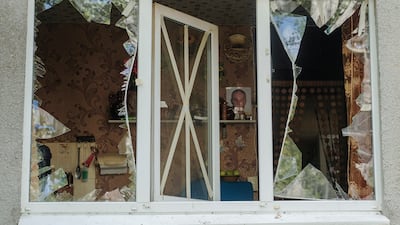
The damaged windows of an apartment, after shells hit a residential area in Kramatorsk. EPA -
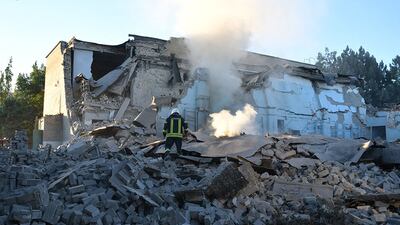
Rescuers working on a residential building partially destroyed by missile strike in Bashtanka, Mykolaiv as the Russian war in Ukraine continues. AFP -
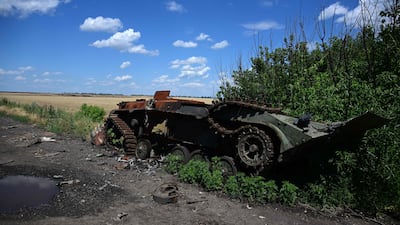
An Ukrainian infantry fighting vehicle lies by the roadside, having been destroyed by Russian forces in Ukraine. AFP


“Sanctions are not a measure with instant effect. They are measures with a long-term effect,” he said. “If we look on and do nothing, what happens then? Then we acknowledge that the UN Charter and international law can be trampled on and the law of the jungle would rule.”
Anna Luehrmann, a deputy German foreign minister, said the sanctions were working and should remain in place despite fears that her country will run short of gas if Russia does not resume exports.
Russia's main gas pipeline to Germany, Nord Stream 1, was shut down for maintenance last week by state-owned exporter Gazprom and there are doubts about whether it will ever come back online.
“We are getting ready for all sorts of scenarios. We are prepared,” Ms Luehrmann said.
A total shutdown would have knock-on effects for Austria and other countries which receive second-hand Nord Stream gas from Germany, but Mr Schallenberg said: “We'll cross that bridge when we get there.”
EU ministers were on Monday discussing new measures that Brussels bills as an upgrade to existing sanctions rather than a full-blown seventh round, but which would include a ban on importing gold from Russia.
A gold ban would bring the EU in line with Britain, the US and Canada and honour an agreement at last month's G7 summit that Russia's gold revenue should be forced down.
The latest package would also clarify the scope of some existing sanctions, in particular by emphasising that Russia is not banned from exporting agricultural produce — countering Moscow's narrative that food shortages are the West's fault.
But there is no proposal on the table to ban Russian gas imports, after fraught negotiations with Mr Orban on oil shipments took the wind out of the sails of the EU's desire for energy sanctions.

