


Emmanuel Jean-Michel Frédéric Macron has been serving as the president of France since May 14, 2017.
The former banker was the first person in the history of the Fifth Republic to win the presidency without the backing of either the Socialists or the Gaullists.
France’s youngest head of state since Napoleon I, Mr Macron, 44, had a rapid rise to power but has since been plagued by domestic troubles and low approval ratings.
The eldest of three siblings, Mr Macron was raised in a politically liberal family. Considered a gifted student, he attended a private school where he began a long-term relationship with his drama teacher, Brigitte Trogneux, who he went on to marry.
While an investment banker at Rothschild & Cie Banque, the French division of the international Rothschild financial group, Mr Macron began working with former French president Francois Hollande during his campaign for the Socialist Party’s nomination for president before the 2012 election.
After Mr Hollande won the presidency, Mr Macron joined his administration as a deputy chief of staff and economic adviser.
In April 2016, Mr Macron, at a time when the country’s poor economic performance and deadly terrorist attacks in Paris had weakened the Hollande presidency, Mr Macron announced the creation of En Marche! (“Forward!”), a popular movement that he characterised as a “democratic revolution” against a rigid political system.

After winning the 2017 presidential elections, Mr Macron quickly became a commanding presence on the world stage but soon began to lose domestic approval after a tax plan that was criticised for benefiting France’s wealthiest citizens and earned him the nickname “president of the rich”.
Criticism of Mr Macron intensified in 2018, when France was hit by a wave of protesters, named gilets jaunes (“yellow vests”) who opposed a proposed fuel tax increase.
Mr Macron’s popularity rose following the Russian invasion of Ukraine in February as he has attempted to engage diplomatically with both Kyiv and Moscow in a bid to bring about peace.
He won the 2022 presidential election, scooping up 58.5 per cent of the vote to his rival Marine Le Pen’s 41.5 per cent in the second round on April 24.
Days before the ballot, Mr Macron said his far-right nationalist rival lived on “fears and resentment” and admitted that his opponent was drawing on his own failures in her bid to replace him.
“She has managed to draw on some of what we did not manage to do, on some of the things I did not manage to do to pacify some of the anger, respond quickly to what voters want and in particular show herself as offering security to the middle and working French classes,” said the incumbent president.
Before the first round of this election, Mr Macron refused to debate with his opponents, and he has hardly campaigned himself. However, Mr Macron and Ms Le Pen held one debate on the evening of April 20.
Mr Macron’s policies include reducing unemployment levels, currently at 7.4 per cent, limiting access to some unemployment benefits, and raising the retirement age to 65, a measure that has historically been difficult to implement in France.
-
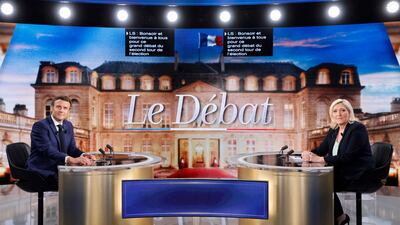
French President Emmanuel Macron and fellow presidential candidate Marine Le Pen before a live televised debate in Saint-Denis, north of Paris. AFP -

A potential voter watches the debate on the French island of Corsica. AFP -
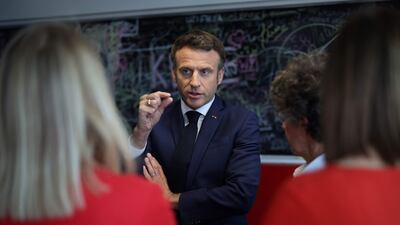
Mr Macron will face far-right National Rally candidate Ms Le Pen in the second round of the elections on Sunday. AFP -
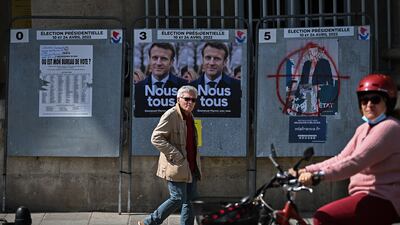
Election posters in Paris. Getty Images -
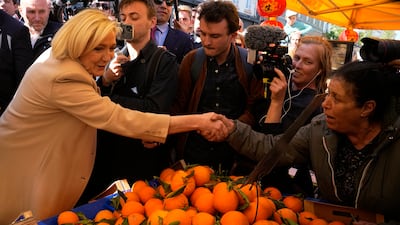
Ms Le Pen campaigns at a street market in Etaples, northern France. AP Photo -
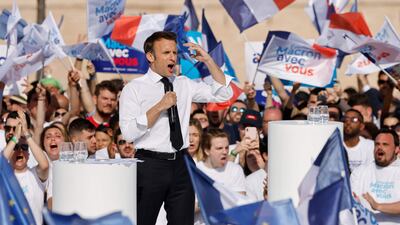
Mr Macron at a rally in Marseille. AFP -
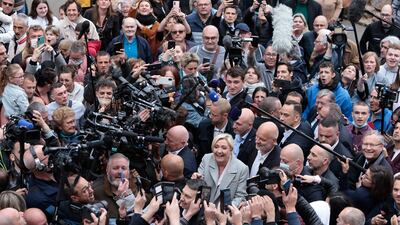
Ms Le Pen campaigns amid crowds in Normandy. AP -

Macron supporters in Saint-Pierre-en-Auge, northern France. AP -
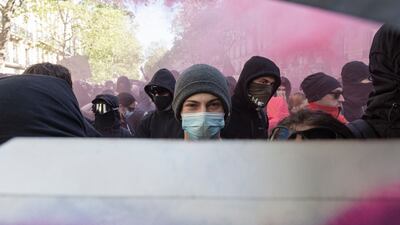
Protesters in Paris demonstrate against the rise of the far right in French politics. Getty Images -

Students in Paris clash with police as they protest against the two final candidates in the French presidential election. Getty Images -
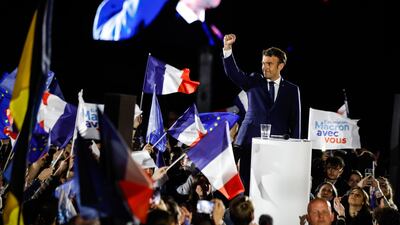
Mr Macron greets supporters at Place du Chateau in Strasbourg. EPA -
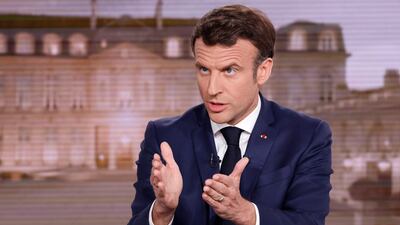
The president appears on an evening news broadcast. AFP -
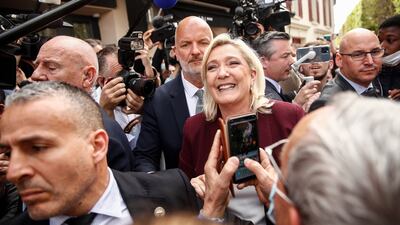
Ms Le Pen greets supporters in Vernon, Normandy. EPA -
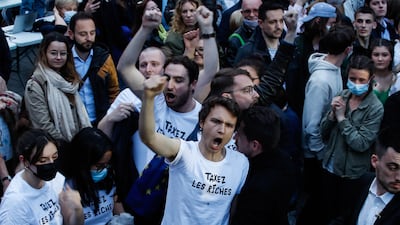
Activists wearing T-shirts reading ‘tax the rich’ interrupt a speech by Mr Macron at a campaign event in Strasbourg. EPA -
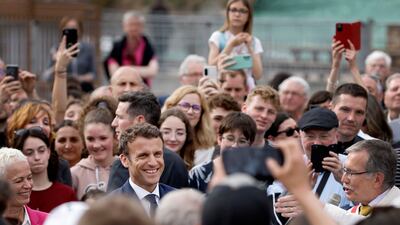
Mr Macron speaks to residents in Chatenois, Alsace. AP -
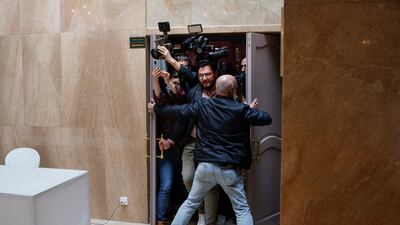
Journalists are barred from the room as Ms Le Pen gives a press conference in Paris. EPA -
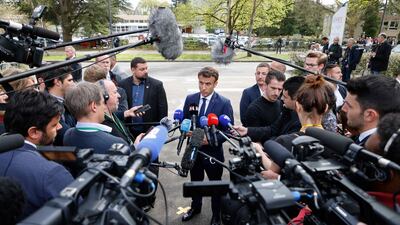
Mr Macron faces the media on a campaign visit to Grand Est, north-eastern France. AFP -
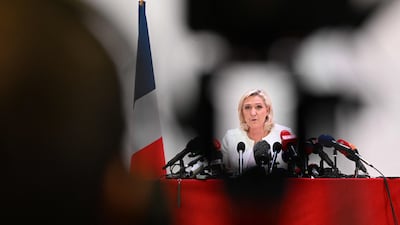
Ms Le Pen holds a press conference on diplomacy and foreign policy in Paris. AFP -

A handshake from the president in the Grand Est region. AFP -
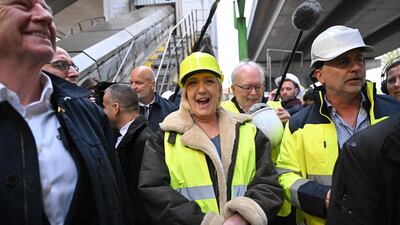
A laughing Ms Le Pen at a campaign meeting near Paris. AFP -
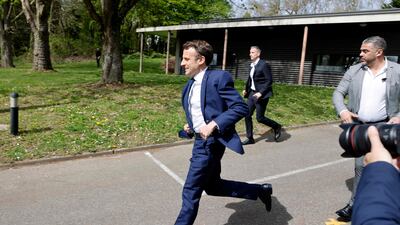
Mr Macron during his presidential run, in Grand Est. AFP -
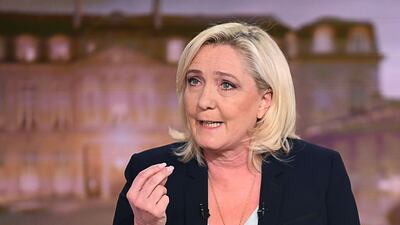
Ms Le Pen make the evening news, in Boulogne-Billancourt near Paris. AFP


During his campaign he proposed cutting taxes by €15 billion (£12.5bn) a year for households and businesses.
His programme also included plans to build six new nuclear power plants and increase the number of police officers.
Some of his measures have been likened to, and criticised for, being similar to those of right-wing party policies.
While running for a second term in office, Mr Macron promised to focus on education, health and defence and unveiled plans to double France's reserve force.

