


Live updates: follow the latest news on Russia-Ukraine
Nato is concerned that Moscow could carry out a "false flag" chemical weapons attack in Ukraine, the head of the military alliance said.
Jens Stoltenberg, speaking ahead of an extraordinary meeting of Nato defence ministers, also called on China to condemn Russia’s invasion of Ukraine amid reports that Beijing could offer Moscow military support.
“We are concerned Moscow could stage a false flag operation in Ukraine, possibly with chemical weapons,” Mr Stoltenberg told a press conference.
Expanding further, he said that throughout the crisis in Ukraine, Russia had “tried to create different kinds of false flag operations to try to find excuses for the use of force. We saw that in the lead up to the intervention.
“And now we have seen them accusing Ukraine and Nato allies of producing and developing chemical weapons — and that's an absolute lie,” Mr Stoltenberg said.”
“Therefore it also makes us a bit concerned about the possibility that they are actually planning to do that.”
But he refused to speculate on whether the use of chemical weapons by Russia would trigger a military response from Nato.
In recent days, the conflict in Ukraine has drawn ever closer to the borders with Nato member states. Ukrainian forces have accused Russia of flying drones into Nato airspace, while an attack on a military base in western Ukraine at the weekend killed 35 people only 25 kilometres from the border of Nato member Poland.
“When we see more military activities, when we see fighting going on close to Nato borders, there's always a risk for incidents and accidents,” Mr Stoltenberg said.
“And, therefore, we have to make every effort to prevent such incidents and accidents, and — if they happen — to make sure that they don't spiral out of control and create really dangerous situations.”
Mr Stoltenberg said Nato military commanders were in contact with their Russian counterparts to try to prevent such events happening.
-
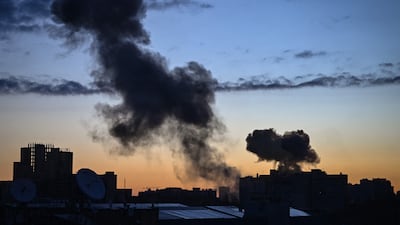
Smoke rising in Kyiv, which mayor Vitali Klitschko says faces a 'difficult and dangerous moment' as Russian forces step up strikes. AFP -

Pope Francis meets visitors holding the Ukrainian flag during his weekly general audience in the Vatican. AFP -

An anti-war protester demonstrates against Russia's invasion of Ukraine in front of the Nato headquarters in Brussels. AFP -
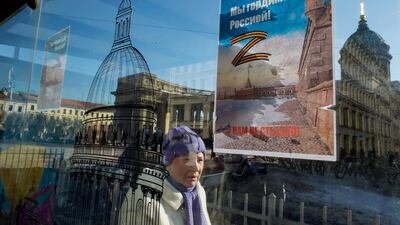
A poster in Saint Petersburg carries the letter Z, a symbol of support for the invasion, and reads: "We are proud of Russia! We are not ashamed!" AFP -

Amid the Ukraine war, there's time for a seaside stroll in Odesa. Reuters -
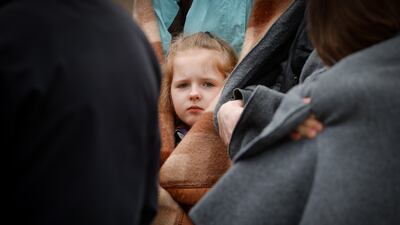
A child who fled from Ukraine to Belgium waits outside an immigration office in Brussels. EPA -
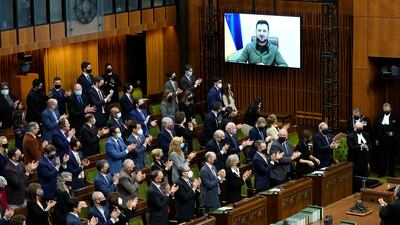
Ukrainian President Volodymyr Zelenskyy receives a standing ovation as he appears via videoconference to make an address to Canada's Parliament. AP -
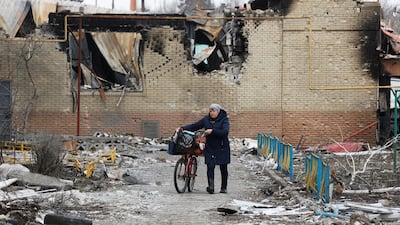
A woman walks with a bicycle next to a building damaged during the conflict in the separatist-controlled town of Volnovakha, Donetsk region. Reuters -
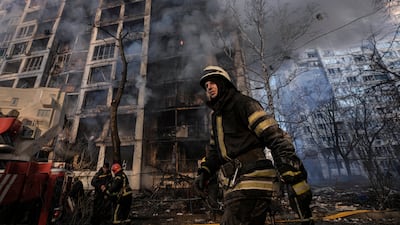
A firefighter outside a destroyed apartment building in a residential area of Kyiv. AP -

Ukrainian soldiers pay tribute to Col Valeriy Gudz, who was killed in battle against Russian troops, at a cemetery in the town of Boryspil. AP -
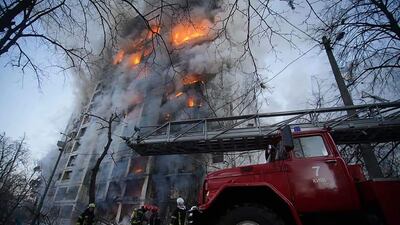
Firefighters work to extinguish a fire in a housing block hit by shelling in the Sviatoshynsky district, in western Kyiv. AFP -
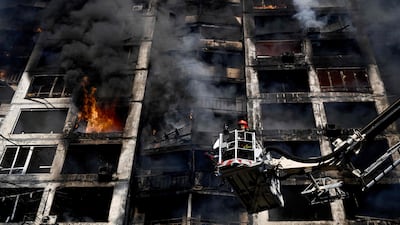
Two people were killed as a series of powerful explosions rocked residential districts in Kyiv just hours before talks between Ukraine and Russia were set to resume. AFP -
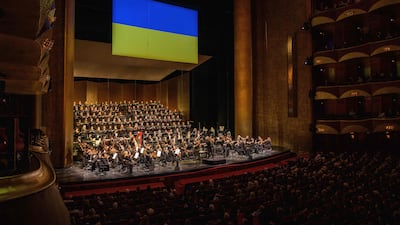
The Met Opera and Chorus performs during 'A Concert For Ukraine' in New York City. AFP -
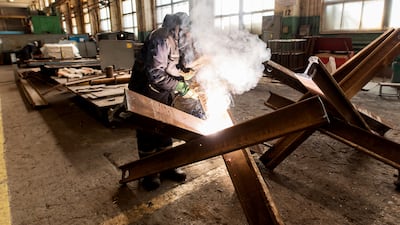
A worker welds metal at the Interpipe Steel plant in Dnipro, Ukraine. Hundreds of Interpipe’s 10,000 employees have joined the fight against Russia. AP -
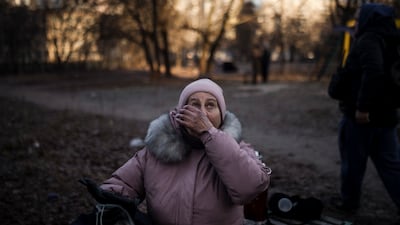
A woman is rescued by firefighters from her apartment in a burning building that was hit by artillery shells in Kyiv. AP -

Rescuers work at a building damaged by an air strike, in central Kharkiv, Ukraine. Reuters -
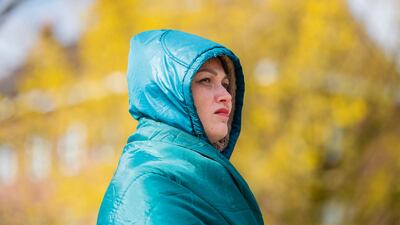
A woman who fled Ukraine to Belgium waits outside an immigration office, in Brussels. EPA -
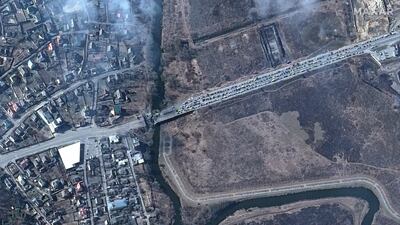
Cars stuck at the Irpin River bridge, as Russia unleashes a barrage of air strikes on cities across Ukraine. AFP -
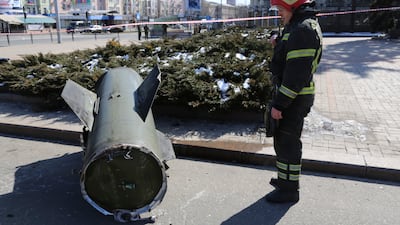
A firefighter looks at a section of a Ukrainian Tochka-U missile on a street in the separatist Donetsk region. The Russian military said 20 civilians were killed by a ballistic missile launched by the Ukrainian forces. AP -
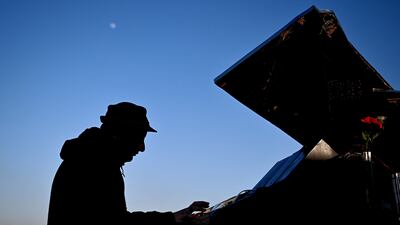
Musician Davide Martello plays a piano near the Ukrainian border in Medyka, Poland. More than 1.76 million people have crossed the Polish-Ukrainian border into Poland, the Polish Border Guard reported on March 14. EPA -
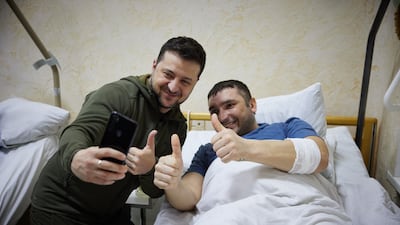
Ukrainian President Volodymyr Zelenskyy, left, snaps a selfie with a wounded man during a visit at a military hospital after fighting in the Kyiv region.AFP -
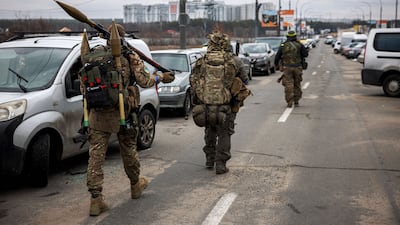
Ukrainian soldiers carry rocket-propelled grenades and sniper rifles as they walk towards the city of Irpin, north-west of Kyiv. AFP -

Troops carry an elderly woman on a stretcher across a makeshift bridge as Ukrainians flee Irpin. AFP -
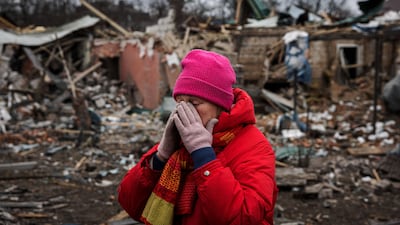
Irina Moprezova, 54, stands in front of a house that was damaged by an air strike in Irpin. AFP -
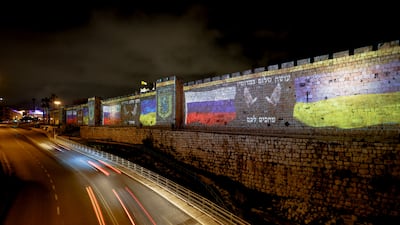
The flags of Russia and Ukraine are projected on the walls of Jerusalem's Old City, which a representative from the Jerusalem Municipality said is a show of support for diplomatic dialogue between the countries. Reuters -
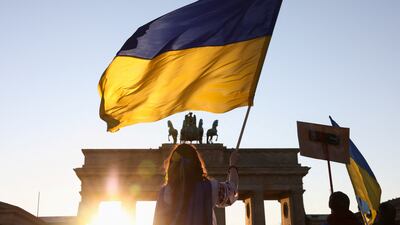
A person holds a Ukrainian flag during an anti-war demonstration at the Brandenburg Gate in Berlin, Germany. Reuters -
A Ukrainian soldier takes cover as people flee Irpin. AFP -

Ukrainians shelter in an underground train station during the day in Kyiv. EPA -
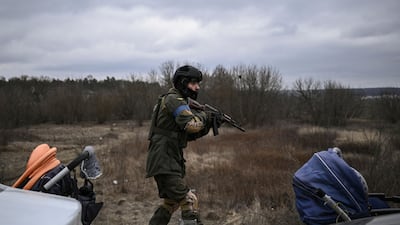
A Ukrainian serviceman walks carefully with his weapon in the city of Irpin, near Kyiv. AFP -
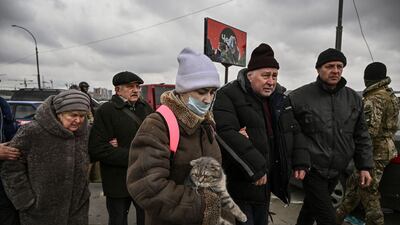
Ukrainian people flee the city of Irpin, north-west of Kyiv. AFP -
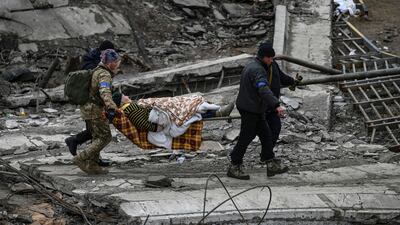
Ukrainian servicemen carry an elderly woman on a stretcher from the city of Irpin. AFP -
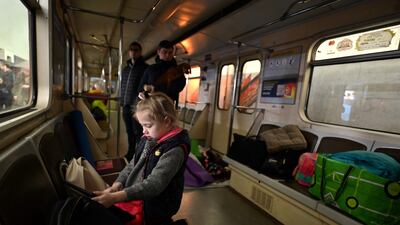
A girl plays games on her tablet inside a subway carriage being used as a bomb shelter in Kyiv. AFP -
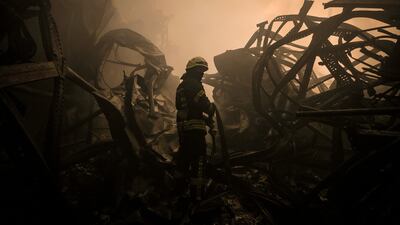
A Ukrainian firefighter drags a hose inside a large food products storage facility which was destroyed by an air strike on the outskirts of Kyiv. AP -

Ukrainian troops with a Javelin anti-tank missile on the front line in the northern Kyiv region. Reuters -
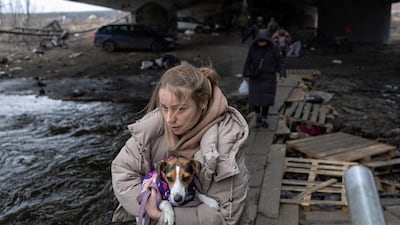
A woman carries her dog during an evacuation in Irpin. Reuters -
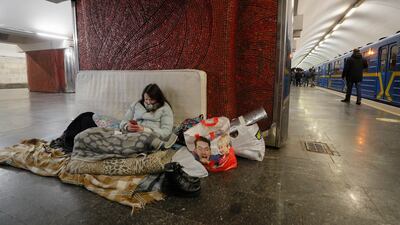
A Ukrainian woman takes shelter in a metro station during the day in Kyiv. EPA -
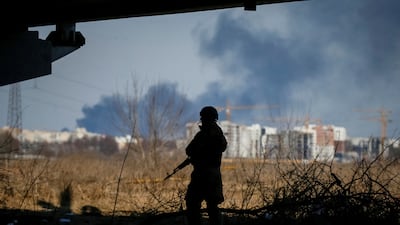
A member of the Ukrainian armed forces on patrol in Irpin. Reuters -

A Ukrainian fighter takes cover behind a car in the city of Irpin. AFP -
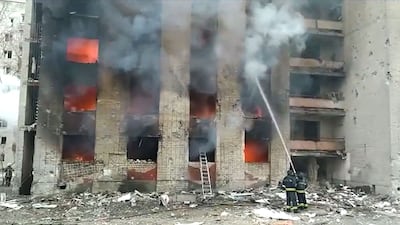
Firefighters at work after air strikes hit residential buildings in Chernihiv, northern Ukraine. AFP -
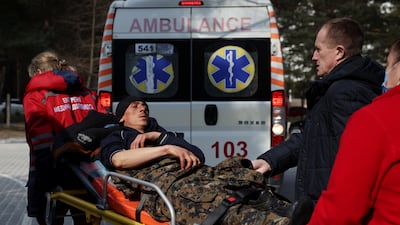
A man wounded in an air strike is helped by medical staff in Novoiavorivsk, western Ukraine. Getty -
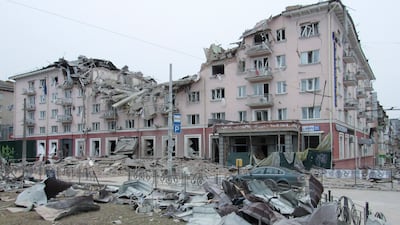
The ruins of the Ukraine Hotel after recent shelling in Chernihiv. EPA


He said Nato was “stepping up” its vigilance and monitoring of its airspace, including by deploying US Patriot surface-to-air missiles to Poland near its border with Ukraine.
On reports that China could provide aid to Russia, Mr Stoltenberg said Beijing must join the condemnation of Moscow’s “brutal invasion”.
“Any support to Russia — military support, any other type of support — would actually help Russia conduct a brutal war against an independent sovereign nation, Ukraine, and help them to continue to wage a war which is causing death, suffering and an enormous amount of destruction.”

