


The US, India, Australia and Japan on Tuesday renewed their commitment to regional security in the Indo-Pacific, at a meeting of the fourth Quadrilateral Security Dialogue, or Quad summit, in Tokyo.
The group promised to oppose any forceful and unilateral changes in the Asia-Pacific, where the four-nation alliance is challenging China’s growing influence in the region.
“We strongly support the principles of freedom, the rule of law, democratic values, sovereignty and territorial integrity, peaceful settlement of disputes without resorting to threat or use of force, and any unilateral attempt to change the status quo,” the alliance's leaders said.
They said freedom of navigation and overflight is an essential part of achieving peace, stability and prosperity in the Indo-Pacific region and the world.
The meeting was attended by US President Joe Biden and Prime Ministers Narendra Modi of India, Anthony Albanese of Australia and Fumio Kishida of Japan.
The summit, the first in-person meeting in nine months, came at a time when major western world powers and other Quad members were grappling with the Russian military invasion of Ukraine and fears that China — a close ally of Russia — could escalate tensions with Taiwan.
New Delhi is the only Quad member that has refused to explicitly condemn Moscow — its historic strategic and military partner — over its offensive of Ukraine.
Disputed territory

Without naming China or any other country, the leaders gave a warning against any coercive, provocative or unilateral actions to alter the status quo or increase tensions through “militarisation of disputed features, the dangerous use of coastguard vessels and maritime militia, and efforts to disrupt other countries’ offshore resource exploitation activities”.
Quad members, particularly the US, accuse Beijing of militarising the South China Sea and reject China's sovereignty claims in the region, which the group says risk severely impeding global maritime trade routes.
The alliance's announcement comes a day after US President Joe Biden gave a warning that China’s increasingly assertive stance on the island was akin to "flirting with danger" as he promised to defend Taiwan militarily from any aggression.
On Tuesday, Mr Biden, asked if there had been any change to the US policy on Taiwan, responded: "No."
"The policy has not changed at all. I stated that when I made my statement yesterday," he said.
Mr Kishida also backed the US leader, saying Russia's invasion of Ukraine had shaken the fundamental principles of the international order and no further unilateral attempts to change the status quo by force will ever be tolerated anywhere, particularly in the Indo-Pacific.
The Quad nations also agreed on a new maritime monitoring initiative that is expected to bolster surveillance of the waters on their shores.
But Mr Modi skirted any mention of China and its close ally Russia in his opening remarks at the summit as he underlined the importance of alliance at the global stage and a “force for good” in the Indo-Pacific region.
“Our mutual co-operation at the Quad level is giving a boost to a free, open and inclusive Indo-Pacific region, which is the common objective of all of us.
“Quad is carrying a constructive agenda for the Indo-Pacific region. This will further strengthen the image of the Quad as a force for good,” he said.
-

Service members of pro-Russian troops drive a tank past a destroyed residential building in the town of Popasna in the Luhansk region, Ukraine. Reuters -
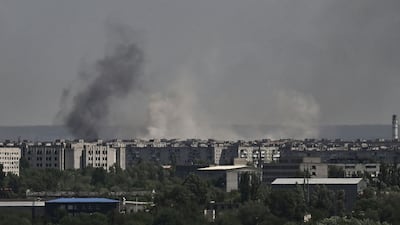
Smoke and dirt rise from the city of Severodonetsk during shelling in the eastern Ukrainian region of Donbas. AFP -
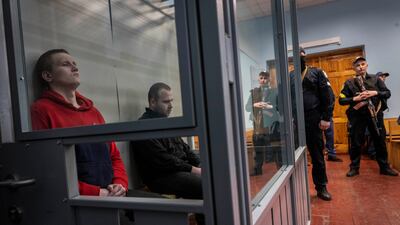
Russian soldiers Alexander Alexeevich Ivanov and Alexander Vladimirovich Bobykin, left, attend their trial hearing in Kotelva, northeastern Ukraine. AP Photo -
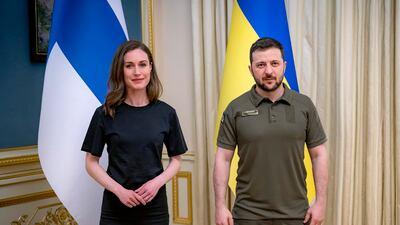
Ukrainian President Volodymyr Zelenskyy, right, meets with Finnish Prime Minister Sanna Marin in Kyiv, Ukraine. AP -
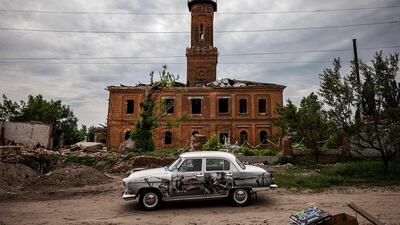
A man drives a GAZ-21 Volga car past a damaged building in Kharkiv, eastern Ukraine, on the 92nd day of the Russian invasion of Ukraine. AFP -
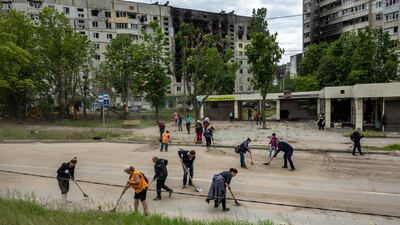
Public transit workers sweep up shrapnel in Kharkiv, Ukraine. Getty Images -
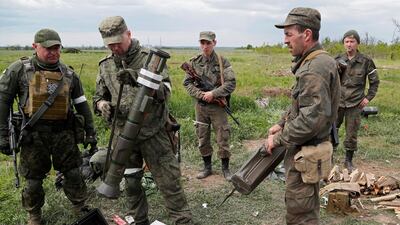
Pro-Russian troops inspect an AT4 anti-tank launcher outside the town of Svitlodarsk in the Donetsk region, Ukraine. Reuters -
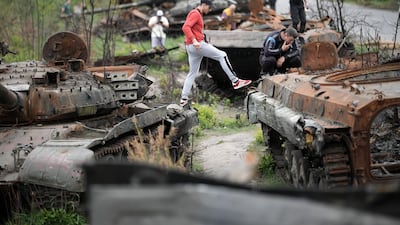
People inspect destroyed Russian tanks and armoured vehicles in Irpin, Ukraine. Getty Images -

A local resident pets a cat next to a destroyed house in Vilkhivka village, near Kharkiv, Ukraine. AFP -
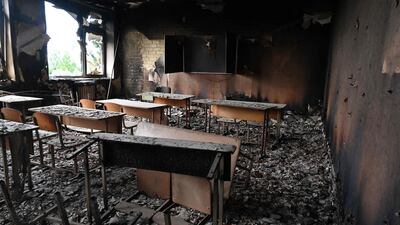
The remains of a school in Vilkhivka village, near Kharkiv. AFP -
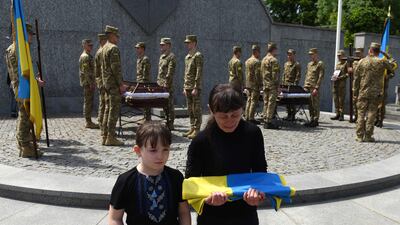
Widow and daughter of Andriy Vertiev, a Ukrainian serviceman, killed during the Russian invasion of Ukraine, attend his funeral at Lychakiv cemetery, Lviv, Ukraine. AFP -

Russian serviceman Vadim Shishimarin, centre, leaves a court hearing in Kyiv. EPA -
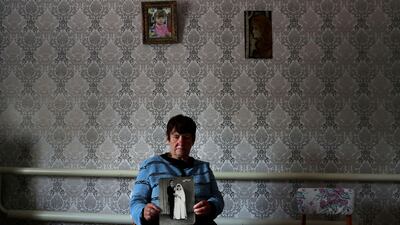
Kateryna Shelikhova, widow of Oleksandr Shelipov, 62, who was shot dead by a Russian soldier. Reuters -
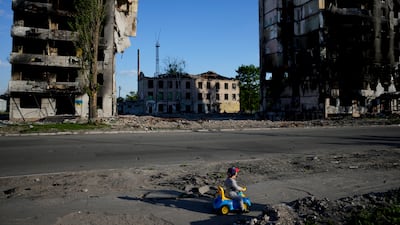
A child plays against a backdrop of buildings ruined by shelling in Borodyanka, Ukraine. AP -

A Ukrainian woman in the basement of a building used as bomb shelter in Soledar, Donetsk region. AP -

Residents live in a subway station used as temporary shelter in Kharkiv. AP -
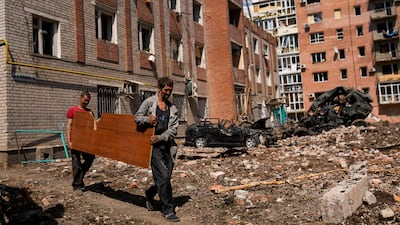
Men with salvageable material from damaged buildings after Russian bombing in Bakhmut, eastern Ukraine. AP -
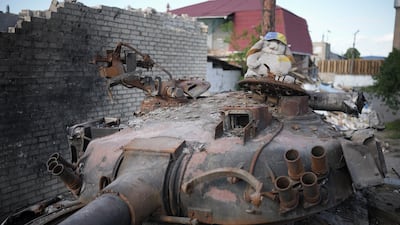
A cuddly toy adorns a destroyed Russian battle tank near damaged homes in Hostomel, Ukraine. Getty Images -
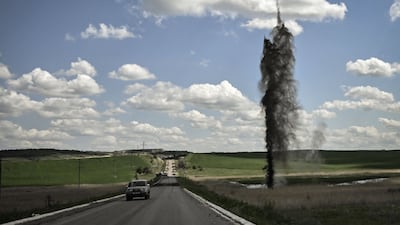
A mortar explodes next to a road leading to the city of Lysychansk, in the eastern Ukrainian region of Donbas. AFP -
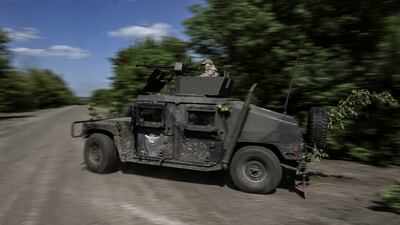
A Ukrainian army vehicle moves towards the front line at a checkpoint near Lysychansk. AFP -
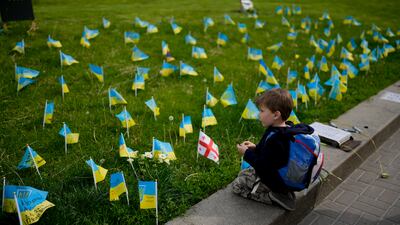
A boy looks at flags honouring soldiers killed while fighting Russian troops, in Kyiv city centre. AP -
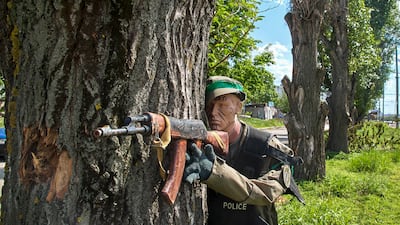
A mannequin with a fake gun is placed as bait on a roadside in the Nord Saltivka district of Kharkiv. EPA -
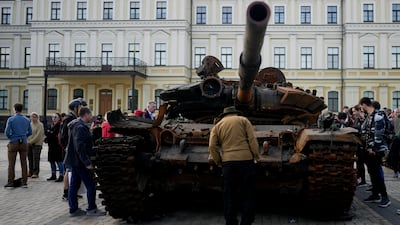
A man looks at a destroyed Russian tank placed as a symbol of war, in central Kyiv. AP -

Ukraine's President Volodymyr Zelenskyy on a screen at the opening ceremony for the World Economic Forum in Davos, Switzerland. Reuters -
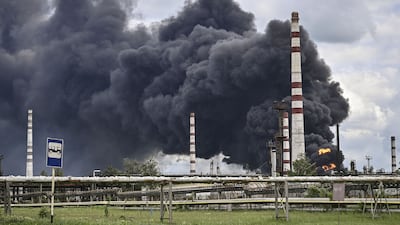
Smoke billows from an oil refinery after an attack outside the city of Lysychansk, in the eastern Ukrainian region of Donbas. AFP -
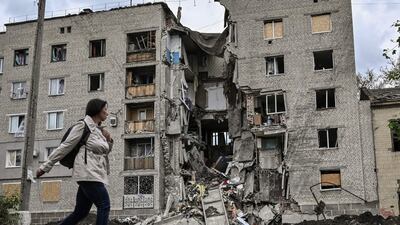
A woman walks by a destroyed apartment building in Bakhmut, Donbas region. AFP -
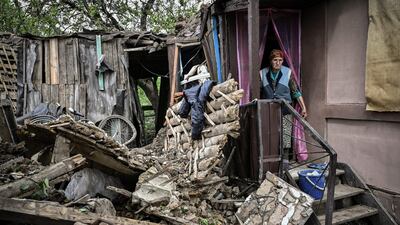
An elderly woman stands inside her heavily damaged house after it was hit by a missile in Bakhmut. AFP -

A mother with her daughter sit inside a bus as they leave Bakhmut. AFP -

A Ukrainian soldier prepares coffee as he takes a break near an artillery position in the breakaway enclave of Donetsk, in the Donbas region. Reuters -
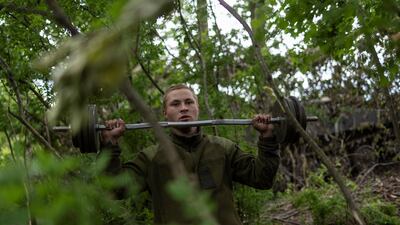
A Ukrainian soldier exercises near Donetsk. Reuters -
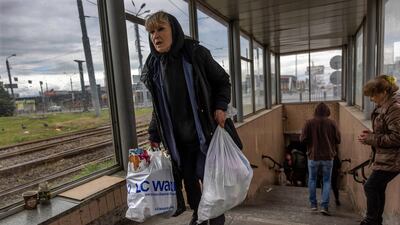
A woman displaced by incessant Russian shelling leaves a metro station where people had been living underground for months in Kharkiv, Ukraine. Getty -

A heavily damaged home spa near Ruski Tyshky village in Ukraine. Getty -

The wreckage of a Ukrainian military helicopter is transported in Kharkiv. Getty -
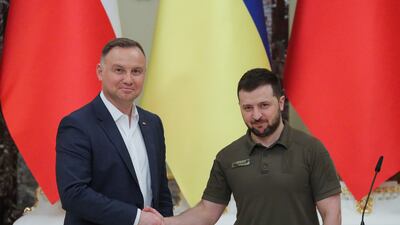
Ukrainian President Volodymyr Zelenskyy and Polish President Andrzej Duda in Kyiv. EPA -
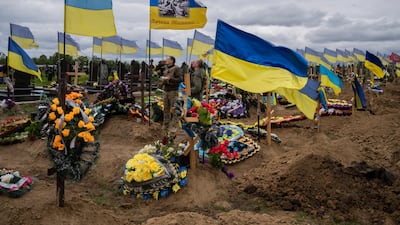
Two Ukrainian national guard soldiers pay their respects at a cemetery in Kharkiv. AP -
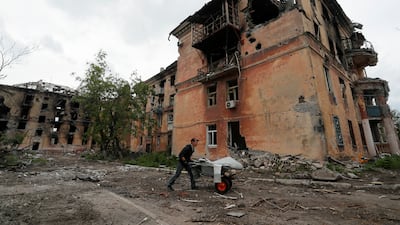
A man pushes a wheelbarrow past a heavily damaged apartment building near Azovstal Iron and Steel Works in Mariupol. Reuters -
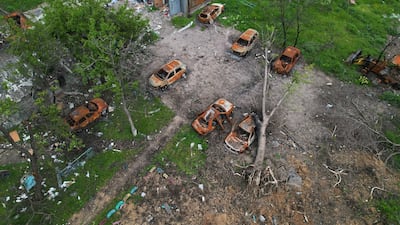
The burnt out shells of cars in a residential area near Azovstal Iron and Steel Works in Mariupol. Reuters -
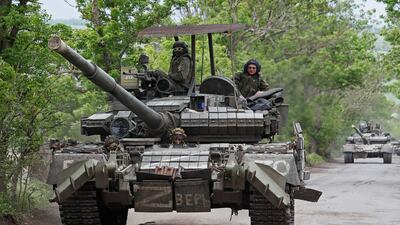
Pro-Russian troops drive a tank in Ukraine's Donetsk region. Reuters -
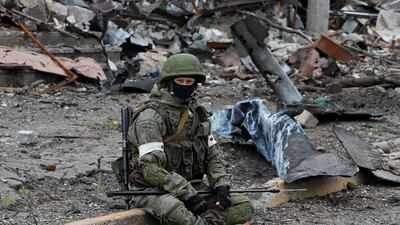
A Russian soldier takes a break during an operation to demine the territory of Azovstal steel plant in Mariupol. Reuters -
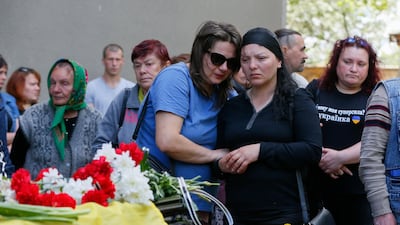
Relatives and friends attend the funeral of a Ukrainian soldier killed in action, in the Odessa region city of Rozdilna. EPA -
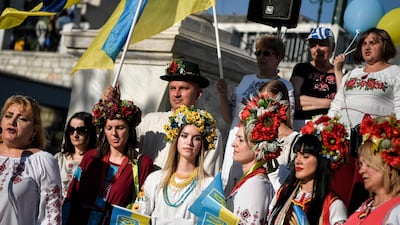
Ukrainians wearing traditional clothing listen to their national anthem as they take part in the celebration of 'Vyshyvanka Day', an annual celebration of Ukrainian folk traditions, in Athens. AFP


The leaders also discussed the continuing Ukraine conflict and humanitarian crisis and reiterated calls for peaceful resolution of the disputes and pledged to “uphold the international rules-based order where countries are free from all forms of military, economic and political coercion”.
They also launched a Quad Climate Change Action and Mitigation Package (Q-Champ) to strengthen efforts towards green shipping, clean energy including green hydrogen and climate and disaster-resilient infrastructure.
Mr Modi emphasised the importance of assisting countries in the region with their Cop26 commitments through mobilisation of climate finance and technology transfer, India's Ministry of External Affairs said.
The prime minister held bilateral talks with President Biden on the sidelines of the summit and said he was happy with progress made across sectors in the bilateral agenda under the India-US Comprehensive Strategic Global Partnership.
They also discussed defence and security co-operation and exchanged views on regional issues of mutual interest, including South Asia.
Mr Modi also held bilateral talks with Mr Albanese and congratulated him on winning Saturday's national elections.
The two leaders reviewed the multi-faceted co-operation including in trade and investment, defence, manufacturing, renewable energy, science and technology and agricultural research, India’s foreign ministry said.

