

The Pakistan Muslim League-Nawaz (PML-N) has nominated party leader Shehbaz Sharif as its prime ministerial candidate, moving Pakistan a step closer to a new government after a general election last week in which no political party achieved an outright majority.
Nawaz Sharif, a three-time prime minister and head of the PML-N, nominated his younger brother Shehbaz for the post on Tuesday after his main rival, Bilawal Bhutto Zardari of the Pakistan People's Party (PPP), dropped out of the race for the top job, spokeswoman Marriyum Aurangzeb said in a post on X.
Mr Bhutto Zardari said earlier on Tuesday that his party would support the PML-N's candidate and the new government, but would not join the cabinet.
Officials in both the PML-N and PPP said the parties had formed internal committees to discuss the modalities of government formation and that the agenda included getting PPP to join the administration and take cabinet positions.
"They are trying their level best but we are not joining the cabinet up until now," PPP leader Faisal Karim Kundi said.
Analysts say that Pakistan needs a stable government with political authority to be able to take tough decisions to help pull the country out of its economic crisis.
"Coalition governments can't work on this principle that one partner takes up all the load and the other partners watch the match from the sidelines and galleries," PML-N secretary general Ahsan Iqbal told Geo TV late on Tuesday.
"Everyone has to play the match together. This is why I am hopeful that this is a mature leadership that knows the problems the country is facing," he said, when asked about PPP joining Mr Sharif's government.
The parties began coalition talks at the weekend after the provisional election results showed that candidates affiliated with jailed former prime minister Imran Khan, who stood as independents, had won the most seats in the February 8 election.
Khan, a national cricketing hero, was disqualified from contesting the election by a series of recent convictions, while his Pakistan Tehreek-e-Insaaf (PTI) party was effectively barred after the election commission ruled that it could not field candidates under its election symbol, a cricket bat.
Candidates backed by Khan won 93 seats while the PML-N, considered the favourite before the vote, emerged as the largest party with 75 seats, followed by the PPP 54 seats.
Pakistan's system means a simple majority can be achieved with 169 of the 336 seats in the National Assembly. Only 266 of the 336 seats are contested directly in elections – the remaining 70 are reserved, with 60 for women and 10 for religious minorities.
Those seats are allocated to political parties based on proportional representation of the 266 elected seats. Under the rules, they cannot be allocated to independent candidates.
Independent candidates can join a party up to three days after the country's Election Commission officially declares the result.
-

Supporters of the Tehreek-e-Labbaik Pakistan (TLP) party protest demanding a free and fair election in Lahore, Pakistan. Reuters -
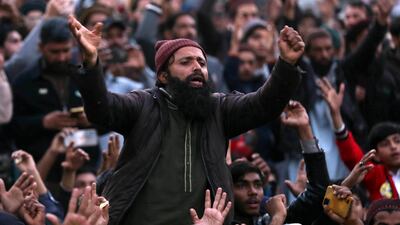
the TLP claim's Thursday's poll was rigged. EPA -
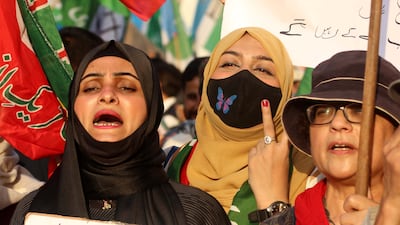
Supporters of the Pakistan Tehrik-e-Insaf party gather in Karachi. EPA -
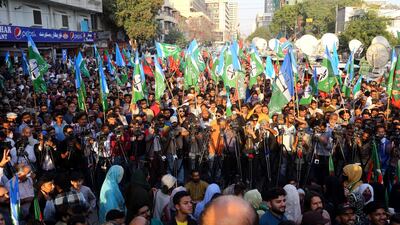
PTI and TLP supporters in Karachi. EPA -
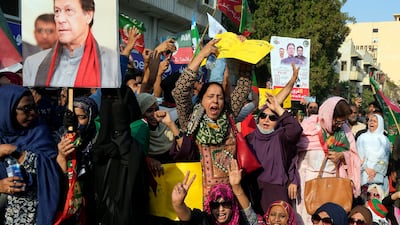
Supporters of imprisoned Pakistan's Former Prime Minister Imran Khan's and Jamaat-e-Islami party chant slogans during a protest against the delaying result of parliamentary election by Pakistan Election Commission, in Karachi. AP -
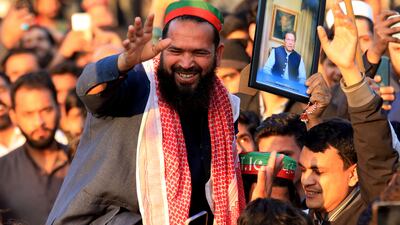
A man holds a picture of convicted former Pakistani prime minister Imran Khan in Peshawar. EPA -
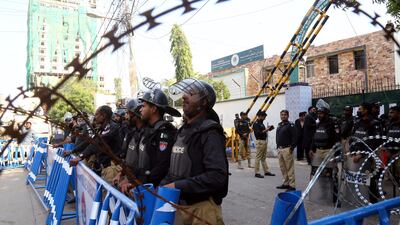
Police stands guard outside the provincial election commission office in Karachi. EPA


'Respectable parties'
The PTI told The National on Tuesday that it would merge with the Majlis-e-Wahdat-e-Muslimeen party in Punjab province and on a national level, while also teaming up with the Jamaat-e-Islami party in Khyber Pakhtunkhwa province.
“Both parties are respectable parties. We had a seat adjustment with MWM and we have always maintained good relationships with Jamaat-e-Islami. So we have decided to merge with them in order to form a united government in KP and go into parliament as a merged party,” PTI spokesman Zulfikar Bukhari told The National.
Under the constitution, Pakistan's President Arif Alvi must convene the inaugural National Assembly session before February 29 so that its members can be sworn in. The parliament will later elect the new prime minister.
The new government's primary challenge will be tackling the economic crisis. The nation faces $25 billion of external debt payments in the fiscal year starting in July, about three times its foreign-exchange reserves. A $3 billion loan programme from the International Monetary Fund loan programme is set to end in April.
-
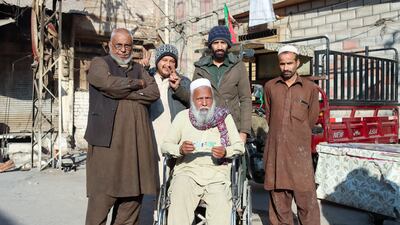
A disabled man being taken to cast his vote in Peshawar, Pakistan. Musa Kamal for The National -
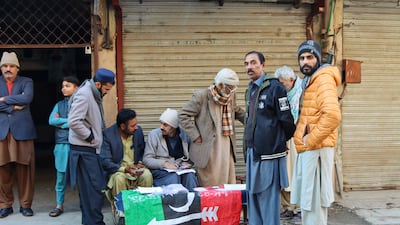
A Pakistan People's Party awareness camp outside the polling station in Peshawar. Musa Kamal for The National -
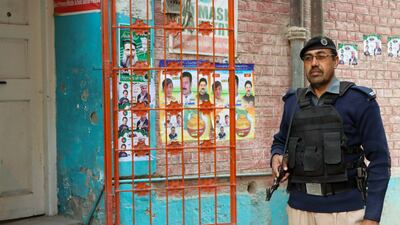
A security guard on duty outside the polling station in Peshawar. Musa Kamal for The National -
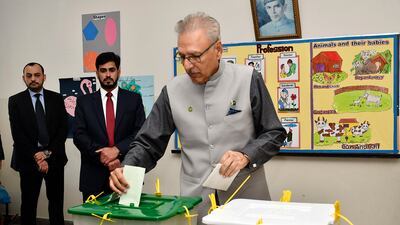
Pakistan's President Ariv Alvi casts his vote at a polling station in Karachi during parliamentary elections. AP -
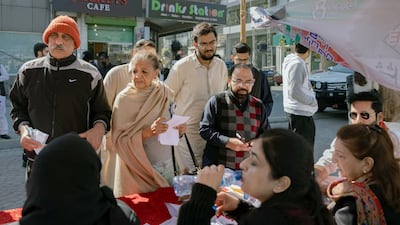
Voters register at a Pakistan Tehreek-e-Insaf voting registration camp in Lahore, Pakistan. Getty Images -
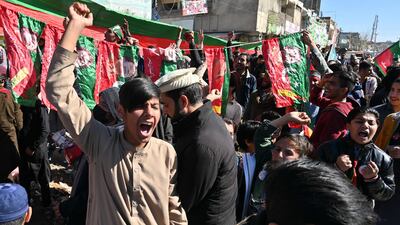
Activists from the Pakistan Tehreek-e-Insaf party outside a polling station in Islamabad. AFP -
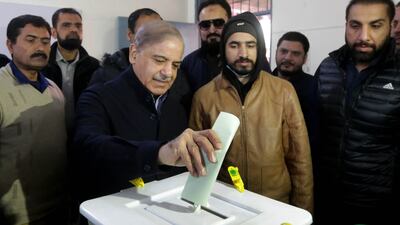
Shehbaz Sharif, centre, former prime minister and president of Pakistan Muslim League Nawaz casts his ballot in Lahore. EPA -
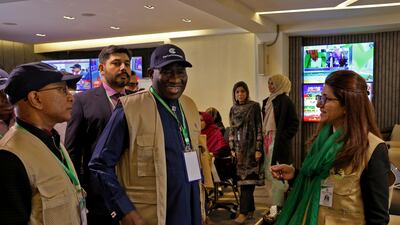
Former Nigerian president Goodluck Jonathan, who is leading a Commonwealth monitoring team, visits the Election Commission of Pakistan's election monitoring control centre, where complaints are received and checked, in Rawalpindi. Reuters -
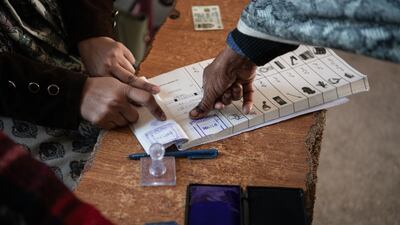
A Pakistani voter at a polling station in Wahgrian. Getty Images -
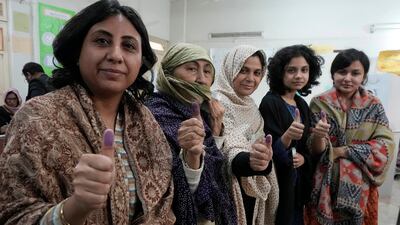
Women show their ink-stained thumbs after voting in Karachi. AP -
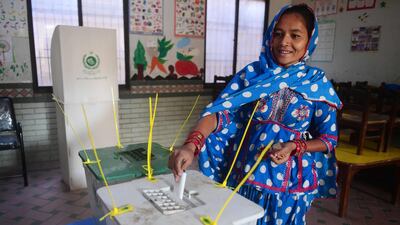
A woman casts her ballot at a polling station during Pakistan's national elections. AFP -
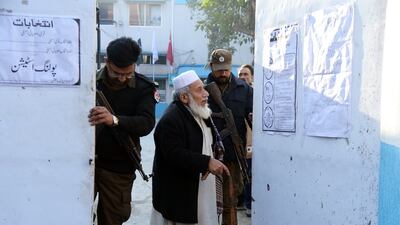
Pakistani security officials guard a polling station in Lahore. EPA -
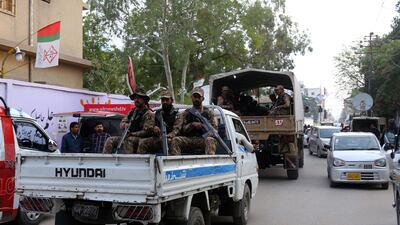
Pakistani soldiers patrol near polling stations in Karachi. EPA -
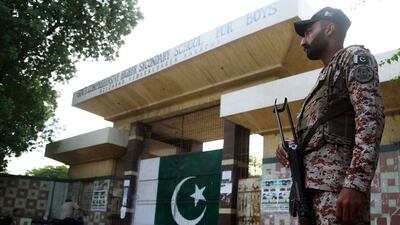
A Pakistani soldier stands guard outside a polling station in Karachi. EPA -
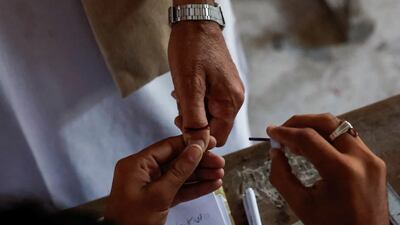
A voter in Karachi gets an ink mark on his thumb after casting his vote during the general election. Reuters -

A voter leaves the ballot booth in Karachi. Reuters -
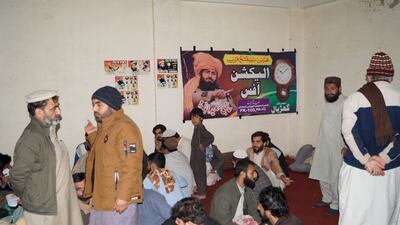
Supporters of Saeed Anwar Mehsud, an independent candidate from South Waziristan, sit inside their campaign office in Dera Ismail Khan. Reuters -
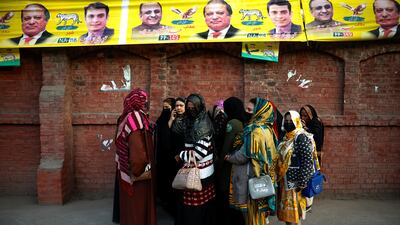
Women wait outside a polling station for voting to begin in Lahore. Reuters -
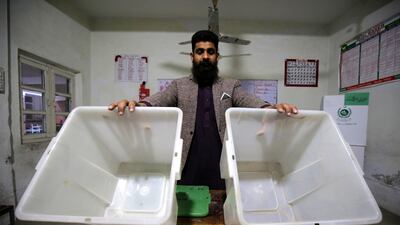
A polling officer sets up a polling station in Peshawar on the eve of the general election. EPA -
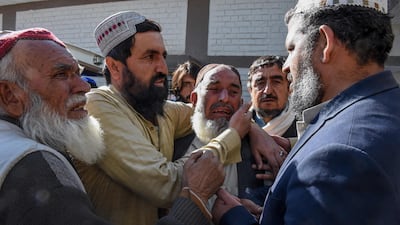
Relatives mourn the death of victims after a bomb blast outside the office of an independent candidate in Pishin district, about 50km from Quetta. AFP -
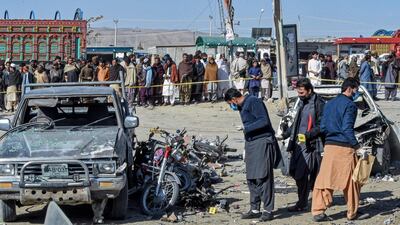
Officials collect evidence at the site of the bomb blast. AFP -
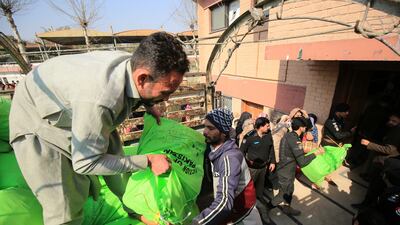
Election commission workers unload election materials at a distribution centre in Khyber-Pakhtunkhwa province. EPA


Shehbaz Sharif, who led a coalition of more than a dozen political parties to topple Khan and become prime minister in 2022, was crucial in breaking the deadlock and securing the current IMF programme after the country came close to bankruptcy last summer.
“Revolutionary steps are needed to take Pakistan out of the economic crisis and they can’t be possible without mutual understanding and consensus,” he said on Tuesday.
However, the PPP's decision to support the government from outside could lead to more political instability, analysts said.
“When the tide turns, the next prime minister will find that they are unable to maintain a majority in parliament, leading to yet another political crisis in Pakistan,” Uzair Younus, a non-resident fellow at the Atlantic Council, told Bloomberg News.

