



The EU has pledged an extra €700 million ($808.5m) in aid to Afghanistan to “avert a major humanitarian and socio-economic collapse".
The announcement by European Commission chief Ursula von der Leyen takes the bloc's emergency support package to the country and its neighbours to around €1bn.
It came on Tuesday at the start of a G20 virtual summit that focused staving off the crisis in the country and ensuring it does not become a safe haven for terrorists, less than two months after the Taliban seized its capital Kabul.
German Chancellor Angela Merkel said her country was still ready to recognise the Taliban's interim government because of its lack of inclusivity.
"We demand that all United Nations organisations have access for the humanitarian aid they wish to provide," she added.
Italian Prime Minister Mario Draghi, who convened the talks, had been pushing for the meeting of the G20 major economies, which includes China and Russia.
“The summit’s focus points include urgent humanitarian support for the Afghan population, the fight against terrorism, freedom of movement inside the country and open borders,” his office said.
The White House said: "The leaders discussed the critical need to maintain a laser-focus on our enduring counter-terrorism efforts, including against threats from ISIS-K, and ensuring safe passage for those foreign nationals and Afghan partners with documentation seeking to depart Afghanistan."
Since the Taliban's lightning takeover of Afghanistan and the withdrawal of Nato forces after two decades, the international community has grappled with how to approach the new rulers in Kabul.
“Our conditions for any engagement with the Afghan authorities are clear, including on human rights. But the Afghans should not pay the price of the Taliban’s actions,” said Ms von der Leyen.
The Afghan economy has virtually collapsed, with international aid cut off, rising food prices and increasing unemployment.
There are also concerns over security, the presence of ISIS-K, the rights of women, girls and minorities, and guaranteeing safe passage abroad for thousands of Afghans who worked for Nato but remain in the country.
Mr Draghi said of the G20 summit: “We want to see if it's possible for the 20 richest countries in the world to have common objectives.”
China has called for the removal of unilateral sanctions on Afghanistan and for its foreign exchange reserves, which are currently frozen, to be released.
“I hear endlessly that a humanitarian catastrophe is about to happen because Afghanistan has no support from the rest of the world,” said Mr Draghi, whose country holds the rotating G20 presidency.
“I think it's the duty of the world's richest countries to do something to avoid a humanitarian catastrophe.”
He said the summit would assess the measures that can be taken “to stop Afghanistan from again becoming a hotbed of international terrorism".
Indian Prime Minister Narendra Modi was among those to attend the meeting, although China's Xi Jinping and Russia's Vladimir Putin sent representatives.
The Taliban is itself seeking international recognition and assistance to avoid a humanitarian disaster. While countries such as the US and the UK have sent officials to Kabul for talks with the hardline group, no country has yet recognised its interim government.
-

A man selling balloons at night in Kabul a month since the start of Taliban rule. All photos by Stefanie Glinski -
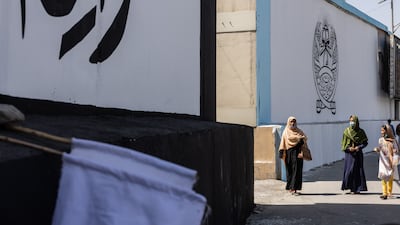
Children stand outside the former US embassy in Kabul where the banner of the 'Islamic Emirate' has replaced previous murals. -
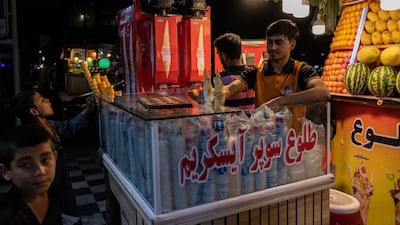
Evenings in Kabul have seen children joined by fighters buying fruit juice and ice cream. -
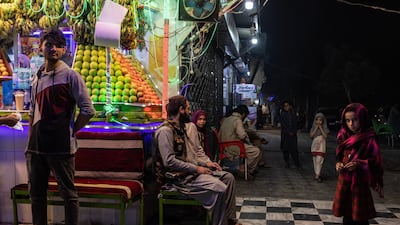
Taliban fighters sit awaiting for their fruit juice among civilians. -
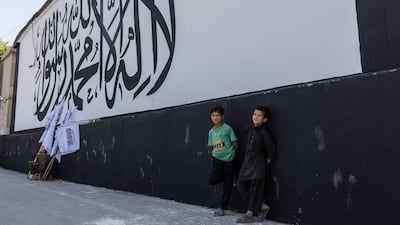
Children stand outside the former US embassy in Kabul where the banner of the 'Islamic Emirate' has replaced previous murals. -
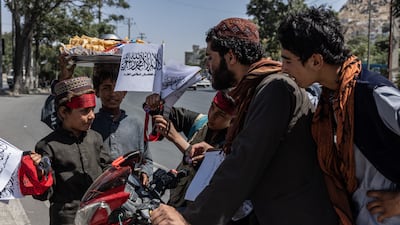
Street-working children are selling Taliban flags and bandanas in Kabul. -
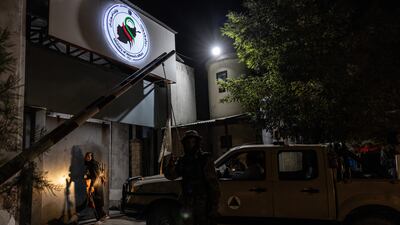
Taliban fighters stand outside the Ministry of Women's Affairs, not part of the new government.


“We want positive relationships with the whole world,” said the Taliban's acting foreign minister, Amir Khan Muttaqi.
“We believe in balanced international relations. We believe such a balanced relationship can save Afghanistan from instability.”

