Cuban scientists race to save rare crocodiles - in pictures
-
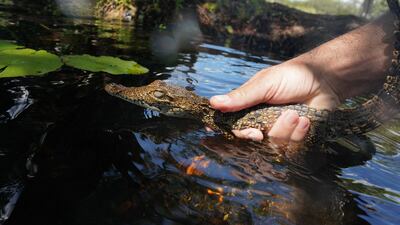
Researcher Etiam Perez releases a baby crocodile confiscated from illegal hunters into the dark waters of Cuba's palm-speckled Zapata Swamp. All photos: Reuters -
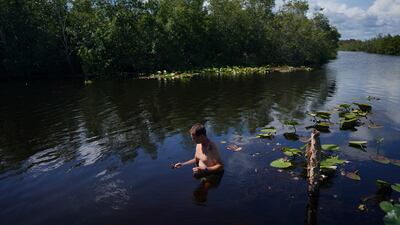
It is a small victory, he says, in a bigger battle. Cuban crocodiles, an endemic species found only here and in a swamp on Cuba's Isle of Youth, are critically endangered and have the smallest natural habitat left of any living crocodile species, scientists say. -

'We are trying to bring them back from the edge of extinction,' Mr Perez said as the spotted reptile, mouth full of fine teeth, swished its striped tail and disappeared. -

Illegal hunting and hybridisation with American crocodiles – which muddles the species' genes – have for decades threatened populations here. A warming climate, which alters the sex ratio of newborn crocs, poses a new threat. -

Despite the Cuban government having protected virtually all of the vast swamp – widely considered to be the best preserved in the Caribbean – that may still not be enough, scientists say. -

'When you compare the Cuban crocodile with other species in the world, its house is very small,' said Gustavo Sosa, a Cuban veterinarian at Zapata. -

Cuban scientists estimate that about 4,000 Cuban crocodiles live in the wild. But because the area they prefer within the wetland is relatively small, a climate-related disaster could wipe out most of the population. -

Those concerns decades ago prompted the Cuban government to underwrite a hatchery programme that annually releases several hundred crocodiles into the wild. Researchers also liberate crocodiles confiscated from hunters as part of a programme to reduce poaching of the species. -

The International Union for the Conservation of Nature, which listed the species as critically endangered in 2008, says its assessment and population estimates need updating, but confirms long-standing concerns over the species' limited habitat. -
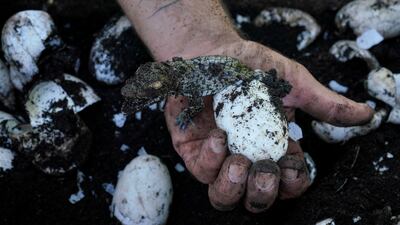
'With the hatchery we are trying to increase the historical range of the Cuban crocodile and of course increase the number of these individuals in the wild,' Mr Perez said. -

The sale of crocodile meat in Cuba is tightly controlled by the state, and only the meat from crocodiles with physical defects or hybrid genetics, for example, is allowed to be served in restaurants. An illegal market, however, can still be found in some areas, particularly around the swamp. -
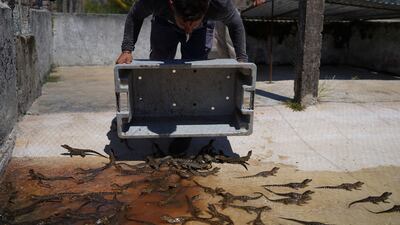
Fuel shortages, antiquated equipment and often inhospitable conditions are constant challenges in Cuba. But at Zapata, those concerns feel distant as this year´s crop of hatched crocs, still covered in mucus from their eggs, snap their jaws at pieces of fresh river fish, moving in unison as they discover their new world. -

The newborns quickly become fierce and intimidating predators, scientists say, and are capable of reaching lengths of nearly five metres as adults. The Cuban crocodile, said veterinarian Mr Sosa, is especially pugnacious, with little fear of humans. 'It is a very curious critter," he said. 'When you see one in nature, you know it is a Cuban crocodile because they come to you.'


Most popular today

