

India will keep its ban on wheat exports to ensure stability in the local market and curb unscrupulous global hoarding, Commerce Minister Piyush Goyal said.
The ongoing Russia-Ukraine war may lead to hoarding and prove disastrous for poorer countries, he said on the sidelines of the World Economic Forum in Davos, Switzerland.
Should India lift the ban, "it would only help black marketeers, hoarders and speculators," Mr Goyal was quoted by Reuters as saying. "Lifting the ban would not help the poor countries.”
Also, India’s exports are less than one per cent of the world's total wheat trade and the ban would not affect global markets, Mr Goyal was cited by India's Press Information Bureau as saying.
“Our export regulation should not affect global markets," Mr Goyal said. "We will continue to allow exports to vulnerable countries and neighbours.”
The statement comes a day after the International Monetary Fund’s chief Kristalina Georgieva appealed to the South Asian nation to reconsider its ban, saying the nation plays a crucial role in global food security and stability.
Several wheat-importing countries, including the G7 nations, have criticised India’s decision to ban wheat sales and asked the country to “assume its responsibility”.
India, which accounts for about 13 per cent of global wheat, is the biggest wheat producer after China but exports small quantities of the grain.
Last month, India said it would increase exports to meet the global wheat shortage as the war had disrupted the grain supply chain.
-

A baker holds up a seeded white loaf of bread at a bakery in Beirut, Lebanon, which faces a food crisis because of war in Europe. All photos: Bloomberg -
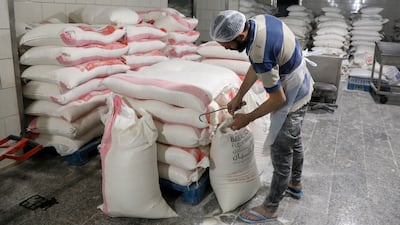
A worker opens a sack of flour to prepare bread dough in Beirut. Lebanon's wheat importers are already rationing flour sales to counter panic buying. -
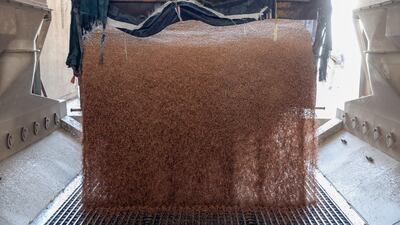
Lebanon, already suffering from years of financial crisis, has faced new problems since Russia invaded Ukraine in February. -
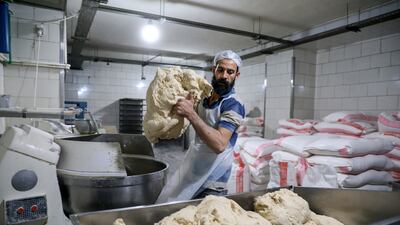
Lebanon normally buys 96 per cent of its wheat from Russia and Ukraine. -

The war between two of the world's biggest wheat exporters has sparked fears of a food crisis in many Middle Eastern countries. -
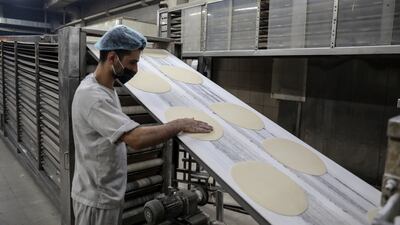
Lebanese importers are struggling to get dollars from a subsidy programme to buy wheat from new suppliers. -
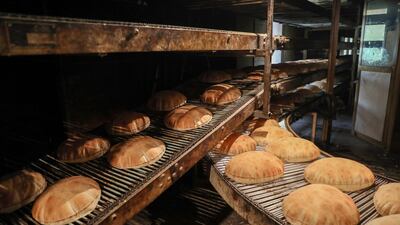
As countries try to secure new sources of wheat, cash-strapped Lebanon's small market of 6 million people could go without. -
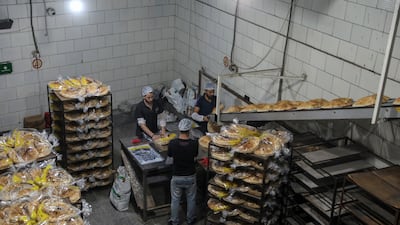
Lebanon lacks grain storage after silos were destroyed in the 2020 Beirut Port blast. -

The country needs 50,000 tonnes of wheat to feed its people for a month. -
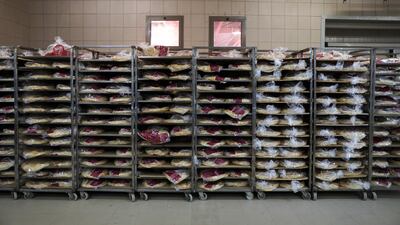
Subsidies keep the price of bread in Lebanon artificially low. -
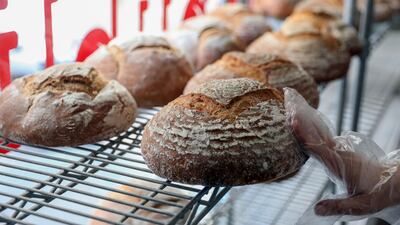
But a loaf now costs on average 10,000 Lebanese pounds, or $0.45, more than six times the price in 2019. -

Millers estimate that without subsidies, prices could more than double. -

Analysts fear that could cause social unrest in a country where three quarters of the population now live in poverty.


Prime Minister Narendra Modi offered help to plug shortages and promised to “feed the world” during his visit to European nations.
But in mid-May, the government imposed the ban after a severe heatwave resulted in crop damage and raised fears of a domestic shortage.
While India was initially expected to produce more than 111 million tonnes of wheat this year, the harvest is now estimated to reach about 106 million tonnes, according to the agriculture ministry.
Russia and Ukraine together account for about a quarter of the global wheat production.

