

Sri Lanka's parliament on Tuesday voted against fast-tracking an opposition move to condemn President Gotabaya Rajapaksa, as the prime minister warned that the country was in a precarious economic situation and down to its last day of petrol supplies.
Lawmakers voted 119 to 68 against fast-tracking the largely symbolic motion through parliament, which reconvened for the first time since violence flared last week and the prime minister quit. It is likely to be debated later in the week.
If the motion eventually passes, it could increase the pressure on the president to resign, following his brother Mahinda Rajapaksa who stood down as prime minister in response to the economic crisis that has triggered violent protests.
Ranil Wickremesinghe, the new prime minister, said in a televised address on Monday that the island nation had to face “unpleasant and terrifying facts”.
-

Violence raged across Sri Lanka late into the night on Monday, with five people dead and some 180 injured. AFP -
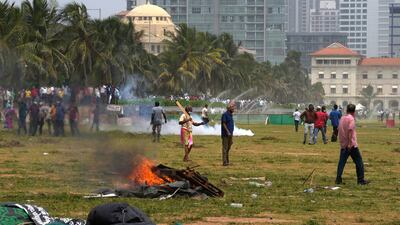
Sri Lanka's pro-government supporters vandalise camps of anti government protestors outside the president's office in Colombo. AP Photo -
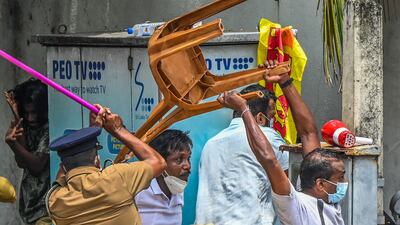
Sri Lankan Prime Minister Mahinda Rajapaksa quit on May 9 after a day of violence saw four people, including an MP, killed. AFP -
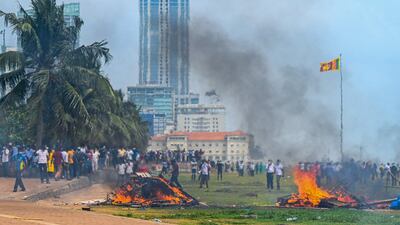
Government supporters armed with sticks and clubs attack protestors. AFP -
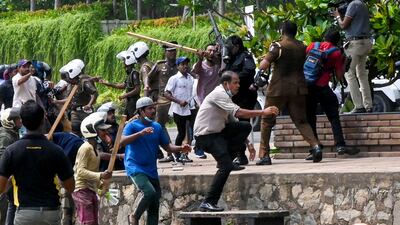
Demonstrators scuffle with police outside the president's office in Colombo. AFP -

Demonstrators and government supporters clash. AFP -
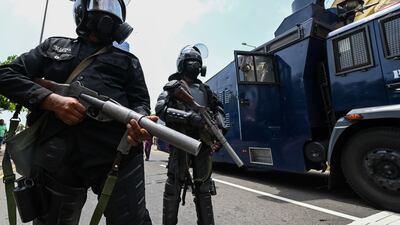
Police personnel stand guard outside the president's office. AFP -
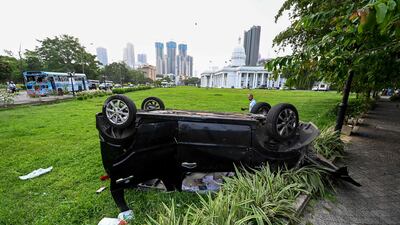
Destroyed vehicles litter the street after anti-government protesters rioted in Colombo. AFP -
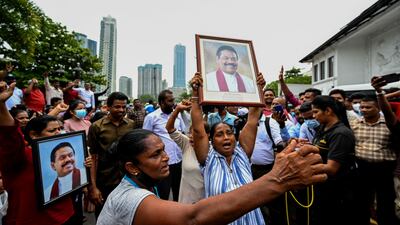
Pro-government supporters hold Prime Minister Mahinda Rajapaksa's portrait while protesting. AFP -
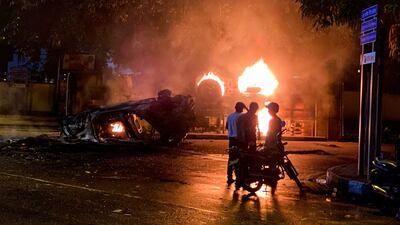
A bus burns close to Sri Lanka's outgoing Prime Minister Mahinda Rajapaksa's official residence in Colombo. AFP -
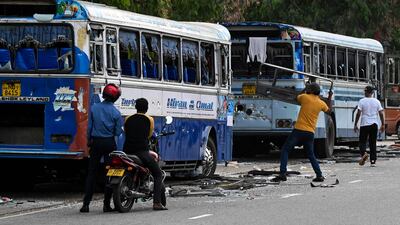
Anti-government protesters destroy a bus in Colombo. AFP -

Army personnel stand guard outside the president's office in Colombo. AFP -
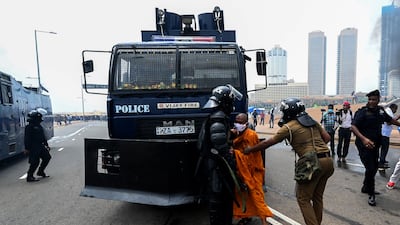
Supporters of the Sri Lankan government attempt to block a police water canon truck. AFP -

People gather near a burning bus in Colombo. AFP -

Anti-government demonstrators set fire to the house owned by Cabinet Minister Sanath Nishantha. Reuters -
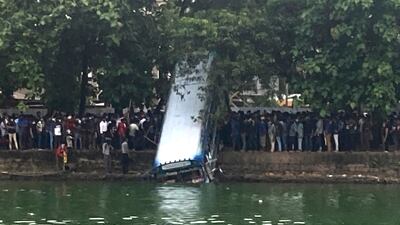
Sri Lankans push a bus, transporting government supporters who attacked anti-government protesters, into a lake in Colombo. AP Photo -

A policeman fires tear gas during a clash. AFP -

Sri Lankan Prime Minister Mahinda Rajapaksa resigned on Monday over the country’s dire economic state and violence at mass protests outside his home in Colombo, his spokesman Rohan Weliwita said. AP -
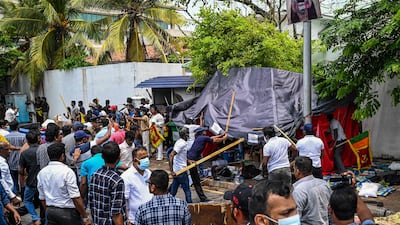
Demonstrators and government supporters clash outside the official residence of Mahinda Rajapaksa, 76, who offered his resignation to his younger brother, President Gotabaya Rajapaksa. AFP -
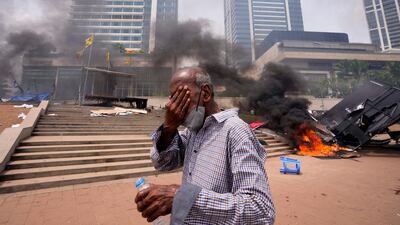
A man suffers after being sprayed with tear gas as cars burn on the streets of Colombo, Sri Lanka. AP -

Paramilitary police arrive as demonstrators and government supporters clash. AFP -
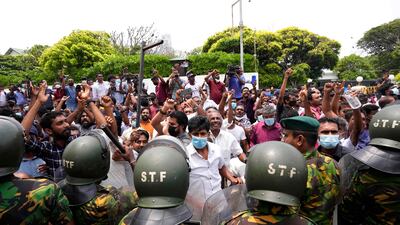
Sri Lankan government supporters cheer outside the prime minister's residence in Colombo. AP -
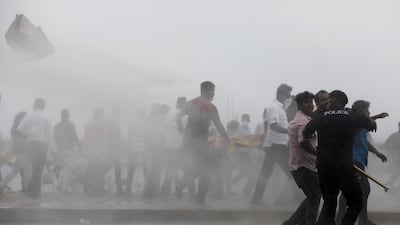
Supporters of the ruling party run as riot police fire tear gas during clashes in Colombo, amid the country's economic crisis. Reuters -
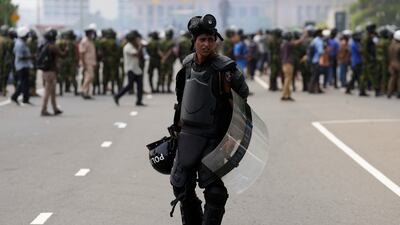
A policeman stands guard in riot gear. AP -
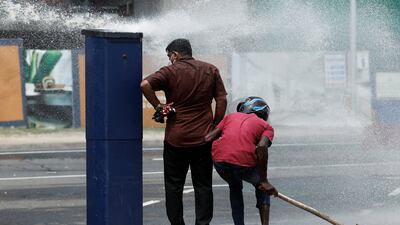
Water cannon are fired during a confrontation with anti-government demonstrators. Reuters -
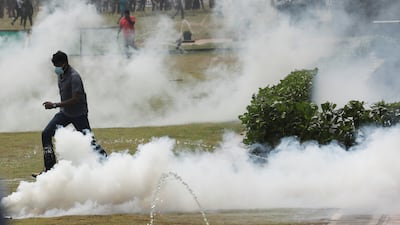
Supporters of Sri Lanka's ruling party run in Colombo as police fire tear gas during a clash with anti-government demonstrators. Reuters -
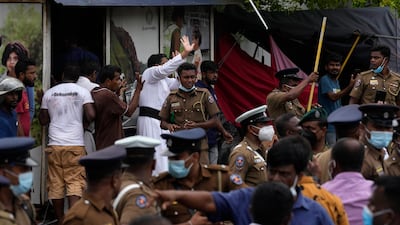
A Sri Lankan Catholic priest, centre in a white robe, is among anti-government protesters being attacked by supporters of the ruling party outside the prime minister's residence. AP -

Tears after anti-government protesters were attacked by supporters of the ruling party in Colombo. AP -

Violence flares between demonstrators and government supporters outside the president's office in Colombo. AFP -
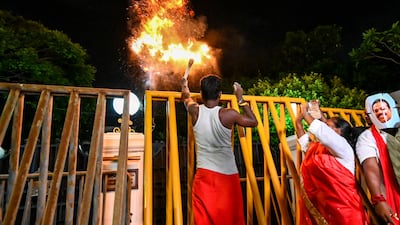
Activists stage a mock ritual to 'exorcise demons' outside the official residence of Sri Lanka's prime minister. AFP


“At the moment, we only have petrol stocks for a single day. The next couple of months will be the most difficult ones of our lives,” he said.
Foreign reserves had come close to zero from $7.5 billion in November 2019, he added, with the country requiring $75 million in the next few days to keep the economy running. Essential medicines have run out.
Power cuts could extend to 15 hours a day because of the lack of fuel, which is mostly imported.
Mr Wickremesinghe said he planned to ask for foreign assistance, privatise Sri Lankan Airlines and seek parliamentary approval to increase Treasury bill issuance to 4 trillion rupees ($11.27 billion) from 3 trillion.
“For a short period, our future will be even more difficult than the tough times that we have passed,” he said.
Politicians arrested
More than a month of predominantly peaceful protests against the government's handling of the economy turned deadly last week when supporters of former the former prime minister stormed an anti-government protest site in the commercial capital, Colombo.
Days of subsequent clashes between protesters, government supporters and police left nine dead and more than 300 injured.
Mahinda Rajapaksa then resigned, leaving Gotabaya, his younger brother, to rule on as president.
Police said on Tuesday they had arrested two politicians from the Rajapaksas' Sri Lanka Podujana Peramuna in connection with last week's violence.
Sri Lanka's economic crisis, unparalleled since its independence in 1948, follows the Covid-19 pandemic, rising oil prices and populist tax cuts by the Rajapaksas.
The chronic foreign currency shortage has led to rampant inflation and shortages of medicine, fuel and other essentials, bringing thousands out on the streets in protest in the Indian Ocean nation, where China and India are battling for influence.
Mr Wickremesinghe's four cabinet appointments to date have all been from the Rajapaksas' party, to the dismay of protesters, who want to exile the family from the nation's politics.
He has yet to announce key portfolios including the crucial post of finance minister, who will negotiate with the International Monetary Fund for financial help.
Former finance minister Ali Sabry held preliminary talks with the multilateral lender, but he quit along with Mahinda Rajapaksa last week.

