

Thousands of children are estimated to have died every month because of the impact of coronavirus on health systems in poorer countries, a Scottish charity has said.
In low and middle-income countries, surging Covid cases strained healthcare systems, a report by Edinburgh-based charity KidsOR showed, with researchers estimating that the collateral effects resulted in at least 6,000 children dying each month during the pandemic.
-
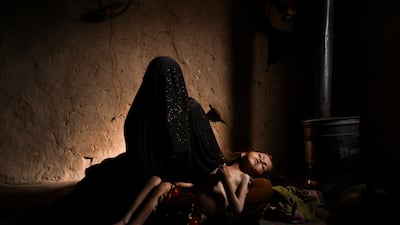
Fatima holds her daughter Nazia, 4, who is suffering from acute malnutrition, at their house near Herat, western Afghanistan, December 16, 2021. Two years ago, Nazia was a plump toddler, Fatima says. Aid groups say more than half the population faces acute food shortages. AP Photo -
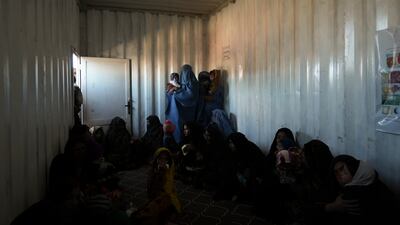
Afghan women at a makeshift clinic run by World Vision at a settlement near Herat. The aid-dependent country’s economy was already teetering when the Taliban seized power in mid-August. The consequences have been devastating for a country battered by four decades of war, a punishing drought and the coronavirus pandemic. AP Photo -
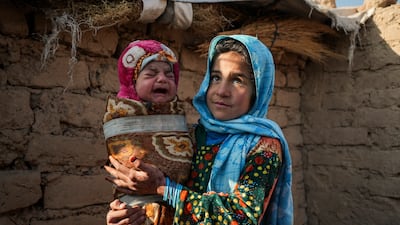
Qandi Gul holds her brother outside their home in a camp for those displaced by war and drought near Herat. Qandi's father sold her into marriage without telling his wife, taking a down payment so he could feed his family of five children. AP Photo -
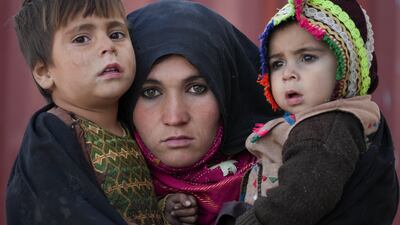
An Afghan woman with her children outside a makeshift clinic at a sprawling settlement of mud brick huts housing those displaced by war and drought near Herat. AP Photo -
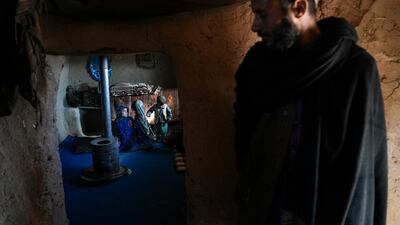
Hamid Abdullah outside a room where his children are playing at a settlement near Herat. Mr Abdullah is selling his young daughters into arranged marriages, desperate for money to treat his chronically ill wife, who is pregnant with their fifth child. AP Photo -
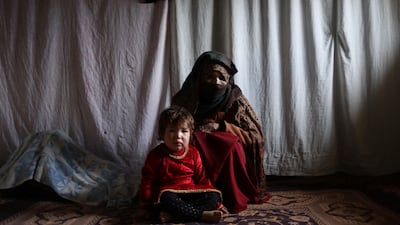
Kubra, 57, with her grandchild in a house in Bamiyan, Afghanistan, December 22, 2021. 'We got two sacks of flour last spring that we're still using. After that, we have to have faith that God will help us," Kubra says. Reuters -
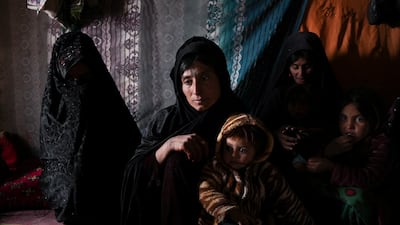
Guldasta and members of her family in their house at a settlement near Qala-e-Naw, Afghanistan. Guldasta says that after days with nothing to eat, she told her husband to take their son Salahuddin, 8, to the bazaar and sell him to buy food for the others. AP Photo -
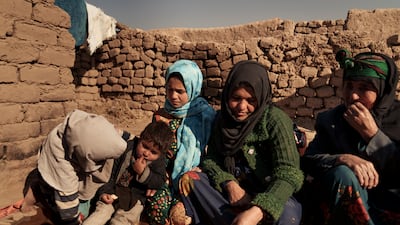
Aziz Gul, second from right, and her 10-year-old daughter Qandi, centre, outside their home with other family members, near Hera. Qandi's father sold her into marriage without telling his wife, Aziz, taking a down-payment so he could feed his family. AP Photo


There were significant changes in the ages and characteristics of patients operated on, before and during the Covid pandemic, with more healthier and wealthier patients treated.
The charity said the findings raise concerns about unreported deaths among poorer people.
Because healthier people were more likely to get treatment, they experienced better results, with a 50 per cent drop in the number of people getting sepsis, infection or dying after surgery.
David Cunningham, the charity’s chief executive, said: “The study suggests the improvements likely reflect a change in the patient population, where sicker patients may not be getting the required care due to increased barriers to access healthcare during the pandemic.
“Our findings add to the growing evidence of hidden morbidity and excess mortality during the pandemic from patients delaying care and potentially dying at home, especially in rural and underserved areas.”
Researchers from the charity and the University of California found there was a sharp drop in the number of operations following the initial outbreak, in March to April 2020, which was in contrast to the trend set before.
Overall, the figure has been slow to recover, KidsOR said, with the total number of operations still not back to pre-Covid levels.
Researchers said that in richer parts of the world there were more resources to help manage Covid surges, but in low- and middle-income countries (LMICs) their healthcare systems have been overwhelmed and worsened by harder-to-access protective equipment and vaccines.
Mr Cunningham said: “The findings of our study are particularly concerning as many LMICs have reported surges of Covid cases in recent months.
“The lack of easily accessible data in LMICs has made it difficult to assess the true impact of Covid-19 and track trends.
“These factors all combine to not only prolong the reduction in surgical capacity in LMICs, but also make it difficult to co-ordinate and plan recovery strategies.”
KidsOR, launched by husband-and-wife philanthropists Garreth and Nicola Wood, works to improve children’s access to surgery at hospitals in poorer countries.
So far, the charity says it has installed 50 paediatric operating rooms across Africa and aims to more than double those centres to 120 by 2030.

