

An Indian woman claims an imposing palace should be given to her as the heir to the dynasty that built the Taj Mahal.
Sultana Begum, 68, has spent 10 years petitioning authorities to recognise her royal status and compensate her accordingly.
In her cramped two-room hut on the outskirts of Kolkata, where she lives on a small pension, are records of her marriage to Mirza Mohammad Bedar Bakht, purported to be the great-grandson of India's last Mughal ruler.
His death in 1980 left her struggling.
"Can you imagine that the descendant of the emperors who built the Taj Mahal now lives in desperate poverty?" she said.
Ms Begum lodged a court case seeking recognition that she is rightful owner of the imposing 17th-century Red Fort, a sprawling and pockmarked castle in New Delhi that was once the seat of Mughal power.
"I hope the government will definitely give me justice," she said. "When something belongs to someone, it should be returned."

Her case, supported by sympathetic campaigners, rests on her claim that her late husband's lineage can be traced to Bahadur Shah Zafar, the last emperor.
By the time of Zafar's coronation in 1837, the Mughal empire had shrunk to the capital's boundaries after the conquest of India by the commercial venture of British merchants known as the East India Company.
In a rebellion two decades later – now recognised as India's first war of independence – mutineering soldiers declared the 82-year-old as the leader of their insurrection.
The emperor, who preferred writing poetry to waging war, knew the uprising was doomed and was a reluctant leader.
British forces surrounded Delhi within a month and crushed the revolt, murdering all 10 of Zafar's surviving sons despite the royal family's surrender.
Zafar himself was exiled to neighbouring Myanmar, travelling under guard in a bullock cart, and died penniless in captivity five years later.
Many of the Red Fort's buildings were demolished in the years after the uprising and the complex fell into disrepair before colonial authorities ordered its renovation at the turn of the 20th century.

It has since become a symbol of freedom from British rule.
Jawaharlal Nehru, independent India's first prime minister, hoisted the national flag from the fort's main gate in August 1947, a ritual repeated annually by his successors.
Ms Begum's court case is based on the argument that India's government is the illegal occupant of the property which, she said, should have passed to her.
The Delhi High Court rejected her petition last week as a "gross waste of time", but did not rule on whether her claim to imperial ancestry was legitimate.
Instead, the court said her legal team had failed to explain why a similar case had not been brought by Zafar's descendants in the 150 years since his exile.
Her lawyer Vivek More said the case would continue.

"She has decided to file a plea before a higher bench of the court challenging the order," he told AFP.
Ms Begum has endured a precarious life, even before she was widowed and forced to move into the disadvantaged community she calls home.
Her husband, whom she married in 1965 when she was 14, was 32 years her senior and earned money as a soothsayer, but was unable to provide for their family.
"Poverty, fear and lack of resources pushed him to the brink," she said.
Ms Begum lives with one of her grandchildren in a small shack, sharing a kitchen with neighbours and washing at a communal tap down the street.
For some years, she ran a small tea shop near her home but it was demolished to allow the widening of a road. She now survives on a pension of 6,000 rupees ($80) per month.
But she has not given up hope that authorities will recognise her as the rightful beneficiary of India's imperial legacy, and of the Red Fort.
"I hope that today, tomorrow or in 10 years, I will get what I'm entitled to," she said.
"God willing, I will get it back ... I'm certain justice will happen."
India inheritance disputes: Five-decade tussle ends with $350m windfall for heirs
-
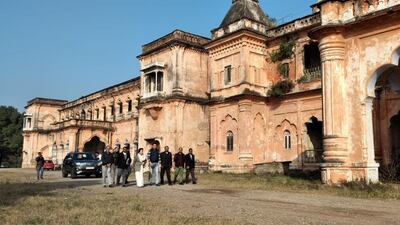
Sixteen legal heirs of Syed Raza Ali Khan, the last ruler of the princely state of Rampur in northern India, will receive a share of his estate, which includes mansions, orchards and a private railway station. Photo: Sandeep Saxena -
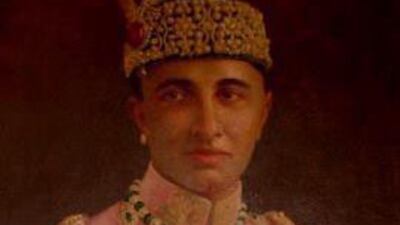
A portrait of Syed Raza Ali Khan. Photo: Kazim Ali Khan -
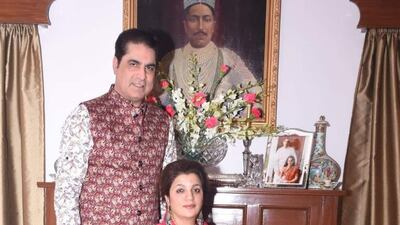
Kazim Ali Khan, one of the grandsons of the late ruler and one of 16 heirs who will receive a share of an estate valued at $350 million. Photo: Kazim Ali Khan -
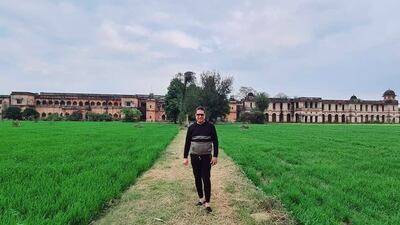
Kazim Ali Khan outside his grandfather's official residence in Rampur, now a part of Uttar Pradesh state. Photo: Kazim Ali Khan -
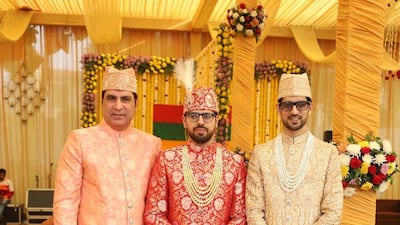
Kazim Ali Khan with his sons Haider Ali Khan and Ali Mohammad Khan. Photo: Kazim Ali Khan -
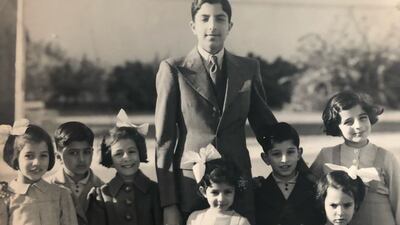
Syed Raza Ali Khan had three sons and six daughters but bequeathed his estate to his eldest son, triggering a decades-long legal dispute among the siblings. Photo: Kazim Ali Khan -
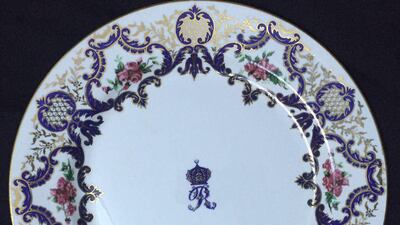
The legal battle was over property and assets including gold-plated crockery. Photo: Kazim Ali Khan -

Valuers found gold and gem-encrusted weapons in an armoury in Rampur. Photo: Kazim Ali Khan -
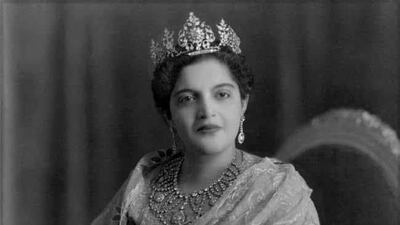
Rafat Zamani, one of the wives of Syed Raza Ali Khan. Photo: Kazim Ali Khan -
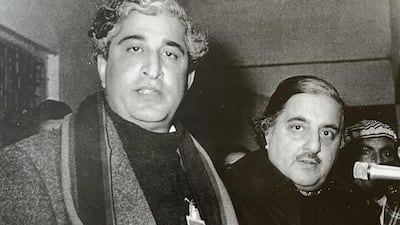
Zulfiqar Ali Khan and Murtaza Ali Khan (in black coat), two of three sons of Syed Raza Ali Khan. Photo: Kazim Ali Khan -
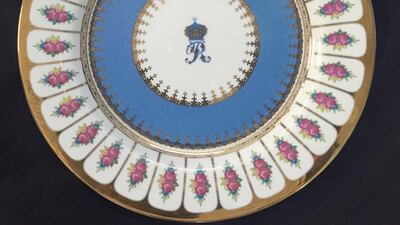
Gold-plated crockery and a weapons peg from the late ruler's estate. Photo Kazim Ali Khan -
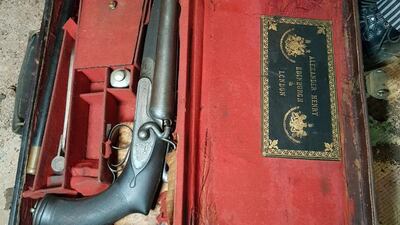
A gold-plated pistol found in the late ruler's armoury. Photo: Kazim Ali Khan -
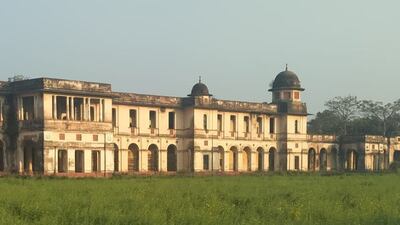
Kothi Khas Bagh is one of five properties that are to be divided among Nawab Syed Raza Ali Khan's legal heirs. Photo: Sandeep Saxena



