

Monumental projects were one way that Dubai attracted international attention at the turn of the century.
Perhaps chief among these was the Palm Jumeirah. When construction started in June 2001, the project was inconceivable to many, even those living in the UAE – a palm-shaped archipelago was considered not only far-fetched, but science-fiction.
This was before the city became renowned the world over for its soaring towers, sprawling malls and tourist appeal. In many ways, Palm Jumeirah was the project that proved Dubai’s ability to meet its ambitions.

Palm Jumeirah was developed by Nakheel. Spread over 560 hectares, which is large enough to house 600 football pitches, the project features a trunk, spine and 17 fronds. A crescent and islets frame the development, acting as a breakwater.
The project was built on reclaimed land using sand dredged from the floor of the Gulf for most of the development. The sides of the crescent curving atop the palm-shaped island were bolstered using rocks from the mainland.
By 2004, Palm Jumeirah’s land and basic infrastructure were established. Residential buildings began being constructed in 2006, with residents arriving a year later. In 2009, a 5.45km monorail was opened to connect the area to the mainland.
The trunk of the development comprises apartments, hotels and retail facilities, including Nakheel Mall. More famously, the area is known for its luxury resorts, including Atlantis The Palm, Atlantis The Royal and Jumeirah Zabeel Saray, as well as fine dining destinations, such as Nobu and Ossiano. It is also known for The Pointe, a waterfront retail and dining development that is currently being redeveloped.
Palm Jumeirah is planned to be part of a larger development named Palm Islands, which includes Palm Deira and Palm Jebel Ali. The two projects stalled for years but Palm Deira has been relaunched as Dubai Islands and the revival of Palm Jebel Ali was announced earlier this month. It will be twice as big as Palm Jumeirah, adding about 110km to Dubai’s coastline and providing 35,000 families with beachside residences, green spaces and other amenities, as well as 80 hotels.
-
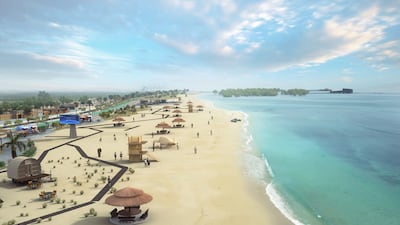
Dubai has unveiled plans to develop 54km of beaches around Palm Jebel Ali and Palm Jumeirah and a new 8km beach at Jebel Ali. Photos: @DXBMediaOffice / twitter -
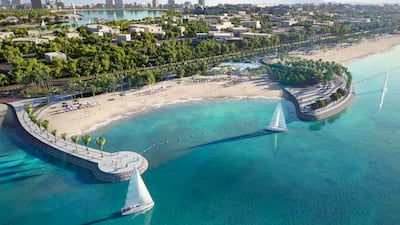
The plans include the development of enclosed beach areas -
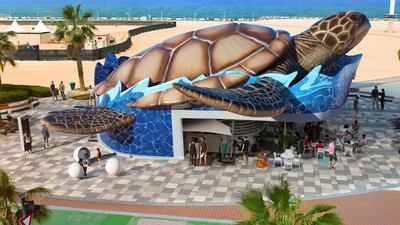
There will be cafes and dining areas -
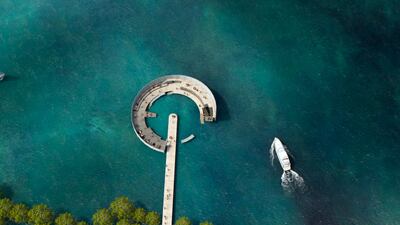
Walkways are included in the project -
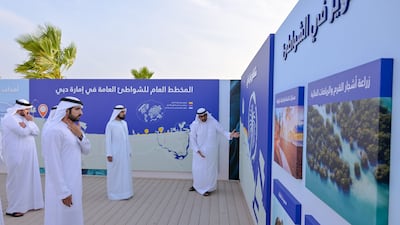
Sheikh Mohammed bin Rashid, Vice President and Ruler of Dubai, and Sheikh Hamdan, Dubai's Crown Prince, viewed the overall plans on Thursday -
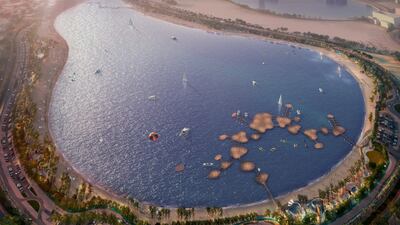
The new beach developments will include new attractions and recreational facilities. -
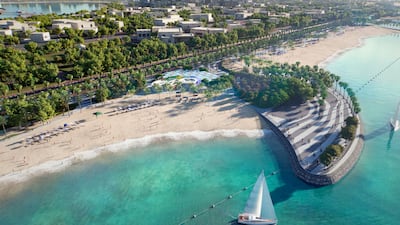
The new beach facilities will increase demand for waterfront properties and resorts as well as attract more tourism. -
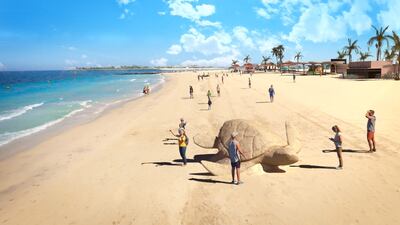
The Jebel Ali beach, developed in collaboration with Nakheel, will include aqua sports facilities, cycling and pedestrian tracks, rest and recreation amenities and a turtle enclosure. -
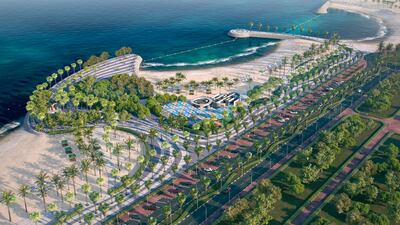
There will be new pedestrian and cycling tracks, along with the planting of mangrove trees.



