• A family ride their motorcycle on a flooded road during the monsoon season in Karachi, Pakistan. Reuters
    A family ride their motorcycle on a flooded road during the monsoon season in Karachi, Pakistan. Reuters
  • Balochistan and Sindh provinces have been hit by heavy rains that have killed more than 300 in Pakistan during this year's monsoon. EPA
    Balochistan and Sindh provinces have been hit by heavy rains that have killed more than 300 in Pakistan during this year's monsoon. EPA
  • A child plays in a flooded road as a bus passes by in Manila in August. Reuters
    A child plays in a flooded road as a bus passes by in Manila in August. Reuters
  • People wade through floodwater in Manila. Reuters
    People wade through floodwater in Manila. Reuters
  • A car submerged by a flash flood in Zayegan village, in the Iranian city of Fasham, north of Tehran. EPA
    A car submerged by a flash flood in Zayegan village, in the Iranian city of Fasham, north of Tehran. EPA
  • The floods swept mud and debris into this home in Zayegan, Iran. EPA
    The floods swept mud and debris into this home in Zayegan, Iran. EPA
  • Rain flooded Death Valley National Park, California this month. Reuters
    Rain flooded Death Valley National Park, California this month. Reuters
  • A rockslide on Route 39 in the San Gabriel Mountains of California, US, after a major storm in December. Reuters
    A rockslide on Route 39 in the San Gabriel Mountains of California, US, after a major storm in December. Reuters
  • Community service group volunteers help to clean a road after the heavy rainfall in Fujairah, UAE. Khushnum Bhandari / The National
    Community service group volunteers help to clean a road after the heavy rainfall in Fujairah, UAE. Khushnum Bhandari / The National
  • Vehicles trapped by the floods in Fujairah. Khushnum Bhandari / The National
    Vehicles trapped by the floods in Fujairah. Khushnum Bhandari / The National
  • The flooded streets of Fujairah. Khushnum Bhandari / The National
    The flooded streets of Fujairah. Khushnum Bhandari / The National
  • People make their way through Fujairah's floodwaters. EPA
    People make their way through Fujairah's floodwaters. EPA
  • A construction vehicle in a flooded tunnel in Fujairah. EPA
    A construction vehicle in a flooded tunnel in Fujairah. EPA

Sea-level rises caused by climate change 'will destroy island countries'


Daniel Bardsley
  • English
  • Arabic

Among the many effects that climate change are having on our planet, the rise in sea levels is probably the most alarming for some nations ― because it means they could no longer exist.

Much of the Indian Ocean archipelago of the Maldives, for example, stands just a few feet above sea level and so is predicted to disappear under the waves this century.

"The most significant impact of climate change will be sea-level rises," Dr Nasser Karami, a climate change researcher in Norway, said. "It will destroy island countries in the Pacific Ocean, the Indian Ocean or other places."

Larger and richer nations may not face an existential crisis, but they are far from immune to the effects of sea-level rises.

Rising sea-level rises will destroy island countries in the Pacific Ocean, the Indian Ocean or other places
Dr Nasser Karami,
a climate change researcher

UN figures show that about 40 per cent of the world's population live within 100 kilometres of a coast, so significant numbers of people could see their lives upended.

Major coastal cities such as New York may face significant challenges, Dr Karami said. Simulations by the advocacy group the Union of Concerned Scientists indicate that much of the US’s eastern seaboard could suffer dozens of flooding events per year as soon as 2035, even without accounting for storm surges.

Sea levels to rise faster now than in past decades

With warmer temperatures causing the sea to expand and glaciers and ice sheets to melt, the world's seas have risen by an average of more than 20 centimetres since the late 19th century.

A report released in February by the US National Oceanic and Atmospheric Administration and other American government agencies forecast that, from now until 2050, seas will rise a further 10 to 12 inches (25 to 30 centimetres) — more than they have risen over the previous century.

By the mid-century, moderate flooding, which causes disruption and damage to infrastructure, is likely to happen 10 times as often as it does now.

Aside from the effects on coastal communities, there will be consequences for agricultural areas and underground aquifers, which may become contaminated with salt. Wildlife will suffer when natural environments become flooded.

Rises in sea levels are accompanied by increases in the frequency of typhoons, hurricanes and other extreme events, causing storm surges with the potential to devastate coastal communities.

Aftermath of Cyclone Shaheen in Oman – in pictures

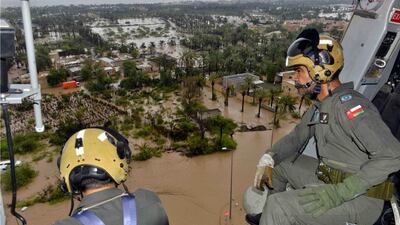
  • An Oman Air Force helicopter flies over Khaburah in Al Batinah district to assess damage caused by Cyclone Shaheen in October 2021. The government later said $500 million was required to repair infrastructure and homes. Photo: AP
    An Oman Air Force helicopter flies over Khaburah in Al Batinah district to assess damage caused by Cyclone Shaheen in October 2021. The government later said $500 million was required to repair infrastructure and homes. Photo: AP
  • Cyclone Shaheen caused widespread flooding and landslides in Oman. Climate change is predicted to make such weather events more frequent. Photo: AFP
    Cyclone Shaheen caused widespread flooding and landslides in Oman. Climate change is predicted to make such weather events more frequent. Photo: AFP
  • In total 14 people in Oman died as a result of the cyclone. Photo: AFP
    In total 14 people in Oman died as a result of the cyclone. Photo: AFP
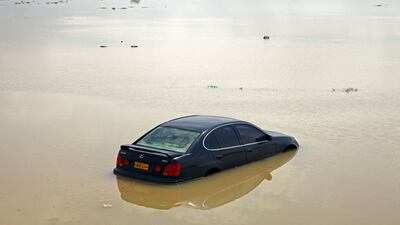
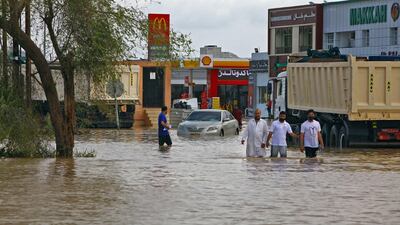
  • A car is stranded in flooded street in the Omani capital, Muscat. Photo: AFP
    A car is stranded in flooded street in the Omani capital, Muscat. Photo: AFP
  • People wade through a flooded street in Muscat. Photo: AFP
    People wade through a flooded street in Muscat. Photo: AFP
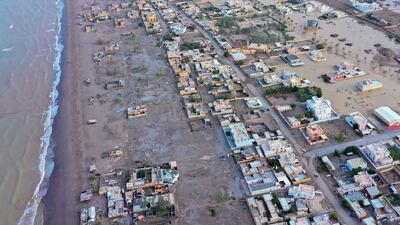
  • A flooded street in Al Khaburah. Photo: AP
    A flooded street in Al Khaburah. Photo: AP
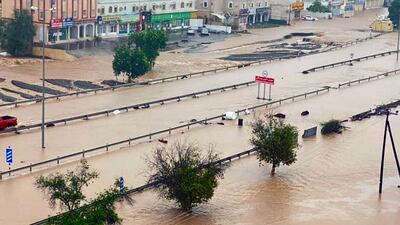
  • Flooded streets in Al Khaburah, one day after Cyclone Shaheen brought wind speeds of up to 116 kilometres an hour. Photo: EPA
    Flooded streets in Al Khaburah, one day after Cyclone Shaheen brought wind speeds of up to 116 kilometres an hour. Photo: EPA
  • Gloomy skies in Muscat. Photo: EPA
    Gloomy skies in Muscat. Photo: EPA
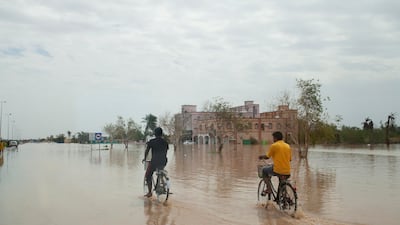
  • People cycle along a waterlogged road in Al Khaburah. Photo: EPA
    People cycle along a waterlogged road in Al Khaburah. Photo: EPA
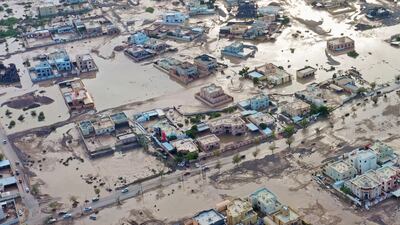
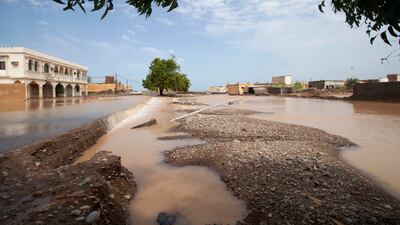
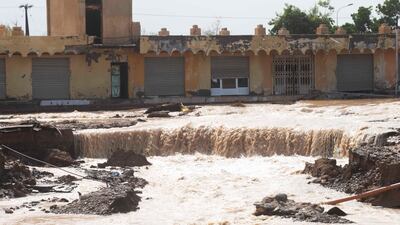
  • A torrent of floodwater runs through Al Khaburah. Photo: EPA
    A torrent of floodwater runs through Al Khaburah. Photo: EPA
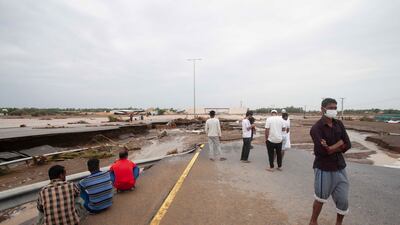
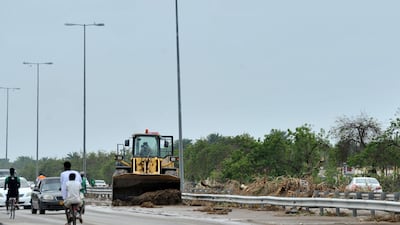
  • Workers in Al Musanna repair damage caused by Cyclone Shaheen. Photo: Reuters
    Workers in Al Musanna repair damage caused by Cyclone Shaheen. Photo: Reuters
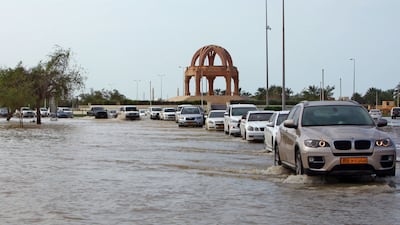
  • Vehicles make their way along a flooded street in the aftermath of Cyclone Shaheen in Muscat. Photo: AFP
    Vehicles make their way along a flooded street in the aftermath of Cyclone Shaheen in Muscat. Photo: AFP

Richard Crowther, head of maritime at WSP Middle East, an engineering consultancy that advises on coastal developments, said more extreme weather events were already being seen in the Gulf of Oman and the Indian Ocean.

Modelling WSP carried out with Oman’s Sohar International Port Company and Deltares, another consultancy, suggests that recent cyclones such as Gonu (in 2007) and Kyarr (in 2019) were more severe than would be expected once every century.

"This, therefore, indicated that the estimated return periods for predicted weather events were overestimated, with high magnitude events seemingly occurring more frequently," Mr Crowther said.

Problems are set to intensify, because even under low emissions scenarios, sea levels will continue to rise.

The US National Oceanic and Atmospheric Administration's 2022 Sea Level Rise Technical Report found that at least two feet (0.61 metres) of increase are likely along the US coastline by 2100 because of emissions released until now.

"Failing to curb emissions could cause an additional 1.5 to five feet of rise, for a total of 3.5 to seven feet by the end of this century," the report summary stated.

GCC’s Catch-22: conservative estimates to build coastal properties

A 2021 report of the Intergovernmental Panel on Climate Change warned that global mean sea levels could rise by two metres if greenhouse gas emissions continued at a high rate.

"This presents a Catch-22 for the GCC region as many coastal developments are currently designed using appropriately conservative considerations, which project around one metre of sea-level rise in the next 100 years," Mr Crowther said.

The vulnerability of infrastructure and populations to sea-level rises varies greatly, said Fawzi Dibis, WSP Middle East’s manager for sustainability and climate change. This stems from differences in geography, altitudes and economic models.

"The World Bank highlights that low-lying coastal areas in Tunisia, Qatar, Libya, the UAE, Kuwait and particularly Egypt are at risk," he said.

Areas that will be affected by 1m sea level rise, according to modelling by Climate Central:

The Nile Delta, for example, will face increasing erosion rates; inundation of wetlands and other low-lying areas; increased flooding; faster retreat of the coastline, including erosion of sand dunes and the coastal sand belt; the breaching of coastal barriers; and damage of coastal inlets.

"This would impact the livelihood of huge population centres in Egypt and pose threats to food security, as most agricultural production occurs in the Nile Delta," Mr Dibis said. He added that creating sand dunes and dykes, and preserving existing wetlands, could reduce the risks.

Given that increasing numbers of people and assets could be at risk, Mr Crowther said it was "crucial to ensure that the formation levels of urban developments on coastal areas are raised".

He said investing early in a project to ensure it is able to cope with the stresses of climate change could reduce risks and costs and "ensure fewer stranded assets".

Some projects do take into account the potential for significant sea-level rises, and protection for developments can be unobtrusive and have the potential to be strengthened over time.

Mr Crowther cited as an example WSP’s work on the Marine Life Institute, part of a development called Amaala on the north-west coast of Saudi Arabia.

"We designed partitions for a unique sea wall around the perimeter, which is purposefully designed to take into account sea-level rise and waves by mitigating the exchange of water from one side to the other, all whilst limiting the visual impact," he said.

"By designing this unique feature with an upgradable approach, the acrylic screen partition can be modified in height as sea levels rise over time to preserve both the visual impact of the structure, as well as extend the lifespan of the overall asset."

Coral bleaching and higher salinity

A sea-level rise is far from the only effect climate change is having on seas and oceans. Coral reef bleaching, in which heat stress causes coral to expel the algae that are essential for their functioning, is another consequence, as is harm to fish numbers from high temperatures.

When it comes to temperature increases, the Arabian Gulf is likely to be one of the most heavily affected seas in the world. The Intergovernmental Panel on Climate Change is forecasting a 4.26°C increase in surface temperature between 2010 and 2039.

"Algal blooms and dead zone areas are likely to grow as increases in temperature lead to increased stratification of oxygenated water and concentrate pollutants, thus negatively impacting coastal tourism," Mr Dibis said.

"Additionally, increased evaporation has been linked to an increase in salinity of seawater, which may disrupt marine ecosystems. This could evolve to the potential demise of mangroves and other species."

Higher salinity could also affect desalination plants, power stations and other infrastructure, something that operators will have to consider.

"It’s essential to embed systematic risk management frameworks, adaptation and resilience strategies, and an accelerated pathway to decarbonisation," Mr Dibis said.

Animals in danger of extinction due to climate change - in pictures

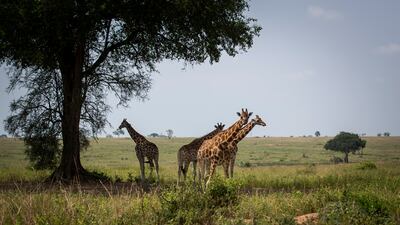
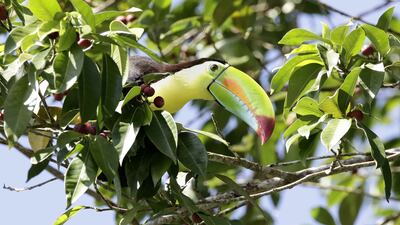
  • Some of the planet’s most stunning creatures, including giraffes and parrots, are at risk from global warming and other human-induced environmental change, the UN has warned. Photo: AFP
    Some of the planet’s most stunning creatures, including giraffes and parrots, are at risk from global warming and other human-induced environmental change, the UN has warned. Photo: AFP
  • Giraffes stand by the shade of a tree in Murchison Falls National Park, Uganda. Photo: AP
    Giraffes stand by the shade of a tree in Murchison Falls National Park, Uganda. Photo: AP
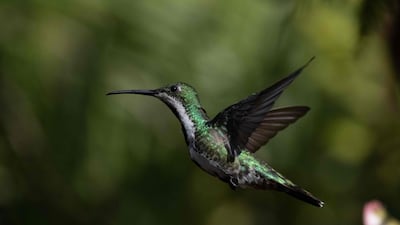
  • Some analysts have concluded that the likes of toucans, puffins and hummingbirds may face particularly uncertain futures. Photo: EPA
    Some analysts have concluded that the likes of toucans, puffins and hummingbirds may face particularly uncertain futures. Photo: EPA
  • A hummingbird flies at a garden in Caracas, the capital of Venezuela. Photo: AFP
    A hummingbird flies at a garden in Caracas, the capital of Venezuela. Photo: AFP
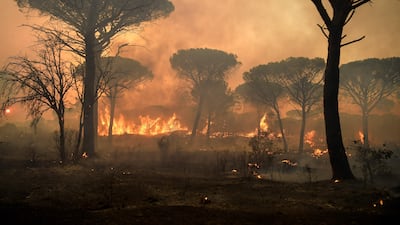
  • Wildfires in southern France. Tree species are facing several threats including an increase in the frequency of wildfires due to climate change and deforestation because of industry, agriculture and firewood. Photo: AFP
    Wildfires in southern France. Tree species are facing several threats including an increase in the frequency of wildfires due to climate change and deforestation because of industry, agriculture and firewood. Photo: AFP
AUSTRALIA SQUAD

Aaron Finch (captain), Ashton Agar, Alex Carey, Pat Cummins, Glenn Maxwell, Ben McDermott, Kane Richardson, Steve Smith, Billy Stanlake, Mitchell Starc, Ashton Turner, Andrew Tye, David Warner, Adam Zampa

Schedule:

Pakistan v Sri Lanka:
28 Sep-2 Oct, 1st Test, Abu Dhabi
6-10 Oct, 2nd Test (day-night), Dubai
13 Oct, 1st ODI, Dubai
16 Oct, 2nd ODI, Abu Dhabi
18 Oct, 3rd ODI, Abu Dhabi
20 Oct, 4th ODI, Sharjah
23 Oct, 5th ODI, Sharjah
26 Oct, 1st T20I, Abu Dhabi
27 Oct, 2nd T20I, Abu Dhabi
29 Oct, 3rd T20I, Lahore

The five pillars of Islam

1. Fasting 

2. Prayer 

3. Hajj 

4. Shahada 

5. Zakat 

Springsteen: Deliver Me from Nowhere

Director: Scott Cooper

Starring: Jeremy Allen White, Odessa Young, Jeremy Strong

Rating: 4/5

Kill%20
%3Cp%3E%3Cstrong%3EDirector%3A%3C%2Fstrong%3E%20Nikhil%20Nagesh%20Bhat%3C%2Fp%3E%0A%3Cp%3E%3Cstrong%3EStarring%3C%2Fstrong%3E%3A%20Lakshya%2C%20Tanya%20Maniktala%2C%20Ashish%20Vidyarthi%2C%20Harsh%20Chhaya%2C%20Raghav%20Juyal%3C%2Fp%3E%0A%3Cp%3E%3Cstrong%3ERating%3A%3C%2Fstrong%3E%204.5%2F5%3Cbr%3E%3C%2Fp%3E%0A
List of officials:

Referees: Chris Broad, David Boon, Jeff Crowe, Andy Pycroft, Ranjan Madugalle and Richie Richardson.

Umpires: Aleem Dar, Kumara Dharmasena, Marais Erasmus, Chris Gaffaney, Ian Gould, Richard Illingworth, Richard Kettleborough, Nigel Llong, Bruce Oxenford, Ruchira Palliyaguruge, Sundaram Ravi, Paul Reiffel, Rod Tucker, Michael Gough, Joel Wilson and Paul Wilson.

Mercer, the investment consulting arm of US services company Marsh & McLennan, expects its wealth division to at least double its assets under management (AUM) in the Middle East as wealth in the region continues to grow despite economic headwinds, a company official said.

Mercer Wealth, which globally has $160 billion in AUM, plans to boost its AUM in the region to $2-$3bn in the next 2-3 years from the present $1bn, said Yasir AbuShaban, a Dubai-based principal with Mercer Wealth.

Within the next two to three years, we are looking at reaching $2 to $3 billion as a conservative estimate and we do see an opportunity to do so,” said Mr AbuShaban.

Mercer does not directly make investments, but allocates clients’ money they have discretion to, to professional asset managers. They also provide advice to clients.

“We have buying power. We can negotiate on their (client’s) behalf with asset managers to provide them lower fees than they otherwise would have to get on their own,” he added.

Mercer Wealth’s clients include sovereign wealth funds, family offices, and insurance companies among others.

From its office in Dubai, Mercer also looks after Africa, India and Turkey, where they also see opportunity for growth.

Wealth creation in Middle East and Africa (MEA) grew 8.5 per cent to $8.1 trillion last year from $7.5tn in 2015, higher than last year’s global average of 6 per cent and the second-highest growth in a region after Asia-Pacific which grew 9.9 per cent, according to consultancy Boston Consulting Group (BCG). In the region, where wealth grew just 1.9 per cent in 2015 compared with 2014, a pickup in oil prices has helped in wealth generation.

BCG is forecasting MEA wealth will rise to $12tn by 2021, growing at an annual average of 8 per cent.

Drivers of wealth generation in the region will be split evenly between new wealth creation and growth of performance of existing assets, according to BCG.

Another general trend in the region is clients’ looking for a comprehensive approach to investing, according to Mr AbuShaban.

“Institutional investors or some of the families are seeing a slowdown in the available capital they have to invest and in that sense they are looking at optimizing the way they manage their portfolios and making sure they are not investing haphazardly and different parts of their investment are working together,” said Mr AbuShaban.

Some clients also have a higher appetite for risk, given the low interest-rate environment that does not provide enough yield for some institutional investors. These clients are keen to invest in illiquid assets, such as private equity and infrastructure.

“What we have seen is a desire for higher returns in what has been a low-return environment specifically in various fixed income or bonds,” he said.

“In this environment, we have seen a de facto increase in the risk that clients are taking in things like illiquid investments, private equity investments, infrastructure and private debt, those kind of investments were higher illiquidity results in incrementally higher returns.”

The Abu Dhabi Investment Authority, one of the largest sovereign wealth funds, said in its 2016 report that has gradually increased its exposure in direct private equity and private credit transactions, mainly in Asian markets and especially in China and India. The authority’s private equity department focused on structured equities owing to “their defensive characteristics.”

Avatar: Fire and Ash

Director: James Cameron

Starring: Sam Worthington, Sigourney Weaver, Zoe Saldana

Rating: 4.5/5

Gothia Cup 2025

4,872 matches 

1,942 teams

116 pitches

76 nations

26 UAE teams

15 Lebanese teams

2 Kuwaiti teams

Israel Palestine on Swedish TV 1958-1989

Director: Goran Hugo Olsson

Rating: 5/5

Basquiat in Abu Dhabi

One of Basquiat’s paintings, the vibrant Cabra (1981–82), now hangs in Louvre Abu Dhabi temporarily, on loan from the Guggenheim Abu Dhabi. 

The latter museum is not open physically, but has assembled a collection and puts together a series of events called Talking Art, such as this discussion, moderated by writer Chaedria LaBouvier. 

It's something of a Basquiat season in Abu Dhabi at the moment. Last week, The Radiant Child, a documentary on Basquiat was shown at Manarat Al Saadiyat, and tonight (April 18) the Guggenheim Abu Dhabi is throwing the re-creation of a party tonight, of the legendary Canal Zone party thrown in 1979, which epitomised the collaborative scene of the time. It was at Canal Zone that Basquiat met prominent members of the art world and moved from unknown graffiti artist into someone in the spotlight.  

“We’ve invited local resident arists, we’ll have spray cans at the ready,” says curator Maisa Al Qassemi of the Guggenheim Abu Dhabi. 

Guggenheim Abu Dhabi's Canal Zone Remix is at Manarat Al Saadiyat, Thursday April 18, from 8pm. Free entry to all. Basquiat's Cabra is on view at Louvre Abu Dhabi until October

Film: In Syria
Dir: Philippe Van Leeuw
Starring: Hiam Abbass, Diamand Bo Abboud, Mohsen Abbas and Juliette Navis
Verdict: Four stars

Updated: November 10, 2022, 12:33 PM