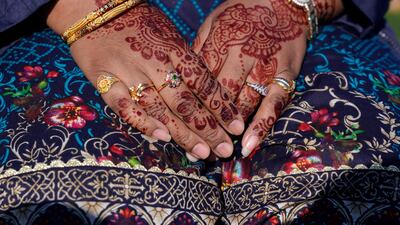
Few better represent how Arab Americans are becoming a potent social and political force in the US than Youssef Elzein.
Since the Lebanon native came to study at an Illinois university in 1980, he has worked with the American Red Cross, local colleges and police reform groups, while also assisting refugees, volunteering to build new homes and, most recently, establishing a sister city relationship between Dayton, Ohio, and the Palestinian city of Salfit in the occupied West Bank.
His driving motivation: to portray Arab Americans in a positive light after the community was demonised in the years following 9/11.
“The first motivation was [the backlash as a result of] September 11, but as I grew older, I realised that [activism] could be a stepping stone to unite us as Arabs or Muslims,” he says.
“I started trying to organise our community as a power that can have a say in elections.”
When the Trump administration established the so-called Muslim Ban in 2017 — an edict that prohibited the travel and refugee resettlement of people from several predominantly Muslim countries — Mr Elzein took that engagement to a whole new level.
He began by rounding up Arab-American businesses for meetings with powerful US political figures who, he hoped, would help advance the needs and rights of the community.
Repeal of Trump's Muslim ban gives hope to Syrian refugees — video
Several years on, he's still working to help Arab Americans and Muslims realise their political potential — and this year may mark a big turning point: as the November midterm elections approach, America’s Arab and Muslim communities are set to play a crucial role in its outcome.
With an estimated population of about 3.7 million, Arab Americans are becoming a potentially potent political force.
In crucial battleground states such as Michigan, they make up about 5 per cent of the population. Last November, America’s first all-Muslim city council was elected in Hamtramck, a city north of Detroit. That same month, the city of Dearborn elected its first Arab mayor.
And Mr Elzein is not alone in his efforts. At mosques across the country this summer, the Council on American-Islamic Relations (CAIR), a major civil rights and advocacy group, has been holding voter registration drives, with more planned for the weeks and months before the midterms.
For Mr Elzein, this points to growing evidence that Arab Americans are turning into an important political force.
In Ohio, he has approached city commissioners, mayors and politicians to discuss the potential power of the Arab vote. He has also pored over voter registration databases to estimate how many people of Arab descent there may be in a particular area.
“When elections are being decided by less than 100 votes, we can turn the tide in local and county elections, I have no doubt about it,” says Mr Elzein.
But a major issue Arab-American organisers have been facing for years is the US Census Bureau’s race categorisation — a crucial tool when it comes to structuring local, state and federal policymaking and funding, as well as a host of other critical socio-economic measuring.
The Census Bureau counts Americans as belonging to a number of races, but Arabs, despite numbering in the millions, are not one of those listed.
“This lack of demographic data collecting and reporting further inhibits organisations like ours from being able to address the needs and challenges of our community appropriately,” said Lucine Jarrah, executive director of the Arab American Heritage Council, a community and immigration services non-profit based in Flint, Michigan — a city that is home to an estimated 20,000 Arab Americans.
“Polling does tend to show that Arab Americans lean Democrat, however there is certainly a large percentage who identify with conservative values,” she says. “There was a large group in our county that did vote for Trump in 2016.”
A recent poll of 525 American Muslims conducted by CAIR titled “American Muslims and the 2022 Midterm Elections” has thrown up some surprising insights.
For many, President Joe Biden, who campaigned in 2020 to make Muslim issues a major part of his administration, has fallen short in their estimation, with only 28 per cent of respondents approving of his performance and 49 per cent disapproving.
The poll that found that major issues on the national agenda, such as gun control and abortion rights, are important to members of America’s Muslim communities.
While 7.2 per cent of those polled said they would support laws banning abortion entirely, about 14 per cent said they would support laws allowing abortion at any stage of pregnancy up until birth.
As Arab-American and Muslim communities increasingly prove to be potentially powerful voting blocs, they have drawn the eye of far-right groups.
In December, the community was rocked by reports that revealed a chapter of CAIR had been infiltrated by people who had been providing information to a known Islamophobic group called the Investigative Project on Terrorism.
Despite the level of vitriol directed at both Arab-American and Muslim communities in the years following the September 11 attacks — in addition to becoming the target of increased scrutiny by law enforcement — Mr Elzein says division within both groups is rife.
One of his greatest challenges has been getting Arab Americans to think first about the potential of their own collective voting power rather than focusing on the religions, sects and nationalities that may divide them — something he says is fuelled by various conflicts in the Middle East.
But on the whole, Mr Elzein is hopeful.
“One thing that made me feel so good: an Arab-American friend recently reached out to thank me for pushing him to register to vote for the first time,” he says.
“What’s better than that?”
Muslims in California — in pictures
In%20the%20Land%20of%20Saints%20and%20Sinners
%3Cp%3E%3Cstrong%3EDirector%3A%20%3C%2Fstrong%3ERobert%20Lorenz%3C%2Fp%3E%0A%3Cp%3E%3Cstrong%3EStarring%3A%3C%2Fstrong%3E%20Liam%20Neeson%2C%20Kerry%20Condon%2C%20Jack%20Gleeson%2C%20Ciaran%20Hinds%3C%2Fp%3E%0A%3Cp%3E%3Cstrong%3ERating%3A%20%3C%2Fstrong%3E2%2F5%3C%2Fp%3E%0A
SPEC%20SHEET%3A%20NOTHING%20PHONE%20(2a)
%3Cp%3E%3Cstrong%3EDisplay%3A%3C%2Fstrong%3E%206.7%E2%80%9D%20flexible%20Amoled%2C%202412%20x%201080%2C%20394ppi%2C%20120Hz%2C%20Corning%20Gorilla%20Glass%205%3C%2Fp%3E%0A%3Cp%3E%3Cstrong%3EProcessor%3A%3C%2Fstrong%3E%20MediaTek%20Dimensity%207200%20Pro%2C%204nm%2C%20octa-core%3C%2Fp%3E%0A%3Cp%3E%3Cstrong%3EMemory%3A%3C%2Fstrong%3E%208%2F12GB%3C%2Fp%3E%0A%3Cp%3E%3Cstrong%3ECapacity%3A%3C%2Fstrong%3E%20128%2F256GB%3C%2Fp%3E%0A%3Cp%3E%3Cstrong%3EPlatform%3A%3C%2Fstrong%3E%20Android%2014%2C%20Nothing%20OS%202.5%3C%2Fp%3E%0A%3Cp%3E%3Cstrong%3EMain%20camera%3A%3C%2Fstrong%3E%20Dual%2050MP%20main%2C%20f%2F1.88%20%2B%2050MP%20ultra-wide%2C%20f%2F2.2%3B%20OIS%2C%20EIS%2C%20auto-focus%2C%20ultra%20XDR%2C%20night%20mode%3C%2Fp%3E%0A%3Cp%3E%3Cstrong%3EMain%20camera%20video%3A%3C%2Fstrong%3E%204K%20%40%2030fps%2C%20full-HD%20%40%2060fps%3B%20slo-mo%20full-HD%20at%20120fps%3C%2Fp%3E%0A%3Cp%3E%3Cstrong%3EFront%20camera%3A%3C%2Fstrong%3E%2032MP%20wide%2C%20f%2F2.2%3C%2Fp%3E%0A%3Cp%3E%3Cstrong%3EBattery%3A%3C%2Fstrong%3E%205000mAh%3B%2050%25%20in%2030%20mins%20w%2F%2045w%20charger%3C%2Fp%3E%0A%3Cp%3E%3Cstrong%3EConnectivity%3A%3C%2Fstrong%3E%20Wi-Fi%2C%20Bluetooth%205.3%2C%20NFC%20(Google%20Pay)%3C%2Fp%3E%0A%3Cp%3E%3Cstrong%3EBiometrics%3A%3C%2Fstrong%3E%20Fingerprint%2C%20face%20unlock%3C%2Fp%3E%0A%3Cp%3E%3Cstrong%3EI%2FO%3A%3C%2Fstrong%3E%20USB-C%3C%2Fp%3E%0A%3Cp%3E%3Cstrong%3EDurability%3A%3C%2Fstrong%3E%20IP54%2C%20limited%20protection%20from%20water%2Fdust%3C%2Fp%3E%0A%3Cp%3E%3Cstrong%3ECards%3A%3C%2Fstrong%3E%20Dual-nano%20SIM%3C%2Fp%3E%0A%3Cp%3E%3Cstrong%3EColours%3A%3C%2Fstrong%3E%20Black%2C%20milk%2C%20white%3C%2Fp%3E%0A%3Cp%3E%3Cstrong%3EIn%20the%20box%3A%3C%2Fstrong%3E%20Nothing%20Phone%20(2a)%2C%20USB-C-to-USB-C%20cable%2C%20pre-applied%20screen%20protector%2C%20SIM%20tray%20ejector%20tool%3C%2Fp%3E%0A%3Cp%3E%3Cstrong%3EPrice%20(UAE)%3A%3C%2Fstrong%3E%20Dh1%2C199%20(8GB%2F128GB)%20%2F%20Dh1%2C399%20(12GB%2F256GB)%3C%2Fp%3E%0A
Mercer, the investment consulting arm of US services company Marsh & McLennan, expects its wealth division to at least double its assets under management (AUM) in the Middle East as wealth in the region continues to grow despite economic headwinds, a company official said.
Mercer Wealth, which globally has $160 billion in AUM, plans to boost its AUM in the region to $2-$3bn in the next 2-3 years from the present $1bn, said Yasir AbuShaban, a Dubai-based principal with Mercer Wealth.
“Within the next two to three years, we are looking at reaching $2 to $3 billion as a conservative estimate and we do see an opportunity to do so,” said Mr AbuShaban.
Mercer does not directly make investments, but allocates clients’ money they have discretion to, to professional asset managers. They also provide advice to clients.
“We have buying power. We can negotiate on their (client’s) behalf with asset managers to provide them lower fees than they otherwise would have to get on their own,” he added.
Mercer Wealth’s clients include sovereign wealth funds, family offices, and insurance companies among others.
From its office in Dubai, Mercer also looks after Africa, India and Turkey, where they also see opportunity for growth.
Wealth creation in Middle East and Africa (MEA) grew 8.5 per cent to $8.1 trillion last year from $7.5tn in 2015, higher than last year’s global average of 6 per cent and the second-highest growth in a region after Asia-Pacific which grew 9.9 per cent, according to consultancy Boston Consulting Group (BCG). In the region, where wealth grew just 1.9 per cent in 2015 compared with 2014, a pickup in oil prices has helped in wealth generation.
BCG is forecasting MEA wealth will rise to $12tn by 2021, growing at an annual average of 8 per cent.
Drivers of wealth generation in the region will be split evenly between new wealth creation and growth of performance of existing assets, according to BCG.
Another general trend in the region is clients’ looking for a comprehensive approach to investing, according to Mr AbuShaban.
“Institutional investors or some of the families are seeing a slowdown in the available capital they have to invest and in that sense they are looking at optimizing the way they manage their portfolios and making sure they are not investing haphazardly and different parts of their investment are working together,” said Mr AbuShaban.
Some clients also have a higher appetite for risk, given the low interest-rate environment that does not provide enough yield for some institutional investors. These clients are keen to invest in illiquid assets, such as private equity and infrastructure.
“What we have seen is a desire for higher returns in what has been a low-return environment specifically in various fixed income or bonds,” he said.
“In this environment, we have seen a de facto increase in the risk that clients are taking in things like illiquid investments, private equity investments, infrastructure and private debt, those kind of investments were higher illiquidity results in incrementally higher returns.”
The Abu Dhabi Investment Authority, one of the largest sovereign wealth funds, said in its 2016 report that has gradually increased its exposure in direct private equity and private credit transactions, mainly in Asian markets and especially in China and India. The authority’s private equity department focused on structured equities owing to “their defensive characteristics.”
Roll of honour 2019-2020
Dubai Rugby Sevens
Winners: Dubai Hurricanes
Runners up: Bahrain
West Asia Premiership
Winners: Bahrain
Runners up: UAE Premiership
UAE Premiership
}Winners: Dubai Exiles
Runners up: Dubai Hurricanes
UAE Division One
Winners: Abu Dhabi Saracens
Runners up: Dubai Hurricanes II
UAE Division Two
Winners: Barrelhouse
Runners up: RAK Rugby
PROFILE OF STARZPLAY
Date started: 2014
Founders: Maaz Sheikh, Danny Bates
Based: Dubai, UAE
Sector: Entertainment/Streaming Video On Demand
Number of employees: 125
Investors/Investment amount: $125 million. Major investors include Starz/Lionsgate, State Street, SEQ and Delta Partners
Our legal columnist
Name: Yousef Al Bahar
Advocate at Al Bahar & Associate Advocates and Legal Consultants, established in 1994
Education: Mr Al Bahar was born in 1979 and graduated in 2008 from the Judicial Institute. He took after his father, who was one of the first Emirati lawyers
UAE currency: the story behind the money in your pockets
The Perfect Couple
Starring: Nicole Kidman, Liev Schreiber, Jack Reynor
Creator: Jenna Lamia
Rating: 3/5
Tomb%20Raider%20I%E2%80%93III%20Remastered
%3Cp%3EDeveloper%3A%20Aspyr%0D%3Cbr%3EPublisher%3A%20Aspyr%0D%3Cbr%3EConsole%3A%20Nintendo%20Switch%2C%20PlayStation%204%26amp%3B5%2C%20PC%20and%20Xbox%20series%20X%2FS%0D%3Cbr%3ERating%3A%203%2F5%3C%2Fp%3E%0A
ETFs explained
Exhchange traded funds are bought and sold like shares, but operate as index-tracking funds, passively following their chosen indices, such as the S&P 500, FTSE 100 and the FTSE All World, plus a vast range of smaller exchanges and commodities, such as gold, silver, copper sugar, coffee and oil.
ETFs have zero upfront fees and annual charges as low as 0.07 per cent a year, which means you get to keep more of your returns, as actively managed funds can charge as much as 1.5 per cent a year.
There are thousands to choose from, with the five biggest providers BlackRock’s iShares range, Vanguard, State Street Global Advisors SPDR ETFs, Deutsche Bank AWM X-trackers and Invesco PowerShares.
The%20Killer
%3Cp%3E%3Cstrong%3EDirector%3A%C2%A0%3C%2Fstrong%3EDavid%20Fincher%3C%2Fp%3E%0A%3Cp%3E%3Cstrong%3EStars%3A%C2%A0%3C%2Fstrong%3EMichael%20Fassbender%2C%20Tilda%20Swinton%2C%20Charles%20Parnell%3C%2Fp%3E%0A%3Cp%3E%3Cstrong%3ERating%3A%3C%2Fstrong%3E%204%2F5%C2%A0%3C%2Fp%3E%0A
More from Rashmee Roshan Lall
Tips for used car buyers
- Choose cars with GCC specifications
- Get a service history for cars less than five years old
- Don’t go cheap on the inspection
- Check for oil leaks
- Do a Google search on the standard problems for your car model
- Do your due diligence. Get a transfer of ownership done at an official RTA centre
- Check the vehicle’s condition. You don’t want to buy a car that’s a good deal but ends up costing you Dh10,000 in repairs every month
- Validate warranty and service contracts with the relevant agency and and make sure they are valid when ownership is transferred
- If you are planning to sell the car soon, buy one with a good resale value. The two most popular cars in the UAE are black or white in colour and other colours are harder to sell
Tarek Kabrit, chief executive of Seez, and Imad Hammad, chief executive and co-founder of CarSwitch.com
Company%C2%A0profile
%3Cp%3E%3Cstrong%3ECompany%20name%3A%20%3C%2Fstrong%3ELeap%0D%3Cbr%3E%3Cstrong%3EStarted%3A%20%3C%2Fstrong%3EMarch%202021%0D%3Cbr%3E%3Cstrong%3EFounders%3A%3C%2Fstrong%3E%20Ziad%20Toqan%20and%20Jamil%20Khammu%0D%3Cbr%3E%3Cstrong%3EBased%3A%3C%2Fstrong%3E%20Dubai%0D%3Cbr%3E%3Cstrong%3ESector%3A%20%3C%2Fstrong%3EFinTech%0D%3Cbr%3E%3Cstrong%3EInvestment%20stage%3A%20%3C%2Fstrong%3EPre-seed%0D%3Cbr%3E%3Cstrong%3EFunds%20raised%3A%3C%2Fstrong%3E%20Undisclosed%0D%3Cbr%3E%3Cstrong%3ECurrent%20number%20of%20staff%3A%20%3C%2Fstrong%3ESeven%3C%2Fp%3E%0A
The burning issue
The internal combustion engine is facing a watershed moment – major manufacturer Volvo is to stop producing petroleum-powered vehicles by 2021 and countries in Europe, including the UK, have vowed to ban their sale before 2040. The National takes a look at the story of one of the most successful technologies of the last 100 years and how it has impacted life in the UAE.
Read part four: an affection for classic cars lives on
Read part three: the age of the electric vehicle begins
Read part one: how cars came to the UAE
Match info
Uefa Champions League Group C
Liverpool v Napoli, midnight
THE BIO
Mr Al Qassimi is 37 and lives in Dubai
He is a keen drummer and loves gardening
His favourite way to unwind is spending time with his two children and cooking
More from Neighbourhood Watch
UAE players with central contracts
Rohan Mustafa, Ashfaq Ahmed, Chirag Suri, Rameez Shahzad, Shaiman Anwar, Adnan Mufti, Mohammed Usman, Ghulam Shabbir, Ahmed Raza, Qadeer Ahmed, Amir Hayat, Mohammed Naveed and Imran Haider.
In Search of Mary Shelley: The Girl Who Wrote Frankenstein
By Fiona Sampson
Profile