Rose water harvesting in Oman - in pictures
-
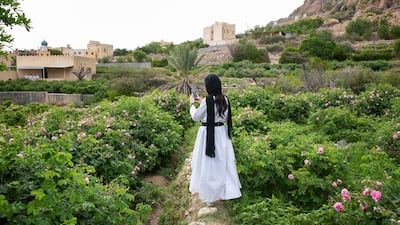
Maryam Al Saleh, 31, from Muscat takes a picture on a tour of the rose gardens of Al Ayn village in Jebel Akhdar in Oman. March and April are harvest season for roses in the picturesque mountains. All photos: Tara Atkinson -
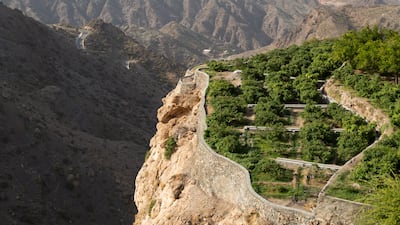
Watered from natural sources using traditional irrigation channels known as falaj, approximately 4,000 individual rose bushes thrive in Jebel Akhdar, also known as the green mountain, in the steep terraced villages of Al Aqer, Al Ayn, Saiq and Al Shuraijah. -

The pink fragrant rose is known as Al Muhammadi Rose (or Damask rose) and is widely used in fragrances, flavouring and herbal remedies in Oman. -
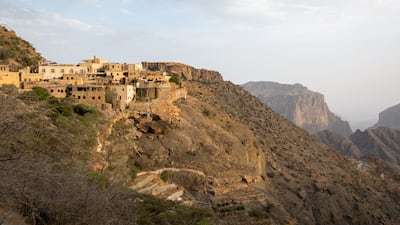
The ancient village of Al Aqer with the Alila Jabal Akhdar hotel behind it. -
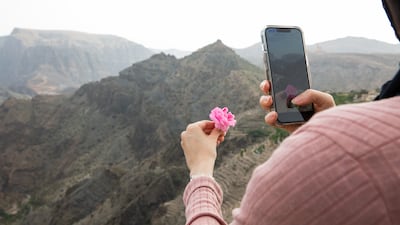
A tourist from Muscat holds up a rose against the mountain range for an Instagram picture. -
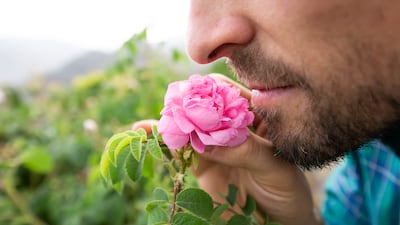
A tourist during a tour of the rose farms in Al Ayn village. -
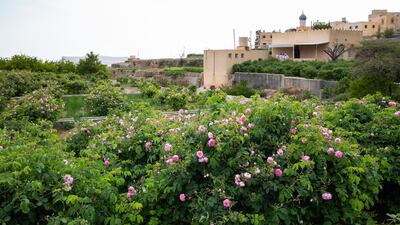
A rose garden in Al Ayn village. -
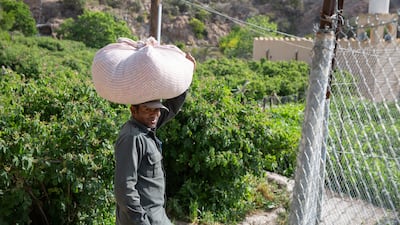
Bilal Hussain, a picker from Bangladesh, works in one of the rose gardens in Jebel Akhdar. Picked roses are placed in a cloth or a scarf and often carried on the heads of pickers. The one Bilal is carrying weighs about 11 kilograms. -
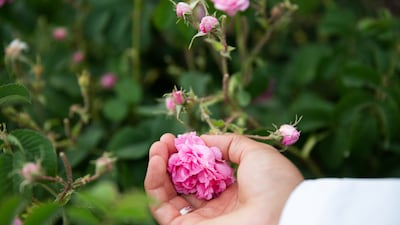
A tour guide demonstrates how roses are picked, by holding the bloom at the base and using the thumbnail to cleanly cut the stalk. Picking the roses like this preserves the petals until they are used for distillation. -
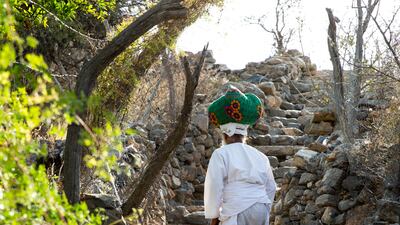
An Omani villager, Nasser, 80, with freshly-picked roses wrapped up in a cloth on his head in Al Ayn Village. Nasser has his own rose garden and factory where he processes the flowers. -
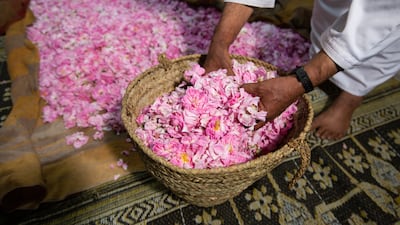
Once the roses are picked they are taken to the distillation factories to process the flowers into fragrant water or oils using traditional and modern methods. -
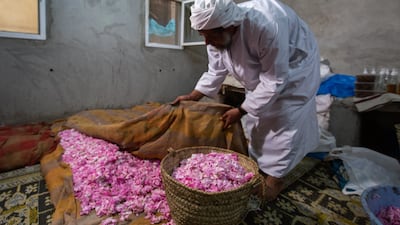
Farmer Abdullah Salim Al-Thani from Al Shuraigah village in Jebel Akhdar covers the rose petals to keep them moist before processing them in his factory behind his house. -
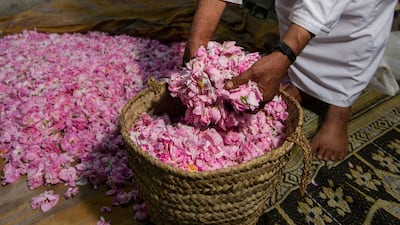
Al-Thani, 60, who is originally from Al Shuraigah village now lives in Seeh Qatanah where his factory and home are located. -
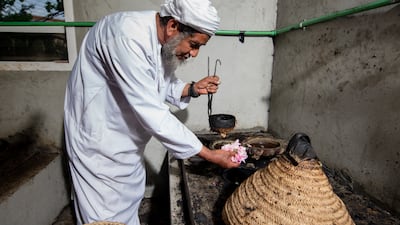
Al-Thani with a traditional distillation unit at his home. -
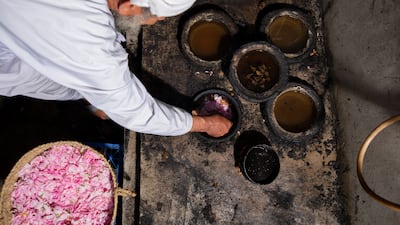
Al-Thani's system uses a bowl heated by a central gas fire. The condensation produces smoky rosewater. -
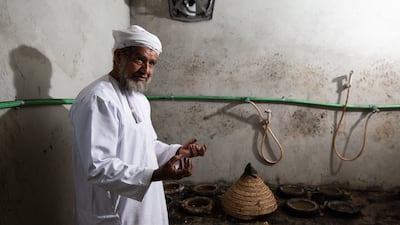
Since he was a child, Al-Thani has worked with his father in the rose factory. -
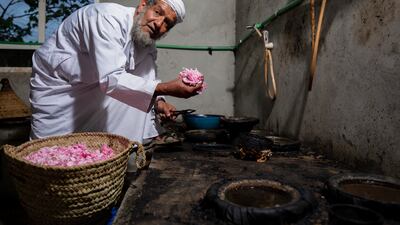
Al-Thani uses a traditional method to extract rosewater from the harvest. -
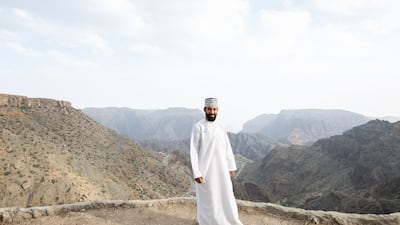
Tour guide Marwan Al Suqri on one of the rose terrace gardens in Al Ayn village. -
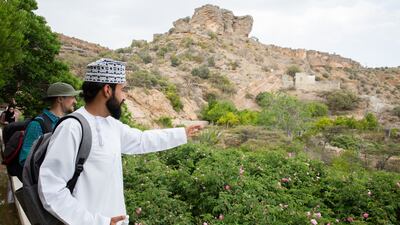
Al Suqri works as a tour guide for a perfume company in his spare time. -
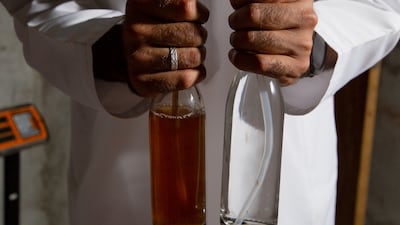
Two types of rosewater are produced in the region. The smoky rosewater is produced by using traditional methods while the clear rosewater uses a similar technique but with a modern distillation process that removes all impurities.


Most popular today

