

Pat Singer has been gripped by fear for days. The 82-year-old president and founder of the Brighton Beach Neighbourhood Association is the unofficial mayor of New York City's largest Russian-speaking neighbourhood, long known to many as “Little Odesa".
Located in New York's borough of Brooklyn, Brighton Beach takes its nickname from the Ukrainian port city of Odesa, which sits on the Black Sea. It is home to numerous Russian restaurants, markets and one of the best schools for Russian ballet in the US, where Russians, Ukrainians and Georgians dance together.
“I have such a traumatic sense of loss and fear for Ukraine,” said Ms Singer. “These are my roots and I don’t want to see it destroyed.”
While the missiles are being fired nearly 8,000 kilometres away, the impacts are reverberating throughout the bustling streets of Brighton Beach, where Ms Singer's grandparents arrived after leaving Odesa in the early 1900s.
“It's an awful thing, absolutely awful,” said Gennadiy Strebkov, who immigrated from Russia 20 years ago. “And I can't totally explain it, but we feel regret; we feel depressed because of it.”
Brighton Beach has become a melting pot of Russian speakers over the past 50 years, with some coming from what is today Russia and a large percentage coming from Ukraine and other former Soviet countries.
-

Signs in Cyrillic line Brighton Beach Avenue. All photos: Willy Lowry / The National -

Pat Singer, the president and founder of the Brighton Beach Neighbourhood Associate, poses for a photo in her office. -

Gennadiy Strebkov, 82, immigrated to Brighton Beach 20 years ago. He says the events in Ukraine are 'awful' and depressing. -

A man feeds seagulls on Brighton Beach. -

A home in Mannahatan Beach flies the Ukrainian flag. -

Brighton Beach is home to the largest concentration of Russian speakers in the US. -

A Russian supermarket in Brighton Beach.


On Brighton Beach Avenue, Russian speakers can be heard chatting over the rumbling elevated train as they shop in stores sporting Cyrillic signs, with caviar and other products lining the shelves.
“Brighton Beach is the starting point of every Russian-speaking immigrant,” says Michael Levitis, who immigrated to the neighbourhood from Moscow when he was 12.
Mr Levitis hosts a popular local radio show, broadcast in Russian. He said Russian-speaking immigrants picked Brighton Beach because its proximity to the ocean reminded them of Odesa's sweeping views of the Black Sea.
“It was very easy for us to come here because we didn’t know English, we had no contacts in the US,” he told The National. “Here, everybody spoke Russian, still speaks Russian. You can buy Russian food, see Russian movies.”
New York City is home to about 600,000 Russian-speaking immigrants, a huge percentage of whom live in Brighton Beach as well as neighbouring Sheepshead Bay and Manhattan Beach.
-

Damage after the shelling of buildings in central Kharkiv, Ukraine. EPA -
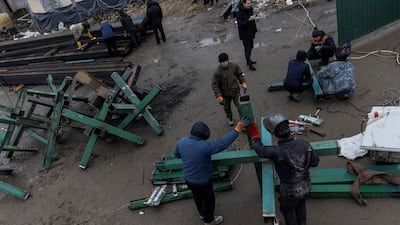
Workers from a local construction company weld anti-tank obstacles to be placed on roads around Kyiv as Russia's invasion of Ukraine continues. Reuters -
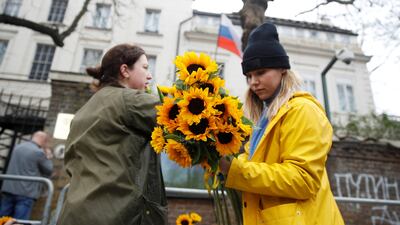
Anti-war protesters attach sunflowers to barriers in front of the Russian embassy. Reuters -
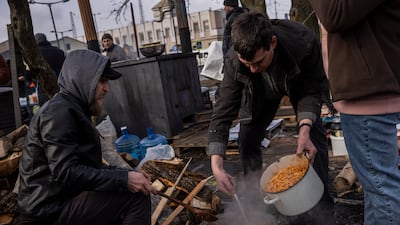
Ukrainian volunteers prepare food for displaced people outside Lviv railway station in western Ukraine. AP -
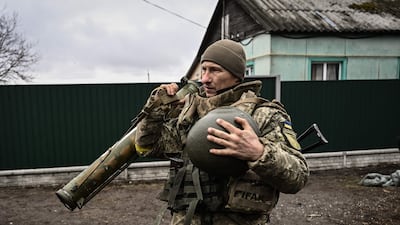
A Ukrainian soldier holds an anti-tank launcher north-east of Kyiv. AFP -
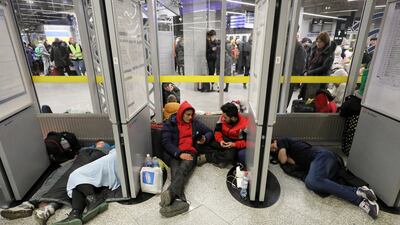
Ukrainian refugees rest at Warsaw East train station in Poland. EPA -
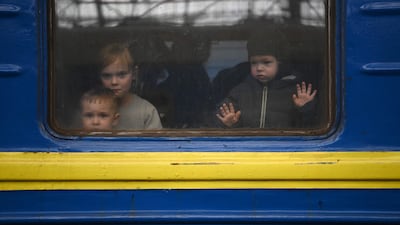
Children look out from a carriage window as a train prepares to depart from a station in Lviv to the town of Uzhhorod near the border with Slovakia. AFP -
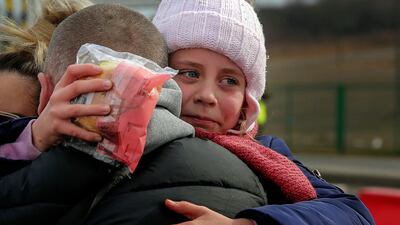
A girl who fled Ukraine is reunited with her father in Medyka, south-eastern Poland. AP Photo -
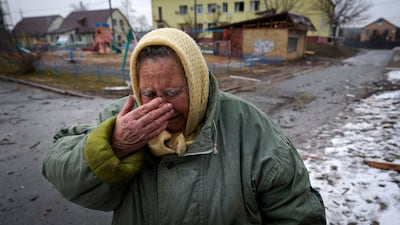
Tears outside a house damaged by a Russian airstrike in Gorenka, on the outskirts of Kyiv. AP Photo -
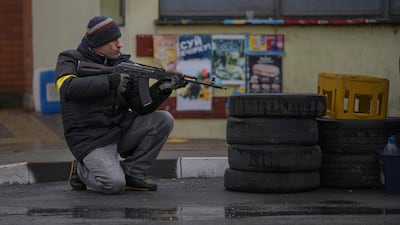
A civil defence member is poised to shoot as a vehicle approaches a checkpoint in Gorenka. AP Photo -

A Ukrainian civil defence member in the garden of a house damaged by a Russian airstrike. AP Photo -

Members of the US Army 3rd Infantry Division board a plane bound for Germany in Savannah, Georgia. EPA -
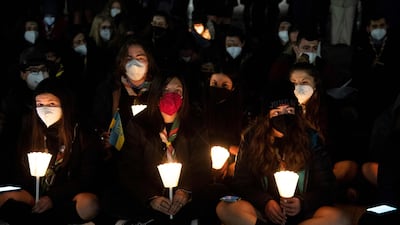
Prayers for peace in Ukraine at the Vatican's Saint Peter's Square. AFP -
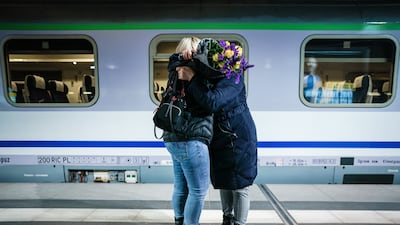
A woman (right) hugs an arriving passenger from a train carrying refugees at Berlin's central station. EPA -

Firefighters battle a blaze in a Kharkiv police building hit by shelling. AFP -
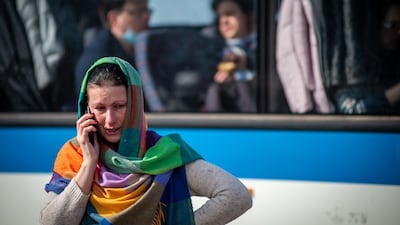
A Ukrainian woman makes a phone call after crossing the Slovakian border. AFP -

A doctor takes shelter in the basement of a Kyiv perinatal centre. Reuters -

Debris which locals say was caused by shelling in separatist-controlled Horlivka, Donetsk. Reuters -
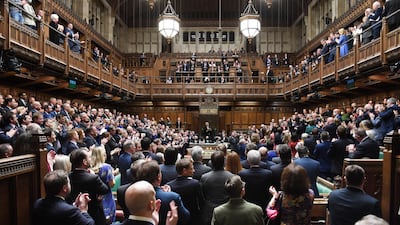
MPs in London give a standing ovation to Ukraine ambassador Vadym Prystaiko, who was in the public gallery. AP -
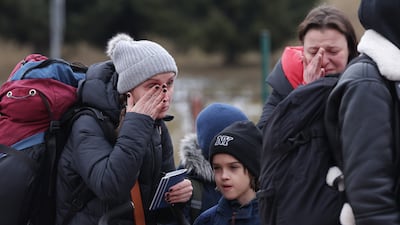
Distraught women and children fleeing Ukraine wait to enter Poland at the Korczowa crossing. Getty -
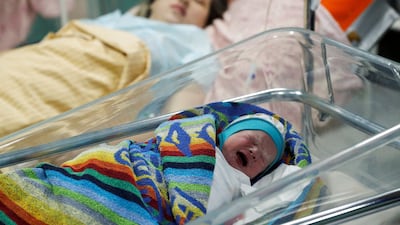
Newborn Ivan lies next to his mother as they shelter in the basement of a Kyiv perinatal centre. Reuters -
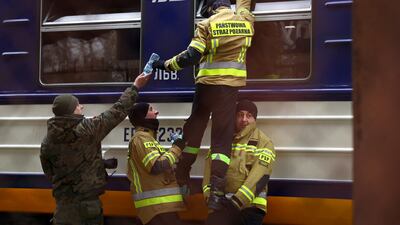
Firefighters hand water to people in a Ukrainian train full of refugees in Przemysl, Poland. Reuters -
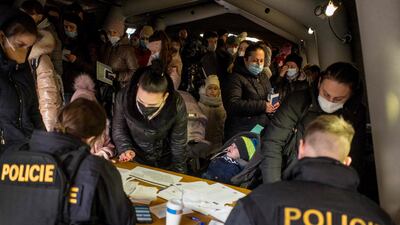
Ukrainian refugees queue to file for residency permits at Prague's police headquarters. AFP -
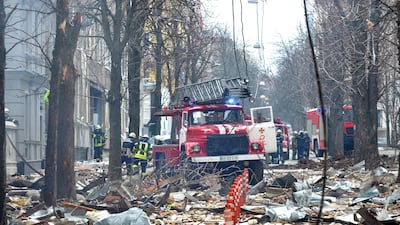
Firefighters work to contain a blaze in buildings housing the Kharkiv regional police department. AFP -
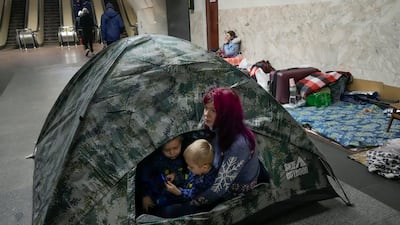
A woman and her children sit in a tent in the Kyiv subway, using it as a bomb shelter. AP -
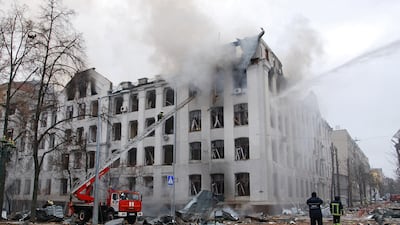
Firefighters work to extinguish a blaze at the Kharkiv National University building, which city officials said was damaged by Russian shelling. Reuters -
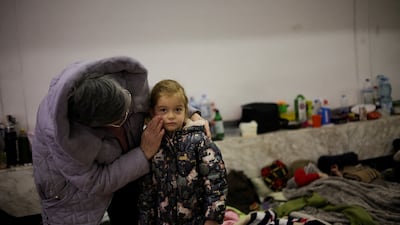
An elderly woman comforts a child as they take shelter inside an underground station in Kyiv. Reuters -
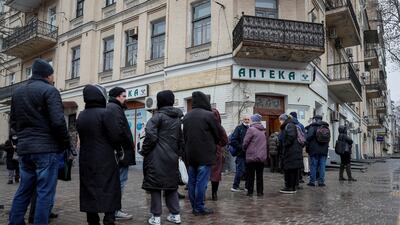
People queue at a pharmacy in central Kyiv. Reuters -
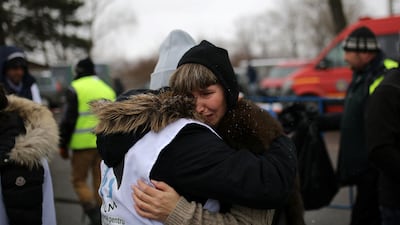
A woman is consoled by a volunteer after fleeing from Russia's invasion of Ukraine, at the border crossing in Siret, Romania. Reuters -

A Ukrainian civilian in the city of Zhytomyr practises throwing petrol bombs. Reuters -
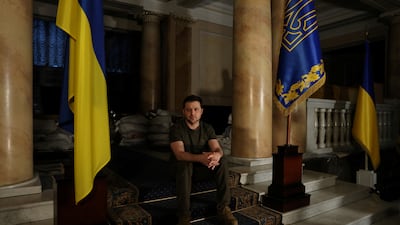
Ukrainian President Volodymyr Zelenskyy poses after an interview with Reuters in Kyiv. Reuters -
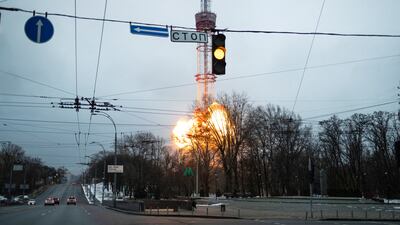
A blast is seen at Kyiv's TV tower. Reuters -
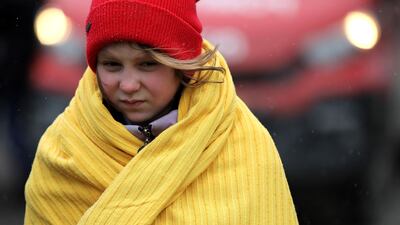
A girl in Siret, Romania, covers herself with a blanket after fleeing from Ukraine. Reuters -
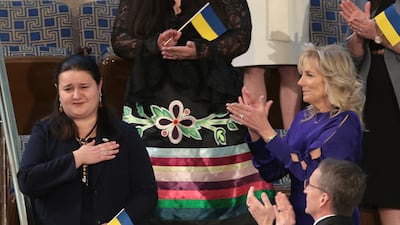
Ukraine's ambassador to the US, Oksana Markarova, acknowledges applause from US first lady Jill Biden as they attend President Joe Biden's first State of the Union address in Washington. AFP -
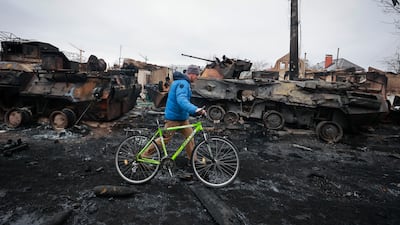
A man walks past the remains of Russian military vehicles in Bucha, close to Kyiv. AFP -
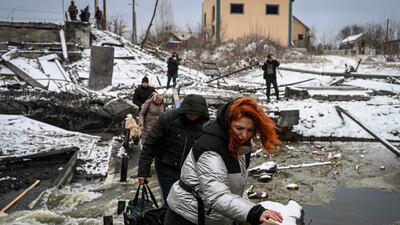
Civilians cross a river on a blown-up bridge on Kyiv's northern front. Defending the capital is a 'key priority', Ukraine's president has said. AFP -
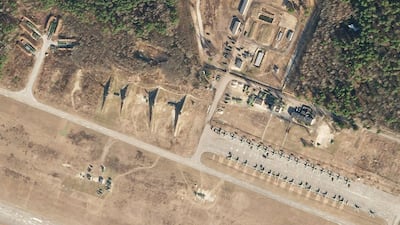
Russian aircraft on the ground at Luninets Airbase, Belarus, about 50 kilometres north of the Ukrainian border. AFP -
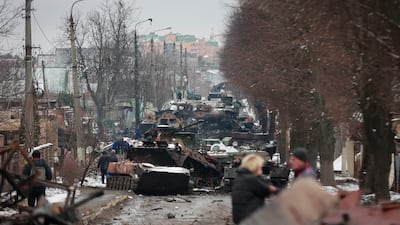
People look at the gutted remains of Russian military vehicles on a road in the town of Bucha. AP -
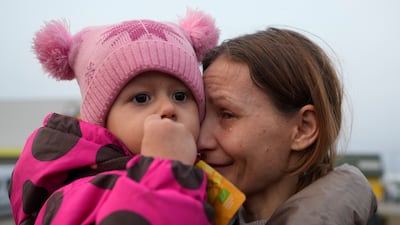
A woman with a child who fled from the war in Ukraine reunite with their family after crossing the border in Medyka, Poland. AP -
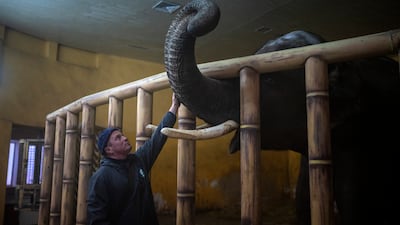
Animal keeper Kirilo Trantin comforts an elephant at Kyiv Zoo. AP -
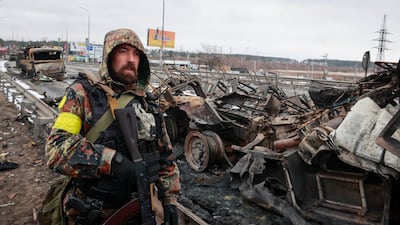
An armed man stands by the remains of a Russian military vehicle in Bucha. AP -
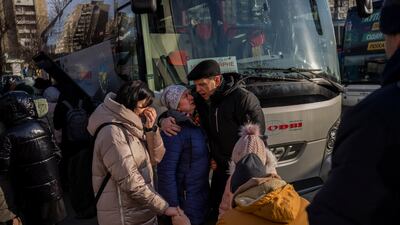
Ukrainian families say goodbye as they prepare to board a bus to Poland at Lviv, western Ukraine. AP -
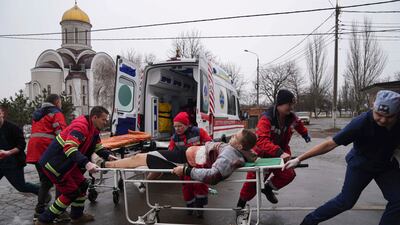
Paramedics move a man who was wounded by shelling in a residential area of Mariupol, south-eastern Ukraine. AP -
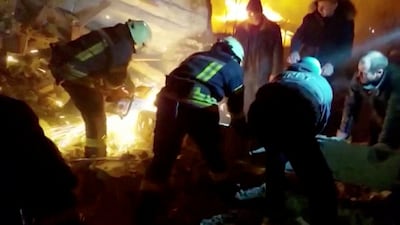
Rescuers work at the site of a Russian strike in Zhytomyr. Reuters -
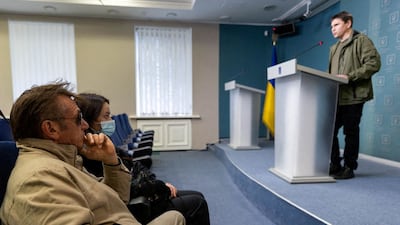
US actor and director Sean Penn attends a press briefing at the Presidential Office in Kyiv. Reuters -
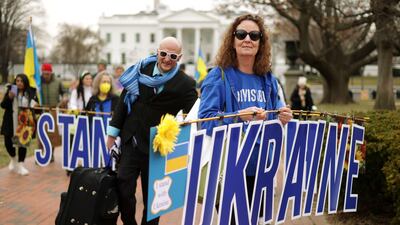
Demonstrators participate in a protest against Russia’s invasion of Ukraine at Lafayette Square in Washington. AFP -
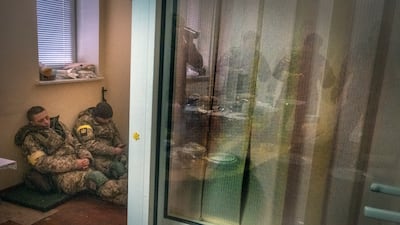
Ukrainian soldiers rest while others eat near the front line with Russian troops in northern Kyiv. AP -
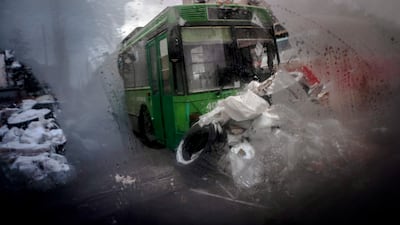
A barricade made of trams, buses and sand bags is seen through the window of car in the northern part of Kyiv. AP -
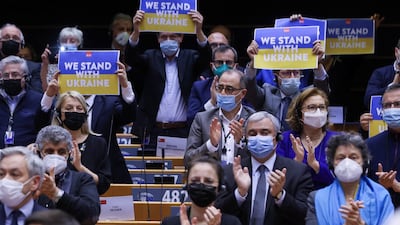
Members of the European Parliament applaud after Ukrainian President Volodymyr Zelenskyy's speech at a special session to debate its response to the Russian invasion of Ukraine. Reuters -
Ambassadors and diplomats walk out as Russia's Foreign Minister Sergey Lavrov (on screen) speaks during a recorded message at the 49th session of the UN Human Rights Council in Geneva. EPA


The neighbourhood, which is made up of mostly low-slung working class homes and the occasional new condo building, is thought to be home to the largest concentration of Russian-speaking people in the Western Hemisphere.
Whatever the situation in Eastern Europe, over the decades, the community has become united, with residents defining themselves not by their countries of origin but by their use of the Russian language.
But Mr Levitis is concerned that will change after Russia's invasion of Ukraine.
“I have a feeling after this conflict [that] more and more people are going to say 'I’m Russian-Jewish, I am Russian-speaking Ukrainian' to try to differentiate themselves from Russians.”
More than one million people have fled Ukraine since Russian President Vladimir Putin started the invasion on February 24, the UN reported, and more than 2,000 civilians have died, Ukraine State Emergency Service said.
All that bloodshed and hardship does not sit well with most in the community.
Some now fear that the enclave may start to feel anti-Russian backlash similar to what Muslim Americans experienced following the terror attacks of September 11, 2001.
“There's a lot of anti-Russian sentiment,” said Mr Levitis. “People are afraid we're going to be conflated with the Russians overseas.”
But Mr Levitis believes the community will rally together and remain united, despite the events in Europe.
“Nobody is getting divorced over this, we’re all intertwined,” he said. “We still live here together in one community, we all go to the same stores, same restaurants, patronise the same businesses and everybody is intermarried with each other.”
Ms Singer, however, is slightly less optimistic. Most of her family in Ukraine were killed by the Nazis in the Second World War, and fears are high both here and in Europe that the current situation will escalate into a third global conflict.
“We’ve had enough,” she said.

