

UAE astronauts Sultan Al Neyadi and Hazza Al Mansouri have completed an important phase of their training in Germany.
The pair went through theoretical and practical sessions of the European Space Agency Columbus training module, for the SpaceX Crew 6 mission.
The Nasa/SpaceX Crew-6 mission will launch from the Kennedy Space Centre in the US state of Florida in mid-February, with Dr Al Neyadi and his American and Russian colleagues on board.
A SpaceX Falcon 9 rocket is set to carry the Dragon Crew spacecraft into the skies.
The Mohammed Bin Rashid Space Centre (MBRSC) astronauts are taking part in the mission as part of the UAE Astronaut Programme.
During the latest phase of their training, they learnt about Expedition 69’s payloads, experiments, hardware, routine maintenance and responding to contingencies.
The training took place in Cologne at the European Astronaut Centre (EAC), which is the training centre for all European-built ISS hardware for astronauts and ground operations personnel.
The crew will spend about six months on the space station, beginning with a brief handover from Crew-5, who arrived in October for a science expedition at the microgravity laboratory.
During the mission, Emirati Dr Al Neyadi plans to conduct in-depth scientific experiments as part of the second mission of the UAE Astronaut Programme, which will pave the way for future missions.
The UAE Astronaut Programme, launched by the MBRSC, aims to establish the infrastructure of the country's space sector and seeks to meet the aspirations of young people with unique scientific capacities and skills.
Earlier this week, Dr Al Neyadi shared a striking image of the mission patch he will wear on his momentous journey to the International Space Station.
This will be the UAE's second ISS mission, after Maj Al Mansouri spent eight days on the orbiting science laboratory in 2019.
For that mission, the Emirates teamed up with Russian space agency Roscosmos and Maj Al Mansouri launched on a Soyuz rocket.
This time, the Mohammed bin Rashid Space Centre ― the organisation that oversees the UAE Astronaut Programme ― was able to secure a mission through US-based Axiom Space, a company that arranges private trips to space.
Nasa owed Axiom Space a seat on a Falcon 9 rocket, after the company gave up its spot on a Soyuz rocket in 2021 for American astronaut Mark Vande Hei.
An agreement was signed between Axiom and MBRSC in April.
Since then, Dr Al Neyadi has been training for the mission in the US, spending time at the Johnson Space Centre in Houston, SpaceX's headquarters in California and at the launch site in Florida.
The crew includes Nasa astronauts Stephen Bowen and Woody Hoburg as well as Roscosmos cosmonaut Andrei Fedyaev.
SpaceX launches UAE's Rashid lunar rover: in pictures
-

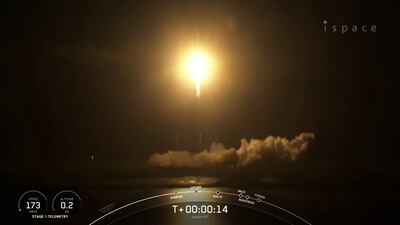
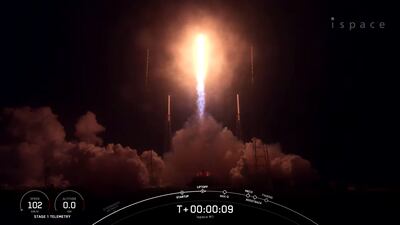
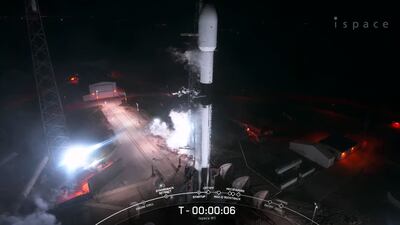
The live-streamed launch of the UAE’s Rashid rover in December 2022. -
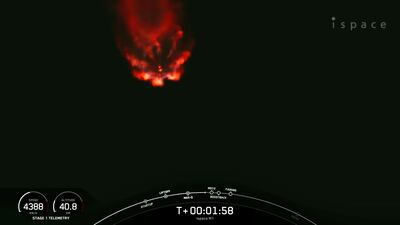
The Hakuto-R Mission 1 lander carrying the rover is expected to land on the Moon at the end of April. -
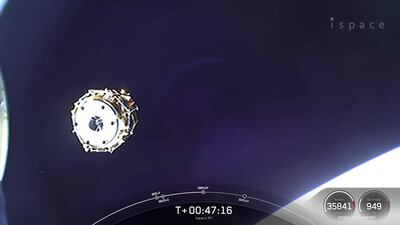
The lander is expected to attempt a lunar orbit insertion towards the end of March. -
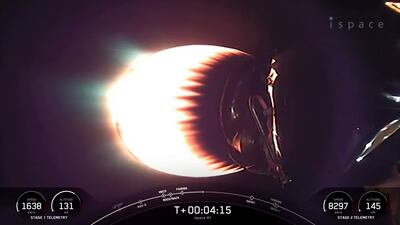
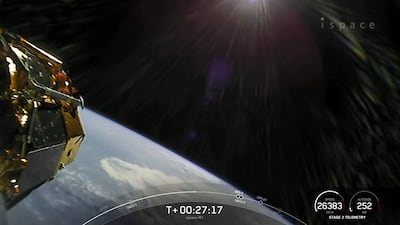
The spacecraft has travelled about 1.37 million km since being launched. -
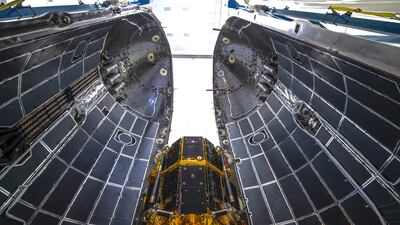
The lander is the first privately funded spacecraft to travel that far. Photo: ispace -
The Rashid rover is the first mission under the UAE's long-term Moon exploration programme. -
Landing on the Moon is challenging, with more than a third of lunar landing missions failing. -
The Moon has no atmosphere, forcing landers to perform complex manoeuvres to achieve a soft landing. -
Only the US, former Soviet Union and China have achieved a soft landing on the Moon. -
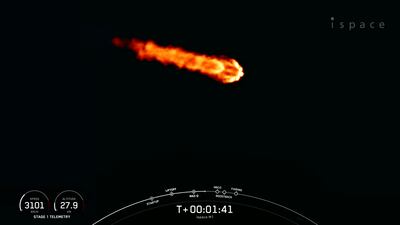
The 10-kilogram exploration rover will study the geography of the lunar surface. -
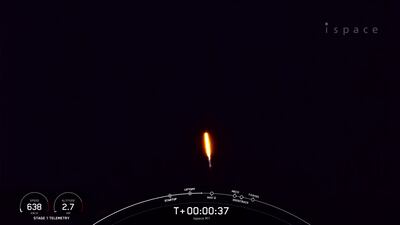
The team also hope the rover can survive a lunar night, when temperatures plunge to minus 183°C. -
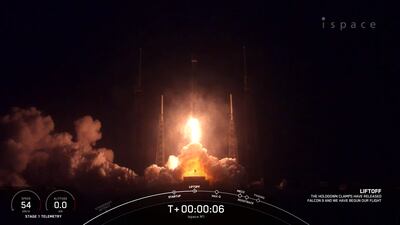
The Hakuto-R Mission 1 lander is taking a longer route to save on fuel and reduce costs. -
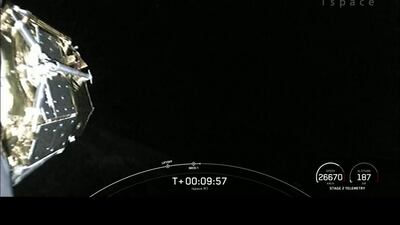
The lander in space after detaching from SpaceX's rocket. Photo: SpaceX -

A SpaceX engine takes the lander to a lunar transfer orbit after launch. Photo: SpaceX -
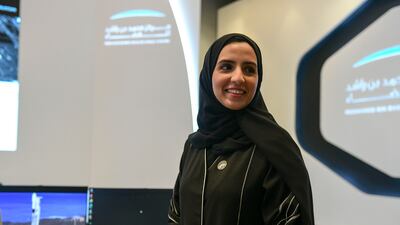
Reem AlMehisni, rover thermal engineering chief at the Mohammed bin Rashid Space Centre in Dubai. Khushnum Bhandari / The National -
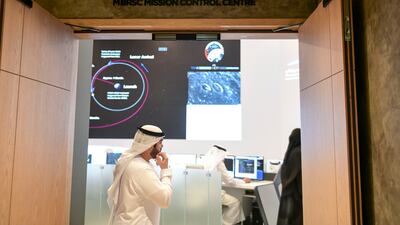
Officials prepare for the launch at the Mohammed bin Rashid Space Centre. Khushnum Bhandari / The National -
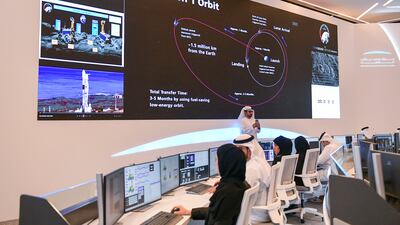
The control room of the space centre. Khushnum Bhandari / The National -
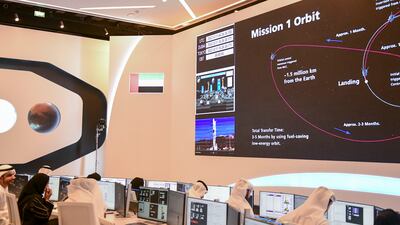
Flight control teams in the Mission Control Centre. Khushnum Bhandari / The National -
The final prototype of the Rashid rover. Photo: MBRSC -
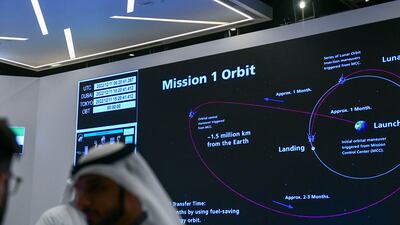
Mission Control Centre staff at the Mohammed bin Rashid Space Centre. Khushnum Bhandari / The National -
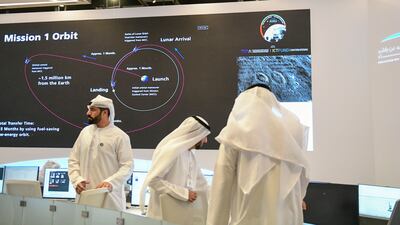
The Mission Control Centre. Khushnum Bhandari / The National -
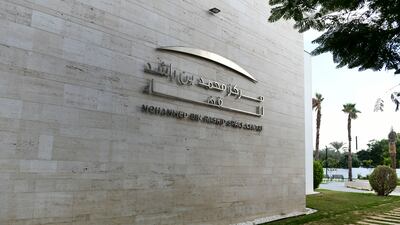
The exterior of the Mohammed bin Rashid Space Centre. Khushnum Bhandari / The National -
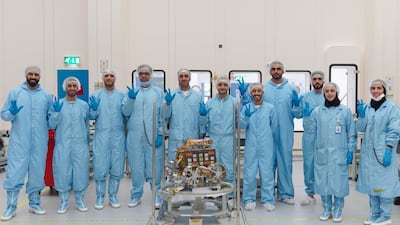
Emirati engineers behind the UAE's lunar mission pose for picture with the Rashid rover. Photo: MBRSC -
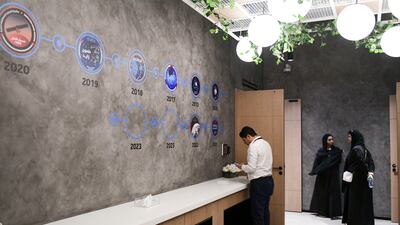
The interior of the Mohammed bin Rashid Space Centre. Khushnum Bhandari / The National



