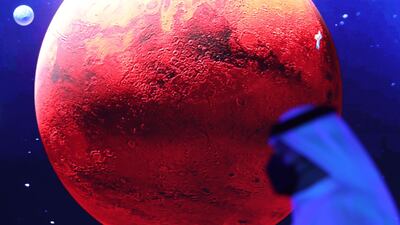
• The first image of Mars as taken by the UAE's Hope probe, which arrived at the planet on February 9.
    The first image of Mars as taken by the UAE's Hope probe, which arrived at the planet on February 9.
  • This image taken by the Hope probe's ultraviolet spectrometer (one of its three scientific instruments) shows sunlight reflecting off the extended cloud of atomic hydrogen gas that surrounds the planet Mars. The sunlight is visible only as a dark disk hidden inside the fog of gas. The Emirates Mars Mission team said that no other mission have made such kind of recordings before.
    This image taken by the Hope probe's ultraviolet spectrometer (one of its three scientific instruments) shows sunlight reflecting off the extended cloud of atomic hydrogen gas that surrounds the planet Mars. The sunlight is visible only as a dark disk hidden inside the fog of gas. The Emirates Mars Mission team said that no other mission have made such kind of recordings before.
  • The UAE's Hope probe captured a high-resolution photo of Mars.
    The UAE's Hope probe captured a high-resolution photo of Mars.
  • The Hope probe has shared new images from its journey in the orbit of Mars.
    The Hope probe has shared new images from its journey in the orbit of Mars.
  • This image was taken by the infrared spectrometer, another instrument on the Hope probe, from an altitude of about 15,000 kilometres. The image shows the surface temperature (left), centred on the Tharsis region of Mars. Dawn can be seen towards the right side. The low surface temperatures observed are due to the dusty nature of the Martian surface. An elevated nighttime atmospheric temperature at 25 km altitude (right) is also observed over the Tharsis region.
    This image was taken by the infrared spectrometer, another instrument on the Hope probe, from an altitude of about 15,000 kilometres. The image shows the surface temperature (left), centred on the Tharsis region of Mars. Dawn can be seen towards the right side. The low surface temperatures observed are due to the dusty nature of the Martian surface. An elevated nighttime atmospheric temperature at 25 km altitude (right) is also observed over the Tharsis region.
  • These images were captured by the eXploration imager, a high-resolution camera on the Hope probe. The red channel clearly shows the dark and light features of the Martian surface, while the water ice clouds stand out in the ultraviolet channel.
    These images were captured by the eXploration imager, a high-resolution camera on the Hope probe. The red channel clearly shows the dark and light features of the Martian surface, while the water ice clouds stand out in the ultraviolet channel.
  • Hope probe sent back an image of the Cerberus Fossae, an area on the planet known for 'Marsquakes'.
    Hope probe sent back an image of the Cerberus Fossae, an area on the planet known for 'Marsquakes'.
  • Surface and atmospheric temperature readings collected by the UAE's Hope probe.
    Surface and atmospheric temperature readings collected by the UAE's Hope probe.
  • Discrete aurora on Mars captured by UAE's Hope probe
    Discrete aurora on Mars captured by UAE's Hope probe
  • Discrete aurora on Mars captured by UAE's Hope probe
    Discrete aurora on Mars captured by UAE's Hope probe

Next steps for Hope probe’s mission to Mars


Sarwat Nasir
  • English
  • Arabic

The Emirates Mars Mission is moving into its next phase, gathering data that will help scientists to study the atmosphere and weather of the Red Planet.

The Hope probe, which started orbiting Mars on February 9, activated its instruments on April 10, and has already sent back thousands of images.

Now, the orbiter will spend two years collecting extensive data on gases, including hydrogen, oxygen and carbon monoxide, that surround the planet.

The data will help scientists to understand why and how Mars, which may have once supported ancient life, lost most of its atmosphere.

“Following a successful cruise to Mars, a near-perfect Mars orbit insertion manoeuvre and our transition from Hope’s capture orbit to our science orbit, we have completed our commissioning, calibration and testing phase,” said the project’s director, Omran Sharaf.

“I am delighted to be able to report that the Mars Hope probe is perfectly positioned to commence its two-year science mission.”

Recent images taken by the ultraviolet spectrometer, one of Hope’s instruments, shows sunlight reflecting off an extended cloud of atomic hydrogen gas that surrounds the planet.

Hope was able to capture the phenomenon because its unique 25-degree elliptical orbit allows it to study the planet at different times of the day.

The ultraviolet spectrometer has sent 14,000 spectral-spatial images of the atmosphere.

Sarah Al Amiri, Minister of State for Advanced Technology and Chairwoman of the UAE Space Agency, said it was capable of collecting "a lot of new data".

“The atomic hydrogen is formed by sunlight splitting water in the lower atmosphere, then diffuses to the upper atmosphere and escapes to space,” she said.

“The hydrogen is thickest close to Mars, circling the planet with a bright ring of light, and becomes thinner and dimmer further away.”

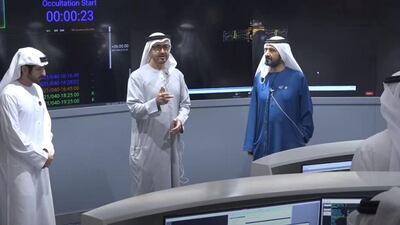
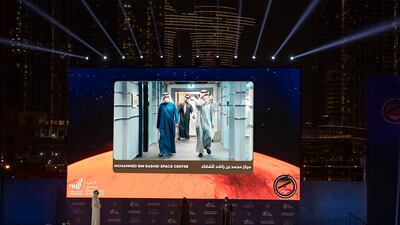
  • Sheikh Mohamed bin Zayed and Sheikh Mohammed bin Rashid personally thank staff from mission control in Dubai after Hope probe's successful orbit entry on February 9. The National
    Sheikh Mohamed bin Zayed and Sheikh Mohammed bin Rashid personally thank staff from mission control in Dubai after Hope probe's successful orbit entry on February 9. The National
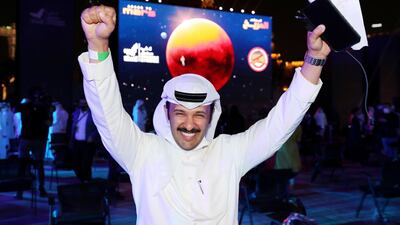
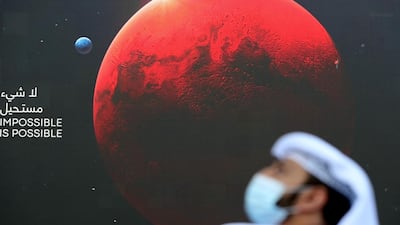
  • A man celebrates at an event at Burj Park in Dubai to celebrate the Hope probe going into orbit around Mars. Chris Whiteoak / The National
    A man celebrates at an event at Burj Park in Dubai to celebrate the Hope probe going into orbit around Mars. Chris Whiteoak / The National
  • People celebrate at an event at Burj Park to celebrate the Hope probe going into orbit around Mars. Chris Whiteoak / The National
    People celebrate at an event at Burj Park to celebrate the Hope probe going into orbit around Mars. Chris Whiteoak / The National
  • An event at Burj Park to celebrate the Hope probe going into orbit around Mars. Chris Whiteoak / The National
    An event at Burj Park to celebrate the Hope probe going into orbit around Mars. Chris Whiteoak / The National
  • People celebrate at an event at Burj Park to celebrate the Hope probe going into orbit around Mars. Chris Whiteoak / The National
    People celebrate at an event at Burj Park to celebrate the Hope probe going into orbit around Mars. Chris Whiteoak / The National
  • Guests arrive at the Burj Park event to mark the arrival of the Hope probe to Mars. Chris Whiteoak / The National
    Guests arrive at the Burj Park event to mark the arrival of the Hope probe to Mars. Chris Whiteoak / The National
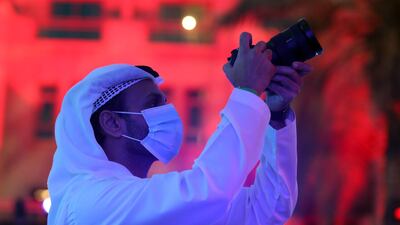
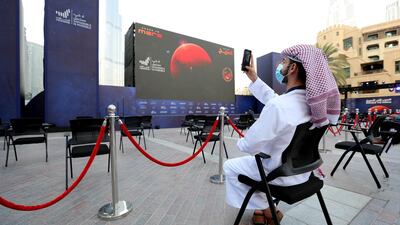
  • A guest attending the Burj Park event to mark the arrival of the Hope probe to Mars. Chris Whiteoak / The National
    A guest attending the Burj Park event to mark the arrival of the Hope probe to Mars. Chris Whiteoak / The National
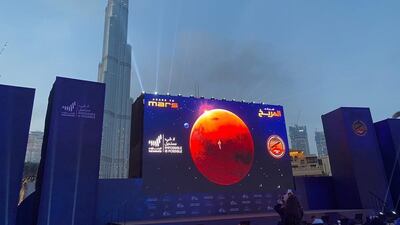
  • Burj Park was set up for people to watch the Hope probe attempt its Mars orbit insertion. Courtesy: UAE Government Twitter
    Burj Park was set up for people to watch the Hope probe attempt its Mars orbit insertion. Courtesy: UAE Government Twitter
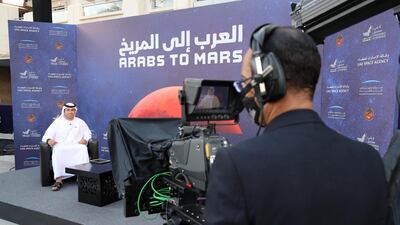
  • UAE Mars Mission engineer, Hessa Al Matroushi, was interviewed at a Burj Park event to mark the arrival of the Hope probe to Mars. Chris Whiteoak / The National
    UAE Mars Mission engineer, Hessa Al Matroushi, was interviewed at a Burj Park event to mark the arrival of the Hope probe to Mars. Chris Whiteoak / The National
  • Dr Thani Al Zeyoudi, Minister of State for Foreign Trade, attended the event at Burj Park to mark the arrival of the Hope probe to Mars. Chris Whiteoak / The National
    Dr Thani Al Zeyoudi, Minister of State for Foreign Trade, attended the event at Burj Park to mark the arrival of the Hope probe to Mars. Chris Whiteoak / The National
  • Engineer Hessa Al Matroushi attended the event at Burj Park to mark the arrival of the Hope probe to Mars. Chris Whiteoak / The National
    Engineer Hessa Al Matroushi attended the event at Burj Park to mark the arrival of the Hope probe to Mars. Chris Whiteoak / The National
  • TV crews get ready at an event at Burj Park in Dubai to celebrate the Hope probe going into orbit around Mars. Chris Whiteoak / The National
    TV crews get ready at an event at Burj Park in Dubai to celebrate the Hope probe going into orbit around Mars. Chris Whiteoak / The National
  • An event at Dubai's Burj Park to celebrate the Hope probe's Mars orbit insertion attempt. Chris Whiteoak / The National
    An event at Dubai's Burj Park to celebrate the Hope probe's Mars orbit insertion attempt. Chris Whiteoak / The National
  • Guests arrive at an event at Burj Park to mark the Hope probe's Mars orbit insertion attempt. Chris Whiteoak / The National
    Guests arrive at an event at Burj Park to mark the Hope probe's Mars orbit insertion attempt. Chris Whiteoak / The National
  • Guests and media arrive at an event at Burj Park to witness Hope probe's Mars orbit insertion attempt. Chris Whiteoak / The National
    Guests and media arrive at an event at Burj Park to witness Hope probe's Mars orbit insertion attempt. Chris Whiteoak / The National
  • Guests arrive at an event at Burj Park to mark the Hope probe's Mars orbit insertion attempt. Chris Whiteoak / The National
    Guests arrive at an event at Burj Park to mark the Hope probe's Mars orbit insertion attempt. Chris Whiteoak / The National
  • Guests arrive at an event at Burj Park to mark the Hope probe's Mars orbit insertion attempt. Chris Whiteoak / The National
    Guests arrive at an event at Burj Park to mark the Hope probe's Mars orbit insertion attempt. Chris Whiteoak / The National
  • Guests arrive at an event at Burj Park to mark the Hope probe's Mars orbit insertion attempt. Chris Whiteoak / The National
    Guests arrive at an event at Burj Park to mark the Hope probe's Mars orbit insertion attempt. Chris Whiteoak / The National
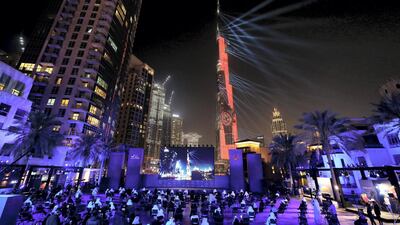
  • The Burj Khalifa lights up at an event at Burj Park in Dubai to celebrate the Hope probe going into orbit around Mars. Chris Whiteoak / The National
    The Burj Khalifa lights up at an event at Burj Park in Dubai to celebrate the Hope probe going into orbit around Mars. Chris Whiteoak / The National
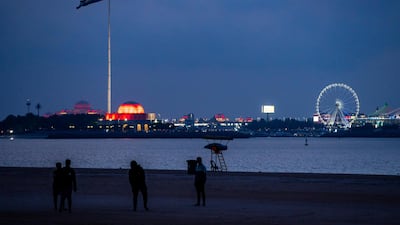
  • The UAE Flag area on the Corniche in Abu Dhabi lights up in red to celebrate the success of the Hope probe going into orbit around Mars. Victor Besa / The National
    The UAE Flag area on the Corniche in Abu Dhabi lights up in red to celebrate the success of the Hope probe going into orbit around Mars. Victor Besa / The National
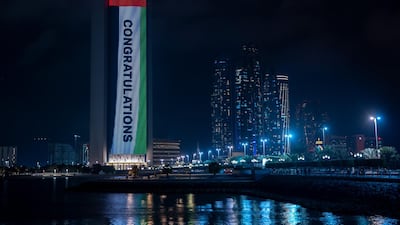
  • The ADNOC Headquarters lights up in Abu Dhabi to celebrate the success of the Hope probe going into orbit around Mars. Victor Besa / The National
    The ADNOC Headquarters lights up in Abu Dhabi to celebrate the success of the Hope probe going into orbit around Mars. Victor Besa / The National
  • Sheikh Mohamed bin Zayed celebrates with Sheikh Mohammed bin Rashid at an event at Burj Park in Dubai to celebrate the Hope probe going into orbit around Mars. Chris Whiteoak / The National
    Sheikh Mohamed bin Zayed celebrates with Sheikh Mohammed bin Rashid at an event at Burj Park in Dubai to celebrate the Hope probe going into orbit around Mars. Chris Whiteoak / The National
  • People celebrate at an event at Burj Park in Dubai to mark the Hope probe going into orbit around Mars. Chris Whiteoak / The National
    People celebrate at an event at Burj Park in Dubai to mark the Hope probe going into orbit around Mars. Chris Whiteoak / The National

The spacecraft’s other instruments include an infrared spectrometer and the eXploration imager, a high-resolution camera.

The infrared spectrometer has been collecting data since the spacecraft’s arrival at Mars.

It will measure surface and atmospheric temperatures and gather data on ice, dust and water vapour.

A newly released image taken by the instrument shows the temperature of the planet.

"This Emirs [infrared spectrometer] image acquired on March 5 from an altitude of about 15,000km showcases the temperature in the same region at different altitudes," Ms Al Amiri said.

This image was taken by the infrared spectrometer, another instrument on the Hope probe, from an altitude of about 15,000 kilometres. The image shows the surface temperature, left, centred on the Tharsis region of Mars. Dawn can be seen to the right. An elevated night-time atmospheric temperature at an altitude of 25km, right, is also observed over the Tharsis region. Emirates Mars Mission

“In the surface temperature image, centred on the Tharsis region of Mars, dawn can be seen towards the right side.

“The low surface temperatures observed are due to the dusty nature of the Martian surface.

“An elevated night-time atmospheric temperature at 25km altitude is also observed over the Tharsis region.”

The eXploration imager has taken more than 500 images of the planet since the transition to science orbit took place in early April.

The imager is now mapping water ice clouds in the atmosphere as Mars enters its cloudy season.

A belt of clouds forms near the planet’s equator in the northern hemisphere during spring and summer, and the Hope probe will be able to measure it.

UAE's mission to the Moon - in pictures 

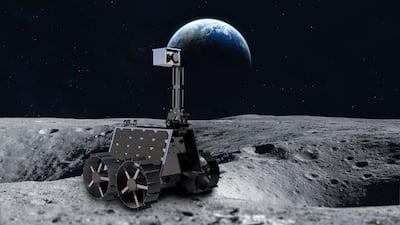
  • An artist's impression of the UAE's lunar rover called Rashid.
    An artist's impression of the UAE's lunar rover called Rashid.
  • Dr Hamad Al Marzooqi, project manager of the Emirates Lunar Mission at the Mohammed bin Rashid Space Centre. Chris Whiteoak / The National
    Dr Hamad Al Marzooqi, project manager of the Emirates Lunar Mission at the Mohammed bin Rashid Space Centre. Chris Whiteoak / The National
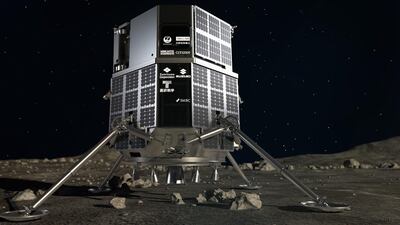
  • An artist's impression of iSpace's Hakuto-Reboot lunar lander. It will carry UAE's Rashid rover to the surface of the Moon in 2022.
    An artist's impression of iSpace's Hakuto-Reboot lunar lander. It will carry UAE's Rashid rover to the surface of the Moon in 2022.
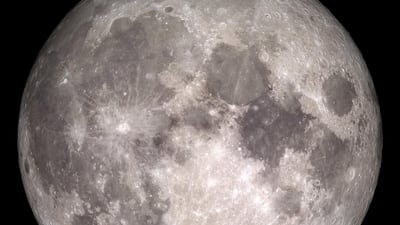
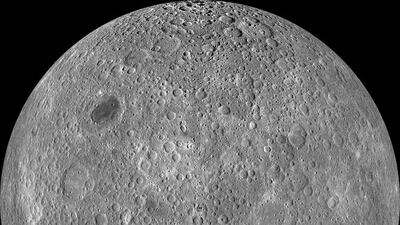
  • The UAE aims to land the Rashid rover on the near side of the Moon due to its smoother surface.
    The UAE aims to land the Rashid rover on the near side of the Moon due to its smoother surface.
  • The far side of the Moon remains largely unexplored, but Nasa is turning its focus back to the lunar surface.
    The far side of the Moon remains largely unexplored, but Nasa is turning its focus back to the lunar surface.
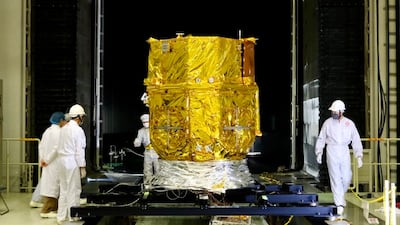
  • The HAKUTO-R lander, which will deliver the UAE's Rashid rover to the lunar surface in 2022, is now in final stages of assembly.
    The HAKUTO-R lander, which will deliver the UAE's Rashid rover to the lunar surface in 2022, is now in final stages of assembly.
  • The ispace team completed the assembly of the lander's structure thermal model in April. Courtesy: ispace
    The ispace team completed the assembly of the lander's structure thermal model in April. Courtesy: ispace
  • The final assembly of the lander is being carried out in co-operation with the Ariane Group GmbH at the Ariane Group facility in Lampoldshausen, Germany. Courtesy: ispace
    The final assembly of the lander is being carried out in co-operation with the Ariane Group GmbH at the Ariane Group facility in Lampoldshausen, Germany. Courtesy: ispace
  • Using a lander and rocket that is already available helps Emirati engineers and scientists get quicker and easier access to space. Courtesy: ispace
    Using a lander and rocket that is already available helps Emirati engineers and scientists get quicker and easier access to space. Courtesy: ispace
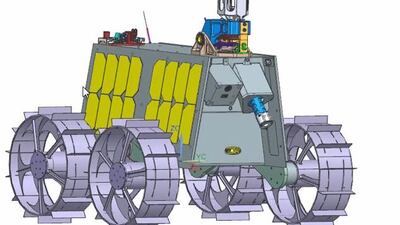
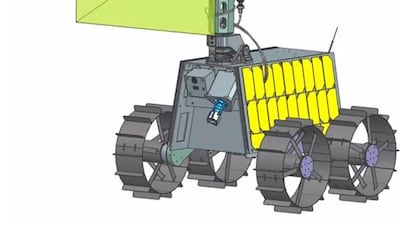
  • The initial concept design of the Rashid rover. Courtesy: MBRSC
    The initial concept design of the Rashid rover. Courtesy: MBRSC
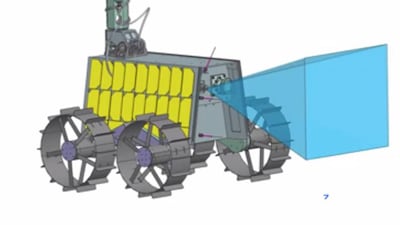
  • Rashid rover's thermal imager will analyse the Moon's properties through thermal energy. Courtesy: MBRSC
    Rashid rover's thermal imager will analyse the Moon's properties through thermal energy. Courtesy: MBRSC
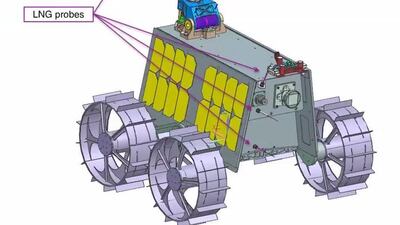
  • The Langmuir probes on the rover will analyse the lunar surface charge and electric fields. Courtesy: MBRSC
    The Langmuir probes on the rover will analyse the lunar surface charge and electric fields. Courtesy: MBRSC
  • One of the rover's two high-resolution optical imagers that will take photos of the Moon. Courtesy: MBRSC
    One of the rover's two high-resolution optical imagers that will take photos of the Moon. Courtesy: MBRSC
HAJJAN
%3Cp%3EDirector%3A%20Abu%20Bakr%20Shawky%C2%A0%3C%2Fp%3E%0A%3Cp%3E%3Cbr%3EStarring%3A%20Omar%20Alatawi%2C%20Tulin%20Essam%2C%20Ibrahim%20Al-Hasawi%C2%A0%3C%2Fp%3E%0A%3Cp%3E%3Cbr%3ERating%3A%204%2F5%3C%2Fp%3E%0A
57%20Seconds
%3Cp%3E%3Cstrong%3EDirector%3A%3C%2Fstrong%3E%20Rusty%20Cundieff%0D%3Cbr%3E%3Cstrong%3EStars%3A%20%3C%2Fstrong%3EJosh%20Hutcherson%2C%20Morgan%20Freeman%2C%20Greg%20Germann%2C%20Lovie%20Simone%0D%3Cbr%3E%3Cstrong%3ERating%3A%20%3C%2Fstrong%3E2%2F5%0D%3Cbr%3E%0D%3Cbr%3E%3C%2Fp%3E%0A
The Voice of Hind Rajab

Starring: Saja Kilani, Clara Khoury, Motaz Malhees

Director: Kaouther Ben Hania

Rating: 4/5

AS IT STANDS IN POOL A

1. Japan - Played 3, Won 3, Points 14

2. Ireland - Played 3, Won 2, Lost 1, Points 11

3. Scotland - Played 2, Won 1, Lost 1, Points 5

Remaining fixtures

Scotland v Russia – Wednesday, 11.15am

Ireland v Samoa – Saturday, 2.45pm

Japan v Scotland – Sunday, 2.45pm

Company%20Profile
%3Cp%3E%3Cstrong%3EName%3A%3C%2Fstrong%3E%20Raha%3Cbr%3E%3Cstrong%3EStarted%3A%3C%2Fstrong%3E%202022%3Cbr%3E%3Cstrong%3EBased%3A%3C%2Fstrong%3E%20Kuwait%2FSaudi%3Cbr%3E%3Cstrong%3EIndustry%3A%3C%2Fstrong%3E%20Tech%20Logistics%3Cbr%3E%3Cstrong%3EFunding%3A%3C%2Fstrong%3E%20%2414%20million%3Cbr%3E%3Cstrong%3EInvestors%3A%3C%2Fstrong%3E%20Soor%20Capital%2C%20eWTP%20Arabia%20Capital%2C%20Aujan%20Enterprises%2C%20Nox%20Management%2C%20Cedar%20Mundi%20Ventures%3Cbr%3E%3Cstrong%3ENumber%20of%20employees%3A%3C%2Fstrong%3E%20166%3C%2Fp%3E%0A