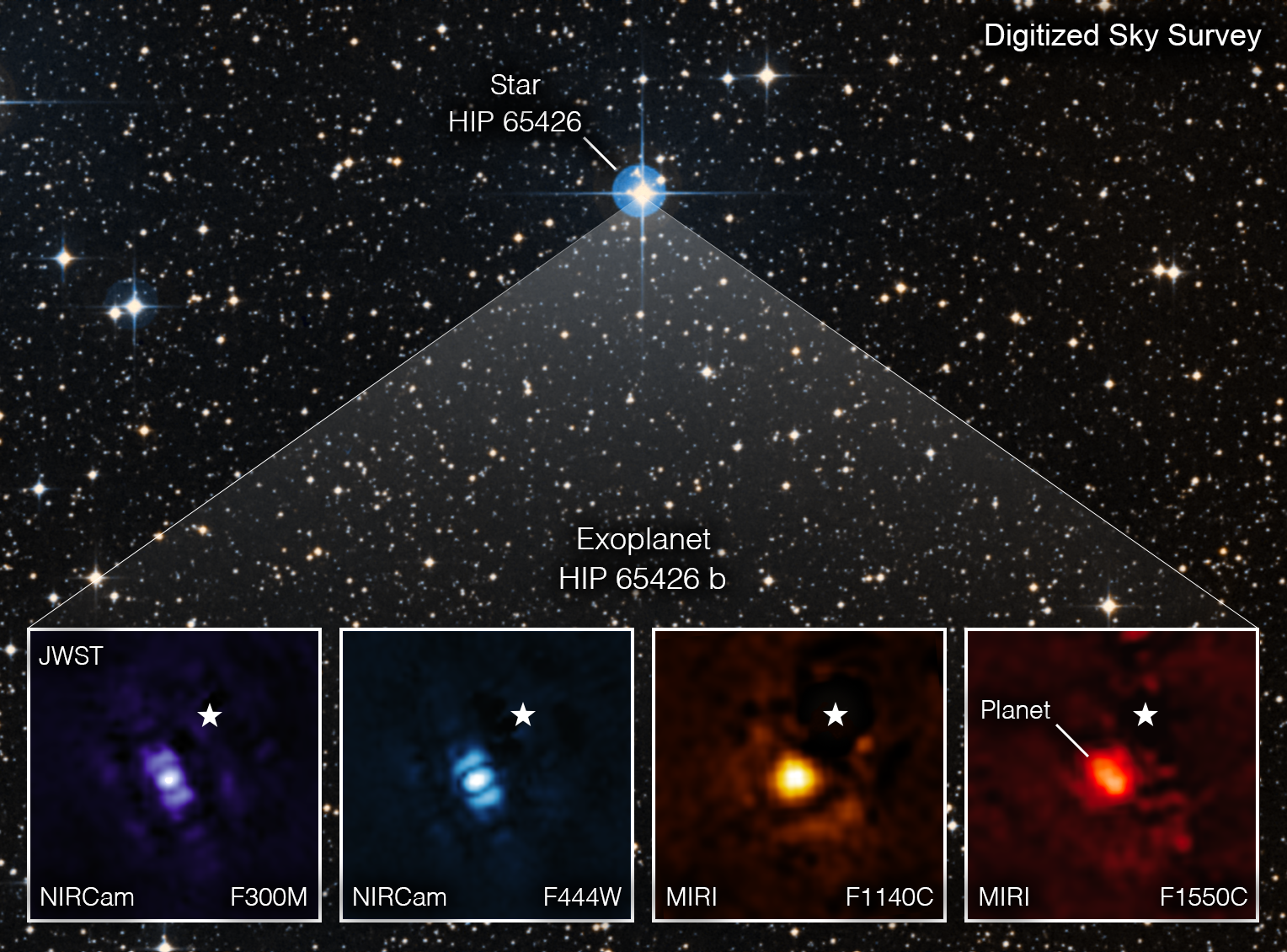
The James Webb Space Telescope has captured its first image of a planet outside the solar system.
Nasa released the image of HIP 65426 b on Thursday, a gas giant that is about six to 12 times the mass of Jupiter – the largest planet in the solar system.
At only 15 to 20 million years old, the alien world is relatively young compared to the 4.5-billion-year-old Earth.
It is the first time an exoplanet ― a planet beyond our solar system ― has been captured in infrared, radiant energy that is invisible to human eye.
This was possible because the Webb telescope has a powerful infrared instrument that can capture unprecedented details of space objects.
“This is a transformative moment, not only for Webb but also for astronomy generally,” said Sasha Hinkley, associate professor of physics and astronomy at the University of Exeter in the UK, who led these observations with a large international collaboration.
The planet was discovered in 2017 using the European Southern Observatory’s Very Large Telescope in Chile.
Images of it were taken in short infrared wavelengths back then, but newer ones taken by Webb at longer infrared wavelengths have helped reveal new details that ground-based telescoped were unable to detect.
The exoplanet is composed mainly of gas, which means it has no rocky surface and is uninhabitable.
Taking direct images of exoplanets is more challenging than capturing shots of their host stars because they are not as bright, Nasa said.
In each filter image, the planet appears as a slightly differently shaped blob of light.
That is because of how Webb’s optical system operates and translates light through the different optics.
Aarynn Carter, a postdoctoral researcher at the University of California, Santa Cruz, who led the analysis of the images, said obtaining the image "felt like digging for space treasure".
“At first all I could see was light from the star, but with careful image processing I was able to remove that light and uncover the planet,” she said.
“I think what’s most exciting is that we’ve only just begun.
“There are many more images of exoplanets to come that will shape our overall understanding of their physics, chemistry, and formation. We may even discover previously unknown planets, too.”
The Webb telescope has been developed by Nasa with its partners, the European Space Agency and the Canadian Space Agency.
Exoplanets: 10 terrifying worlds in our galaxy - in pictures
-
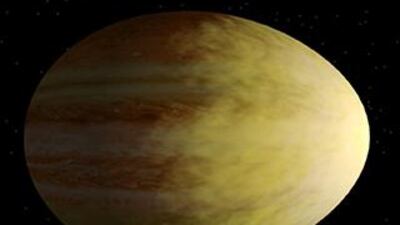
WASP-12b is a planet that will be destroyed by its parent star in 10 million years. The star is so hot that it is tearing apart the planet’s atmosphere, with the extreme gravity causing giant tidal forces that are stretching the planet into the shape of an egg. All photos: Nasa -
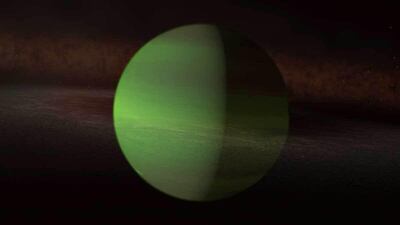
AU Microscopii b is constantly blasted with deadly X-rays and other radiation from its star. The gas giant exoplanet takes 8.5 days to complete one orbit around its star. It was discovered in 2020. -
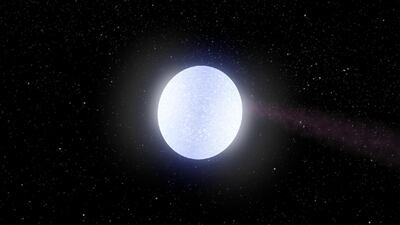
KELT-9b was discovered in 2017 and has a mass nearly three times bigger than Jupiter, but is only half as dense as the planet. It has a dayside temperature of more than 4,315°C and orbits a star (pictured) that is almost twice as large and hot as the Sun, which blasts the planet with high levels of ultraviolet radiation. -

Kepler 16b is a rocky planet that orbits two stars. It lies in a habitable zone, where liquid water could exist. -
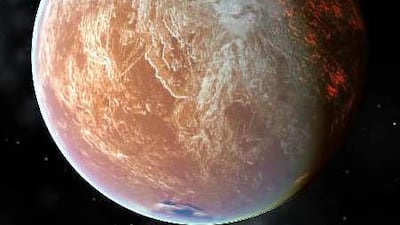
PSR B1257+12 b was discovered in 1994 and is described by scientists as “one of the creepiest ones”. It orbits a pulsar – a rapidly rotating neutron star, which is the dense core of a massive star that exploded. The planet, like any other the orbits a pulsar, is inhospitable and is bombarded with constant radiation from its star. -
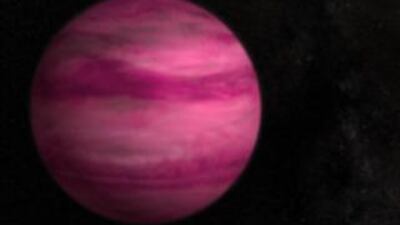
GJ 504 b is four times the size of Jupiter and is 57 light-years away from Earth. Nasa reports that this world is still glowing from the heat of its formation and its colour would appear as a dull magenta. -
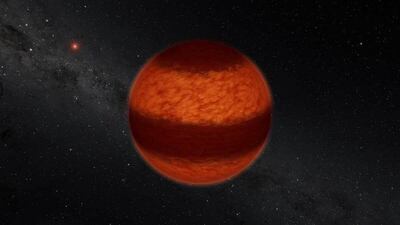
TYC 8998-760-1 b is a brown dwarf that was formed so recently, its powerful glow can be detected by ground-based telescope. Nasa classifies this planet as a brown dwarf, meaning it is considered neither a star or a planet, and somewhere in between. -
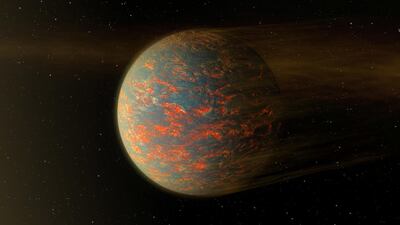
55 Cancri e is a lava planet. Its surface is uninhabitable as it is covered in molten lava. The sky in this world sparkles when the surface lava reflects on the dark side of the planet. Only one side of the planet faces the star, the other is completely dark. -
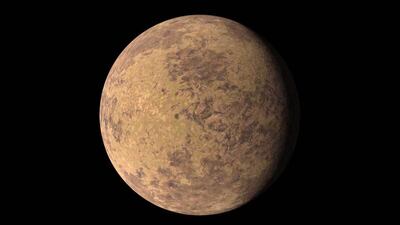
TOI-849 b was discovered in 2020. The planet’s atmosphere is being stripped away because it is so close to its parent star. It is 40 times the mass of Earth and has little or no atmosphere. Surface temperature on the planet is about 1,500°C. -
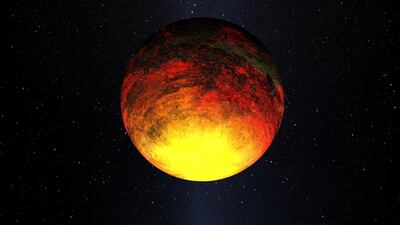
Kepler-10b is another lava world, which orbits too closely to its star. Daytime temperatures on this planet are more than 1,371°C – hotter than the lava on Earth.