• Sheikh Abdullah speaks in a Q&A session to students at a park in Abu Dhabi. He urged young people to be ambitious and to challenge themselves, while also speaking of the need to talk about mental health issues, which have been exacerbated by the pandemic. The National
    Sheikh Abdullah speaks in a Q&A session to students at a park in Abu Dhabi. He urged young people to be ambitious and to challenge themselves, while also speaking of the need to talk about mental health issues, which have been exacerbated by the pandemic. The National
  • Minister of State for Food Security Mariam Al Mheiri, Minister of Community Development Hessa Buhumaid and presenter Ali Al Shimmari. The National
    Minister of State for Food Security Mariam Al Mheiri, Minister of Community Development Hessa Buhumaid and presenter Ali Al Shimmari. The National
  • Mariam Al Mheiri and Hessa Buhumaid visit Gracia Farm, which uses agricultural technology to produce food in the UAE’s arid climate. The National
    Mariam Al Mheiri and Hessa Buhumaid visit Gracia Farm, which uses agricultural technology to produce food in the UAE’s arid climate. The National
  • Minister of Cabinet Affairs Mohammed Al Gergawi urges young people to take the initiative and seize on the groundwork the previous generation paved for them. The National
    Minister of Cabinet Affairs Mohammed Al Gergawi urges young people to take the initiative and seize on the groundwork the previous generation paved for them. The National
  • Sheikh Abdullah bin Zayed speaks to Emirati students at an outdoor question-and-answer session for the Mohamed bin Zayed Majlis for Future Generations
    Sheikh Abdullah bin Zayed speaks to Emirati students at an outdoor question-and-answer session for the Mohamed bin Zayed Majlis for Future Generations

Nearly half of Emirati students say mental health affected by Covid-19 pandemic, poll finds


  • English
  • Arabic

Two out of three Emirati students want remote learning to continue in some form after Covid-19, while almost half (44 per cent) said their mental health had been negatively affected by the pandemic, a survey found.

Although the vast majority are happy with their university experience, the study showed that 45 per cent believed the pandemic had a negative effect on their education.

The findings lay bare the huge challenges faced by Emirati students who – like their international peers – had to grapple with university and a once in a century event.

The report, Looking to the Future: Understanding Emirati Youth's Vision for the Next 50 Years, was conducted for the Mohamed bin Zayed Majlis for Future Generations.

Researchers interviewed Emirati students at home and abroad, and ran focus groups. The study is said to be one of most authoritative on young Emiratis and assesses their opinions on everything from technology to heritage.

Here are the main findings that relate to the pandemic.

The effect of Covid-19 on education

Most Emirati students are happy with their educational experience but the study found nearly half (45 per cent) believe the pandemic had a negative effect, while one in three (32 per cent) felt it had been positive.

Despite this, the pandemic brought positive perspectives on remote learning. Two out of three want remote learning to continue in some form after Covid-19, while just 26 per cent wanted coursework to return to in-person learning.

Maryam Hassani, 25, an Emirati working with the Abu Dhabi Early Childhood Authority, believes the pandemic offered a wake-up call.

“A completely virtual environment takes away from the essence of being in university or school. Engaging with people, interacting in the halls, conversing with your peers and teachers in-person – these are all valuable experiences you just don’t get in a virtual environment,” Ms Hassani said.

“On the other hand though, a completely in-person education does somewhat limit the extent of knowledge exposure. Students now have unprecedented access to the best professors or educators from across the world.”

The majority – 87 per cent – said they are satisfied with the overall quality of education they are receiving, even at a time when most of the learning is taking place remotely, away from professors and fellow classmates.

How the coronavirus affected mental health

Mental well-being has been one of the most pressing issues of the pandemic and the consequences will only be revealed in the years to come. The survey, perhaps unsurprisingly, reveals Covid-19 is causing stress and mental health issues for some young Emiratis.

While 75 per cent of students describe their mental health and well-being as excellent or good, one in four say their mental health is not good or even poor.

Nearly half (44 per cent) of Emirati university students said their mental health has been negatively affected by the pandemic.

“Women and students are at the top of the pyramid for anxiety,” said Khawla Hammad, founder of Takalam, an online counselling platform.

“Being a student already comes with many challenges and now, on top of these, they have to go through the isolation of studying without their classmates. Women are under so much pressure because of home schooling and the different roles they are expected to play as mothers, sisters, daughters and employees.”

The pandemic hits certain students more than others. Students in science, technology, engineering or mathematics (48 per cent); medical students (47 per cent); women (47 per cent); UAE citizens studying abroad (47 per cent); and undergraduates (45 per cent) are more likely to report a negative effect on their mental health than others.

Of those who say their mental health is not good or poor, 78 per cent say educational pressures are a source of stress. This is more than any factor – including Covid-19 (53 per cent) or social isolation and loneliness (44 per cent). The sources of stress go beyond pandemic, as 32 per cent refer to body image issues, 12 per cent to social media and 11 per cent to bullying.

The study was conducted between October and November last year and canvassed 2,974 young Emiratis – 2,629 students studying in the UAE and 345 abroad. Alongside the study, four focus groups were conducted in Arabic with Emirati university students.

The UAE's top universities 

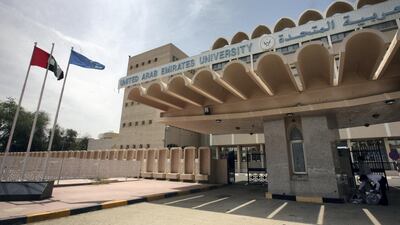
  • United Arab Emirates University in Al Ain has a strong standing in research and offers one of the country's main medicine degrees. Randi Sokoloff / The National
    United Arab Emirates University in Al Ain has a strong standing in research and offers one of the country's main medicine degrees. Randi Sokoloff / The National
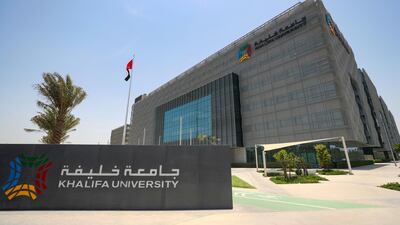
  • Khalifa University has rapidly climbed the global rankings in recent years but was knocked off the UAE top spot this year by UAEU. It boasts a nuclear engineering school staffed by top nuclear scientists, many of them from South Korea. Chris Whiteoak / The National
    Khalifa University has rapidly climbed the global rankings in recent years but was knocked off the UAE top spot this year by UAEU. It boasts a nuclear engineering school staffed by top nuclear scientists, many of them from South Korea. Chris Whiteoak / The National
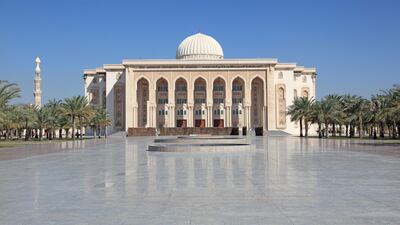
  • With its its striking architecture, American University of Sharjah offers about two dozen major degrees including humanities, engineering and business to about 5,000 students. It often scores strongly in global rankings and is particularly popular with Arab expat students. Alamy Photo
    With its its striking architecture, American University of Sharjah offers about two dozen major degrees including humanities, engineering and business to about 5,000 students. It often scores strongly in global rankings and is particularly popular with Arab expat students. Alamy Photo
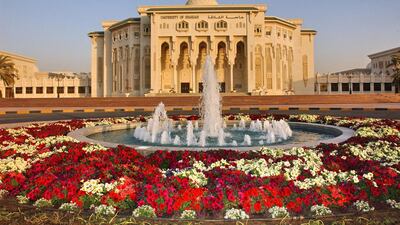
  • University of Sharjah was established in 1997 and is one of the country's largest, with about 14,000 students enroled. It also has campuses in the town of Dhaid and in Kalba, in Sharjah's east coast enclave. Wikicommons
    University of Sharjah was established in 1997 and is one of the country's largest, with about 14,000 students enroled. It also has campuses in the town of Dhaid and in Kalba, in Sharjah's east coast enclave. Wikicommons
The White Lotus: Season three

Creator: Mike White

Starring: Walton Goggins, Jason Isaacs, Natasha Rothwell

Rating: 4.5/5

COMPANY PROFILE
Name: HyperSpace
 
Started: 2020
 
Founders: Alexander Heller, Rama Allen and Desi Gonzalez
 
Based: Dubai, UAE
 
Sector: Entertainment 
 
Number of staff: 210 
 
Investment raised: $75 million from investors including Galaxy Interactive, Riyadh Season, Sega Ventures and Apis Venture Partners
Who's who in Yemen conflict

Houthis: Iran-backed rebels who occupy Sanaa and run unrecognised government

Yemeni government: Exiled government in Aden led by eight-member Presidential Leadership Council

Southern Transitional Council: Faction in Yemeni government that seeks autonomy for the south

Habrish 'rebels': Tribal-backed forces feuding with STC over control of oil in government territory

Ten tax points to be aware of in 2026

1. Domestic VAT refund amendments: request your refund within five years

If a business does not apply for the refund on time, they lose their credit.

2. E-invoicing in the UAE

Businesses should continue preparing for the implementation of e-invoicing in the UAE, with 2026 a preparation and transition period ahead of phased mandatory adoption. 

3. More tax audits

Tax authorities are increasingly using data already available across multiple filings to identify audit risks. 

4. More beneficial VAT and excise tax penalty regime

Tax disputes are expected to become more frequent and more structured, with clearer administrative objection and appeal processes. The UAE has adopted a new penalty regime for VAT and excise disputes, which now mirrors the penalty regime for corporate tax.

5. Greater emphasis on statutory audit

There is a greater need for the accuracy of financial statements. The International Financial Reporting Standards standards need to be strictly adhered to and, as a result, the quality of the audits will need to increase.

6. Further transfer pricing enforcement

Transfer pricing enforcement, which refers to the practice of establishing prices for internal transactions between related entities, is expected to broaden in scope. The UAE will shortly open the possibility to negotiate advance pricing agreements, or essentially rulings for transfer pricing purposes. 

7. Limited time periods for audits

Recent amendments also introduce a default five-year limitation period for tax audits and assessments, subject to specific statutory exceptions. While the standard audit and assessment period is five years, this may be extended to up to 15 years in cases involving fraud or tax evasion. 

8. Pillar 2 implementation 

Many multinational groups will begin to feel the practical effect of the Domestic Minimum Top-Up Tax (DMTT), the UAE's implementation of the OECD’s global minimum tax under Pillar 2. While the rules apply for financial years starting on or after January 1, 2025, it is 2026 that marks the transition to an operational phase.

9. Reduced compliance obligations for imported goods and services

Businesses that apply the reverse-charge mechanism for VAT purposes in the UAE may benefit from reduced compliance obligations. 

10. Substance and CbC reporting focus

Tax authorities are expected to continue strengthening the enforcement of economic substance and Country-by-Country (CbC) reporting frameworks. In the UAE, these regimes are increasingly being used as risk-assessment tools, providing tax authorities with a comprehensive view of multinational groups’ global footprints and enabling them to assess whether profits are aligned with real economic activity. 

Contributed by Thomas Vanhee and Hend Rashwan, Aurifer