


Though pottery is now mostly used for decoration, its history provides a window into the lives of the UAE’s forefathers, says Nasir Al Darmaki, curator at the Sharjah Archaeology Museum.
-
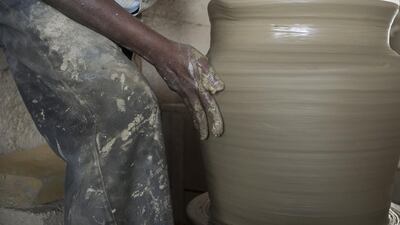
Now 62, the master craftsman at Al Fakher Pottery Works in Al Dhaid, continues to design all the works produced by the company’s nine employees. Mona Al-Marzooqi/ The National -
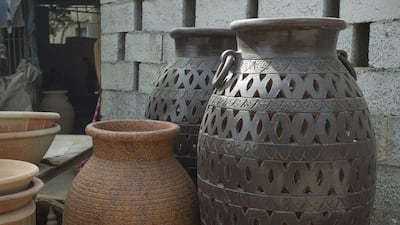
Al Fakher Pottery Works provides many of the pieces found in the markets on the UAE’s east coast as well as in shops throughout the country. Mona Al-Marzooqi/ The National -
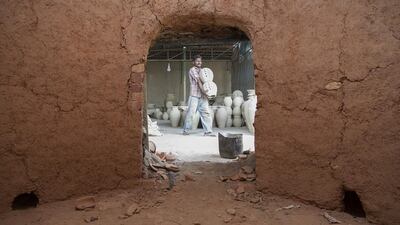
The craftsmen can produce 100 small pots a day, while the largest pots – created in three separate pieces that are then moulded together – can take a full working day. Mona Al-Marzooqi/ The National -

After moulding, the craftsmen cut designs into the pieces, or stack them straight into one of two kilns to be dried for five days. Mona Al-Marzooqi/ The National -
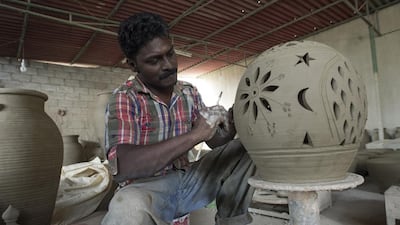
It can take as little as 10 minutes for craftsmen like Rajesh Rajal (shown here) to slice and etch elaborate designs with flower petals, moons and stars into one small pot.Mona Al-Marzooqi/ The National -
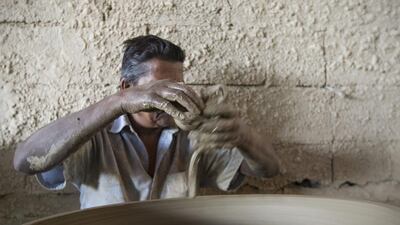
Chunks of clay are cut off from large shipments, most of which are brought in from Pakistan, with only a small proportion of the clay being locally sourced. Mona Al-Marzooqi/ The National
In pictures: Pottery trade in Sharjah still flourishing
Most popular today

