
Related: How the GCC helped the Gulf find a common voice and purpose
Not everyone will remember what they were doing on this day 42 years ago. But it is a date that Jiraporn Wattanasuntranon, 62, will remember forever.
On the morning of May 25, 1981, she was among staff who prepared the InterContinental Hotel in Abu Dhabi for a summit where history would be made for the region.
At 7.55pm that evening, six Gulf rulers came together and formed the Gulf Co-operation Council in one of the hotel's ballrooms.
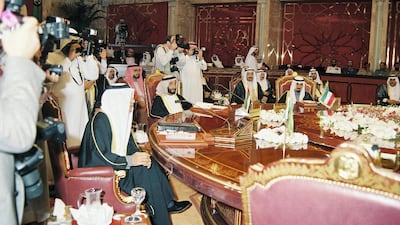
Sat around an ornate, handcrafted table flown in by helicopter days before, the rulers of the UAE, Saudi Arabia, Bahrain, Qatar, Kuwait and Oman forged ties to give the region a united voice.

The hotel underwent a full renovation in 2007, but the Dar El Istiqbal ballroom, which was the birthplace of that union, remains almost untouched.
Standing below the five crystal chandeliers, where the rulers signed the GCC charter, Ms Wattanasuntranon remembered the landmark day.
“I started work at around 10am that morning,” Ms Wattanasuntranon, who is one of the hotel's longest-serving staff members, told The National.
“I was part of the housekeeping team at that time and I remember a great buzz about the hotel in the days leading up to the summit.
“I had not long been in the UAE. I arrived as a 21-year-old from Thailand and it was my first time away from home.”
She recalled her excitement about being able to see UAE Founding Father, the late Sheikh Zayed bin Sultan Al Nahyan.
“I heard so many things about Sheikh Zayed and I was excited that I was going to get the chance to see him,” she said.
Walking through the lobby of the hotel today, framed photographs from that first summit adorn the imposing marble columns that welcome guests as they enter the property. They are a snapshot of history that remain synonymous with the hotel.
In one, Sheikh Zayed can be seen sitting with the Emir of Bahrain. And in another, all six rulers are pictured walking through the banquet corridor that leads to the Dar El Istiqbal ballroom.
Lobster, caviar and fruit on the menu
Ms Wattanasuntranon, who now works in the accounts department at the hotel, landed in the UAE on October 3, 1980, after seeing an advertisement for a housekeeping job in a newspaper in Thailand.
There was a new hotel opening in the Middle East and the company was recruiting staff from overseas.
That hotel was the InterContinental in Abu Dhabi and it was being built to host the first GCC Summit.
“When I first landed, I was in awe as all I could see was sand and a few low-rise buildings,” she said.
“I guess back then I didn't know the significance of the hotel I was about to work in. But quickly I came to realise just how important that summit was.
“That morning, I remember seeing so many security walking around. I had finished my housekeeping duties, so I was working in the restaurant near the lobby.
“I was helping with the mise en place then I remember this big commotion. When I looked up, I saw Sheikh Zayed walking through the entrance. I got this great feeling from him, he was a man of the people.”
Months before, a fellow staff member at the hotel had sent a letter to Sheikh Zayed's palace after his home in Egypt was destroyed by fire. Ms Wattanasuntranon said the man received Dh75,000 from the ruler's office.
“I knew from then that Sheikh Zayed was a good man. Just seeing him smiling and interacting with staff and guests was humbling and reaffirmed that for me,” she said.
“I remember, in the days after the summit, seeing the news in the local newspaper. My colleagues were briefing me on who each ruler was because I had seen them but didn’t know who they all were.”
Although Ms Wattanasuntranon did not liaise directly with the rulers during their visit, she remembered the food that was prepared for their evening meals: “Fresh lobster, caviar and lots of salads and fruits.”
Who were the heads of state at the first GCC Summit?
First GCC Summit set tone for the region
During the two-day event, the rulers engaged in both formal and informal discussions in different areas of the hotel, including the opulent Liwa Majlis, Binyas Majlis and the Al Manhal meeting room on the 18th floor.
More than 600 staff were responsible for making that first summit a success.
Over the past four decades, the InterContinental Hotel has hosted five GCC Summits, in 1981, 1986, 1992, 1998 and 2004.
With his opening remarks at that first summit in 1981, Sheikh Zayed led one of the most defining acts of the 1980s in the UAE and helped set the tone for the region over the next 10 years.
Speaking at the intimate affair, he addressed the rulers as brothers and said the meeting would pave the way for “security, development and solidarity” in the region.
The first GCC Summit - in pictures
-

Sheikh Zayed welcomes the heads of state at the first GCC summit on May 25, 1981. The meeting was held at the InterContinental hotel in Abu Dhabi. Photos by Khushnum Bhandari / The National and courtesy InterContinental -

Sheikh Zayed, left, walks through the hallway of the InterContinental hotel in Abu Dhabi with Khalid bin Abdulaziz, the King of Saudi Arabia. -
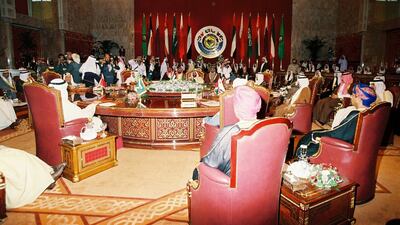
The six heads of state of the Gulf countries sit around a handcrafted table in the Dar El Istiqbal ballroom during the first GCC summit in 1981. -
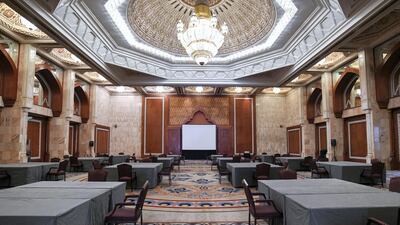
Despite undergoing a full renovation in 2007, the Dar El Istiqbal ballroom at the InterContinental hotel in Abu Dhabi remains almost the same today as it did 40 years ago. -
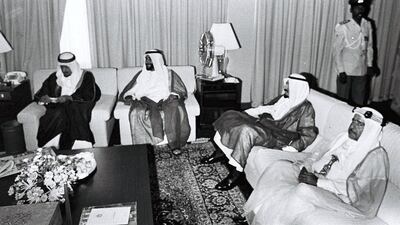
Heads of GCC states held formal and informal discussions at the two-day event to strengthen the bilateral relations among six countries. -
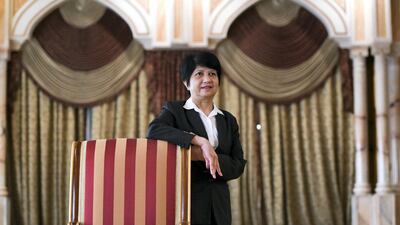
Jiraporn Wattanasuntranon, 62, from Thailand, started working at the hotel in 1980 and remembers the buzz around hosting the first GCC Summit. -

Framed photographs from the first GCC summit hung on the walls of the hotel lobby offer a snapshot of the historic meeting. -

A table being flown into the hotel for the first GCC summit in 1981. This is the table where the six heads of state signed a document to form the GCC. -
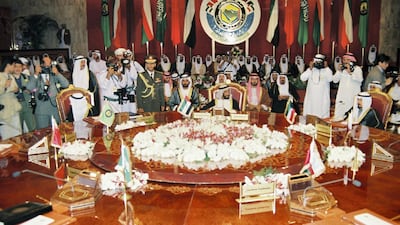
Over the past four decades, the InterContinental hotel in Abu Dhabi has hosted five GCC summits - 1981, 1986, 1992, 1998 and 2004. -

Sheikh Zayed and Sultan Qaboos of Oman during a meeting at the GCC summit in 1981. -
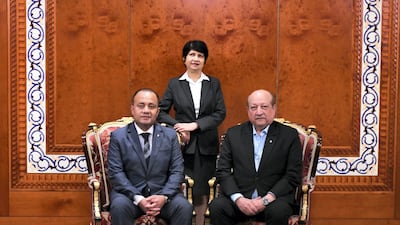
From left, Wael Sami, director of sales and marketing, Jiraporn Wattanasuntranon, pay master and Marwan Naser, chief security manager at the InterContinental hotel in Abu Dhabi. -
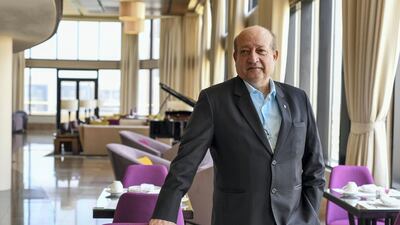
Marwan Naser, chief security manager at the InterContinental hotel was present during the second GCC summit hosted by the UAE in 1986. -
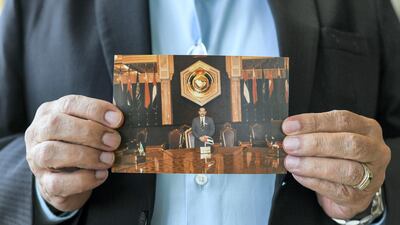
Marwan Naser shows a throwback image of himself from the 1986 GCC summit in the Dar El Istiqbal ballroom at the InterContinental hotel. -
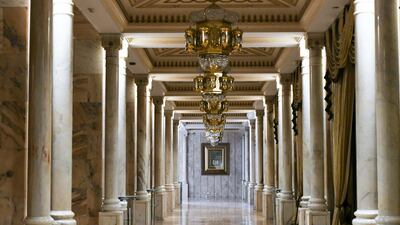
The banquet corridor leading to the Liwa Majlis and Dar El Istiqbal ballroom at the hotel. -
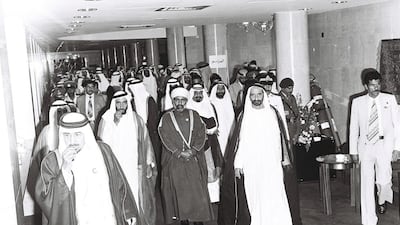
Sheikh Zayed and the heads of state walk through a corridor of the hotel. -
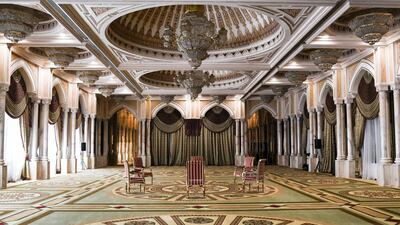
The Liwa Majlis hosted several side meetings during the first GCC summit in 1981. -
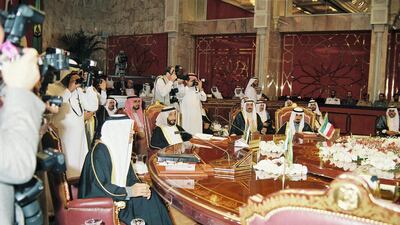
Sheikh Zayed, who addresses GCC heads of state as his brothers, said the meeting would pave the way for 'security, development and solidarity' in the region.


*A version of this story first appeared in The National in 2021, to mark the 40th anniversary of the GCC

